Deals and Managers
How Buffett buys businesses and chooses people.

“Well, I just, I, I knew what I would do, and I told them what I would do. And if they wanted to do it, fine; if they didn't want to do it, fine. I mean, we, we, we don't really negotiate at Berkshire. It's just I don't have enough time, you know, to spend the rest of my life, you know, negotiating with people. So I tell them what I'll do, and if it works, fine; if it doesn't work, fine then.”CNBC Squawk Box interview, Economic Club of Washington, D.C., 2009 · 29:08
The lesson
Buffett’s starting point in a deal is simple: treat the purchase as buying a business, not trading a symbol. He focuses on the economics of the business itself and stays within areas he understands, rather than forcing opinions on things outside his competence12. That mindset matters because a good acquisition decision comes from judging what the business will be like over time, not from reacting to market noise3.
That leads to patience and selectivity. Buffett does not want constant action; he wants a small number of understandable opportunities at acceptable prices, and he is willing to wait for them rather than chase activity for its own sake45. When Berkshire does act, price is still central: even a strong business and attractive situation must come with terms that make sense, because price shapes future returns and provides protection against being wrong678.
Berkshire’s deal style is also unusually direct. Buffett has said Berkshire is not built around long negotiation processes; instead, he tells sellers what he will do and lets them decide whether that works9. That approach fits a company that wants to move quickly when the right opportunity appears and that prefers straightforward transactions with people who value certainty and trust over haggling.
Who runs the business after the deal is just as important as the business itself. Berkshire wants able managers and gives them room to operate, with very little central bureaucracy or make-work from headquarters510. That only works if the people are trustworthy and aligned, which is why Buffett emphasizes integrity first in judging people and also cares about liking the partners he works with11.
The result is a system where trust lowers overhead. Berkshire’s culture depends on a board and shareholder base that protect this owner-oriented, low-bureaucracy model over time1213. Managers are expected to run their businesses, while headquarters concentrates on capital allocation, so the organization can stay lean even at great size1015.
5 principles from Warren Buffett
Treat every deal as buying a business
Analyze the underlying business, not the ticker or the recent market move. Ask how the company performs over time, how durable it is, and whether it sits inside your circle of competence.
“I look at it as buying the whole company.”
Wait for the right pitch
You do not need many deals; you need a few good ones. Be willing to pass on most opportunities until you find one you understand and can buy on terms that leave room for error.
“I'm looking for one good idea a year.”
Let price protect the future
A good business can still be a poor deal if the price is too high. Use discipline on valuation so that future returns do not depend on perfect outcomes.
“Price takes care of the future.”
Choose managers for integrity first
Autonomy only works when the person running the business is trustworthy and capable. When evaluating leaders or partners, start with character, then look at intelligence, energy, and fit.
“I only work with people I like. You know, I I don't I don't... If I can make it a $100,000,000 by buying a business with some guy that caused my stomach to churn, I'd say no. Because I say that's just like marrying for money, probably isn't a very good idea in any circumstances, but if you're already rich, it's crazy, right? I am not going to marry for money. So I would do it. I would I would really do almost exactly, what I've done except I don't think I bought the US Air. Thanks.”
Use trust to reduce bureaucracy
If you have the right people, you do not need layers of committees and make-work. Keep headquarters focused on a few essential decisions and let strong operators run their businesses.
Moments to watch
In his own words
The quotes behind the lesson, word for word from the transcripts. Numbers match the lesson above.
“I look at it as buying the whole company.”
“I don't worry about things I don't understand.”
“The stock market is there to serve you, not to instruct you.”
“I'm looking for one good idea a year.”
“…we keep waiting for the right pitch…”
“…always have a margin of safety…”
“Heinz makes sense because we've got a business we like, and we've got a partner we like, and we've got a price that I barely like.”
“Price takes care of the future.”
“Well, I just, I, I knew what I would do, and I told them what I would do. And if they wanted to do it, fine; if they didn't want to do it, fine. I mean, we, we, we don't really negotiate at Berkshire. It's just I don't have enough time, you know, to spend the rest of my life, you know, negotiating with people. So I tell them what I'll do, and if it works, fine; if it doesn't work, fine then.”
“We just don't do... we don't have make-work activities…”
“I only work with people I like. You know, I I don't I don't... If I can make it a $100,000,000 by buying a business with some guy that caused my stomach to churn, I'd say no. Because I say that's just like marrying for money, probably isn't a very good idea in any circumstances, but if you're already rich, it's crazy, right? I am not going to marry for money. So I would do it. I would I would really do almost exactly, what I've done except I don't think I bought the US Air. Thanks.”
“…the main, by far, the main factor in keeping Berkshire's culture is that you have a board…”
“We want our shareholders to walk in the shoes and the directors to walk in the shoes of shareholders.”
“Many of the managers, a great many of the managers of Berkshire are here and and are listening to you, and I suspect that a very high percentage of them agree with what you're saying. Whether they... What they do in terms of web pages and so on, in our view, it's basically up to them. But I can tell you that one leading proponent, as you mentioned, was Greg Abel, who until recently was running Berkshire Hathaway Energy and now is vice chairman. And Greg may wanna say a few words on this too. And, but I can assure you our managers are listening to you.”
Reflect
- Think about a recent decision you made involving money, work, or hiring. Did you evaluate the underlying business or person, or did you react to surface signals like price moves, prestige, or urgency?
- Where in your work do you create activity instead of value? What would a lower-bureaucracy, higher-trust version of that process look like?
- If you had to choose one person to run an important operation with little oversight, what evidence would you look for to judge integrity, judgment, and alignment?
Check your understanding
Go deeper
 Warren Buffett on Value Investing: Wait for the Right Pitch2006 · 52 min · full transcript
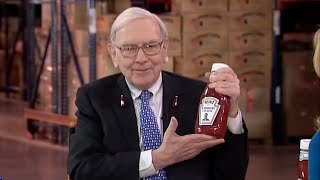 Warren Buffett on Capital Allocation: Buybacks, Heinz, and Cash2013 · 115 min · full transcript
 Warren Buffett on Value Investing: Lessons from the Financial Crisis2009 · 43 min · full transcript
 Warren Buffett on Succession and Investing: Hands-Off Moat2018 · 450 min · full transcript
 Warren Buffett on Berkshire Culture: Size, Talent, and Shareholders2016 · 177 min · full transcript
 Warren Buffett on the American Economy: Recovery, Risk, and Opportunity2010 · 51 min · full transcript