Ignore Forecasts
Let the market serve you instead of instructing you.
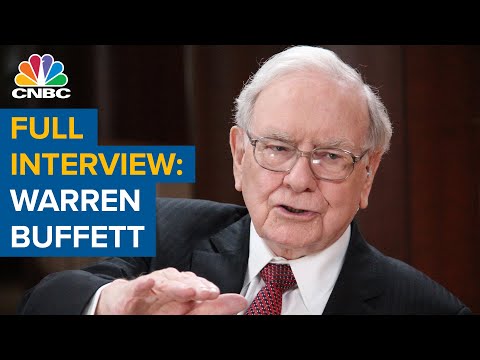
The lesson
Buffett’s starting point is simple: a stock is not a headline or a chart, but a partial ownership interest in a real business. That is why he says to think about what the business will earn over the next 10 to 30 years, not what the market may do next week or whether fear is dominating the news today123. Once you adopt that owner’s view, forecasts about short-term market moves become much less useful.
He is unusually blunt about prediction: he does not think people know where the market is headed, and he does not build decisions around macro calls45. Berkshire has not avoided attractive purchases because of a top-down economic view, and he warns that many investors miss opportunities by fixating on one scary variable instead of the value in front of them6. The practical lesson is to spend your effort on valuing businesses and recognizing your own limits, not on trying to sound certain about the next quarter.
That discipline depends on staying inside your circle of competence. Buffett treats some big questions, especially interest rates and medical outcomes, as areas where he should defer to others rather than pretend expertise789. Ignoring forecasts does not mean ignoring reality; it means separating what is important from what is actually knowable by you.
Market declines then look different. If you are a long-term net buyer, lower prices are often helpful because they create better opportunities, not just pain on a screen10. Buffett’s preference is to let the market serve him with occasional bargains rather than instruct him through moods, bubbles, or panic, even if that means waiting in cash when prices are unattractive1112.
Underneath this is a broader optimism about productive businesses and the country they operate in. Buffett argues that shocks, recessions, and even severe uncertainty do not overturn the long-run capacity of America to progress and create wealth131415. So the right response to scary forecasts is neither denial nor bravado, but a calm focus on long-term earning power, price, and patience.
5 principles from Warren Buffett
Treat stocks like businesses
Ask what you are buying ownership in and what its future earning power is likely to be over many years. If your attention is mostly on price moves or headlines, you are letting the market instruct you instead of using it as a tool.
“I bought a business today, not a stock today.”
Do not build strategy on market forecasts
Buffett’s approach is not to predict where markets or the economy will go next, but to act when value is clearly available. In practice, that means you should not pass on a strong opportunity just because a macro story sounds scary.
“We've never decided not to buy a business we like because of a macro view.”
Stay inside your circle of competence
Separate questions you can answer from questions you cannot. You do not need a view on every big variable to invest or decide well; you need clarity about where your knowledge stops.
“I have never been able to predict interest rates, and I've never tried…”
Welcome lower prices if you are still buying
A falling market is not automatically bad news for someone who will continue allocating capital over time. Think like a net buyer: cheaper prices can improve future returns if the underlying business case is still intact.
“If you told me I had to invest 50,000,000,000 every year till we got down to 50,000,000,000, that would be the dumbest thing in the world to invest in that manner. Things get extraordinarily attractive very occasionally. The long term trend is up. Nobody knows. And I certainly don't know. Greg doesn't know. Ajit doesn't know. Nobody knows what the market is going to do tomorrow, next week, next month. Nobody knows what business is gonna do tomorrow, next week, or next month, but they spend all their time talking about it because it's it's easy to talk about. And... But it it it has no value. I've I've never found anybody I wanted to listen to on the subject.”
Anchor on long-term progress, not short-term fear
Temporary crises create real uncertainty, but they do not necessarily change the long-run direction of strong businesses or a productive economy. This perspective helps you avoid reacting to dramatic headlines as if they settle the future.
“…we'll come out better on the other end…”
In his own words
The quotes behind the lesson, word for word from the transcripts. Numbers match the lesson above.
“I bought a business today, not a stock today.”
“If you get your money's worth in terms of future earning power over the next 10 or 20 or 30 years, you're going to have made a good investment. And you can't pick them from day to day. If you can do that, you can. Well, I haven't met anybody yet that knows how to do it.”
“We don't think of stocks as as little items that wiggle around in the paper and that have charts attached to them.”
“I don't think anybody knows what the market's going to do.”
“We have no—we're not good at forecasting market, so I mean, we knew that we were getting enormous bargains in the mid-'70s. We knew that the market went crazy to some extent in the late '90s, but we don't have much—we don't spend any time. Charlie and I spend no time thinking or talking about what the stock market is gonna do because we don't know. We do know sometimes that we're getting very good value for our money when we buy some stocks or some bonds, as it may be, but we are not operating on the basis of any kind of macro forecasts about stocks.”
“We've never decided not to buy a business we like because of a macro view.”
“…you gotta defer to the doctors on that…”
“I have never been able to predict interest rates, and I've never tried…”
“The the question is, is the box that says knowns and important... Knowable and important Mhmm. Is there anything in that box? And can you tell what's in that box and what isn't in that box? And it's what I call knowing your circle of competence. And my circle of competence doesn't include the ability to predict interest rates a day from now or a year from now or five years from now. So I say, can I function without knowing that? Same way as predicting what business is going to do or the stock market's going to do. I can't do any of those things, But that doesn't mean that I can't do well investing over time.”
“…if I'm a net buyer, I will do better if prices are lower.”
“We do not find bargains in this market among the larger companies that are that are our universe.”
“If you told me I had to invest 50,000,000,000 every year till we got down to 50,000,000,000, that would be the dumbest thing in the world to invest in that manner. Things get extraordinarily attractive very occasionally. The long term trend is up. Nobody knows. And I certainly don't know. Greg doesn't know. Ajit doesn't know. Nobody knows what the market is going to do tomorrow, next week, next month. Nobody knows what business is gonna do tomorrow, next week, or next month, but they spend all their time talking about it because it's it's easy to talk about. And... But it it it has no value. I've I've never found anybody I wanted to listen to on the subject.”
“It does not make sense to bet against America.”
“You'd pick today, and you would pick America.”
“And it's been true all along. It may have been interrupted One of the scariest of scenarios when you had a war with one group of states fighting another group of states, and it may have been tested again in the Great Depression, and it may be tested now to some degree. But in the end, the answer is never bet against America. And that, in my view, is is true today as it was in 1789 and even was true at the... During the civil war and the depths of the depression.”
Reflect
- What forecasts or headlines most often pull your attention away from evaluating the underlying quality and price of a business or decision?
- Where is your actual circle of competence narrower than you usually admit, and how could you redesign your decisions to rely less on predictions outside it?
- If you thought of yourself as a long-term net buyer, how would your reaction to a 20% market decline change?
Check your understanding
Go deeper
 Warren Buffett on Macro Forecasting: Focus on Value, Not Predictions2005 · 260 min · full transcript
 Warren Buffett on Markets in Crisis: Buying Through Panic2021 · 150 min · full transcript
 Warren Buffett on Market Volatility: Buy Businesses, Not Headlines2019 · 121 min · full transcript
 Warren Buffett on Tech Bubble Skepticism: Why They Avoided Big Tech1999 · 324 min · full transcript
 Warren Buffett on Never Bet Against America: Berkshire and Crisis2020 · 268 min · full transcript
 Warren Buffett on Market Valuation: Buybacks, Rates, and Kraft Heinz2019 · 120 min · full transcript
- What did Warren Buffett say about forecasting the stock market?
- Why does Warren Buffett say economic predictions do not guide decisions?
- Why does Warren Buffett think market forecasts are useless?
- What did Warren Buffett say about knowing what will happen?
- Why doesn't Warren Buffett pay attention to Berkshire Hathaway’s monthly results?