Barack Obama on War & Peace
Obama sees peace as a moral goal that sometimes requires force, but only when used with discipline, legality, restraint, and a larger strategy aimed at justice and human dignity.
- War can be necessary, but it is never something to romanticize or use carelessly.
- The first duty of a president is security, yet force should serve a broader strategy, not replace it.
- Legitimate power is disciplined power: targeted, careful, allied, and constrained by moral responsibility.
- Peace is more than the absence of fighting; it depends on justice, dignity, cooperation, and political compromise.

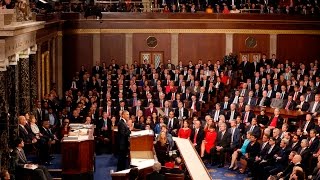
“…that was a tactic designed to contain the damage of the previous four years of mismanagement of this war…”Second presidential debate, 2008 · 5:08
Peace is the goal, but force can sometimes be necessary
Obama rejects both easy militarism and passive idealism. He argues that history is morally complicated, that violence can sometimes be required, and that refusing despair means taking responsibility for hard choices rather than pretending they do not exist.12
At the same time, he insists war should never be celebrated for its own sake. In his view, the use of force may at times be justified, but it remains tragic, costly, and morally serious.3
A president's first duty is protection, but strategy matters more than impulse
Obama frames national security as a basic obligation of leadership. He says the commander in chief must keep Americans safe and remain vigilant against threats, especially terrorism and nuclear proliferation.567
But he also warns that security is weakened when the United States reacts rashly or treats military action as the first answer to every problem. He favors a steadier approach that combines force with diplomacy, coalition building, and long-term thinking.8
That is why he contrasts targeted action against those responsible for 9/11 with what he calls the strategic error of Iraq. His point is not that military tactics never work, but that even successful tactics cannot rescue a fundamentally misguided war.101112
Legitimate force must be targeted, restrained, and morally bounded
Obama's clearest example of justified force is the bin Laden raid. He presents it as the product of patience, intelligence work, and a narrowly focused decision to act once there was enough information, rather than a broad or symbolic show of power.1314
He also stresses limits. Even in pursuing justice, he highlights care, discipline, and the effort to avoid wider harm, showing that success in war or counterterrorism depends not just on strength but on how strength is used.2
This moral boundary also shapes how he talks about religion and conflict. He repeatedly separates the fight against terrorists from any war against Islam, arguing that preserving human dignity and political legitimacy is part of winning peace.1516
Bad wars teach the danger of using the military unwisely
Obama treats Iraq as the central cautionary tale. He argues the problem was not only poor execution but the original strategic judgment: the United States committed itself to the wrong war and diverted attention from the people who actually attacked America.1110
Even where he acknowledges reduced violence from the surge, he treats that outcome as limited and corrective rather than vindication of the larger decision. A tactical improvement, in his view, does not erase years of error or prove that the initial course was wise.12
The broader lesson is that military power must be matched to clear purposes and realistic ends. Otherwise, the country can spend lives and resources while making itself less secure, not more.118
“…that was a tactic designed to contain the damage of the previous four years of mismanagement of this war…”Second presidential debate, 2008 · full transcript →
Lasting peace requires justice, cooperation, and political renewal
Obama's idea of peace goes beyond ending a particular war. He argues that actions can move history toward justice, and he links peace to responsibility and sacrifice, not to wishful thinking or simple withdrawal.172
Internationally, this means replacing cycles of fear and suspicion with mutual respect and new beginnings, while working through alliances and shared interests. He sees peace as something built with others, not imposed alone.181920
Domestically, he connects peace to democratic health. A society that cannot compromise, debate constructively, or trust its institutions will struggle to sustain wise foreign policy, because fear and division distort judgment.212223
Obama on war & peace, in his own words
“But war itself is never glorious…”
“Peace requires responsibility; peace entails sacrifice.”
Where to watch
 Barack Obama on War and Peace: The Nobel Lecture2009 · 37 min · full transcriptHis fullest statement of how war can be necessary yet morally constrained, and why peace means more than no fighting.
 Barack Obama on Iraq War Strategy: Mistakes, Surge, and Withdrawal2008 · 93 min · full transcriptBest for understanding why he thought Iraq was a strategic mistake and what he learned about the misuse of force.
 Barack Obama on the Bin Laden Raid: Justice Has Been Done2011 · 9 min · full transcriptShows how he justified a specific use of force: targeted, intelligence-driven, and tied to justice rather than revenge.
 Barack Obama on Relations With the Muslim World: A new beginning2009 · 59 min · full transcriptExplains why he separated counterterrorism from any clash with Islam and tied peace to mutual respect.
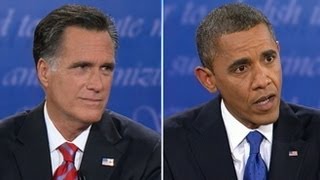 Barack Obama on Foreign Policy and Iran: Final Debate Exchange2012 · 92 min · full transcriptA concise defense of his broader foreign-policy approach: security first, but through alliances, pressure, and restraint.
Questions people ask
- How did Barack Obama decide to authorize the bin Laden raid?
- How did Barack Obama say America should lead in the world?
- What did Barack Obama mean when he said justice has been done?
- What did Barack Obama say about America's role in the Middle East?
- What did Barack Obama say about Islam and the fight against al Qaeda?
- What did Barack Obama say about alliances in foreign policy?
Sources
Every quote above, word for word from the transcripts. Numbers match the text.
“I refuse to accept despair as the final response to the ambiguities of history.”
“Peace requires responsibility; peace entails sacrifice.”
“But war itself is never glorious…”
“…my first job as commander-in-chief, Bob, is to keep the American people safe…”
“We must -- and we will -- remain vigilant at home and abroad.”
“…as long as I'm President of the United States, Iran will not get a nuclear weapon…”
“When we make rash decisions, reacting to the headlines instead of using our heads; when the first response to a challenge is to send in our military -- then we risk getting drawn into unnecessary conflicts, and neglect the broader strategy we need for a safer, more prosperous world. That's what our enemies want us to do. I believe in a smarter kind of American leadership. We lead best when we combine military power with strong diplomacy; when we leverage our power with coalition building; when we don't let our fears blind us to the opportunities that this new century presents. That's exactly what we're doing right now. And around the globe, it is making a difference.”
“We ended the war in Iraq, refocused our attention on those who actually killed us on 9/11…”
“…we did not use our military wisely in Iraq…”
“…that was a tactic designed to contain the damage of the previous four years of mismanagement of this war…”
“Then, last August, after years of painstaking work by our intelligence community, I was briefed on a possible lead to bin Laden. It was far from certain, and it took many months to run this thread to ground. I met repeatedly with my national security team as we developed more information about the possibility that we had located bin Laden hiding within a compound deep inside Pakistan. And finally, last week, I determined that we had enough intelligence to take action, and authorized an operation to get Osama bin Laden and bring him to justice. Today, at my direction, the United States launched a targeted operation against that compound in Abbottabad, Pakistan.”
“…the United States has conducted an operation that killed Osama bin Laden…”
“…the United States is not -- and never will be -- at war with Islam.”
“As we do, we must also reaffirm that the United States is not -- and never will be -- at war with Islam. I've made clear, just as President Bush did shortly after 9/11, that our war is not against Islam. Bin Laden was not a Muslim leader; he was a mass murderer of Muslims. Indeed, al Qaeda has slaughtered scores of Muslims in many countries, including our own. So his demise should be welcomed by all who believe in peace and human dignity. Over the years, I've repeatedly made clear that we would take action within Pakistan if we knew where bin Laden was. That is what we've done.”
“Our actions matter and can bend history in the direction of justice.”
“This cycle of suspicion and discord must end.”
“We have the power to make the world we seek, but only if we have the courage to make a new beginning.”
“We were able to refocus our attention on not only the terrorist threat but also beginning a transition process in Afghanistan. It also allowed us to refocus on alliances and relationships that had been neglected for a decade. And, Governor Romney, our alliances have never been stronger—in Asia, in Europe, in Africa, with Israel, where we have unprecedented military and intelligence…”
“Democracy grinds to a halt without a willingness to compromise…”
“Democracy grinds to a halt without a willingness to compromise; or when even basic facts are contested, and we listen only to those who agree with us. Our public life withers when only the most extreme voices get attention. Most of all, democracy breaks down when the average person feels their voice doesn't matter; that the system is rigged in favor of the rich or the powerful or some narrow interest. Too many Americans feel that way right now. It's one of the few regrets of my presidency - that the rancor and suspicion between the parties has gotten worse instead of better.”
“The future we want - opportunity and security for our families; a rising standard of living and a sustainable, peaceful planet for our kids - all that is within our reach. But it will only happen if we work together. It will only happen if we can have rational, constructive debates. It will only happen if we fix our politics. A better politics doesn't mean we have to agree on everything.”
How this guide was made: drafted with AI from the full transcripts of the recordings cited, then checked: every quotation must match a transcript word for word and be the speaker's own words, and an independent review gates accuracy. Methodology and corrections.