Barack Obama: Third presidential debate
On Foreign Policy and Iran: Final Debate Exchange

What Obama talks about
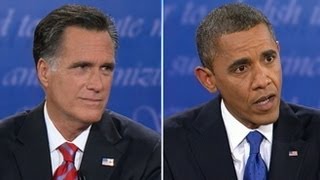
Barack Obama took part in the third presidential debate at Lynn University in October 2012, debating Mitt Romney on foreign policy with major exchanges on Libya, Syria, Israel, and Iran.
Also known as: Final Presidential Debate 2012; The third 2012 presidential debate; The Complete Final Presidential Debate between Barack Obama and Mitt Romney.
In this final 2012 presidential debate at Lynn University, Obama frames foreign policy as a test of steady leadership, alliance management, and disciplined use of American القوة. He contrasts his approach with Romney’s, arguing that the U.S. must combine pressure on extremists with diplomacy, sanctions, and coalition-building.
A major focus is the Middle East: Libya, Syria, Israel, and Iran. Obama defends the administration’s handling of Libya and Syria, emphasizes support for Israel’s security, and argues that sanctions and international unity are the right way to prevent Iran from getting a nuclear weapon.
He also connects foreign policy to domestic strength, saying America’s influence abroad depends on a strong economy, investment in education, and a military built around capabilities rather than slogans. The exchange shows how Obama links national security to long-term strategy, alliances, and economic resilience.
Bob Schieffer moderates, Obama and Romney answer each other throughout the debate.
In his words
“My first job as commander-in-chief, Bob, is to keep the American people safe”
“We ended the war in Iraq, refocused our attention on those who actually killed us on 9/11”
“As long as I'm President of the United States, Iran will not get a nuclear weapon”
“America must lead”
Key points
- Obama says his first job is to keep Americans safe through steady commander-in-chief leadership.
- He defends the Libya response as a mix of immediate protection, investigation, and pursuing those responsible.
- He argues Syria requires international coordination, humanitarian aid, and caution about military entanglement.
- He says Israel’s security is a red line and that Iran will not get a nuclear weapon on his watch.
- He emphasizes that sanctions on Iran were built through painstaking international coalition-building.
- He links U.S. global strength to a healthy economy, strong alliances, and smart defense planning.
- He argues against reckless or premature military action and for diplomacy backed by pressure.
Full transcript: Barack Obama, Third presidential debate (2012)
Good evening from the campus of Lynn University here in Boca Raton, Florida. This is the fourth and last debate of the 2012 campaign, brought to you by the Commission on Presidential Debates. This one's on foreign policy. I'm Bob Schie
Gentlemen, your campaigns have agreed to certain rules, and they are simple. They've asked me to divide the evening into segments. I'll
Begin. The first segment is the challenge of a, uh, changing Middle East and the new face of terrorism. I'm going to put this into two segments so you'll have two top questions within this one segment on that subject. The first, uh, question, and it concerns Libya. The, uh, controversy over what happened there continues. Four Americans are dead, including an American ambassador. Questions remain: what happened? What caused it? Was it spontaneous? Was it an intelligence failure? Was it a policy failure? Uh, was there an attempt to mislead people about what really happened? Governor O'Malley, you said this was an example of an American
Policy in the Middle East that is unraveling before our very eyes. I'd like to hear each of you give your thoughts on that. Governor Romney, you won the toss, you go first. Thank you, Bob, and thank you for agreeing to moderate this debate this evening. Thank you to Lynn University for welcoming us here. And Mr. President, it's good to be with you again. We were together at a humorous event a little earlier, and it's nice to maybe be funny this time, not on purpose. We'll see what happens. This is obviously
Deal of hope that there would be a change towards more moderation, an opportunity for greater participation on the part of women and in public life and in economic life in the Middle East. But instead, we've seen in nation after nation a number of disturbing events. Of course, we see in Syria, 30,000 civilians having been killed by the military there. We see in Libya, an attack apparently by—well, I think we know now by terrorists of some kind—against our people there. Four people dead. Our hearts and minds go to them. Mali has been taken over, the northern part of Mali, by Al-Qaeda type individuals. We have in Egypt a Muslim Brotherhood president. And so what we're...
Seeing is a a pretty dramatic reversal in the kind of hopes we had for that region. And, of course, the greatest threat of all is Iran, four years closer to a nuclear weapon. And we're going to have to recognize that. We have to do what the president's done. I congratulate him on taking out Osama Bin Laden and going after the leadership in al-Qaeda, but we can't kill our way out of this mess. We're going to have to put in place a very comprehensive and robust strategy to help the world of Islam and other parts of the world reject this radical violent extremism, which is certainly not on the run. It's certainly not hiding. This is a group that is now involved in 10 or 12 countries, and it presents an
Enormous threat to our friends, to the world, uh, to America long term, and we must have a comprehensive strategy to help reject this kind of extremism. Mr. President, well, my first job as commander-in-chief, Bob, is to keep the American people safe, and that's what we've done over the last four years. We ended the war in Iraq, refocused our attention on those who actually killed us on 9/11, and
Rebuild alliances and make friends around the world to combat future threats. Now, with respect to Libya, as I indicated in the last debate, when we received that phone call, I immediately made sure that number one, we did everything we could to secure those Americans who were still in harm's way; number two, that we would investigate exactly what happened; and number three, most importantly, that we would go after those who killed Americans and we would bring them to justice. And that's exactly what we're going to do. But I think it's important to step back and think, think about what happened in Libya and keep in mind that I and Americans took leadership in organizing an
International Coalition that made sure that we were able to, without putting troops on the ground, at the cost of less than what we spent in two weeks in Iraq, liberate a country that had been under the yoke of dictatorship for 40 years, got rid of a des
Your strategy previously has been one that has been all over the map and is not designed to keep Americans safe or to build on the opportunities that exist in the Middle East. Well, my strategy is pretty straightforward, which is to go after the bad guys, uh, to make sure we do our very best to interrupt them, to kill them, to take them out of the picture. But my strategy is broader. That that's important, of course, but the key that we're going to have to pursue is a pathway to get the Muslim world to be able to reject extremism on its own. We don't want another Iraq. We don't want another Afghanistan. That's not the right course for us. The right course for us is to make sure that we go after the people who are leaders of these various anti-American groups and these
These jihadists, but also help the Muslim world. And how do we do that? The group of Arab scholars came together, organized by the UN, to look at how we can help the world reject these terrorists. And the answer they came up with was this: one, more economic development. We should key our foreign aid, our direct foreign investment, and that of our friends. We should coordinate it to make sure that we push back and give them more economic development. Number two, better education. Number three, gender equality. Number four, the rule of law. We have to help these nations create civil societies. But what's been happening over the last couple of years is, as we've watched this tumult in the Middle East, this rising tide of chaos occur, you see Al-Qaeda rushing in.
See other jihadist groups rushing in, and they're throughout many nations in the Middle East. It's wonderful that Libya seems to be making some progress despite this terrible tragedy, but next door, of course, we have Egypt. Libya, 6 million population; Egypt, 80 million population. We
Threat facing America, you said Russia, not Al-Qaeda. You said Russia in the 1980s are now calling to ask for their foreign policy back, because, you know, the Cold War has been over for 20 years. But, Governor, you know, when it comes to our foreign policy, you seem to want to import the foreign policies of the 1980s, just like the social policies of the 1950s and the economic policies of the 1920s. You say that you're not interested in duplicating what happened in Iraq, but just a few weeks ago, you said you think we should have more troops in Iraq right now. And the, the, the challenge we have—I know you haven't been in a position to actually execute foreign policy—but every time you've offered an opinion,
You've been wrong. You said we should have gone into Iraq despite the fact that there were no weapons of mass destruction. You said that we should still have troops in Iraq to this day. You indicated that, uh, we shouldn't be passing, uh, nuclear, uh, treaties with Russia despite the fact that 71 Senators, Democrats and Republicans, voted for it. You've said that first, we should not have a timeline in Afghanistan; then you said we should; now you say maybe or it depends, uh, which means not only were you wrong, but you're also confusing and sending mixed messages both to our troops and our allies. So what we need to do with respect to the Middle
East is strong, steady leadership, not wrong and reckless leadership that is all over the map. And unfortunately, that's the kind of opinions that you've offered throughout this campaign, and it is not a recipe for American strength or keeping America safe over the long term. I'm going to add a couple of seconds here to give you a chance to respond. Well, of course, I don't concur with what the president said about my own record and the things that I've said. They don't happen to be accurate. But I can't say this: that we're talking about the Middle East and how to help the Middle East reject the kind of terrorism we're seeing and the rising tide of tumult and confusion, and attacking me is not an agenda. Attacking me is not talking about how we're going...
To deal with the challenges that exist in the Middle East and take advantage of the opportunity there and stem the tide of this violence. But I'll respond to a couple of things you mentioned. First of all, Russia I indicated is a geopolitical foe. Not—excuse me, it's a geopolitical foe. And I said in the same paragraph, I said, and Iran is the greatest national security threat we face. Russia does continue to battle us in the UN time and time again. I have clear eyes on this. I'm not going to wear rose-colored glasses when it comes to Russia or Mr. Putin. And I'm certainly not going to say to him, "I'll give you more flexibility after the election." After the election, he'll get more backbone. Number two, with regards to Iraq, you and I agreed I believe that there should have been a status of forces agreement. Did—
You—oh, you didn't. You didn't want a status of forces? What I would not have done is left 10,000 troops in Iraq. That would tie us down. That certainly would not help us in the Middle East. I'm sorry, you actually there was an effort on the part of the president to have a status of forces agreement, and I concurred in that and said that we should have some number of troops that stayed on. That was something I concurred with. Was your posture? That was my posture as well. You thought it should have been 5,000 troops. I thought it should have been more troops. But you know what the answer was? We got no troops through whatsoever. This is just a few weeks ago that you indicated that we should still have troops in Iraq. No, I'm sorry, that's—IND. I indicated that you failed to put in place a status of forces agreement at the end of the conflict that exists. Governor, here—here's one thing, here's one thing.
Here, here's one thing I've learned as Commander-in-Chief: you've got to be clear both to our allies and our enemies about where you stand and what you mean. Now, you just gave a speech a few weeks ago in which you said we should still have troops in Iraq. That is not a reason for making sure that we are taking advantage of the opportunities and meeting the challenges of the Middle East. Now, it is absolutely true that we cannot just meet these challenges militarily. And so what I've done throughout my presidency and will continue to do is, number one, make sure that these countries are supporting our counterterrorism efforts; number two, make sure that they are standing by our interests in Israel's security because it
is a true friend and our greatest ally in the region. Number three, we do have to make sure that we're protecting religious minorities and women, because these countries can't develop unless all the population, not just half of it, is developing. Number four, we do have to develop their economic—uh—their economic capabilities. But number five, the other thing that we have to do is recognize that we can't continue to do nation-building in these regions. Part of American leadership is making sure that we're doing nation-building here at home. That will help us, uh, maintain the kind of American leadership that we need. Let me, uh, interject the second topic question in this segment about the Middle East and so on. And that is, uh, you
Both mentioned, alluded to this, and that is: the war in Syria is now spilled over into Lebanon. We have more than a hundred people that were killed there in a bomb. There were demonstrations there, eight people dead. Uh, Mr. President, it's been more than a year since you said you told Assad he had to go. Since then, 30,000 Syrians have died. We've had 300,000 refugees. The war goes on, he's still there. Should we reassess our policy and see if we can find a better way to influence events there? Or is that even possible? And you go first, sir. What we've done is organized the international community, saying Assad has...
To go, we've mobilized sanctions against that government. We have made sure that they are isolated. We have provided humanitarian assistance, and we are
But we also have to recognize that, you know, for us to get more entangled militarily in Syria is a serious step, and we have to do so making absolutely certain that we know who we are helping, that we're not putting arms in the hands of folks who eventually could turn them against us or our allies in the region. And I am confident that Assad's days are numbered, but what we can't do is to simply suggest that
How important it is. Uh, first of all, 30,000 people being killed by their government is a humanitarian disaster. Secondly, Syria is an opportunity for us because Syria plays an important role in the Middle East, particularly right now. Syria is Iran's only ally in the Arab world. It's their route to the sea; it's the route for them to arm Hezbollah in Lebanon, which threatens, of course, our ally Israel. And so, seeing Syria remove Assad is a very high priority for us. Number two, seeing a replacement government being responsible people is critical for us. And finally, we don't want to have military involvement there. We don't want to get drawn into a military
Identify responsible parties within Syria, organize them, bring them together in a form of — if not government, a form of council that can take the lead in Syria, and then make sure they have the arms necessary to defend themselves. We do need to make sure that they don't have arms that get into the wrong hands, that those arms could be used to hurt us down the road. We need to make sure as well that we coordinate this effort with our allies, and particularly with Israel, but the Saudis and the Qataris and the Turks are all very concerned about this. They're willing to work with us. We need to have a very effective leadership effort in Syria, making sure that the insurgents there are armed and that the insurgents that
Become armed are people who will be the responsible parties. Recognize, I believe that Assad must go. I believe he will go, but I believe we want to make sure that we have the relationships of friendship with the people that take his place such that in the years to come, we see Syria as a friend and Syria as a responsible party in the Middle East. This is a critical opportunity for America. And what I'm afraid of is that we've watched over the past year or so, first the president saying, "Well, we'll let the UN deal with it," and Assad—excuse me, Kofi Annan came in and said, "We're going to try to have a ceasefire." That didn't work. Then it looked to the Russians and said, "Let's see if you can do something." We should be playing the leadership role there—not with military, all right? Play the leadership.
Role we are playing: the leadership role. We organize the Friends of Syria, we are mobilizing humanitarian support and support for the opposition, and we are making sure that those we help are those who will be friends of ours in the long term and friends of our allies in the region over the long term. But, you know, going back to Libya because this is an example of how we make choices. Now, when we went into Libya and we were able to immediately stop the massacre there because of the unique circumstances and the coalition that we had helped to organize,
Coalition that we organized, but when it came time to making sure that Gaddafi did not stay in power, that he was captured—Governor, your suggestion was that, uh, this was mission creep, that this was mission meltdown. Imagine if we had pulled out at that point. Muammar Gaddafi had more American blood on his hands than any individual other than Osama bin Laden, and so we were going to make sure that we finished the job. That's part of the reason why the Libyans stand with us. But we did so in a careful, thoughtful way, making certain that we knew who we were dealing with, that those forces of moderation on the ground were ones that we could work with.
And we have to take the same kind of steady, thoughtful leadership when it comes to Syria. That's exactly what we're doing. Uh, Governor, can I just ask you: would you go beyond what the administration would do? Like, for example, would you put in no-fly zones over Syria? I don't—I don't want to have our military involved in Syria. Uh, I don't think there's a necessity to put our military in Syria at this stage, and I don't anticipate that in the future. As I indicated, our
Our troops, and this—this isn't going to be necessary. We, with our partners in the region, have sufficient resources to support those groups. But look, this has been going on for a year. This is a time—this should have been a time for American leadership. We should have taken a leading role, not militarily, but a leading role organizationally, governmentally, to bring together the parties there, to find responsible parties. As you hear from intelligence sources even today, the insurgents are highly desperate. They haven't come together; they haven't formed a unity group, a council of some kind. That needs to happen. America can help that happen, and we
A quick response, Mr. President, because I want to ask—I’ll be, I’ll be very quick. What you just heard Governor Romney said is he doesn't have different ideas. And that's because we're doing exactly what we should be doing to try to
Don't, because I think that America has to stand with democracy. The notion that we would have tanks run over those young people who
With Israel, that is a red line for us because not only is Israel's security at stake, but our security is at stake if that unravels. They have to make sure that they're cooperating with us when it comes to counterterrorism, and we will help them with respect to developing
For example, organizing entrepreneurship conferences with these Egyptians to give them a sense of how they can start rebuilding their economy in a way that's non-corrupt, that's transparent. But what is also important for us to understand is that for America to be successful in this region, there's some things that we're going to have to do
Response to that, but I would just ask you: would you have stuck with Mamari? Uh, no. I—I believe, as the President, uh, indicated and said at the time, that I supported his—his action there. I felt that I—I wish we'd have had a better vision of the future. I—I wish that, looking back at the beginning of the President's term and even further back than that, that we'd have recognized that there was a growing, uh, energy and passion for freedom in that part of the world, and that we would have worked more aggressively with our, our friend and with other friends in the region to have them make the transition towards a more representative form of government, such that it didn't explode in the way it did. But—but once it exploded, I felt the same as the President did, which is these—these freedom voices in the, the streets of, of Egypt, with the people who were
The President, Mubarak, had done things which were unimaginable, and the idea of him crushing his people was not something that we
President of, of, of Iraq—excuse me, of Iran, Akman NAD says that our debt makes us not a great country. That's a frightening thing. The former Chief of the Joint Chiefs of Staff, Admiral Mullen, said that our debt is the biggest national security threat we face. This—we have weakened our economy. We need a strong economy. We need to have as well a strong military. Our military is second to none in the world. We're blessed with terrific soldiers and extraordinary technology and intelligence, but the idea of a trillion dollars in cuts through sequestration and budget cuts to the military would change that. We need to have strong allies. Our association and connection with our allies is essential to America's strength. We're the great nation that has allies—42 allies—and
Friends around the world, and finally, we have to stand by our principles. And if we're strong in each of those things, American influence will grow. But unfortunately, nowhere in the world is America's influence greater today than it was four years ago, right? And that's because we become weaker on each of those four. Perfect. You're going to get a chance to respond to that because that's a perfect segue into our next segment, and that is: What is America's role in the world? And that is the question.
Promote the principles, uh, that make the world more peaceful. And those principles include human rights, human dignity, free enterprise, freedom of expression, elections. Because when there are elections, people tend to vote for peace; they don't vote for war. So we want to promote those principles around the world. We recognize that there are places of conflict in the world. We want to end those conflicts to the extent humanly possible. But in order to be able to fulfill our role in the world, America must be strong. America must lead. And for that to happen, we have to strengthen our economy here at home. You can't have 23 million people struggling to get a job. You can't have an economy that, over the last three
Years keeps slowing down its growth rate. You can't have kids coming out of college, half of whom can't find a job today or a job that's commensurate with their college degree. We have to get our economy going and our military. We've got to strengthen our military long-term. We don't know what the world
Think also that pulling our missile defense program out of Poland in the way we did was also unfortunate in terms of, if you will, disrupting the
We were able to refocus our attention on not only the terrorist threat but also beginning a transition process in Afghanistan. It also allowed us to refocus on alliances and relationships that had been neglected for a decade. And, Governor Romney, our alliances have never been stronger—in Asia, in Europe, in Africa, with Israel, where we have unprecedented military and intelligence
We're creating jobs here, as we've done with the auto industry; not rewarding companies that are shipping jobs overseas; making sure that we've got the best education system in the world, including retraining our workers for the jobs of tomorrow; doing everything we can to control our own energy. We've cut our oil imports to the lowest level in two decades because we've developed oil and natural gas. But we also have to develop clean energy technologies
A bit more that way, we invest in the research and technology that's always kept us at the cutting edge. Now, Governor Romney has taken a different approach throughout this campaign. Now, both at home and abroad, he has proposed wrong and reckless policies. He's praised George Bush as a good economic steward and Dick Cheney as somebody who shows great wisdom and judgment. Taking us back to those kinds of strategies that got us into this mess are not the way that we are going to maintain leadership in the 21
Take-home pay. And what we've seen over the last four years is something I don't want to see over the next four years. The president said by now we'd be at 5.4% unemployment. We're 9 million jobs short of that. I will get America working again and see rising take-home pay again, and I'll do it with five steps. Number one: we are going to have North American energy independence. We're going to do it by taking full advantage of oil, coal, gas, nuclear, and our renewables. Number two: we're going to increase our trade. Trade grows about 12% per year; it doubles about every five or so years. We can do better than that, particularly in Latin America. The opportunities for us in Latin America we have just not taken advantage of fully. As a matter of fact, Latin America's economy is almost as big.
As the economy of China— we're all focused on China— Latin America is a huge opportunity for us. Time zone, language opportunities. Number three, we're going to have to have training programs that work for our workers and schools that finally put the parents and the teachers and the kids first. And the teachers' union is going to have to go behind. And then we're going to have to get to a balanced budget. We can't expect entrepreneurs and businesses, large and small, to take their life savings or their company's money and invest in America if they think we're headed to the road to Greece. And that's where we're going right now unless we finally get off the spending and borrowing binge. And that'll get us on track to a balanced budget. And finally, number five, we've got to champion small business.
Small business is where jobs come from. Two-thirds of our jobs come from small businesses. New business formation is down, the lowest level in 30 years under this Administration. I want to bring it back and get back good jobs and rising take-home pay. Well, let's talk about what we need to compete. First of all, Governor Romney talks about small businesses, but Governor, when you were in Massachusetts
21st century, and that's our education policy. We didn't have a lot of chance to talk about this in the last debate. Under my leadership, what we've done is reformed education, working with governors in 46 states. We've seen progress and gains in schools that were having a terrible time, and they're starting to finally make progress. And what I now want to do is to hire more teachers, especially in math and science, because we know that we've fallen behind when it comes to math and science, and those teachers can make a difference. Now, Governor Romney, when you were asked by teachers whether or not this would help the economy grow, you said, "This isn't going to help the economy grow." When you were asked about reduced class sizes, you said class sizes don't make a difference. But I tell you...
If you talk to teachers, they will tell you it does make a difference. And if we've got math teachers who are able to provide the kind of support that they need for our kids, that's what's going to determine whether or not new businesses are created here, companies are going to locate here depending on whether we've got the most highly skilled workforce. And the kinds of budget proposals that you've put forward, when we don't ask either you or me to pay a dime more in terms of reducing the debt, but instead we slash support for education, that's undermining our long-term competitiveness. That is not good for America's position in the world, and the world notices. Let me get back to foreign policy, and I just get back—well, I... I need to speak a moment if you let me, Bob, just.
About education, because I'm, uh, I'm so proud of the state that I had the chance to be governor of. Um, we have, uh, every two years, tests that look at how well our kids are doing. Fourth graders and eighth graders are tested in English and math. While I was governor, I was proud that our fourth graders came out number one of all 50 states in English, and then also in math. And our eighth graders: number one in English and also in math. First time one state had been number one in all four measures. How do we do that? Well, Republicans and Democrats came together on a bipartisan basis to put in place education principles that focused on having great teachers in the classroom. And that was what allowed us to become the number one state in the nation. But that was 10 years before you took office? Absolutely.
And then you cut education spending when you came into office. The first, and we kept our schools number one in the nation. They're still number one today, and the principles that we put in place. We also gave kids not just a graduation exam that determined whether they were up to the skills needed to be able to compete, but also if they graduated the top quarter of their class, they got a four-year tuition-free ride at any Massachusetts public institution of higher learning. That happened before you came into office. That was actually mine. Actually, uh, Mr. President, you got that fact wrong. I want to try to shift it because we have heard some of this in the other debates. Governor, you say you want a bigger military, you want a bigger Navy, uh, you don't want to cut defense spending. Uh, what I want to ask you: we're talking about financial problems in this...
Country, where are you going to get the money? Well, let's, let's come back and talk about the military, but all the way, all the way through. First of all, I'm going through from the very beginning. We're going to cut about 5% of the discretionary budget, excluding military. That's number one. But can you do this without D? The good news is, I—I'll be happy to have you take a look. Come on our website; you'll look at how we get to a balanced budget within 8 to 10 years. We do it by reducing spending in a whole series of programs. By the way, number one I get rid of is Obamacare. There are a number of things that sound good, but frankly, we just can't afford them. And that one doesn't sound good, and it's not affordable. So, I get rid of that one from day one. To the
We don't absolutely have to have, and we get rid of them. Number two, we take some programs that we are going to keep, like Medicaid, which is a program for the poor. We take that healthcare program for the poor, and we give it to the states to run because states run these programs more efficiently. As a governor, I thought, "Please give me this program. I can run this more efficiently than the federal government." And states, by the way, are proving it. States like Arizona, Rhode Island, have taken these Medicaid dollars, have shown they can run these
You should have answered the first question. Look, Governor Romney's called for $5 trillion of tax cuts that he says he's going to pay for by closing deductions. Now, the math doesn't work, but he continues to claim that he's going to do it. He then wants to spend another two trillion dollars on military spending that our military is not asking for. Now, keep in mind that military, our military spending has gone up every single year that I've been in office. We spend more on our military than the next 10 countries combined: China, Russia, France, the United Kingdom, you name it—next 10. And what I did was work with
Our Joint Chiefs of Staff to think about, what are we going to need in the future to make sure that we are safe? And that's the budget that we've put forward. But what you can't do is spend $2 trillion in additional military spending that the military is not asking for, $5 trillion on tax cuts you say that you're going to pay for it by closing loopholes and deductions without naming what those loopholes and deductions are, and then somehow you're also going to deal with the deficit that we've already got. The math simply doesn't work. But when it comes to our military, what we have to think about is not just budgets. We've got to think about capabilities. We need to be thinking.
About cybersecurity, we need to be thinking about space. That's exactly what our budget does, but it's driven by strategy. It's not driven by politics; it's not driven by members of Congress and what they would like to see. It's driven by, what are we going to need to keep the American people safe? That's exactly what our budget does, and it also then allows us to reduce our deficit, which is a significant national security concern, because we've got to make sure that our economy is strong at home so that we can project military power overseas. Bob, I'm pleased that I balanced budgets. I was in the world of business for 25 years. If you didn't balance your budget, you went out of business. I went to the Olympics, that was out of balance, and we—we got it on balance and made a...
Success. There, I had the chance to be governor of a state. Four years in a row, Democrats and Republicans came together to balance the budget. We cut taxes 19 times, balanced our budget. The president hasn't balanced a budget yet. I expect to have the opportunity to do so myself. All right, I—I'm going to be able to balance the budget. Let's talk about military spending, and that’s this: Our Navy is older—excuse me, our Navy is smaller now than any time since 1917. The Navy said they needed 313 ships to carry out their mission. We're not under 285. We're headed down to the low 200s if we go through with sequestration. That's unacceptable to me. I want to make sure that we have the ships that are required by our Navy. Our Air Force is older and smaller than any time since it was founded in...
1947, we've changed for the first time since FDR. We all, since FDR, we had... we've always had the strategy of saying we could fight in two conflicts at once. Now we're changing to one conflict.
But I think Governor Romney maybe hasn't spent enough time looking at how our military works. You mentioned the Navy, for example, and then we have fewer ships than we did in 1916. Well, Governor, we also have fewer horses and bayonets because the nature of our military has changed. We have these things called aircraft
Also makes sure that our veterans have, uh, the kind of support that they need when they come home. And that is not reflected in the kind of budget that you're putting forward because it just doesn't work. All right? And, you know, we visited the website quite a bit and it still doesn't work. Lot to cover. I'd like—I'd like to move to the next segment: red lines, Israel, and Iran. Would either of you—and you'll have two minutes—and, uh, President Obama, you have the first go at this one. Would either of you be willing to declare that an attack on Israel is an attack on the United States, which of course is the same promise that we give to our close?
Allies like Japan. And if you made such a D.E. declaration, would not that deter Iran? It's certainly deterred the Soviet Union for a long, long time when we made that—when we made that promise to
History. In fact, this week we'll be carrying out the largest military exercise with Israel in history, this very week. But to the issue of Iran: as long as I'm President of the United States, Iran will not get a nuclear weapon. I made that clear when I came into office. We then organized the strongest coalition and the strongest sanctions against Iran in history, and it is crippling their economy. Their currency has dropped 80%. Their oil production has plunged to the lowest level since they were fighting a war with Iraq 20 years ago. So their economy is in shambles. And the reason we did this is because a nuclear Iran is a threat to our national security, and it's
A threat to Israel's national security: we cannot afford to have a nuclear arms race in the most volatile region of the world. Iran's a state sponsor of terrorism, and for them to be able to provide nuclear technology to non-state actors—that's unacceptable. And they have said that they want to see Israel wiped off the map. So the work that we've done with respect to sanctions now offers Iran a choice: they can take the diplomatic route and end their nuclear program, or they will have to face a united world and a United States president—me—who said we're not going to take any options off the table. The disagreement I have with Governor Romney is that during the
Course of this campaign, he's often talked as if we should take premature military action. I think that would be a mistake because when I've sent young men and women into harm's way, I always understand that that is the last resort, not the first resort. Two minutes. Well, first of all, I want to underscore the same point the president made, which is that if I’m president, the United States, when I’m president of the United States, we will stand with Israel. And if Israel is attacked, we have their back — not just diplomatically, not just culturally, but militarily. That's number one. Number two, with regards to Iran and the threat of Iran, there’s no question but that a nuclear Iran, a nuclear-capable Iran, is...
Unacceptable to America, it presents a threat not only to our friends but ultimately a threat to us: to have Iran have nuclear material, nuclear weapons we—that could be used against us or used to be threatening to us. It's also essential for us to understand what our mission is in Iran, and that is to dissuade Iran from having a nuclear weapon through peaceful and diplomatic means. Crippling sanctions are something I called for five years ago when I was in Israel speaking at the Herzli
I would say that ships that carry Iranian oil can't come into our ports. I imagine the EU would agree with this as well. Not only ships couldn't—I’d say companies that are moving their oil can't, people who are trading in their oil can't. I would tighten those sanctions further. Secondly, I'd take on diplomatic isolation efforts. I'd make sure that Ahmadinejad is indicted
Stops. This nuclear folly of theirs is unacceptable to America. And, of course, a military action is the last resort. It is something one would only consider if all of the other avenues had been tried to their full extent. Let me ask both of you there: as you know, there are reports that Iran and the United States, as part of an international group, have agreed in principle to
Our goal is to get Iran to recognize it needs to give up its nuclear program and abide by the UN resolutions that have been in place because they have the opportunity to reenter the community of nations, and we would welcome that. There are people in Iran who have the same aspirations as people all around the world for a better life, and we hope that their leadership takes the right decision. But the deal we
Like, uh, you thought that you do the same things we did, but you'd say them louder and somehow that would make a difference. And it turns out that the work involved in setting up these CPAL sanctions is painstaking. It's meticulous. We started from the day we got into office, and the reason it was so important—and this is a testament to how we've restored American credibility and strength around the world—is we had to make sure that all the countries participated, even countries like Russia and China. Because if it's just us that are imposing sanctions— we've had sanctions in place for a long time—it's because we got everybody to agree that Iran is seeing so much pressure and we've got to maintain that pressure.
There is a deal to be had, and that is that they abide by the rules that have already been established. They convince the international community they are not pursuing a nuclear program. There are inspections that are very intrusive, but over time, what they can do is rec—uh, regain credibility. In the meantime, though, we're not going to let up the pressure until we have clear evidence that takes place. And one last thing, I'm just—to make this point—the clock is ticking. We're not going to allow Iran to perpetually engage in negotiations that lead nowhere. And I've been very clear to them, you know, because of the intelligence coordination that we do with a range of countries including
Israel, we have a sense of when they would get breakout capacity, which means that we would not be able to intervene in time to stop their nuclear program. And that clock
With Chavez and Kim Jong-il, with Castro, and with President Ahmad of Iran, I think they looked and thought, "Well, that's an unusual honor to receive from the President of the United States." And then the president began what I've called
Think to the Iranian mullahs that, hey, you know, we can keep on pushing along here. We can keep talks going on, but
We need to, Indio, mad. We need to put the pressure on them as hard as we possibly can because if we do that, we won't have to take the military action. Bob, let me just respond. Nothing Governor Romney just said is true, starting with this notion of me apologizing. This has been, uh, probably the biggest whopper that's been told during the course of this campaign, and every fact checker and every reporter has looked at it. Governor has said this is not true. And when it comes to tightening sanctions, look, as I said before, we've put in the toughest, most crippling sanctions ever, and the fact is, while we were
Effective, you were still invested in a Chinese state oil company that was doing business with the Iranian oil sector. So, I'll let the American people decide, judge who's going to be more effective and more credible when it comes to imposing crippling sanctions. And with respect to our attitude about the Iranian Revolution, I was very clear about the murderous activities that had taken place, and that was contrary to
Iran was resurgent. Iran is at its weakest point economically, strategically, militarily than since, uh, then in many years, and we are going to continue to keep the pressure on to make sure that they do not get a nuclear weapon. That's in America's national interest, and that will be the case so long as I'm president. We're four years closer to a nuclear Iran. We're four years closer to nuclear Iran, and we should not have wasted these four years to the extent they've continued to be able to spin these centrifuges and get that much closer. That's number one. Number two, Mr. President, the reason I call it an apology tour is because you went to the Middle East, and you flew to Egypt and to Saudi Arabia and to
Turkey and Iraq, and by the way, you skipped Israel, our closest friend in the region, but you went to the other nations. And by the way, they noticed that you skipped Israel. And then in those nations on Arabic TV, you said that America had been dismissive and derisive. You said that on occasion America had dictated to other nations. Mr. President, America has not dictated to other nations. We have freed other nations from dictators. Um, let me—let me respond. You know, if we're going to talk about trips that we've taken, when I was a candidate for office, the first trip I took was to visit our troops. And when I went to Israel as a
Candidate, I didn't take donors. I didn't attend fundraisers. I went to Yad Vashem, the Holocaust Museum there, to remind myself the nature of evil and why our bond with Israel will be unbreakable. And then I went down to the border towns of S
My travels, when I traveled to Israel and when I traveled to the region, and the central question at this point is going to be, who's going to be credible to all parties involved? And they can look at my track record: whether it's Iran's sanctions, whether it's dealing with counterterrorism, whether it's supporting democracy, whether it's supporting women's rights, whether it's supporting religious minorities. And they can say that the President of the United States and the United States of America has stood on the right side of history. And that kind of credibility is precisely why we've been able to show leadership on a wide range of
If, what if the Prime Minister of Israel called you on the phone and said, "Our bombers are on the way. We're going to bomb Iran." What do you say? Bob, let's not go into hypotheticals of that nature. Our relationship with Israel, my relationship with the Prime Minister of Israel, is such that we would not get a call saying "Our bombers
World and I see Iran four years closer to a bomb. I see the Middle East with a rising tide of violence, chaos, tumult. I see jihadists continuing to spread,
Treaties that we had with them. I look around the world; I don't see our influence growing around the world. I see our influence receding, in part because of the failure of the president to deal with our economic challenges at home; in part because of our withdrawal from our commitment to our military in the way I think it ought to be; in part because of the, the, um, uh, the turmoil with Israel. I mean, the president received a letter from 38 Democrat Senators saying the tensions with Israel were a real problem. They asked him, "Please repair the tension." Democrat Senators, please repair the damage in his own party, Governor. The problem is that on a whole range of issues, whether it's the
Middle East, whether it's Afghanistan, whether it's Iraq, whether it's now, uh, Iran, you've been all over the map. I mean, I'm pleased that you now are endorsing our policy of applying diplomatic pressure and potentially having, uh, bilateral discussions with the Iranians to end their nuclear program. But just a few years ago, you said that's something you'd never do, in the same way that you initially opposed a timetable in Afghanistan. Now, you're for it, although it depends; in the same way that you say you would have ended the war in Iraq but recently gave a speech
There, the same way that you said that it was mission creep to go after, uh, Gaddafi. When it comes to going after Osama Bin Laden, you said, "Well, any president would make that call." But when you were a candidate in 2008, as I was, and I said, "If I got Bin Laden in our sights, I would take that shot," you said we shouldn't move Heaven and Earth to get one man. And you said we should ask Pakistan for permission. And if we had asked Pakistan for permission, we would not have gotten them. And it was worth moving Heaven and Earth to get them. You know, after we killed Bin Laden, I was at Ground Zero for a memorial and talked to a a young
A woman who was four years old when 9/11 happened, and the last conversation she had with her father was him calling from the Twin
Decisions are not always popular. Those decisions generally, generally are not poll tested, and even some in my own party, including my current Vice President, had
The United States is scheduled to turn over responsibility for security in Afghanistan to the Afghan government in 2014. At that point, we will withdraw our combat troops, leave a smaller force of Americans. If I understand our policy in Afghanistan for training purposes, it seems to me the key question here is: What do you do if the deadline arrives, and it is obvious the Afghans are unable to handle their security? Do we still leave? And I believe, Governor Romney, you go first. Well, we're going to be finished by 2014, and when I'm president, we'll make sure we bring our troops out by the end of 2014. The commanders and the generals there...
Are on track to do so. We've seen progress over the past several years. The Surge has been successful, and the training program is proceeding at pace
Mr. President, but some people in our nation feel that Pakistan isn't being nice to us and that we should just walk away from them. But Pakistan is important to the region, to the world, and to us because Pakistan has 100 nuclear warheads, and they're rushing to build a lot more. They'll have more than Great Britain sometime in the relatively near future. They also have the Al-Qaeda network and the Taliban existent within their country. So a Pakistan that falls apart, becomes a failed state, would be of extraordinary danger to Afghanistan and to us. And so we're going to have to remain helpful in encouraging Pakistan to move towards a more stable government and rebuild a relationship with us, and that means that
That our aid that we provide to Pakistan is going to have to be conditioned upon certain benchmarks being met. So, for me, I look at this as both a need to help move Pakistan in the right direction and also to get Afghanistan to be ready, and they will be ready by the end of 2014. Mr. President, when I came into office, we were still bogged down in Iraq, and Afghanistan had been drifting for a decade. We ended the war in Iraq, refocused our attention on Afghanistan, and we did deliver a surge of troops that was facilitated in part because we had ended the war in Iraq. We are now in a position where we have met many of the objectives that got us there in the
First place, part of what had happened is we've forgotten why we had gone. We went because there were people who were responsible for 3,000 American deaths. And so, we decimated al-Qaeda's core leadership in the border regions between, uh, Afghanistan and Pakistan. We then started to build up Afghan forces, and we're now in a position where we can transition out because there's no reason why Americans should die when Afghans are perfectly capable of defending their own country. Now, that transition has to take place in a responsible fashion. We've been there a long time, and we've got to make sure that we and our coalition partners are pulling out responsibly and giving
Afghans a capability that they need, but what I think the American people recognize is after a decade of war, it's time to do some nation building here at home. And what we can now do is free up some resources to, for example, put Americans back to work, especially our veterans; rebuilding our roads, our bridges, our schools; making sure that, uh, you know, our veterans are getting the care that they need when it comes to post-traumatic stress disorder and, uh, traumatic brain injury. Make mak sure that the certifications that they, uh, need for good jobs of the future are in place. You know, I, I, I was having lunch with some, uh, a veteran from Minnesota who had been a medic dealing with the most
Extreme circumstances. When he came home and he wanted to become a nurse, he had to start from scratch. And what we've said is, let's change those certifications. The First Lady's done great work with an organization called Joining Forces,
Pakistan. We know that Pakistan has arrested the doctor who helped us catch Osama bin Laden. Uh, it still provides safe haven for terrorists, yet we continue to give Pakistan billions of dollars. Is it time for us to divorce Pakistan? No. It's not time to divorce a nation on Earth that has 100 nuclear weapons and is on the way to double that at some point, a nation that has, uh, serious threats from terrorist groups within its nation, as I indicated before, the Taliban, the Haqqani network. It's a nation that's not like others, and it does not have a civilian
ISI, their intelligence organization, is probably the most powerful of the three branches there. Then you have the military, and then you have the civilian government. This is a nation which, if it
And that upset them, but there was obviously a great deal of anger even before that. But we're going to have to work with the people in Pakistan to try and help them move
Making progress on matters that would lead them to becoming a civil society. Uh, let me ask you, Governor, because we know President Obama's position on this: what is your position on the use of drones? Well, I believe that we should use any and all means necessary to take out people who pose a threat to us and our friends around the world. And it's widely reported that drones
Important as that is, we're also going to have to have a far more effective and comprehensive strategy to help move the world away from terror and Islamic extremism. We haven't done that yet. We talk a lot about these things, but you look at the record—the record of the last four years—and say, is Iran closer to a bomb? Yes. Is the Middle East in tumult? Yes. Is Al-Qaeda on the run, on its
Nations reject extremism, we can see the kind of peace and prosperity the world demands. We'll keep in mind our strategy wasn't just going after Bin Laden. We've created partnerships throughout the region to deal with extremism in Somalia, in Yemen, in Pakistan. And what we've also done is engage these governments in the kind of reforms that are actually going to make a difference in people's lives day to day; to make sure that their governments aren't
Engaging them in building capacity in these countries, and we have stood on the side of democracy. One thing I think Americans should be proud of: when Tunisians began to protest this nation, me, my Administration stood with them earlier than just about any other country. In Egypt, we stood on the side of democracy. In Libya, we stood on the side of the people. And as a consequence, there is no doubt that attitudes about Americans have changed. But there’s always going to be elements in these countries that potentially threaten the United States, and we want to shrink those groups and those networks, and we can do.
That, but we're always also going to have to maintain vigilance when it comes to terrorist activities. The truth, though, is that Al-Qaeda is much weaker than it was when I came into office, and they don't have the same capacities to attack the US homeland and our allies as they did four years ago. Let's, uh, let's go to the next segment because it's a very important one. It is you: the rise of China and future challenges for America. I want to just begin this by asking, uh, both of you and, uh, Mr. President, you—you go first this time. What do you believe is the greatest future threat to the national security of this country? Well, I think it will continue to
Be, uh, terrorist networks, we have to remain vigilant. As I just said, uh, but with respect to China, China’s both an adversary but also a potential partner in the international community if it’s following the rules. So my attitude coming into office was that we are going to insist that China plays by the same rules as everybody else. And I know Americans have seen jobs being shipped overseas, businesses and workers not getting a level playing field when it came to trade, and that’s the reason why I set up a trade task force to, uh, go after cheaters when it came to
International trade. That's the reason why we have brought more cases against China for violating trade rules than the previous administration had done in two terms, and we've won just about every case that we filed that has been decided. In fact, just recently, steel workers in Ohio and throughout the Midwest, Pennsylvania, are in a position now to sell steel to China because we won that case. We had a tire case in which they were flooding us with cheap domestic tires, or cheap Chinese tires, and we put a stop to it and, as a consequence, saved
Wouldn't be good for American workers and that it would be protectionist. But I tell you, those workers don't feel that way. They feel as if they had finally an administration who is going to take this issue seriously over the long term. In order for us to compete with China, we've also got to make sure, though, that we're taking care of business here at home. If we don't have the best education system in the world, if we don't continue to put money into research and technology that will allow us to create great businesses here in the United States, that's how we lose the competition. And unfortunately, Governor Romney's budget
It's not government investments that make businesses grow and hire people. Uh, let me also note that the greatest threat that the world faces, the greatest national security threat, is a nuclear Iran. Um, let's talk about China. Uh, China has an interest that's very much like ours in one respect, and that is they want a stable world. They don't want war. They don't want to see, uh, protectionism. They don't want to see, uh, the world break out into various forms of chaos because they have to—they have to manufacture goods and put people to work. They have about 20 million, rather, people coming out of the farms every year, coming into the cities needing jobs. So they want the economy to work, and the world to be free and open. And so we can be a partner with China; we don't have to.
Be an adversary in any way, shape, or form, we can work with them. We can collaborate with them if they're willing to be responsible. Now, they look at us and say, is it a good idea to be with America? How strong are we going to be? How strong is our economy? They look at the fact that we owe them a trillion dollars and owe other people 16 trillion in total, including them. They look at our decision to cut back on our military capabilities—a trillion dollars. The Secretary of Defense called these trillion dollars of cuts a military devastation. It's not my term; it's the president's own Secretary of Defense who called them devastating. They look at America's commitments around the world, and they see what's happening and say, "Well, okay, is America going to be strong?" And the answer is yes if I'm—
President of America will be very strong. We'll also make sure that we have trade relations with China that work for us. I've watched year in and year out as companies have shut down and people have lost their jobs because China has not played by the same rules, in part by holding down artificially the value of their currency. It holds down the prices of their goods. It means our goods aren't as competitive, and we lose jobs. That's got to end. They're making some progress; they need to make more. That's why on day one, I will label them a currency manipulator, which allows us to apply tariffs where they're taking jobs, they're stealing our intellectual property, our patents, our designs, or technology, hacking into our computers.
Counterfeiting our goods. They have to understand we want to trade with them. We want a world that's stable. We like free enterprise, but you got to play by the rules. Well, Governor, let me just ask you: if you declare them a currency manipulator on day one, some people say you're just going to start a trade war with China on day one. Isn't there a risk that that could happen? Well, they sell us about this much stuff every year, and we sell them about this much stuff every year. So it's pretty clear who doesn't want a trade war. And there's one going on right now, which we don't know about. It's a silent one, and they're winning. We have an enormous trade imbalance with China, and it's worse this year
Year than the year before, and so we have to understand that we can't just surrender and lose jobs year in and year out. We have to say to our friends in China, "Look, you guys are playing aggressively; we understand it, but this can't keep on going. You can't keep on holding down the value of your
Being made overseas with the same serial number as a U.S. company, the same packaging—these were being sold into our market and around the world as if they
Of selling cars to China. If we take your advice with respect to how we change our tax codes, so that companies that earn profits overseas don't pay us taxes compared to companies here that are paying taxes, now that's estimated to create 800,000 jobs. The problem is they won't be here; they'll be in places like China. And if we're not making investments in education and basic research, which is not something that the private sector is doing at a sufficient pace right now and has never done, then we will lose the lead in things like clean energy technology. Now, with respect to what we've done with China already, US exports have doubled since I came into office to
China and, actually, currencies are at their most advantageous point for us exporters since 1993. We absolutely have to make more progress, and that's why we're going to keep on pressing. And when it comes to our military and Chinese security, part of the reason that we were able to pivot to the Asia
Make sure, for example, that ships can pass through, that commerce continues, and we're organizing trade relations with countries other than China so that China starts feeling more pressure about meeting basic international standards. That's the kind of leadership we've shown in the region. That's the kind of leadership that we'll continue to show. Uh, I just want to take one of those points. Um, again, attacking me is not talking about an agenda for getting more trade and opening up more jobs in this country. But the
Like American cars, and, uh, I would do nothing to hurt the U.S. auto industry. My plan to get the industry on its feet when it was in real trouble was not to start writing checks. It was President Bush that wrote the first
Circumstances would I do anything other than to help this industry get on its feet? And the idea that has been suggested that I would liquidate the industry? Of course not. Of course not. Gee, silliness. I have never said I would liquidate the industry. I want to keep the industry going and thriving. And that's why I have the kind of commitment to make sure that our industries in this country can compete and be successful. We, in this country, can compete successfully with anyone in the world. And we're going to—we're going to have to have a president, however, that doesn't think that somehow the government investing in car companies like Tesla and Fisker, making electric battery cars, this is not
The government investing in companies investing in Cylindra—this is a company—this isn't basic research. I want to invest in research. Research is great. Providing funding to universities and think tanks
The, uh, look, I think anybody out there can check the record. Governor Romney, you keep on trying to, you know, airbrush history here. You were very clear that you would not provide government assistance to the U.S.
Compete with China by cutting our investments in research and technology? That's not a smart choice. That will not help us compete with China. Bringing down our deficit by adding $7 trillion of tax cuts and military spending that our military is not asking for, before we even get to the debt that we currently have—that is not going to make us more competitive. Those are the kinds of choices that the American people face right now. Having a tax code that rewards companies that are shipping jobs overseas instead of companies that are investing here in the United States—that will not make us more competitive. And the one thing that I'm absolutely clear about is that after a decade in...
Which we saw drift jobs being shipped overseas, nobody championing American workers and American businesses. We've now begun to make some real progress. What we can't do is go back to the same policies that got us into such difficulty in the first place. That's why we have to move forward, not go back. I could agree, agree more about going forward, but I certainly don't want to go back to the policies of the last four years. The policies of the last four years have seen incomes in America decline every year for middle-income families, now down $4,300 during your term. 23 million Americans still struggling to find a good job. When you came to office, 32 million people on food...
Stamps: today, 47 million people on food stamps. When you came to office, just over 1 trillion in debt; now, $16 trillion in
To build jobs, to grow the economy, and that's not going to happen by just hiring teachers. Look, I love teachers, and I'm happy to have states and communities that want to hire teachers do that. I, by the way, don't like to have the federal government start pushing its way deeper and deeper into our schools. Let the states and localities do that. I was a governor; the federal government didn't hire our teachers. But I love teachers. I want to get our private sector growing, and I know how to do it. I think we all love teachers. Gentlemen, thank you so much for a very vigorous debate. We have come to the end. It is time for closing statements. I believe you're first, Mr. President. Well, thank you very much, Bob, Governor Romney, and to Lynn University. You've now heard three
Debates, months of campaigning, and way too many TV commercials. And now you've got a choice. Over the last four years, we've made real progress digging our way out of policies that gave us two prolonged wars, record deficits, and the worst economic crisis since the Great Depression. And Governor Romney wants to take us back to those policies: a foreign policy that's wrong and reckless, economic policies that won't create jobs, won't reduce our deficit, but
Bringing manufacturing jobs back to our shores by rewarding companies and small businesses that are investing here, not overseas. I want to make sure we've got the best education system in the world, and we're retaining our workers for the jobs of tomorrow. I want to control our own energy by developing oil and natural gas, but also the energy sources of the future. Yes, I want to reduce our deficit by cutting spending that we don't need, but also by asking the wealthy to do a little bit more, so that we can invest in things like research and technology that are the key to a 21st century economy. As commander-in-chief, I will maintain the strongest military in the world, keep faith with our troops, and go after those
Who would do us harm? But after a decade of war, I think we all recognize we got to do some nation-building here at home, rebuilding our roads, our bridges, and especially caring for our veterans who sacrificed so much for our freedom. We've been through tough times, but we always bounce back because of our character, because we pull together. And if I have the privilege of being your president for another four years, I promise you I will always listen to your voices, I will fight for your families, and I will work every single day to make sure that America continues to be the greatest nation on Earth. Thank you, Governor. Thank you, Bob. Mr. President. Folks at Lynn University, good to be with you. I'm optimistic about the future.
I'm excited about our prospects as a nation. I want to see peace. I want to see growing peace in this country. It's our objective. We have an opportunity to have real leadership. America is going to have that kind of leadership and continue to promote principles of peace that will make the world a safer place and make people in this country more confident that their future is secure. I also want to make sure that we get this economy going, and there
The president's plan means 20 million people out of work struggling for a good job. I'll get people back to work with 12 million new jobs. I'm gonna make sure that we get people off of food stamps not by cutting the program but by getting them good jobs. America is going to come back, and for that to happen, we're going to have to have a president who can work across the aisle. I was in a state where my legislature was 87% Democrat. I learned how to get along on the other side of the aisle. We've got to do that in Washington. Washington is broken. I know what it takes to get this country back, and we'll work with good Democrats and good Republicans to do that. This nation is the hope of the Earth. We've been blessed by having a nation.
That's free and prosperous thanks to the contributions of the Greatest Generation. They’ve held a torch for the world to see: the torch of freedom, and hope, and opportunity. Now it's our turn to take that torch. I'm convinced we'll do it. We need strong leadership. I'd like to be that leader. With your support, I'll work with you, I'll lead you in an open and honest way, and I ask for your vote. I'd like to be the next President of the United States to support and help this great nation, and to make sure that we all together maintain America as the hope of the earth. Thank you so much, gentlemen. Thank you both so much. That brings an end to this year's debates and we want to thank Lynn University and its students for having us, as always, do at
The end of these debates, I leave you with the words of my mom who said, "Go vote. Makes you feel big and strong." That's great. Good night.
From YouTube captions, lightly punctuated for readability. Timestamps link to the video above. Errors are possible.
Cite this recording
Barack Obama, “Third presidential debate (2012)”, Lynn University / Commission on Presidential Debates, October 2012. Transcript and video: Thinkers Archive, https://thinkersarchive.com/barack-obama/foreign-policy-iran-final-debate-2012/
Quoting a passage? Link to its exact moment: every timestamp above has its own anchor (for example https://thinkersarchive.com/barack-obama/foreign-policy-iran-final-debate-2012/#t-153).