Barack Obama on Decision Making
Obama treats decision making as a disciplined balance of urgency and caution: get the facts, test the arithmetic, weigh costs, stay within values, and act clearly once the case is strong enough.
- Decisions should be fast enough for the moment but careful enough for the stakes.
- He pushes hard on evidence, feasibility, and whether plans add up in practice.
- In national security, he ties choices to safety, legality, restraint, and clear objectives.
- He sees bad decisions as failures of strategy, not just execution.
- He treats public choices as moral acts that carry responsibility and sacrifice.

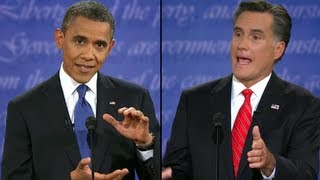
“So, we have to move swiftly, and we have to move wisely.”First presidential debate, 2008 · 2:35
Good decisions are both urgent and careful
Obama rejects the false choice between speed and seriousness. In moments of crisis, he argues that leaders must act quickly, but not blindly. His standard is to respond with urgency while still thinking through consequences, protections, and what comes next.1
That mindset shows up when he describes the country facing war and financial panic at the same time. For him, a defining moment does not excuse sloppiness; it raises the bar for judgment. Pressure is exactly when discipline matters most.1
He also frames major turning points as longer than a single announcement or vote. That means decision making is not just about the first move, but about recognizing that one choice opens a longer sequence of work, oversight, and adjustment.4
He wants decisions grounded in facts, arithmetic, and reality
Obama often approaches policy choices by asking whether the proposal actually works on paper and in the real world. His blunt emphasis on arithmetic shows that for him, a persuasive plan must survive basic scrutiny, not just rhetoric.
That same habit appears in his response to the financial crisis. He does not stop at the immediate fix; he asks what structural failures produced the emergency in the first place, including weak rules and outdated oversight. Decision making, in this view, means solving the urgent problem and examining the system that created it.5
He also insists that public risk should come with public protection. If taxpayers are exposed, then a sound decision should include accountability and a path for them to recover value, not simply absorb losses.6
On security decisions, clarity of purpose matters
Obama describes the core duty of a president as keeping the American people safe. But he pairs that duty with clarity: leaders must be clear to allies and enemies alike about where the United States stands and what it means. For him, ambiguity about goals can itself become a strategic problem.7
His account of the bin Laden raid reflects a decision process that waits for enough intelligence, revisits uncertainty, and then acts decisively. He emphasizes that the lead was not certain, that the intelligence took months to develop, and that he met repeatedly with his team before authorizing action.9
Even after force is used, he draws lines around its meaning. He insists the fight is not against Islam, which shows that he sees careful definition of the target as part of good decision making, not just good messaging.10
He distinguishes tactics from strategy
A recurring Obama theme is that a decision can look effective in the short run and still be wrong at the strategic level. His critique of Iraq is exactly this: military power was not used wisely, and later improvements did not erase the original error.12
This is one of his clearest lessons about judgment. He does not want leaders to confuse damage control with proof that the larger choice was sound. A tactical success may reduce harm without justifying the strategy that created the problem.
That also explains why he praises refocusing attention on the people responsible for 9/11. For him, good decision making means putting resources on the central objective rather than letting side commitments drain attention and capacity.14
The best decisions are constrained by values and responsibility
Obama does not treat decision making as mere calculation. He argues that actions should be bounded by law, restraint, and human dignity, especially in war. Force may sometimes be necessary, but necessity does not make it glorious or unlimited.15
This moral dimension is central to how he thinks about leadership. Peace, citizenship, and national purpose all involve responsibility and sacrifice, which means the right choice is not always the easiest or most popular one.1617
He also links serious decision making to maturity. Setting aside childish things means facing hard facts, shared obligations, and the work required to earn national greatness rather than assuming it comes automatically.1819
Obama on decision making, in his own words
“So, we have to move swiftly, and we have to move wisely.”
“…my first job as commander-in-chief, Bob, is to keep the American people safe…”
Where to watch
 Barack Obama on Financial Crisis: The 2008 Debate on Recovery2008 · 96 min · full transcriptBest single window into how he handles crisis choices: urgent action, wiser design, oversight, and protection for the public.
 Barack Obama on Iraq War Strategy: Mistakes, Surge, and Withdrawal2008 · 93 min · full transcriptShows his distinction between strategy and tactics, and how he judges past decisions by long-term wisdom, not short-term optics.
 Barack Obama on the Bin Laden Raid: Justice Has Been Done2011 · 9 min · full transcriptShows a high-stakes national security decision shaped by intelligence, deliberation, precision, and clear limits.
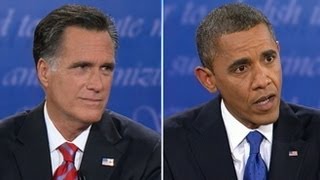 Barack Obama on Foreign Policy and Iran: Final Debate Exchange2012 · 92 min · full transcriptBest for his commander-in-chief framework: safety first, clear signals, alliances, and caution about military overreach.
 Barack Obama on War and Peace: The Nobel Lecture2009 · 37 min · full transcriptExplains the moral rules he thinks should constrain major decisions, especially around war, peace, and legitimacy.
Questions people ask
- How did Barack Obama decide to authorize the bin Laden raid?
- What did Barack Obama mean when he said justice has been done?
- What did Barack Obama say about America's role in the Middle East?
- What did Barack Obama say about Islam and the fight against al Qaeda?
- What did Barack Obama say about the 2008 financial crisis in the first presidential debate?
- What did Barack Obama say about regulation after the financial crisis?
Sources
Every quote above, word for word from the transcripts. Numbers match the text.
“So, we have to move swiftly, and we have to move wisely.”
“…this isn't the beginning of the end of this crisis; this is the end of the beginning.”
“So, the question I think that we've got to ask ourselves is, yes, we've got to solve this problem short term, and we are going to have to intervene—uh, there's no doubt about that—but we're also going to have to look at how is it that we shredded so many regulations? We did not set up a 21st century regulatory framework to deal with these problems, and that in part has to do with an economic philosophy that says that regulation is always bad. Are you going to vote for the plan?”
“…we've got to make sure that taxpayers, when they are putting their money at risk, have the possibility of getting that money back and gains…”
“…my first job as commander-in-chief, Bob, is to keep the American people safe…”
“Then, last August, after years of painstaking work by our intelligence community, I was briefed on a possible lead to bin Laden. It was far from certain, and it took many months to run this thread to ground. I met repeatedly with my national security team as we developed more information about the possibility that we had located bin Laden hiding within a compound deep inside Pakistan. And finally, last week, I determined that we had enough intelligence to take action, and authorized an operation to get Osama bin Laden and bring him to justice. Today, at my direction, the United States launched a targeted operation against that compound in Abbottabad, Pakistan.”
“…the United States is not -- and never will be -- at war with Islam.”
“…we did not use our military wisely in Iraq…”
“We ended the war in Iraq, refocused our attention on those who actually killed us on 9/11…”
“But war itself is never glorious…”
“Peace requires responsibility; peace entails sacrifice.”
“This is the price and the promise of citizenship.”
“The time has come to set aside childish things.”
“Greatness is never a given; it must be earned.”
How this guide was made: drafted with AI from the full transcripts of the recordings cited, then checked: every quotation must match a transcript word for word and be the speaker's own words, and an independent review gates accuracy. Methodology and corrections.