Barack Obama on Failure & Resilience
Obama treats failure and crisis as unavoidable, but sees resilience as disciplined collective action guided by hope, responsibility, and a long view of change.
- Setbacks are real, and change is slow rather than sudden.
- Hope is not wishful thinking; it is work under pressure.
- Resilience is collective, not solitary: progress depends on citizenship, compromise, and shared obligation.
- The right response to crisis is to shape the future instead of fearing it.
- People and nations recover by acting with discipline, values, and faith in one another.
Change is hard, so resilience begins with realism
Obama does not treat failure as a shocking exception. He presents disappointment, conflict, and slow progress as normal parts of democratic life and social change. His point is that resilience starts when you stop expecting quick victories and accept that meaningful improvement takes time.12
That realism is paired with confidence. In moments of anxiety, he argues against retreating into fear and instead urges people to take responsibility for shaping what comes next. Resilience, in this view, is not denial about how bad things are; it is the refusal to let crisis define the horizon of possibility.34
Hope is a practice, not a mood
A central Obama idea is that hope is useful only when it pushes people into action. He rejects passive optimism and describes hope as something you use in emergencies, a force that helps people work, endure, and rebuild. That turns resilience from a feeling into a habit of doing the next necessary thing.56
This is why he speaks so often about effort over fantasy. If the world is broken or unfair, the answer is not to wait for rescue or perfect conditions. The answer is to build a better normal through deliberate action.789
You recover faster when you stop making resilience a solo story
Obama consistently frames endurance as collective. He ties progress to participation, shared duty, and the idea that no one gets through crisis alone. In his language, democracy works only when people act as citizens rather than spectators and accept obligations to one another.101112
That changes how failure should be interpreted. A setback is not always proof that you personally are inadequate; often it is a sign that difficult work requires more hands, more patience, and better cooperation. His repeated stress on togetherness makes resilience less about toughness for its own sake and more about staying connected, useful, and accountable.1315
Resilience is built block by block through steady work
Obama often describes durable achievement as cumulative. Progress is assembled through repeated effort, ordinary contribution, and patient construction rather than dramatic single moments. That makes resilience look less like heroic comeback and more like sustained labor over time.1617
He also links this to maturity. Greatness, for a person or a nation, is earned through sacrifice, discipline, and seriousness about the work in front of you. When you apply that idea to failure, the lesson is simple: what matters is not avoiding hardship but continuing to build after it.41819
Imperfection does not disqualify you from doing great work
Obama's praise of Nelson Mandela reveals an important part of his thinking about resilience: he admires leaders not because they are flawless, but because they keep moving through doubt, error, and difficulty. Human limitation is not a reason to give up on moral ambition. It is the condition under which courage becomes meaningful.21
That same outlook appears in his broader democratic vision. Progress requires compromise, persistence, and the humility to keep working with other imperfect people. Resilience, then, includes the ability to remain constructive without waiting for purity, certainty, or total agreement.222324
At its deepest level, this resilience is moral as well as political. Obama returns to the idea that people are bound together, and that grace, truth, and solidarity can carry a community through grief and injustice. That is how endurance becomes renewal instead of mere survival.2526
Obama on failure & resilience, in his own words
“…it always seems impossible until it is done…”
Where to watch
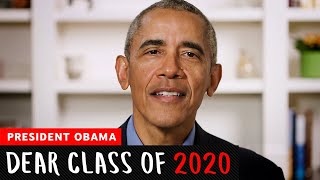 Barack Obama on Democracy and Hope: Dear Class of 20202020 · 15 min · full transcriptBest short statement of Obama's active view of hope: resilience means making things better and creating a better normal.
 Barack Obama on Hope & Democracy: Democratic convention farewell2008 · 49 min · full transcriptShows how he connects setbacks, slow change, and democratic persistence.
 Barack Obama on Inaugural Address: Hope, Unity, and Renewal2009 · 99 min · full transcriptBest for his belief that crises test character and that renewal must be earned through sacrifice and responsibility.
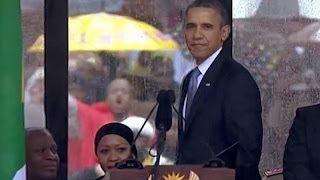 Barack Obama on Nelson Mandela's Legacy: Ubuntu, justice, and courage2013 · 19 min · full transcriptExplains why imperfection, doubt, and disciplined action can still produce historic moral courage.
 Barack Obama on Grace and Racial Justice: Charleston Memorial Remarks2015 · 38 min · full transcriptShows resilience after tragedy through grace, solidarity, and confronting hard truths.
 Barack Obama on Election Victory: Yes We Can2008 · 17 min · full transcriptUseful for his practical, ground-level picture of progress as work built piece by piece.
Questions people ask
- What did Barack Obama say about America's future and getting through the crisis?
- What did Barack Obama say about compromise in democracy?
- What did Barack Obama say about democracy and why it breaks down?
- What did Barack Obama say young people can do to create a new normal?
- What did Barack Obama say about the future and working together?
- What did Barack Obama say gives him hope for America’s future?
Sources
Every quote above, word for word from the transcripts. Numbers match the text.
“…change is never easy and never quick…”
“We live in a time of extraordinary change…”
“We don't fear the future; we shape it.”
“Greatness is never a given; it must be earned.”
“Hope is not a lottery ticket, it's a hammer for us to use in a national emergency.”
“We have to work to make things better.”
“You can make it into the world as it should be and could be.”
“You can create a new normal.”
“Because you don't have to accept what was considered normal before. You don't have to accept the world as it is. You can make it into the world as it should be and could be. You can create a new normal. One that is fairer, and gives everybody opportunity, and treats everyone equally, and builds bridges between people instead of dividing them. Just as America overcame slavery and Civil War, recessions and Depression, Pearl Harbor and 9/11, and all kinds of social upheaval, we can emerge from our current circumstances stronger than before, better than before. But, as has always been true at key moments in history, it's gonna depend on young people like you to go out there and rewrite what is possible.”
“Democracy isn't a spectator sport.”
“This is the price and the promise of citizenship.”
“The belief that our destiny is shared, that this country only works when we accept certain obligations to one another and the future generations; so that the freedom which so many Americans have fought for and died for comes with responsibilities as well as rights. And among those are love and charity and duty and patriotism. That's what makes America great.”
“Yes, we can. Not yes, she can. Not yes, I can. Yes, we.”
“That my liberty depends on you being free, too.”
“Block by block. Brick by brick. Calloused hand by calloused hand.”
“I will never forget who this victory truly belongs to. It belongs to you. It belongs to you. I was never the likeliest candidate for this office. We didn't start with much money or many endorsements. Our campaign was not hatched in the halls of Washington. It began in the backyards of Des Moines, in the living rooms of Concord, in the front porches of Charleston. It was built by working men and women who dug into what little savings they had to give $5, $10, and $20 to the cause. It drew strength from the young people…”
“The time has come to set aside childish things.”
“All this we can do. All this we will do.”
“Mandela taught us the power of action, but he also taught us the power of ideas…”
“Democracy grinds to a halt without a willingness to compromise…”
“And that's what Hillary Clinton understands. She knows that this is a big, diverse country. She has seen it, she's traveled, she's talked to folks, and she understands that most issues are rarely black and white. She understands that even when you're 100% right, getting things done requires compromise. That democracy doesn't work if we constantly demonize each other. She knows that for progress to…”
“The future we want - opportunity and security for our families; a rising standard of living and a sustainable, peaceful planet for our kids - all that is within our reach. But it will only happen if we work together. It will only happen if we can have rational, constructive debates. It will only happen if we fix our politics. A better politics doesn't mean we have to agree on everything.”
“…there is a oneness to humanity…”
“If we can find that grace, anything is possible.”
How this guide was made: drafted with AI from the full transcripts of the recordings cited, then checked: every quotation must match a transcript word for word and be the speaker's own words, and an independent review gates accuracy. Methodology and corrections.