Barack Obama on Leadership in Crisis
Obama treats leadership in crisis as a test of steadiness, moral clarity, shared sacrifice, and practical action that protects people while strengthening democracy.
- Act fast, but with discipline and judgment, not panic.
- Protect people while staying anchored to law, values, and human dignity.
- Tell the truth about the depth of the problem and who is affected.
- Use crisis to rebuild what was already broken, not just restore the old normal.
- Real leadership asks for shared responsibility and proves democracy can still deliver.

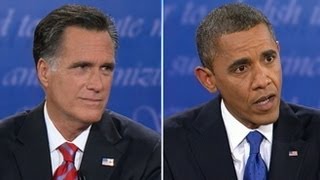
“You know, we are at a defining moment in our history. Our nation is involved in two wars, and we are going through the worst financial crisis since the Great Depression. And although we've heard a lot about Wall Street, those of you on Main Street, I think, have been struggling for a while. And you recognize that this could have an impact on all sectors of the economy, and you're wondering, how's it going to affect me? How's it going to affect my job? How's it going to affect my house? How's it going to affect my retirement savings or my ability to send my children to college? So, we have to move swiftly, and we have to move wisely. And I've put forward a series of proposals that make sure that we protect taxpayers as we engage in this important…”First presidential debate, 2008 · 2:35
Crisis leadership starts with steadiness, not drama
Obama presents crisis as a moment when leaders have to be calm enough to make hard decisions and serious enough to match the scale of events. He describes these moments as defining tests, which require moving quickly without abandoning judgment. In his view, urgency and wisdom have to go together.12
That same idea appears in national security. He frames the core responsibility of leadership as keeping people safe, but he ties that duty to clear thinking, repeated consultation, and decisions made only after the facts are developed as far as possible. Crisis leadership is not impulse; it is disciplined responsibility under pressure.34
A leader must be honest about danger and clear about purpose
Obama does not treat reassurance as pretending everything is fine. He talks plainly about severe conditions, whether the issue is war, terrorism, financial collapse, or democratic strain. He argues that people need leaders who level with them about what is at stake for jobs, homes, savings, security, and civic life.56
But honesty is not enough by itself. He also stresses clarity about what the country is doing and why. In foreign policy, that means being unmistakable to allies and adversaries. In domestic crisis, it means explaining both the immediate emergency and the deeper structural failures that helped create it.78
“You know, we are at a defining moment in our history. Our nation is involved in two wars, and we are going through the worst financial crisis since the Great Depression. And although we've heard a lot about Wall Street, those of you on Main Street, I think, have been struggling for a while. And you recognize that this could have an impact on all sectors of the economy, and you're wondering, how's it going to affect me? How's it going to affect my job? How's it going to affect my house? How's it going to affect my retirement savings or my ability to send my children to college? So, we have to move swiftly, and we have to move wisely. And I've put forward a series of proposals that make sure that we protect taxpayers as we engage in this important…”First presidential debate, 2008 · full transcript →
Power in a crisis must be restrained by values
Obama's view of leadership in crisis is not simply to use power forcefully; it is to use it carefully. He supports decisive action when needed, including military force, but insists that force is never something to romanticize and must be constrained by law, restraint, and respect for human dignity.910
That moral boundary matters in practice. In the bin Laden operation, he emphasizes the targeted nature of the mission and the effort to avoid broader harm. He also insists on distinguishing between a fight against terrorists and a conflict with a religion, showing that effective crisis leadership should narrow the target and protect legitimacy.111213
The same logic appears in his criticism of Iraq. For Obama, leadership fails when power is used without strategic wisdom or when tactics are confused with sound long-term judgment. A crisis can demand strength, but strength without discipline creates larger problems.1415

“But war itself is never glorious…”Nobel Peace Prize lecture, Oslo City Hall, 2009 · full transcript →
Crises expose what was already broken
Obama often argues that emergencies do not just create problems; they reveal them. The pandemic and protests, in his telling, exposed inequality, racism, weak healthcare, misinformation, and political dysfunction that had been building for years. Good leadership therefore does more than manage the emergency in front of it; it addresses the underlying failures the emergency uncovers.1617
He says the same about the financial crash. The immediate problem required intervention, but he also argued that the country had to examine the regulatory and philosophical choices that helped produce the collapse. Crisis leadership, then, means solving the urgent problem while redesigning the conditions that made the problem likely.28
That is why he pushes against simply returning to the old status quo. He sees crisis as a chance to create a fairer and more durable normal, if leaders and citizens are willing to do the work.181920

“Because you don't have to accept what was considered normal before. You don't have to accept the world as it is. You can make it into the world as it should be and could be. You can create a new normal. One that is fairer, and gives everybody opportunity, and treats everyone equally, and builds bridges between people instead of dividing them. Just as America overcame slavery and Civil War, recessions and Depression, Pearl Harbor and 9/11, and all kinds of social upheaval, we can emerge from our current circumstances stronger than before, better than before. But, as has always been true at key moments in history, it's gonna depend on young people like you to go out there and rewrite what is possible.”Dear Class of 2020 commencement speech, virtual, 2020 · full transcript →
Leadership in crisis is collective: democracy, citizenship, and grace
Obama rejects the idea that crisis leadership is just one strong person taking charge. He argues that leaders must call people into a larger sense of citizenship, responsibility, and sacrifice. In his language, freedom includes obligations to one another, and peace and renewal require public effort, not just private hope.212210
That is why he links crisis leadership to democracy's performance. Leaders must show that democratic government can solve real problems for ordinary people, not just generate noise and division. He warns that polarization, shaming, and cynicism make collective action harder at exactly the moment it is most needed.23
He also gives a moral and emotional dimension to this idea in moments of grief. After racial violence, he points to grace, mutual freedom, and the social institutions that hold communities together. In crisis, leadership is not only operational competence; it is also the ability to widen solidarity and keep despair from becoming the final answer.252627
Obama on leadership in crisis, in his own words
“…my first job as commander-in-chief, Bob, is to keep the American people safe…”
“This is the price and the promise of citizenship.”
Where to watch
 Barack Obama on Financial Crisis: The 2008 Debate on Recovery2008 · 96 min · full transcriptBest for seeing Obama's crisis method in economic terms: urgency, transparency, taxpayer protection, and structural reform.
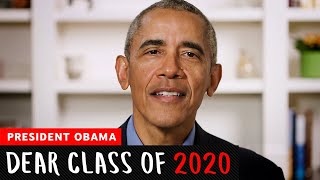 Barack Obama on Democracy and Hope: Dear Class of 20202020 · 15 min · full transcriptShows how he thinks crises expose deeper injustices and create an opening to build a better normal.
 Barack Obama on War and Peace: The Nobel Lecture2009 · 37 min · full transcriptBest for his moral framework: when force is necessary, what limits it, and why responsibility matters in conflict.
 Barack Obama on the Bin Laden Raid: Justice Has Been Done2011 · 9 min · full transcriptShows his model of decisive but tightly framed action in a high-stakes national security moment.
 Barack Obama on Inaugural Address: Hope, Unity, and Renewal2009 · 99 min · full transcriptExplains the civic side of crisis leadership: sacrifice, unity, maturity, and the duties of citizenship.
 Barack Obama on Democracy and Hope: Fight for the Future2020 · 49 min · full transcriptBest for understanding how he connects crisis leadership to democratic trust and problem-solving.
Questions people ask
- How did Barack Obama decide to authorize the bin Laden raid?
- What did Barack Obama mean when he said justice has been done?
- What did Barack Obama say about America's role in the Middle East?
- What did Barack Obama say about the 2008 financial crisis in the first presidential debate?
- What did Barack Obama say young people can do to create a new normal?
- What did Barack Obama say about values and happiness?
Sources
Every quote above, word for word from the transcripts. Numbers match the text.
“You know, we are at a defining moment in our history.”
“So, we have to move swiftly, and we have to move wisely.”
“…my first job as commander-in-chief, Bob, is to keep the American people safe…”
“Then, last August, after years of painstaking work by our intelligence community, I was briefed on a possible lead to bin Laden. It was far from certain, and it took many months to run this thread to ground. I met repeatedly with my national security team as we developed more information about the possibility that we had located bin Laden hiding within a compound deep inside Pakistan. And finally, last week, I determined that we had enough intelligence to take action, and authorized an operation to get Osama bin Laden and bring him to justice. Today, at my direction, the United States launched a targeted operation against that compound in Abbottabad, Pakistan.”
“You know, we are at a defining moment in our history. Our nation is involved in two wars, and we are going through the worst financial crisis since the Great Depression. And although we've heard a lot about Wall Street, those of you on Main Street, I think, have been struggling for a while. And you recognize that this could have an impact on all sectors of the economy, and you're wondering, how's it going to affect me? How's it going to affect my job? How's it going to affect my house? How's it going to affect my retirement savings or my ability to send my children to college? So, we have to move swiftly, and we have to move wisely. And I've put forward a series of proposals that make sure that we protect taxpayers as we engage in this important…”
“That is what this election is about.”
“Here, here's one thing I've learned as Commander-in-Chief: you've got to be clear both to our allies and our enemies about where you stand and what you mean. Now, you just gave a speech a few weeks ago in which you said we should still have troops in Iraq. That is not a reason for making sure that we are taking advantage of the opportunities and meeting the challenges of the Middle East. Now, it is absolutely true that we cannot just meet these challenges militarily. And so what I've done throughout my presidency and will continue to do is, number one, make sure that these countries are supporting our counterterrorism efforts; number two, make sure that they are standing by our interests in Israel's security because it…”
“So, the question I think that we've got to ask ourselves is, yes, we've got to solve this problem short term, and we are going to have to intervene—uh, there's no doubt about that—but we're also going to have to look at how is it that we shredded so many regulations? We did not set up a 21st century regulatory framework to deal with these problems, and that in part has to do with an economic philosophy that says that regulation is always bad. Are you going to vote for the plan?”
“But war itself is never glorious…”
“Peace requires responsibility; peace entails sacrifice.”
“…the United States has conducted an operation that killed Osama bin Laden…”
“…the United States is not -- and never will be -- at war with Islam.”
“As we do, we must also reaffirm that the United States is not -- and never will be -- at war with Islam. I've made clear, just as President Bush did shortly after 9/11, that our war is not against Islam. Bin Laden was not a Muslim leader; he was a mass murderer of Muslims. Indeed, al Qaeda has slaughtered scores of Muslims in many countries, including our own. So his demise should be welcomed by all who believe in peace and human dignity. Over the years, I've repeatedly made clear that we would take action within Pakistan if we knew where bin Laden was. That is what we've done.”
“…we did not use our military wisely in Iraq…”
“…that was a tactic designed to contain the damage of the previous four years of mismanagement of this war…”
“We have to work to make things better.”
“I hope that, instead, you decide to moor yourself in values that last, like responsibility, fairness, generosity, and respect for others. That will make you part of the solution, instead of part of the problem. And if experience is any guide, it actually makes for a happier life. Second, listen to each other. Respect each other. And use all that critical thinking you've developed from your education to help promote the truth. You are the Internet generation and the social media generation. It's not just how you shop or listen to music or watch videos. It's part of your social lives. It's the new town square, where you all come together and meet.”
“You can make it into the world as it should be and could be.”
“You can create a new normal.”
“Because you don't have to accept what was considered normal before. You don't have to accept the world as it is. You can make it into the world as it should be and could be. You can create a new normal. One that is fairer, and gives everybody opportunity, and treats everyone equally, and builds bridges between people instead of dividing them. Just as America overcame slavery and Civil War, recessions and Depression, Pearl Harbor and 9/11, and all kinds of social upheaval, we can emerge from our current circumstances stronger than before, better than before. But, as has always been true at key moments in history, it's gonna depend on young people like you to go out there and rewrite what is possible.”
“We have a broader idea of freedom.”
“This is the price and the promise of citizenship.”
“Our job is to convince people democracy can deliver.”
“That my liberty depends on you being free, too.”
“If we can find that grace, anything is possible.”
“I refuse to accept despair as the final response to the ambiguities of history.”
How this guide was made: drafted with AI from the full transcripts of the recordings cited, then checked: every quotation must match a transcript word for word and be the speaker's own words, and an independent review gates accuracy. Methodology and corrections.