Barack Obama on Economics
Obama sees economics as the work of building broad middle-class opportunity through fair rules, public investment, and shared responsibility rather than trickle-down tax cuts.
- Growth should start with the middle class, not tax cuts for the wealthy.
- Government has to act in crises, but with oversight, accountability, and taxpayer protection.
- Long-term prosperity depends on education, training, innovation, infrastructure, and clean energy.
- Economic policy is also about fairness: wages, family supports, equal opportunity, and a system people do not see as rigged.
- Change in the economy should be met with confidence and adaptation, not fear or nostalgia.
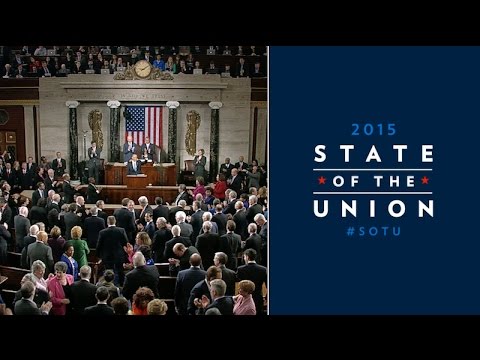
“The shadow of crisis has passed, and the State of the Union is strong.”State of the Union Address, 2015 · 3:32
His core economic idea is middle-class economics
Obama treats the economy as a question of who growth is built for and where it starts. He argues against a top-down approach and instead centers policy on the strength, purchasing power, and security of ordinary families, presenting this as a basic difference in economic philosophy rather than a small policy dispute1.
By 2015, he describes the country as having moved beyond emergency and into the task of expanding opportunity. In that frame, economics means making work pay and making it easier for families to balance jobs and caregiving, not just celebrating aggregate recovery23.
He also ties this economic view to a moral idea of equal citizenship. A strong economy, in his account, depends on opportunity being broad, competition being fair, and freedom being made more real by the supports that let people build stable lives45.
“The shadow of crisis has passed, and the State of the Union is strong.”State of the Union Address, 2015 · full transcript →
In a crisis, government must act fast but also police the system
Obama’s response to economic crisis is activist but not blank-check. In 2008 he presents the financial collapse as a defining national moment affecting jobs, homes, retirement savings, and college plans, so delay is dangerous; but action also has to be disciplined and prudent678.
That means oversight, transparency, and taxpayer protection. If public money is used to stabilize the system, he says the public should have accountability and the possibility of getting its money back, rather than watching Wall Street escape consequences while everyone else bears the risk910.
He also treats the crisis as proof that markets need modern rules. His criticism is not only that mistakes were made, but that an anti-regulatory ideology left the country without a framework suited to a 21st-century financial system1112.
Long-term growth comes from investment, not short-term tax promises
Obama repeatedly argues that lasting prosperity is built by investing in people and productive capacity. He points to education, job training, community colleges, energy, and support for businesses investing domestically as more credible sources of job growth than high-end tax cuts13.
Education sits at the center of this view. He treats skills, college access, and retraining as economic necessities in a knowledge economy, arguing that the country has to raise its game if it wants workers to compete and wages to rise in the future141516.
He makes the same argument about innovation and clean energy. New technology is not just an environmental issue in his framework; it is an industrial and competitive issue, because the countries that lead in new industries will capture the jobs that come with them1718.

“We cannot cede to other nations the technology that will power new jobs and new industries…”Second inaugural address, United States Capitol, 2013 · full transcript →
Fairness is part of economic strength, not a side issue
Obama does not separate efficiency from fairness as sharply as many economic arguments do. He treats childcare, paid leave, equal pay, higher wages, and worker protections as parts of a stronger economy because they widen participation and reduce the fragility of working families319.
He also defends major social programs as supports for freedom rather than obstacles to it. In his broader economic language, security in health care and retirement helps people take risks, care for family members, and live with more independence, which makes opportunity more meaningful4.
This is also why he worries about public trust. When people think the system is rigged for the rich or powerful, democratic legitimacy and economic confidence both erode, so fair rules are not only ethically important but politically and economically stabilizing2021.
He sees economic change as something to shape, not fear
Obama’s economic outlook is future-facing. He acknowledges rapid technological and global change, but argues that the answer is not retreat or nostalgia; it is to adapt with confidence through education, innovation, and shared responsibility161822.
That future orientation also explains his urgency. He argues that waiting on major economic problems carries its own costs, whether the issue is recession, health care, competitiveness, or climate-linked industrial change, and that the country gains by acting before decline hardens into fate2313.
At the broadest level, his economics is tied to citizenship. National prosperity is something Americans build together through work, compromise, and public purpose, not something that arrives automatically if government simply steps aside24252627.

“We live in a time of extraordinary change…”Final State of the Union Address, 2016 · full transcript →
Obama on economics, in his own words
“…we've got to make sure that taxpayers, when they are putting their money at risk, have the possibility of getting that money back and gains…”
“We cannot cede to other nations the technology that will power new jobs and new industries…”
“The shadow of crisis has passed, and the State of the Union is strong.”
Where to watch
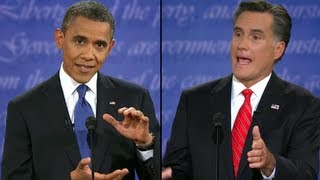 Barack Obama on Jobs and Taxes: The 2012 Debate Case2012 · 93 min · full transcriptBest single debate on his contrast between middle-class economics and tax-cut economics.
 Barack Obama on Financial Crisis: The 2008 Debate on Recovery2008 · 96 min · full transcriptBest for his crisis economics: urgent action, regulation, oversight, and taxpayer protection.
 Barack Obama on State of the Union: A stronger future together2015 · 62 min · full transcriptBest overview of middle-class economics after recovery, with wages, family supports, education, and infrastructure.
 Barack Obama on the Future of America: Final State of the Union2016 · 61 min · full transcriptBest for how he thinks about technology, change, worker security, and the future economy.
 Barack Obama on Equality and Climate: Second Inaugural Address2013 · 224 min · full transcriptBest for the moral foundation of his economics: equality, opportunity, and clean-energy growth.
Questions people ask
- What did Barack Obama say about America's future and getting through the crisis?
- What did Barack Obama say about democracy and why it breaks down?
- What did Barack Obama say about education and getting skills for the future?
- What did Barack Obama say about regulation after the financial crisis?
- What did Barack Obama say about the future and working together?
- What did Barack Obama say about the 2008 financial crisis in the first presidential debate?
Sources
Every quote above, word for word from the transcripts. Numbers match the text.
“We don't turn back. We leave no one behind.”
“The shadow of crisis has passed, and the State of the Union is strong.”
“It's the right thing to do.”
“We hold these truths to be self-evident, that all men are created equal…”
“Those who say that we're in a time when there are no heroes, they just don't know where to look. Our challenges are great, but our will is greater. There is nothing wrong with America that cannot be cured by what is right with America. The United States will not ignore your oppression or excuse your oppressors. All are equal, all are free, and all deserve a chance to pursue their full measure of happiness.”
“You know, we are at a defining moment in our history.”
“You know, we are at a defining moment in our history. Our nation is involved in two wars, and we are going through the worst financial crisis since the Great Depression. And although we've heard a lot about Wall Street, those of you on Main Street, I think, have been struggling for a while. And you recognize that this could have an impact on all sectors of the economy, and you're wondering, how's it going to affect me? How's it going to affect my job? How's it going to affect my house? How's it going to affect my retirement savings or my ability to send my children to college? So, we have to move swiftly, and we have to move wisely. And I've put forward a series of proposals that make sure that we protect taxpayers as we engage in this important…”
“So, we have to move swiftly, and we have to move wisely.”
“…we've got to make sure that taxpayers, when they are putting their money at risk, have the possibility of getting that money back and gains…”
“It's not about helping banks, it's about helping people.”
“So, the question I think that we've got to ask ourselves is, yes, we've got to solve this problem short term, and we are going to have to intervene—uh, there's no doubt about that—but we're also going to have to look at how is it that we shredded so many regulations? We did not set up a 21st century regulatory framework to deal with these problems, and that in part has to do with an economic philosophy that says that regulation is always bad. Are you going to vote for the plan?”
“…this isn't the beginning of the end of this crisis; this is the end of the beginning.”
“The cost of inaction will be far greater.”
“It's not a nice-to-have -- it's a must-have.”
“America thrived in the 20th century because we made high school free, sent a generation of GIs to college, trained the best workforce in the world. We were ahead of the curve. But other countries caught on. And in a 21st century economy that rewards knowledge like never before, we need to up our game. We need to do more. By the end of this decade, two in three job openings will require some higher education -- two in three. And yet, we still live in a country where too many bright, striving Americans are priced out of the education they need. It's not fair to them, and it's sure not smart for our future.”
“We live in a time of extraordinary change…”
“We cannot cede to other nations the technology that will power new jobs and new industries…”
“I want to focus on our future.”
“I still believe that we are one people.”
“Democracy grinds to a halt without a willingness to compromise; or when even basic facts are contested, and we listen only to those who agree with us. Our public life withers when only the most extreme voices get attention. Most of all, democracy breaks down when the average person feels their voice doesn't matter; that the system is rigged in favor of the rich or the powerful or some narrow interest. Too many Americans feel that way right now. It's one of the few regrets of my presidency - that the rancor and suspicion between the parties has gotten worse instead of better.”
“The future we want - opportunity and security for our families; a rising standard of living and a sustainable, peaceful planet for our kids - all that is within our reach. But it will only happen if we work together. It will only happen if we can have rational, constructive debates. It will only happen if we fix our politics. A better politics doesn't mean we have to agree on everything.”
“That's American strength. That's American leadership.”
“It must not wait, and it will not wait another year.”
“Greatness is never a given; it must be earned.”
“This is the price and the promise of citizenship.”
“All this we can do. All this we will do.”
“Democracy grinds to a halt without a willingness to compromise…”
How this guide was made: drafted with AI from the full transcripts of the recordings cited, then checked: every quotation must match a transcript word for word and be the speaker's own words, and an independent review gates accuracy. Methodology and corrections.


