Barack Obama on Foreign Policy
Obama sees foreign policy as disciplined American leadership: protect the country, use force when necessary, but rely on diplomacy, alliances, and restraint to build a safer peace.
- His first duty is protecting Americans, including through targeted counterterrorism action.
- Military force is sometimes necessary, but it must be limited, lawful, and used wisely.
- America leads best by combining power with diplomacy and coalition-building.
- He rejects treating Islam as the enemy and argues for respect across cultures.
- He wants a foreign policy that avoids fear, rash decisions, and unnecessary wars.

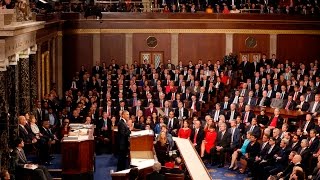
“…the United States has conducted an operation that killed Osama bin Laden…”Address from the White House on bin Laden's death, 2011 · 0:00
Foreign policy starts with keeping Americans safe
Obama treats national security as the president’s most basic responsibility. He says the commander in chief’s first job is to protect the American people, and he presents counterterrorism as a central test of that duty.12
That is why he highlights the operation against Osama bin Laden as a model of focused action: long intelligence work, a specific target, and a mission designed to achieve a clear objective rather than launch a broader war. He also frames that action as justice for the victims of 9/11 and as part of a continuing need for vigilance.345
Even when he speaks in forceful terms, his emphasis is on precision and purpose. The goal is not to display power for its own sake, but to remove real threats and defend citizens and allies.56
“…the United States has conducted an operation that killed Osama bin Laden…”Address from the White House on bin Laden's death, 2011 · full transcript →
Force is sometimes necessary, but it must be disciplined
Obama does not argue that peace comes from refusing to use force. He argues that war can be necessary, especially against those who threaten Americans, but that it is always costly and morally serious.75
That is why restraint is so important in his worldview. He warns against reacting to headlines, making rash decisions, or treating military intervention as the first answer to every challenge. In his view, that path leads to unnecessary conflicts and weakens broader strategy.8
His criticism of Iraq shows the same principle. He says the United States did not use its military wisely there, and he distinguishes tactical success from sound strategy. For him, the core question is not whether America can use force, but whether it is using force in the right place, for the right ends, and with a realistic plan.91011
American leadership works best through alliances and diplomacy
Obama’s foreign policy is built around the idea that the United States is strongest when it does not act alone. He repeatedly argues for a smarter kind of leadership that combines military strength with diplomacy and uses coalitions to increase American leverage.8
This is not, for him, a sign of weakness. It is how durable results are achieved in a complicated world. He says alliances and relationships matter, and he points to rebuilding and strengthening them as part of refocusing U.S. strategy after years of drift.1213
His approach to major conflicts follows the same logic. On questions like Iran and regional instability, he stresses clarity with allies and enemies alike, pressure where needed, and coordinated international action rather than impulsive escalation.146
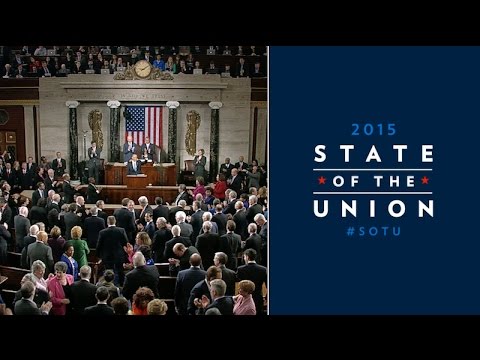
“When we make rash decisions, reacting to the headlines instead of using our heads; when the first response to a challenge is to send in our military -- then we risk getting drawn into unnecessary conflicts, and neglect the broader strategy we need for a safer, more prosperous world. That's what our enemies want us to do. I believe in a smarter kind of American leadership. We lead best when we combine military power with strong diplomacy; when we leverage our power with coalition building; when we don't let our fears blind us to the opportunities that this new century presents. That's exactly what we're doing right now. And around the globe, it is making a difference.”State of the Union Address, 2015 · full transcript →
America must fight terrorism without turning civilizational conflict into policy
A defining line in Obama’s foreign policy is that the United States is fighting violent extremists, not Islam. He insists that America is not at war with Islam and argues that collapsing that distinction would be both morally wrong and strategically self-defeating.1516
That belief shapes his broader outreach to the Muslim world. He calls for ending cycles of suspicion and discord and replacing them with mutual interest and mutual respect. The idea is that security improves when the United States isolates terrorists instead of validating their claim that America is at war with a religion.1718
This also explains why he links foreign policy to human dignity. He wants the United States to confront real threats while still making clear that its quarrel is with murder and extremism, not with whole peoples or faiths.1619
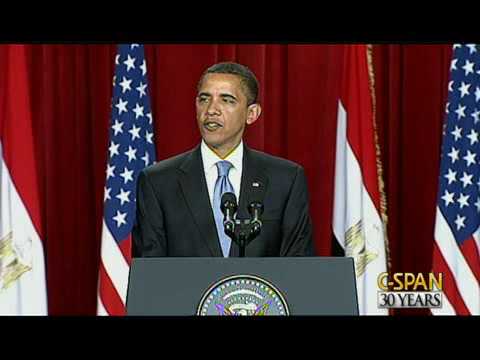
“This cycle of suspicion and discord must end.”Cairo speech, 2009 · full transcript →
Lasting peace requires more than battlefield success
Obama’s view of peace is broader than simply ending a war or winning a strike. He argues that peace requires responsibility and sacrifice, and that a stable world depends on political freedom, human rights, opportunity, and cooperation.2019
That broader vision is why he resists fear-based politics. In a time of rapid change, he argues for confidence, compromise, and constructive debate rather than retreat or overreaction. He sees that attitude as part of American strength and leadership in the world.212223
So the practical lesson of his foreign policy is balance: be relentless against genuine threats, but do not let fear drive strategy. Lead with power, but also with patience, legitimacy, and a sense of the future you are trying to build.5813

“That's American strength. That's American leadership.”Final State of the Union Address, 2016 · full transcript →
Obama on foreign policy, in his own words
“…the United States is not -- and never will be -- at war with Islam.”
“…we did not use our military wisely in Iraq…”
“This cycle of suspicion and discord must end.”
“Our actions matter and can bend history in the direction of justice.”
Where to watch
 Barack Obama on War and Peace: The Nobel Lecture2009 · 37 min · full transcriptBest single statement of his theory of force, restraint, law, and what a just peace requires.
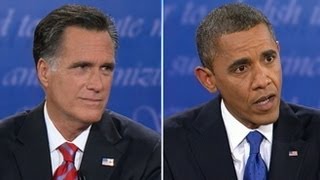 Barack Obama on Foreign Policy and Iran: Final Debate Exchange2012 · 92 min · full transcriptShows how he applies that theory to real disputes like Iran, Syria, Libya, alliances, and presidential decision-making.
 Barack Obama on Relations With the Muslim World: A new beginning2009 · 59 min · full transcriptExplains his effort to reset America’s relationship with the Muslim world and reject a clash-of-civilizations frame.
 Barack Obama on the Bin Laden Raid: Justice Has Been Done2011 · 9 min · full transcriptShows his approach to targeted counterterrorism: patient intelligence, limited force, and clear objectives.
 Barack Obama on Iraq War Strategy: Mistakes, Surge, and Withdrawal2008 · 93 min · full transcriptBest for understanding how Iraq shaped his belief that military power must serve strategy, not substitute for it.
Questions people ask
- How did Barack Obama decide to authorize the bin Laden raid?
- How did Barack Obama say America should lead in the world?
- What did Barack Obama mean when he said justice has been done?
- What did Barack Obama say about America's role in the Middle East?
- What did Barack Obama say about Islam and the fight against al Qaeda?
- What did Barack Obama say about alliances in foreign policy?
Sources
Every quote above, word for word from the transcripts. Numbers match the text.
“…my first job as commander-in-chief, Bob, is to keep the American people safe…”
“We must -- and we will -- remain vigilant at home and abroad.”
“…the United States has conducted an operation that killed Osama bin Laden…”
“Then, last August, after years of painstaking work by our intelligence community, I was briefed on a possible lead to bin Laden. It was far from certain, and it took many months to run this thread to ground. I met repeatedly with my national security team as we developed more information about the possibility that we had located bin Laden hiding within a compound deep inside Pakistan. And finally, last week, I determined that we had enough intelligence to take action, and authorized an operation to get Osama bin Laden and bring him to justice. Today, at my direction, the United States launched a targeted operation against that compound in Abbottabad, Pakistan.”
“These efforts weigh on me every time I, as Commander-in-Chief, have to sign a letter to a family that has lost a loved one, or look into the eyes of a service member who's been gravely wounded. So Americans understand the costs of war. Yet as a country, we will never tolerate our security being threatened, nor stand idly by when our people have been killed. We will be relentless in defense of our citizens and our friends and allies. We will be true to the values that make us who we are. And on nights like this one, we can say to those families who have lost loved ones to al Qaeda's terror: Justice has been done. Tonight, we give thanks to the countless intelligence and counterterrorism professionals who've worked tirelessly to achieve this outcome.”
“Here, here's one thing I've learned as Commander-in-Chief: you've got to be clear both to our allies and our enemies about where you stand and what you mean. Now, you just gave a speech a few weeks ago in which you said we should still have troops in Iraq. That is not a reason for making sure that we are taking advantage of the opportunities and meeting the challenges of the Middle East. Now, it is absolutely true that we cannot just meet these challenges militarily. And so what I've done throughout my presidency and will continue to do is, number one, make sure that these countries are supporting our counterterrorism efforts; number two, make sure that they are standing by our interests in Israel's security because it…”
“But war itself is never glorious…”
“When we make rash decisions, reacting to the headlines instead of using our heads; when the first response to a challenge is to send in our military -- then we risk getting drawn into unnecessary conflicts, and neglect the broader strategy we need for a safer, more prosperous world. That's what our enemies want us to do. I believe in a smarter kind of American leadership. We lead best when we combine military power with strong diplomacy; when we leverage our power with coalition building; when we don't let our fears blind us to the opportunities that this new century presents. That's exactly what we're doing right now. And around the globe, it is making a difference.”
“…we did not use our military wisely in Iraq…”
“…that was a tactic designed to contain the damage of the previous four years of mismanagement of this war…”
“We ended the war in Iraq, refocused our attention on those who actually killed us on 9/11…”
“We were able to refocus our attention on not only the terrorist threat but also beginning a transition process in Afghanistan. It also allowed us to refocus on alliances and relationships that had been neglected for a decade. And, Governor Romney, our alliances have never been stronger—in Asia, in Europe, in Africa, with Israel, where we have unprecedented military and intelligence…”
“That's American strength. That's American leadership.”
“…as long as I'm President of the United States, Iran will not get a nuclear weapon…”
“…the United States is not -- and never will be -- at war with Islam.”
“As we do, we must also reaffirm that the United States is not -- and never will be -- at war with Islam. I've made clear, just as President Bush did shortly after 9/11, that our war is not against Islam. Bin Laden was not a Muslim leader; he was a mass murderer of Muslims. Indeed, al Qaeda has slaughtered scores of Muslims in many countries, including our own. So his demise should be welcomed by all who believe in peace and human dignity. Over the years, I've repeatedly made clear that we would take action within Pakistan if we knew where bin Laden was. That is what we've done.”
“This cycle of suspicion and discord must end.”
“We have the power to make the world we seek, but only if we have the courage to make a new beginning.”
“Our actions matter and can bend history in the direction of justice.”
“Peace requires responsibility; peace entails sacrifice.”
“We live in a time of extraordinary change…”
“Democracy grinds to a halt without a willingness to compromise…”
“The future we want - opportunity and security for our families; a rising standard of living and a sustainable, peaceful planet for our kids - all that is within our reach. But it will only happen if we work together. It will only happen if we can have rational, constructive debates. It will only happen if we fix our politics. A better politics doesn't mean we have to agree on everything.”
How this guide was made: drafted with AI from the full transcripts of the recordings cited, then checked: every quotation must match a transcript word for word and be the speaker's own words, and an independent review gates accuracy. Methodology and corrections.