Barack Obama on Unity & Polarization
Obama argues that unity is not sameness but a democratic habit of shared responsibility, honest disagreement, and refusing the cynicism, resentment, and misinformation that turn citizens against one another.
- America is one country with shared obligations, not rival tribes locked into red-versus-blue identities.
- Polarization grows when people demonize each other, reward grievance, and let cynicism replace participation and compromise.
- Unity does not erase conflict; it means working through disagreement inside democracy rather than treating opponents as enemies.
- Real unity requires confronting hard truths about race, inequality, and history instead of pretending they do not matter.
- Citizens can push back by listening, showing up, promoting truth, and building a fairer common life together.
Polarization deepens when politics becomes cynicism, demonization, and performance
Obama warns that polarization is not just a disagreement over policy. It becomes corrosive when citizens assume the worst about one another, when leaders profit from outrage, and when public argument turns into scolding, shaming, and mutual contempt. In that environment, regular people tune out, and democratic energy drains away.
He also links polarization to a political and media culture that rewards spectacle over substance. When gossip, scandals, and manufactured controversies dominate attention, citizens are pulled away from the hard work of solving problems together.
For Obama, this style of politics is especially dangerous because it trains people to think opponents are enemies rather than fellow citizens. His answer is not passivity, but a refusal to dehumanize the other side.9
Democracy can hold disagreement without falling apart
Obama does not treat unity as the absence of conflict. He sees democracy as noisy, messy, and contentious, and he argues that disagreement is part of liberty rather than proof that the system has failed.
What matters is whether disagreement still happens inside a framework of participation, compromise, and shared rules. He says democratic life depends on citizens acting rather than spectating, and on accepting that change is slow and incomplete.1112
This is why he resists both easy optimism and despair. He asks people to believe that the future can be shaped through common effort, while acknowledging that progress demands patience and persistence.131415
Real unity requires telling the truth about race and history
Obama’s view of unity is not colorblind avoidance. He argues that some divisions persist because the country still lives with the effects of slavery, segregation, and discrimination, and that these realities shape schools, wealth, housing, and opportunity in the present.
He also insists that racial conflict is sustained by more than one emotion at a time: Black anger can be real, white resentment can be real, and both can be manipulated in ways that block solidarity and reform. Unity therefore requires moral clarity without caricature.
At his strongest, he frames the country as permanently unfinished. The union is improvable, but only if Americans see one another’s children as their own and accept that freedom is bound up with the freedom of others.171819
The practical answer is participation, truth, and mutual respect
Obama’s response to polarization is highly practical. He argues that democracy must deliver for ordinary people, but that it can only do so if citizens and leaders put in the work of organizing, listening, and showing up beyond their comfort zones. Trust is built through presence and sustained engagement, not slogans alone.20
He also gives a civic ethic for daily life: anchor yourself in responsibility, fairness, generosity, and respect; listen to others; and use critical thinking to promote truth. That matters especially in a digital environment where falsehood travels fast and social platforms shape public life.2122
His broader hope is that people, especially the young, can build a fairer normal that creates opportunity, treats people equally, and builds bridges instead of widening divisions. Unity, in this sense, is something citizens make.232425
Obama on unity & polarization, in his own words
“…we are not enemies, but friends.”
Where to watch
 Barack Obama on Race and Unity: The Road to a More Perfect Union2008 · 38 min · full transcriptHis clearest explanation of how unity must include honest reckoning with race, resentment, and the country’s unfinished promise.
 Barack Obama on Politics of Hope: Audacity in Boston2004 · 22 min · full transcriptThe defining statement of his anti-tribal view that America is one nation, not two hostile camps.
 Barack Obama on Media and Democracy: Lessons from the 2016 Election2016 · 61 min · full transcriptBest for understanding how media incentives, weak local trust, and a distorted information environment worsen polarization.
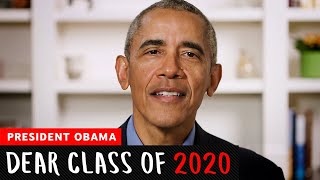 Barack Obama on Democracy and Hope: Dear Class of 20202020 · 15 min · full transcriptA concise guide to what ordinary citizens can do now: listen, promote truth, and build bridges.
 Barack Obama on Hope & Democracy: Democratic convention farewell2008 · 49 min · full transcriptShows how he connects unity to participation, compromise, and the belief that democracy requires action from everyone.
 Barack Obama on Democracy and Hope: Fight for the Future2020 · 49 min · full transcriptA later, sharper case that democracy must prove it can still deliver and that mutual respect has to return to politics.
Questions people ask
- What did Barack Obama say about compromise in democracy?
- What did Barack Obama say about cynicism and division in America?
- What did Barack Obama say about polarization and how to persuade people in politics?
- What did Barack Obama say young people can do to create a new normal?
- What did Barack Obama say about values and happiness?
- What did Barack Obama say about America and unity after bin Laden was killed?
Sources
Every quote above, word for word from the transcripts. Numbers match the text.
“There is not a liberal America and a conservative America. There is the United States of America.”
“I am my brother's keeper, I am my sister's keeper.”
“Block by block. Brick by brick. Calloused hand by calloused hand.”
“I will never forget who this victory truly belongs to. It belongs to you. It belongs to you. I was never the likeliest candidate for this office. We didn't start with much money or many endorsements. Our campaign was not hatched in the halls of Washington. It began in the backyards of Des Moines, in the living rooms of Concord, in the front porches of Charleston. It was built by working men and women who dug into what little savings they had to give $5, $10, and $20 to the cause. It drew strength from the young people…”
“Yes, we can. Not yes, she can. Not yes, I can. Yes, we.”
“…we are not enemies, but friends.”
“Democracy isn't a spectator sport.”
“…change is never easy and never quick…”
“We don't fear the future; we shape it.”
“We have more work to do.”
“…the best is yet to come…”
“The children of America are not those kids. They are our kids.”
“This union may never be perfect, but generation after generation has shown that it can always be perfected.”
“That my liberty depends on you being free, too.”
“Our job is to convince people democracy can deliver.”
“I hope that, instead, you decide to moor yourself in values that last, like responsibility, fairness, generosity, and respect for others. That will make you part of the solution, instead of part of the problem. And if experience is any guide, it actually makes for a happier life. Second, listen to each other. Respect each other. And use all that critical thinking you've developed from your education to help promote the truth. You are the Internet generation and the social media generation. It's not just how you shop or listen to music or watch videos. It's part of your social lives. It's the new town square, where you all come together and meet.”
“You are the Internet generation and the social media generation.”
“You can create a new normal.”
“Because you don't have to accept what was considered normal before. You don't have to accept the world as it is. You can make it into the world as it should be and could be. You can create a new normal. One that is fairer, and gives everybody opportunity, and treats everyone equally, and builds bridges between people instead of dividing them. Just as America overcame slavery and Civil War, recessions and Depression, Pearl Harbor and 9/11, and all kinds of social upheaval, we can emerge from our current circumstances stronger than before, better than before. But, as has always been true at key moments in history, it's gonna depend on young people like you to go out there and rewrite what is possible.”
“We have to work to make things better.”
How this guide was made: drafted with AI from the full transcripts of the recordings cited, then checked: every quotation must match a transcript word for word and be the speaker's own words, and an independent review gates accuracy. Methodology and corrections.


