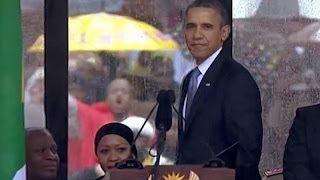
Barack Obama on American Identity
Obama sees American identity as a shared creed of equality, freedom, mutual responsibility, and democratic self-correction that people of every background must keep renewing together.
- American identity is based on a creed, not blood, race, or tribe.
- The country is always unfinished; each generation must widen freedom and equality.
- Citizenship means shared obligations, not just individual rights.
- Unity does not erase disagreement; democracy requires compromise and participation.
- America should face change with hope and confidence, not fear or retreat.

“There is not a liberal America and a conservative America. There is the United States of America.”Democratic National Convention keynote address, Boston, 2004 · 14:52
America is defined by an unfinished promise
Obama does not describe the nation as already perfect. He treats American identity as aspirational: the country is most itself when it tries to close the gap between its ideals and its realities. That is why he emphasizes that the union can be improved across generations rather than completed once and for all.34
Race is central to this argument. He insists that the history of slavery and segregation still shapes the present, so patriotism requires honesty about injustice rather than denial. Facing the past is part of national maturity because the country cannot renew its identity by pretending old injuries have disappeared.6
At the same time, he resists fatalism. America can change, he argues, precisely because self-correction is built into the national story. The identity he defends is not innocence, but the capacity to reform.73
Citizenship means responsibility to one another
For Obama, American identity is not just a set of rights individuals claim for themselves. It also includes duties citizens owe one another and the next generation. He ties freedom to responsibility, sacrifice, charity, and public purpose.89
This is why he often speaks of mutual care as a national principle. The country works when people see other people’s children, struggles, and futures as tied to their own. In that sense, solidarity is not a soft ideal but part of what makes the republic function.1011
He also links this ethic to work and institution-building. Change is made through ordinary effort, collective action, and persistence, not just rhetoric. American identity becomes real when people build together across differences.1213
Unity does not require uniformity
Obama’s idea of unity is often misunderstood as asking everyone to think the same way. His actual view is more democratic than that. He sees disagreement as normal in a free society, but believes citizens must still treat one another as political partners rather than enemies.1415
That is why compromise matters so much in his account of American identity. A functioning democracy depends on the willingness to argue honestly, accept facts, and keep institutions working even amid deep differences. When politics turns into pure contempt or permanent suspicion, public life begins to decay.141617
So unity, for Obama, is less about emotional harmony than about shared rules and shared fate. Americans can debate fiercely while still believing the republic belongs to all of them.29
Hope is a civic discipline, not a mood
Obama treats hope as a defining American habit of mind. But he does not mean optimism without effort. Hope, in his speeches, is the decision to act despite difficulty, trusting that citizens can shape events together.1819
This matters because he thinks fear and nostalgia are temptations in moments of rapid change. His answer is not retreat, but confidence in democratic action, education, innovation, and the capacity of people to set a better course.202122
That forward-looking attitude is one reason he connects American identity to renewal. The country is strongest when it believes progress is still possible and when citizens behave as if their participation matters.231324
American identity includes pluralism at home and respect abroad
Obama’s view of the nation is pluralist: different faiths, backgrounds, and histories can belong within one political community. Because American identity is civic rather than ethnic, it can be expansive without becoming rootless.12
He extends that logic to America’s role in the world. The same nation that believes in human dignity at home should seek relationships grounded in mutual respect rather than suspicion, and should see humanity as fundamentally connected.2526
This does not erase conflict or hard choices. It means that American identity, at its best, combines confidence in democratic values with humility about how to engage others.2628
Obama on american identity, in his own words
“There is not a liberal America and a conservative America. There is the United States of America.”
“We hold these truths to be self-evident, that all men are created equal…”
Where to watch
 Barack Obama on Race and Unity: The Road to a More Perfect Union2008 · 38 min · full transcriptBest single speech on how race, history, and the unfinished Constitution shape American identity.
 Barack Obama on Equality and Climate: Second Inaugural Address2013 · 224 min · full transcriptMost direct statement that America is bound by a creed of equality rather than race or origin.
 Barack Obama on Politics of Hope: Audacity in Boston2004 · 22 min · full transcriptIntroduces Obama’s core idea that the country is one nation joined by shared values and obligations.
 Barack Obama on Inaugural Address: Hope, Unity, and Renewal2009 · 99 min · full transcriptShows how he ties American identity to citizenship, sacrifice, and renewal in a moment of crisis.
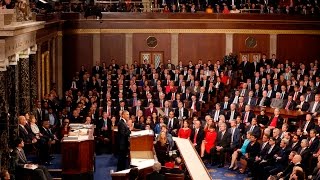 Barack Obama on the Future of America: Final State of the Union2016 · 61 min · full transcriptExplains how democratic compromise, confidence, and reform fit his mature view of the American future.
 Barack Obama on Hope & Democracy: The Best Is Yet to Come2008 · 30 min · full transcriptCaptures his belief that democracy is messy but meaningful because citizens share a common destiny.
Questions people ask
- What did Barack Obama say about democracy and why it breaks down?
- What did Barack Obama say about equality in his second inaugural address?
- What did Barack Obama say about who his election victory belonged to?
- What did Barack Obama say makes America great?
- What did Barack Obama say about the future and working together?
- What did Barack Obama say gives him hope for America’s future?
Sources
Every quote above, word for word from the transcripts. Numbers match the text.
“We hold these truths to be self-evident, that all men are created equal…”
“There is not a liberal America and a conservative America. There is the United States of America.”
“This union may never be perfect, but generation after generation has shown that it can always be perfected.”
“We have more work to do.”
“We have a choice in this country.”
“What we know, what we have seen is that America can change.”
“This is the price and the promise of citizenship.”
“The belief that our destiny is shared, that this country only works when we accept certain obligations to one another and the future generations; so that the freedom which so many Americans have fought for and died for comes with responsibilities as well as rights. And among those are love and charity and duty and patriotism. That's what makes America great.”
“The children of America are not those kids. They are our kids.”
“I am my brother's keeper, I am my sister's keeper.”
“Block by block. Brick by brick. Calloused hand by calloused hand.”
“That's why we do this. That's what politics can be.”
“Democracy grinds to a halt without a willingness to compromise…”
“…we are not enemies, but friends.”
“The future we want - opportunity and security for our families; a rising standard of living and a sustainable, peaceful planet for our kids - all that is within our reach. But it will only happen if we work together. It will only happen if we can have rational, constructive debates. It will only happen if we fix our politics. A better politics doesn't mean we have to agree on everything.”
“Democracy grinds to a halt without a willingness to compromise; or when even basic facts are contested, and we listen only to those who agree with us. Our public life withers when only the most extreme voices get attention. Most of all, democracy breaks down when the average person feels their voice doesn't matter; that the system is rigged in favor of the rich or the powerful or some narrow interest. Too many Americans feel that way right now. It's one of the few regrets of my presidency - that the rancor and suspicion between the parties has gotten worse instead of better.”
“…the best is yet to come…”
“I believe in change, because I believe in you.”
“We live in a time of extraordinary change…”
“I want to focus on our future.”
“You and I, as citizens, have the power to set this country's course…”
“All this we can do. All this we will do.”
“That's the America I know. That's the country we love. Clear-eyed. Big-hearted. Optimistic that unarmed truth and unconditional love will have the final word. That's what makes me so hopeful about our future. I believe in change, because I believe in you. The American people. And that's why I stand here confident that the State of our Union is strong. Thank you, God bless you, and God bless the United States of America. (applause)”
“This cycle of suspicion and discord must end.”
“We have the power to make the world we seek, but only if we have the courage to make a new beginning.”
“Mandela taught us the power of action, but he also taught us the power of ideas…”
How this guide was made: drafted with AI from the full transcripts of the recordings cited, then checked: every quotation must match a transcript word for word and be the speaker's own words, and an independent review gates accuracy. Methodology and corrections.