Barack Obama on Leadership
Obama treats leadership as disciplined, shared work: face reality, act responsibly, persuade across differences, and keep people focused on a larger common purpose.
- Leadership starts with responsibility, not ego or easy applause.
- Good leaders stay calm in crisis and act both quickly and wisely.
- Leadership is collective: democracy works when citizens participate and leaders build a shared “we.”
- Real leadership means solving problems without losing moral restraint or human dignity.
- Progress is slow, but leaders keep faith, reject cynicism, and shape the future.

“That's why we do this. That's what politics can be.”Victory speech at Grant Park, Chicago, 2008 · 8:13
Leadership is service to a shared purpose
Obama returns again and again to the idea that leadership is not personal performance. It is a form of citizenship aimed at a common goal, where people accept obligations to one another and to the future rather than treating politics as a stage for individual glory.123
That is why he frames effective leadership in collective terms. The central test is whether a leader can turn private ambition into a broader sense of shared destiny and move people from “I” to “we.”45
“That's why we do this. That's what politics can be.”Victory speech at Grant Park, Chicago, 2008 · full transcript →
In a crisis, leadership means judgment under pressure
Obama’s model of leadership is calm and deliberate when stakes are high. In moments of danger or economic emergency, he emphasizes the need to act with urgency without becoming reckless, pairing speed with judgment and decisions with accountability.678
He presents the bin Laden operation as an example of this style: patient intelligence work, repeated consultation, and action only when the case was strong enough. That combination of vigilance, restraint, and decisiveness is central to how he thinks a leader should behave under pressure.910

“Then, last August, after years of painstaking work by our intelligence community, I was briefed on a possible lead to bin Laden. It was far from certain, and it took many months to run this thread to ground. I met repeatedly with my national security team as we developed more information about the possibility that we had located bin Laden hiding within a compound deep inside Pakistan. And finally, last week, I determined that we had enough intelligence to take action, and authorized an operation to get Osama bin Laden and bring him to justice. Today, at my direction, the United States launched a targeted operation against that compound in Abbottabad, Pakistan.”Address from the White House on bin Laden's death, 2011 · full transcript →
Leaders persuade, compromise, and make democracy work
Obama does not treat leadership as domination. He argues that democratic leadership requires participation from citizens and compromise from leaders, because durable progress comes from persuasion rather than from scorning opponents or waiting for perfect agreement.111213
This is also why he warns against polarization and spectacle. A leader should lower the temperature, practice mutual respect, and convince people that democratic institutions can actually deliver practical results in their lives.1415
Strength without restraint is not real leadership
Obama’s view of leadership includes toughness, but not impulsiveness. He argues that military power and national strength matter, yet they must be guided by broader strategy, coalition-building, law, and an understanding of consequences.1617
That is why he rejects both naivete and swagger. Leaders may sometimes need to use force, but they should never romanticize war, and they must keep human dignity and long-term peace in view.181920
Even in the aftermath of violence, he insists that leaders draw moral boundaries carefully. His refusal to frame conflict as a war against a faith shows that, for him, leadership protects security without surrendering fairness or clarity about who the real enemy is.2122

“Peace requires responsibility; peace entails sacrifice.”Nobel Peace Prize lecture, Oslo City Hall, 2009 · full transcript →
Leadership asks people to grow up and do hard things
Obama links leadership to maturity. He argues that greatness is earned, not assumed, and that a serious nation must put aside childish habits in order to meet difficult challenges through work, sacrifice, and responsibility.2324
This applies to domestic policy as much as foreign policy. Whether the issue is economic recovery, education, or long-term opportunity, he praises leaders who do what is necessary and right, not merely what is easy or immediately popular.252627
The practical lesson is that leadership means telling the truth about effort. Change takes time, progress is incomplete, and there are no shortcuts that remove the need for discipline and persistence.2829

“Greatness is never a given; it must be earned.”First inaugural address, U.S. Capitol, 2009 · full transcript →
Hope is a discipline, not a mood
Obama’s leadership style is often described as hopeful, but his idea of hope is demanding. It is not denial about danger or difficulty; it is the decision to keep acting because human choices can still bend events toward justice and improvement.3031
That is why he resists cynicism. A leader should acknowledge flaws, setbacks, and division, but still call people to believe that the future can be shaped by steady effort and common action.323334
In practice, this makes leadership future-oriented. The point is not simply to survive the present crisis, but to build conditions in which ordinary people can trust that democracy, opportunity, and freedom will keep expanding.1413

“We don't fear the future; we shape it.”Democratic National Convention acceptance speech, Denver, 2008 · full transcript →
Obama on leadership, in his own words
“Yes, we can. Not yes, she can. Not yes, I can. Yes, we.”
“So, we have to move swiftly, and we have to move wisely.”
“Greatness is never a given; it must be earned.”
“Peace requires responsibility; peace entails sacrifice.”
“I refuse to accept despair as the final response to the ambiguities of history.”
Where to watch
 Barack Obama on Inaugural Address: Hope, Unity, and Renewal2009 · 99 min · full transcriptBest single statement of leadership as responsibility, sacrifice, unity, and earned greatness.
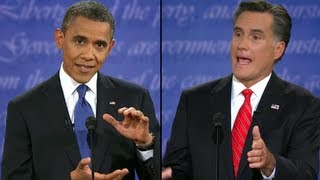
 Barack Obama on Financial Crisis: The 2008 Debate on Recovery2008 · 96 min · full transcriptShows how he thinks leaders should behave in crisis: urgent, careful, transparent, and accountable.
 Barack Obama on War and Peace: The Nobel Lecture2009 · 37 min · full transcriptExplains his idea of moral leadership: strength joined to restraint, law, and human dignity.
 Barack Obama on Hope & Democracy: Democratic convention farewell2008 · 49 min · full transcriptBest for his democratic leadership ethic: participation, compromise, persistence, and shared purpose.
 Barack Obama on the Bin Laden Raid: Justice Has Been Done2011 · 9 min · full transcriptA concrete case of decisive leadership after patient preparation and consultation.
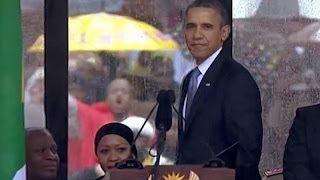 Barack Obama on Nelson Mandela's Legacy: Ubuntu, justice, and courage2013 · 19 min · full transcriptUseful for Obama’s portrait of great leadership through courage, ideas, compromise, and humanity.
Questions people ask
- How did Barack Obama decide to authorize the bin Laden raid?
- How did Barack Obama say America should lead in the world?
- What did Barack Obama say about compromise in democracy?
- What did Barack Obama say about polarization and how to persuade people in politics?
- What did Barack Obama say makes America great?
- What did Barack Obama say about the future and working together?
Sources
Every quote above, word for word from the transcripts. Numbers match the text.
“This is the price and the promise of citizenship.”
“That's why we do this. That's what politics can be.”
“The belief that our destiny is shared, that this country only works when we accept certain obligations to one another and the future generations; so that the freedom which so many Americans have fought for and died for comes with responsibilities as well as rights. And among those are love and charity and duty and patriotism. That's what makes America great.”
“Yes, we can. Not yes, she can. Not yes, I can. Yes, we.”
“I still believe that we are one people.”
“So, we have to move swiftly, and we have to move wisely.”
“…we've got to make sure that taxpayers, when they are putting their money at risk, have the possibility of getting that money back and gains…”
“You know, we are at a defining moment in our history. Our nation is involved in two wars, and we are going through the worst financial crisis since the Great Depression. And although we've heard a lot about Wall Street, those of you on Main Street, I think, have been struggling for a while. And you recognize that this could have an impact on all sectors of the economy, and you're wondering, how's it going to affect me? How's it going to affect my job? How's it going to affect my house? How's it going to affect my retirement savings or my ability to send my children to college? So, we have to move swiftly, and we have to move wisely. And I've put forward a series of proposals that make sure that we protect taxpayers as we engage in this important…”
“Then, last August, after years of painstaking work by our intelligence community, I was briefed on a possible lead to bin Laden. It was far from certain, and it took many months to run this thread to ground. I met repeatedly with my national security team as we developed more information about the possibility that we had located bin Laden hiding within a compound deep inside Pakistan. And finally, last week, I determined that we had enough intelligence to take action, and authorized an operation to get Osama bin Laden and bring him to justice. Today, at my direction, the United States launched a targeted operation against that compound in Abbottabad, Pakistan.”
“We must -- and we will -- remain vigilant at home and abroad.”
“Democracy isn't a spectator sport.”
“And that's what Hillary Clinton understands. She knows that this is a big, diverse country. She has seen it, she's traveled, she's talked to folks, and she understands that most issues are rarely black and white. She understands that even when you're 100% right, getting things done requires compromise. That democracy doesn't work if we constantly demonize each other. She knows that for progress to…”
“The future we want - opportunity and security for our families; a rising standard of living and a sustainable, peaceful planet for our kids - all that is within our reach. But it will only happen if we work together. It will only happen if we can have rational, constructive debates. It will only happen if we fix our politics. A better politics doesn't mean we have to agree on everything.”
“Our job is to convince people democracy can deliver.”
“THAT SENSE OF MUTUAL RESPECT HAS TO BE PART OF OUR MESSAGE. OUR POLITICS HAVE BECOME SO POLARIZED THESE DAYS. ALL OF US ACROSS THE SPECTRUM SEEM SO QUICK TO ASSUME THE WORST IN OTHERS, UNLESS THEY AGREE WITH US ON EVERY SINGLE ISSUE. WE START THINKING THE ONLY WAY TO WIN IS TO SCOLD AND SHAME AND OUT YELL THE OTHER SIDE. AFTER A WILD, REGULAR FOLKS TUNE IT OUT. OR THEY DON'T BOTHER TO VOTE. THAT APPROACH MAY WORK FOR THE POLITICIANS WHO WANT ATTENTION AND THRIVE ON DIVISION.”
“When we make rash decisions, reacting to the headlines instead of using our heads; when the first response to a challenge is to send in our military -- then we risk getting drawn into unnecessary conflicts, and neglect the broader strategy we need for a safer, more prosperous world. That's what our enemies want us to do. I believe in a smarter kind of American leadership. We lead best when we combine military power with strong diplomacy; when we leverage our power with coalition building; when we don't let our fears blind us to the opportunities that this new century presents. That's exactly what we're doing right now. And around the globe, it is making a difference.”
“…we did not use our military wisely in Iraq…”
“But war itself is never glorious…”
“Peace requires responsibility; peace entails sacrifice.”
“These efforts weigh on me every time I, as Commander-in-Chief, have to sign a letter to a family that has lost a loved one, or look into the eyes of a service member who's been gravely wounded. So Americans understand the costs of war. Yet as a country, we will never tolerate our security being threatened, nor stand idly by when our people have been killed. We will be relentless in defense of our citizens and our friends and allies. We will be true to the values that make us who we are. And on nights like this one, we can say to those families who have lost loved ones to al Qaeda's terror: Justice has been done. Tonight, we give thanks to the countless intelligence and counterterrorism professionals who've worked tirelessly to achieve this outcome.”
“…the United States is not -- and never will be -- at war with Islam.”
“As we do, we must also reaffirm that the United States is not -- and never will be -- at war with Islam. I've made clear, just as President Bush did shortly after 9/11, that our war is not against Islam. Bin Laden was not a Muslim leader; he was a mass murderer of Muslims. Indeed, al Qaeda has slaughtered scores of Muslims in many countries, including our own. So his demise should be welcomed by all who believe in peace and human dignity. Over the years, I've repeatedly made clear that we would take action within Pakistan if we knew where bin Laden was. That is what we've done.”
“Greatness is never a given; it must be earned.”
“The time has come to set aside childish things.”
“It's not a nice-to-have -- it's a must-have.”
“It's the right thing to do.”
“So, the question I think that we've got to ask ourselves is, yes, we've got to solve this problem short term, and we are going to have to intervene—uh, there's no doubt about that—but we're also going to have to look at how is it that we shredded so many regulations? We did not set up a 21st century regulatory framework to deal with these problems, and that in part has to do with an economic philosophy that says that regulation is always bad. Are you going to vote for the plan?”
“…change is never easy and never quick…”
“…this isn't the beginning of the end of this crisis; this is the end of the beginning.”
“Our actions matter and can bend history in the direction of justice.”
“I refuse to accept despair as the final response to the ambiguities of history.”
“We don't fear the future; we shape it.”
“Over the past six years, the pundits have pointed out more than once that my presidency hasn't delivered on this vision. How ironic, they say, that our politics seems more divided than ever. It's held up as proof not just of my own flaws -- of which there are many -- but also as proof that the vision itself is misguided, naïve, that there are too many people in this town who actually benefit from partisanship and gridlock for us to ever do anything about it. I know how tempting such cynicism may be. But I still think the cynics are wrong.”
“…the best is yet to come…”
How this guide was made: drafted with AI from the full transcripts of the recordings cited, then checked: every quotation must match a transcript word for word and be the speaker's own words, and an independent review gates accuracy. Methodology and corrections.