Barack Obama on Elections & Campaigns
Obama treats elections as tests of democratic citizenship: they should mobilize ordinary people, force real choices on policy and values, and renew a shared commitment to one another.
- Elections are about democracy working when people participate
- Campaigns should be rooted in citizens, not candidate ego
- Voters should choose between real governing visions, especially on the economy
- Obama rejects fear, cynicism, and permanent tribal division in politics
- Winning is only the start; democracy requires compromise, service, and sustained organizing

Elections are proof that democracy still works
Obama consistently presents elections as more than contests for office. He treats them as moments when citizens show whether self-government is still alive, whether people still believe they can shape the future, and whether change is possible through participation rather than withdrawal123.
That is why even in victory he looks past celebration to responsibility. An election can affirm hope, but it does not remove hardship or division; it simply gives the country a chance to act together on war, economic distress, and unfinished national work456.
A campaign should be built by ordinary people, not around one person
Obama’s campaign ideal is collective rather than personal. He describes political success as something constructed by volunteers, small donors, organizers, and voters over time, stressing that the energy of a campaign comes from people who believe their effort matters78.
This is also why he resists personality cult politics. His emphasis is that democratic action begins with we, not with a single leader, and that the candidate’s job is to channel the public’s aspirations rather than absorb all the credit910.
Campaigns should give voters a real choice about governing
Obama argues that elections should clarify competing visions, not just trade slogans. In economic debates, he frames campaigns around concrete choices: whether growth should come from strengthening the middle class, investing in education and training, and supporting productive business activity, or from tax policies that mainly favor the wealthy12.
He also insists that campaigns must connect policy arguments to lived consequences. In moments of crisis, he pushes for urgency tied to accountability, transparency, and protection for ordinary taxpayers, showing that an election choice should be judged by who bears risk, who gets helped, and whether the plan actually adds up1415.
The best politics resists fear and tribal division
Obama’s campaign message repeatedly rejects the idea that America is irreparably split into hostile camps. He argues that democratic politics works best when candidates appeal to common obligations and national belonging instead of deepening resentment and turning every disagreement into a moral war16417.
That view shapes his criticism of polarized campaigning. He warns that scolding, shaming, and assuming the worst in opponents may excite partisans but often drives ordinary people away from politics, weakens turnout, and makes democracy less functional1819.
Winning an election is not enough; democracy needs follow-through
Obama is explicit that elections are beginnings, not endings. Change takes time, progress is difficult, and democratic gains last only if citizens stay engaged after the campaign, accept compromise, and keep working through institutions that are often slow and messy519.
He also argues that parties and candidates cannot disappear between election cycles. Trust is built by showing up in more places, listening seriously, and organizing from the ground up, especially where people feel unseen by national politics21.
This is part of his broader warning about modern campaigning: when the political environment is dominated by scandal, gossip, and distraction, substance gets crowded out. For Obama, healthier elections require steadier civic habits, better attention, and stronger local democratic relationships24.
“So I think we have a scrambled political landscape right now.”NPR exit interview, 2016 · full transcript →
Obama on elections & campaigns, in his own words
“Democracy isn't a spectator sport.”
“Yes, we can. Not yes, she can. Not yes, I can. Yes, we.”
Where to watch
 Barack Obama on Hope & Democracy: Democratic convention farewell2008 · 49 min · full transcriptBest single statement of Obama’s view that elections are choices about democracy, participation, compromise, and national character.
 Barack Obama on Election Victory: Yes We Can2008 · 17 min · full transcriptShows how he interprets victory as belonging to citizens and as a call to unity, service, and hard work.
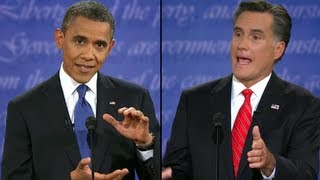 Barack Obama on Jobs and Taxes: The 2012 Debate Case2012 · 93 min · full transcriptBest example of Obama turning a campaign into a concrete argument about economic policy and governing tradeoffs.
 Barack Obama on Politics of Hope: Audacity in Boston2004 · 22 min · full transcriptLays out the anti-tribal, one-country moral framework that shaped his campaign politics from the start.
 Barack Obama on Media and Democracy: Lessons from the 2016 Election2016 · 61 min · full transcriptUseful for understanding what he thought campaigns were missing after 2016: local organizing, listening, and substance.
Questions people ask
- What did Barack Obama say about compromise in democracy?
- What did Barack Obama say about cynicism and division in America?
- What did Barack Obama say about polarization and how to persuade people in politics?
- What did Barack Obama say about the 2008 financial crisis in the first presidential debate?
- What did Barack Obama say about who his election victory belonged to?
- What did Barack Obama say makes America great?
Sources
Every quote above, word for word from the transcripts. Numbers match the text.
“Democracy isn't a spectator sport.”
“We don't fear the future; we shape it.”
“You know, we are at a defining moment in our history.”
“…we are not enemies, but friends.”
“…change is never easy and never quick…”
“We have more work to do.”
“Block by block. Brick by brick. Calloused hand by calloused hand.”
“I will never forget who this victory truly belongs to. It belongs to you. It belongs to you. I was never the likeliest candidate for this office. We didn't start with much money or many endorsements. Our campaign was not hatched in the halls of Washington. It began in the backyards of Des Moines, in the living rooms of Concord, in the front porches of Charleston. It was built by working men and women who dug into what little savings they had to give $5, $10, and $20 to the cause. It drew strength from the young people…”
“Yes, we can. Not yes, she can. Not yes, I can. Yes, we.”
“It's been you who fueled my dogged faith in our future…”
“We don't turn back. We leave no one behind.”
“…we've got to make sure that taxpayers, when they are putting their money at risk, have the possibility of getting that money back and gains…”
“So, the question I think that we've got to ask ourselves is, yes, we've got to solve this problem short term, and we are going to have to intervene—uh, there's no doubt about that—but we're also going to have to look at how is it that we shredded so many regulations? We did not set up a 21st century regulatory framework to deal with these problems, and that in part has to do with an economic philosophy that says that regulation is always bad. Are you going to vote for the plan?”
“There is not a liberal America and a conservative America. There is the United States of America.”
“I am my brother's keeper, I am my sister's keeper.”
“THAT SENSE OF MUTUAL RESPECT HAS TO BE PART OF OUR MESSAGE. OUR POLITICS HAVE BECOME SO POLARIZED THESE DAYS. ALL OF US ACROSS THE SPECTRUM SEEM SO QUICK TO ASSUME THE WORST IN OTHERS, UNLESS THEY AGREE WITH US ON EVERY SINGLE ISSUE. WE START THINKING THE ONLY WAY TO WIN IS TO SCOLD AND SHAME AND OUT YELL THE OTHER SIDE. AFTER A WILD, REGULAR FOLKS TUNE IT OUT. OR THEY DON'T BOTHER TO VOTE. THAT APPROACH MAY WORK FOR THE POLITICIANS WHO WANT ATTENTION AND THRIVE ON DIVISION.”
“And that's what Hillary Clinton understands. She knows that this is a big, diverse country. She has seen it, she's traveled, she's talked to folks, and she understands that most issues are rarely black and white. She understands that even when you're 100% right, getting things done requires compromise. That democracy doesn't work if we constantly demonize each other. She knows that for progress to…”
“So I think we have a scrambled political landscape right now.”
“Our job is to convince people democracy can deliver.”
How this guide was made: drafted with AI from the full transcripts of the recordings cited, then checked: every quotation must match a transcript word for word and be the speaker's own words, and an independent review gates accuracy. Methodology and corrections.


