Barack Obama on Muslim World
Obama sees the Muslim world as a partner America must engage with respect while confronting violent extremism, avoiding reckless war, and pushing for a just peace.
- America is not at war with Islam; it should seek a new relationship with Muslims based on respect
- Violent extremists must be confronted, but with precision and clear limits rather than broad war against a faith
- He believes U.S. mistakes in Iraq deepened problems and showed the danger of using force unwisely
- Peace in the region requires more than military action: diplomacy, alliances, rights, and political dignity matter too
- He treats threats like al-Qaeda and a nuclear-armed Iran as serious security issues, but argues they require disciplined leadership
America should replace suspicion with mutual respect
Obama’s core view is that relations between the United States and the Muslim world should not be defined by fear, grievance, or civilizational conflict. He argues that the distrust on both sides has become self-reinforcing and needs to be broken deliberately12.
That is why he frames the relationship as one grounded in both mutual interest and mutual respect. In his view, America and Muslim communities are not natural enemies, and progress begins when each side rejects the idea that conflict is inevitable12.
He draws a sharp line between Islam and violent extremism
Obama insists that America’s fight is against terrorist networks and mass murderers, not against Islam as a religion. He returns to this point in one of the most sensitive counterterrorism moments of his presidency, stressing that even the killing of bin Laden should not be read as a war against Muslims34.
This distinction matters because he believes extremists damage Muslims as well as Americans. By separating Islam from al-Qaeda, he tries to deny terrorists the larger clash they want and to keep U.S. policy focused on actual threats rather than whole populations534.
Use force when necessary, but reject reckless war
Obama is willing to use force against direct threats, as shown by the targeted raid that killed bin Laden. But he presents that action as disciplined, intelligence-driven, and limited, not as a blank check for endless war567.
His broader view is that war can sometimes be justified, yet it is never something to romanticize. He argues that military action must be constrained by responsibility, sacrifice, and moral seriousness89.
That helps explain his criticism of the Iraq War. He sees Iraq as proof of what happens when America uses military power unwisely and confuses tactics with sound strategy1011.
Security in the Muslim world requires strategy, not just firepower
Obama’s first foreign-policy test, as he describes it, is protecting Americans. But he argues that real security in the Middle East and broader Muslim world depends on more than military action alone1213.
He says the United States should combine counterterrorism with diplomacy, alliance management, and pressure on regional actors to support shared security goals. He also links stronger strategy to correcting past overreach, including ending the Iraq War and refocusing on the groups responsible for 9/11141315.
This same approach shapes his view of Iran. He treats the prospect of an Iranian nuclear weapon as unacceptable, but places it within a framework of steady leadership and coordinated pressure rather than impulsive escalation1612.
Lasting peace depends on justice, rights, and human dignity
Obama does not define peace as merely the absence of attacks. He argues that a just peace requires responsibility, sacrifice, and institutions that respect human beings917.
That is why his view of the Muslim world includes political and moral questions, not only security ones. He believes history can move toward justice, but only if states act with restraint and people defend human dignity rather than despairing or defaulting to force1718.
In practice, this means he sees America’s role as protecting itself while also supporting conditions in which broader reconciliation is possible. The aim is not domination, but a more stable order built on legitimacy as well as strength1792.
Obama on muslim world, in his own words
“We have the power to make the world we seek, but only if we have the courage to make a new beginning.”
Where to watch
 Barack Obama on Relations With the Muslim World: A new beginning2009 · 59 min · full transcriptBest single statement of his view that America and the Muslim world need a new beginning based on respect and direct engagement.
 Barack Obama on the Bin Laden Raid: Justice Has Been Done2011 · 9 min · full transcriptShows how he pairs aggressive counterterrorism with a firm insistence that the U.S. is not at war with Islam.
 Barack Obama on War and Peace: The Nobel Lecture2009 · 37 min · full transcriptExplains his moral framework for when force is justified and why peace requires more than military victory.
 Barack Obama on Iraq War Strategy: Mistakes, Surge, and Withdrawal2008 · 93 min · full transcriptUseful for understanding why he thinks Iraq became a warning against using American power unwisely in the region.
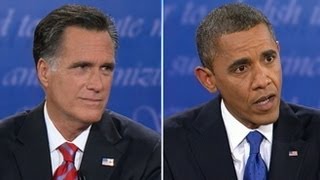 Barack Obama on Foreign Policy and Iran: Final Debate Exchange2012 · 92 min · full transcriptShows his mature presidency view: security first, but through alliances, diplomacy, and disciplined pressure on Iran and extremists.
Questions people ask
- How did Barack Obama decide to authorize the bin Laden raid?
- What did Barack Obama mean when he said justice has been done?
- What did Barack Obama say about America's role in the Middle East?
- What did Barack Obama say about Islam and the fight against al Qaeda?
- What did Barack Obama say about alliances in foreign policy?
Sources
Every quote above, word for word from the transcripts. Numbers match the text.
“This cycle of suspicion and discord must end.”
“We have the power to make the world we seek, but only if we have the courage to make a new beginning.”
“…the United States is not -- and never will be -- at war with Islam.”
“As we do, we must also reaffirm that the United States is not -- and never will be -- at war with Islam. I've made clear, just as President Bush did shortly after 9/11, that our war is not against Islam. Bin Laden was not a Muslim leader; he was a mass murderer of Muslims. Indeed, al Qaeda has slaughtered scores of Muslims in many countries, including our own. So his demise should be welcomed by all who believe in peace and human dignity. Over the years, I've repeatedly made clear that we would take action within Pakistan if we knew where bin Laden was. That is what we've done.”
“…the United States has conducted an operation that killed Osama bin Laden…”
“We must -- and we will -- remain vigilant at home and abroad.”
“Then, last August, after years of painstaking work by our intelligence community, I was briefed on a possible lead to bin Laden. It was far from certain, and it took many months to run this thread to ground. I met repeatedly with my national security team as we developed more information about the possibility that we had located bin Laden hiding within a compound deep inside Pakistan. And finally, last week, I determined that we had enough intelligence to take action, and authorized an operation to get Osama bin Laden and bring him to justice. Today, at my direction, the United States launched a targeted operation against that compound in Abbottabad, Pakistan.”
“But war itself is never glorious…”
“Peace requires responsibility; peace entails sacrifice.”
“…we did not use our military wisely in Iraq…”
“…that was a tactic designed to contain the damage of the previous four years of mismanagement of this war…”
“…my first job as commander-in-chief, Bob, is to keep the American people safe…”
“Here, here's one thing I've learned as Commander-in-Chief: you've got to be clear both to our allies and our enemies about where you stand and what you mean. Now, you just gave a speech a few weeks ago in which you said we should still have troops in Iraq. That is not a reason for making sure that we are taking advantage of the opportunities and meeting the challenges of the Middle East. Now, it is absolutely true that we cannot just meet these challenges militarily. And so what I've done throughout my presidency and will continue to do is, number one, make sure that these countries are supporting our counterterrorism efforts; number two, make sure that they are standing by our interests in Israel's security because it…”
“We ended the war in Iraq, refocused our attention on those who actually killed us on 9/11…”
“We were able to refocus our attention on not only the terrorist threat but also beginning a transition process in Afghanistan. It also allowed us to refocus on alliances and relationships that had been neglected for a decade. And, Governor Romney, our alliances have never been stronger—in Asia, in Europe, in Africa, with Israel, where we have unprecedented military and intelligence…”
“…as long as I'm President of the United States, Iran will not get a nuclear weapon…”
“Our actions matter and can bend history in the direction of justice.”
“I refuse to accept despair as the final response to the ambiguities of history.”
How this guide was made: drafted with AI from the full transcripts of the recordings cited, then checked: every quotation must match a transcript word for word and be the speaker's own words, and an independent review gates accuracy. Methodology and corrections.
