Smart Power
Use strength with restraint, alliances, and moral purpose.

“…my first job as commander-in-chief, Bob, is to keep the American people safe…”Third presidential debate, Lynn University, 2012 · 4:43
The lesson
Obama’s foreign-policy framework starts with a basic duty: protect Americans. But in this chapter, safety is not defined as reacting to every threat with maximum force. He argues that leadership means staying vigilant, acting decisively when necessary, and keeping strategy tied to the real source of danger rather than drifting into the wrong war or the wrong battlefield123.
That is why he treats military power as necessary but limited. The bin Laden raid is presented as a model of focused force: built on lengthy intelligence work, authorized only after enough confidence, and carried out as a targeted operation rather than a broad war45. In contrast, his discussion of Iraq emphasizes the cost of using force unwisely, where tactical gains cannot erase a deeper strategic error67.
A second pillar is restraint through diplomacy and alliances. Obama warns against rash decisions and against letting fear push the United States into unnecessary conflicts; instead, he argues for combining military strength with diplomacy and coalition-building8. In the debate, this becomes a practical method: be clear to allies and enemies, strengthen partnerships, and use international relationships as part of American power rather than as an alternative to it910.
He also insists that legitimacy matters. In these speeches, strength is tied to moral purpose: the United States should defend itself relentlessly, but remain true to its values and avoid turning counterterrorism into a civilizational war111213. The Cairo and Nobel speeches widen the frame further: peace is not just the absence of conflict, but a harder project that requires responsibility, human dignity, and the courage to move beyond cycles of suspicion and despair14151617.
So “smart power” in Obama’s terms is not softness, and it is not swagger. It means using force when needed, with clear aims and discipline; avoiding reckless wars; building coalitions; and pursuing peace realistically, knowing that security and values have to reinforce each other. His standard is whether American action makes people safer while preserving judgment, legitimacy, and the possibility of a more just peace81819.
5 principles from Barack Obama
Protect people without losing strategic focus
Security is the first responsibility, but that does not justify fighting everywhere or confusing tactics with strategy. Apply this by asking whether an action addresses the real threat and advances a broader plan, not just whether it shows toughness in the moment.
“…my first job as commander-in-chief, Bob, is to keep the American people safe…”
Use force precisely, not recklessly
Obama’s model is targeted, intelligence-driven action rather than open-ended conflict. In practice, this means force should come after serious evaluation, with clear objectives and attention to limiting wider harm.
“…we did not use our military wisely in Iraq…”
Pair military strength with diplomacy and coalitions
American power works best when it is reinforced by partners, sanctions, diplomacy, and shared effort. Apply this by treating relationships and coalition support as part of the strategy itself, not as afterthoughts.
“When we make rash decisions, reacting to the headlines instead of using our heads; when the first response to a challenge is to send in our military -- then we risk getting drawn into unnecessary conflicts, and neglect the broader strategy we need for a safer, more prosperous world. That's what our enemies want us to do. I believe in a smarter kind of American leadership. We lead best when we combine military power with strong diplomacy; when we leverage our power with coalition building; when we don't let our fears blind us to the opportunities that this new century presents. That's exactly what we're doing right now. And around the globe, it is making a difference.”
Defend values while defending security
Obama argues that legitimacy and moral clarity are strategic assets, not luxuries. Apply this by separating enemies from entire peoples or religions, and by making sure hard actions still fit the principles you claim to protect.
“…the United States is not -- and never will be -- at war with Islam.”
Pursue peace with realism and responsibility
Peace is not achieved by wishing conflict away, but by accepting hard responsibilities while still aiming at justice and human dignity. Apply this by holding together two ideas at once: force may sometimes be necessary, and lasting peace requires more than force.
“Peace requires responsibility; peace entails sacrifice.”
In his own words
The quotes behind the lesson, word for word from the transcripts. Numbers match the lesson above.
“…my first job as commander-in-chief, Bob, is to keep the American people safe…”
“We must -- and we will -- remain vigilant at home and abroad.”
“We ended the war in Iraq, refocused our attention on those who actually killed us on 9/11…”
“Then, last August, after years of painstaking work by our intelligence community, I was briefed on a possible lead to bin Laden. It was far from certain, and it took many months to run this thread to ground. I met repeatedly with my national security team as we developed more information about the possibility that we had located bin Laden hiding within a compound deep inside Pakistan. And finally, last week, I determined that we had enough intelligence to take action, and authorized an operation to get Osama bin Laden and bring him to justice. Today, at my direction, the United States launched a targeted operation against that compound in Abbottabad, Pakistan.”
“…the United States has conducted an operation that killed Osama bin Laden…”
“…we did not use our military wisely in Iraq…”
“…that was a tactic designed to contain the damage of the previous four years of mismanagement of this war…”
“When we make rash decisions, reacting to the headlines instead of using our heads; when the first response to a challenge is to send in our military -- then we risk getting drawn into unnecessary conflicts, and neglect the broader strategy we need for a safer, more prosperous world. That's what our enemies want us to do. I believe in a smarter kind of American leadership. We lead best when we combine military power with strong diplomacy; when we leverage our power with coalition building; when we don't let our fears blind us to the opportunities that this new century presents. That's exactly what we're doing right now. And around the globe, it is making a difference.”
“Here, here's one thing I've learned as Commander-in-Chief: you've got to be clear both to our allies and our enemies about where you stand and what you mean. Now, you just gave a speech a few weeks ago in which you said we should still have troops in Iraq. That is not a reason for making sure that we are taking advantage of the opportunities and meeting the challenges of the Middle East. Now, it is absolutely true that we cannot just meet these challenges militarily. And so what I've done throughout my presidency and will continue to do is, number one, make sure that these countries are supporting our counterterrorism efforts; number two, make sure that they are standing by our interests in Israel's security because it…”
“We were able to refocus our attention on not only the terrorist threat but also beginning a transition process in Afghanistan. It also allowed us to refocus on alliances and relationships that had been neglected for a decade. And, Governor Romney, our alliances have never been stronger—in Asia, in Europe, in Africa, with Israel, where we have unprecedented military and intelligence…”
“These efforts weigh on me every time I, as Commander-in-Chief, have to sign a letter to a family that has lost a loved one, or look into the eyes of a service member who's been gravely wounded. So Americans understand the costs of war. Yet as a country, we will never tolerate our security being threatened, nor stand idly by when our people have been killed. We will be relentless in defense of our citizens and our friends and allies. We will be true to the values that make us who we are. And on nights like this one, we can say to those families who have lost loved ones to al Qaeda's terror: Justice has been done. Tonight, we give thanks to the countless intelligence and counterterrorism professionals who've worked tirelessly to achieve this outcome.”
“…the United States is not -- and never will be -- at war with Islam.”
“As we do, we must also reaffirm that the United States is not -- and never will be -- at war with Islam. I've made clear, just as President Bush did shortly after 9/11, that our war is not against Islam. Bin Laden was not a Muslim leader; he was a mass murderer of Muslims. Indeed, al Qaeda has slaughtered scores of Muslims in many countries, including our own. So his demise should be welcomed by all who believe in peace and human dignity. Over the years, I've repeatedly made clear that we would take action within Pakistan if we knew where bin Laden was. That is what we've done.”
“This cycle of suspicion and discord must end.”
“Peace requires responsibility; peace entails sacrifice.”
“I refuse to accept despair as the final response to the ambiguities of history.”
“Our actions matter and can bend history in the direction of justice.”
“But war itself is never glorious…”
“We have the power to make the world we seek, but only if we have the courage to make a new beginning.”
Reflect
- Think of a situation where you wanted to act fast to prove resolve. What would it look like to protect your goals while still avoiding a rash or overbroad response?
- Where in your work or life do you treat relationships as secondary to direct action? How could coalition-building make your approach stronger rather than slower?
- How do you balance realism and values when facing a difficult conflict? What principles do you refuse to drop even under pressure?
Check your understanding
Go deeper
 Barack Obama on War and Peace: The Nobel Lecture2009 · 37 min · full transcript
 Barack Obama on Relations With the Muslim World: A new beginning2009 · 59 min · full transcript
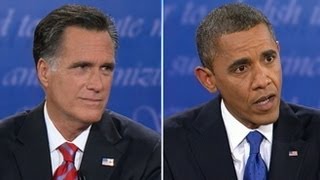 Barack Obama on Foreign Policy and Iran: Final Debate Exchange2012 · 92 min · full transcript
 Barack Obama on Iraq War Strategy: Mistakes, Surge, and Withdrawal2008 · 93 min · full transcript
 Barack Obama on the Bin Laden Raid: Justice Has Been Done2011 · 9 min · full transcript