Democracy as Practice
Democracy is not a spectator sport.

“Democracy isn't a spectator sport.”Democratic National Convention acceptance speech, Denver, 2008 · 35:01
The lesson
Obama treats democracy less as a system you inherit and more as a practice you perform. In this chapter’s speeches, he argues that self-government only works when ordinary people participate instead of watching politics like a show, and when they see political action as a shared effort rather than a solo performance12. That is why he keeps returning to the idea that citizens shape the future through what they do together, not through passive hope or personality-based politics34.
Participation, for Obama, is not only voting on big national days. It also means showing up consistently, listening, and building trust over time, especially in places and communities that are easy to ignore between elections. He connects that practical work to a larger standard: democracy has to prove that it can solve real problems for ordinary people, or people will stop believing their voice matters56.
But participation alone is not enough. Obama argues that democratic life depends on compromise, mutual respect, and a willingness to accept complexity rather than divide every issue into pure good and evil7. When citizens assume the worst about one another, reward the loudest extremes, or treat disagreement as betrayal, democratic life stalls and many people tune out altogether68. In his view, democracy is messy by nature, so the goal is not to eliminate conflict but to keep conflict from becoming contempt.
A healthy democracy also needs truthfulness and responsible citizenship. Obama warns that public life weakens when basic facts are disputed, when attention is captured by sensational distractions, and when people only hear what confirms their side69. That is why he calls on people, especially those shaped by digital media, to use critical thinking, promote truth, and ground their public choices in durable values like fairness, responsibility, and respect for others10.
Finally, Obama links democracy to persistence. Progress is real but slow, and setbacks do not cancel the work; they clarify the need for more effort1112. His version of hope is active: people can reject a broken status quo, build a fairer normal, and keep going because change comes from sustained action over time, not from wishing things will improve on their own131415.
5 principles from Barack Obama
Participate instead of spectating
Treat democracy as something you do, not something you watch. In practice, that means voting, organizing, showing up in your community, and measuring politics by whether people are contributing to a shared effort rather than waiting for one leader to fix everything.
“Democracy isn't a spectator sport.”
Build trust through steady presence
Democratic persuasion is not only about messages; it is also about relationships. If you want to move people or improve an institution, show up repeatedly, listen seriously, and make your commitment visible over time.
“Our job is to convince people democracy can deliver.”
Compromise without contempt
Obama’s view is that pluralistic societies cannot function if every disagreement becomes moral warfare. Hold your convictions, but accept that progress often requires negotiation, complexity, and enough respect to keep working with people who differ from you.
“And that's what Hillary Clinton understands. She knows that this is a big, diverse country. She has seen it, she's traveled, she's talked to folks, and she understands that most issues are rarely black and white. She understands that even when you're 100% right, getting things done requires compromise. That democracy doesn't work if we constantly demonize each other. She knows that for progress to…”
Defend facts and resist distraction
A functioning democracy depends on citizens who can distinguish truth from noise. Apply critical thinking, avoid being pulled around by outrage and sensationalism, and contribute to a public culture that rewards substance over performance.
“…we call the shiny object: the faux scandals, the trumped up controversies…”
Practice hopeful persistence
Change is usually gradual, contested, and unfinished, so discouragement is not a sign to quit. Use setbacks as a reason to work longer and smarter toward a fairer normal rather than waiting for circumstances to improve by themselves.
“…change is never easy and never quick…”
In his own words
The quotes behind the lesson, word for word from the transcripts. Numbers match the lesson above.
“Democracy isn't a spectator sport.”
“Yes, we can. Not yes, she can. Not yes, I can. Yes, we.”
“We don't fear the future; we shape it.”
“It's been you who fueled my dogged faith in our future…”
“Our job is to convince people democracy can deliver.”
“Democracy grinds to a halt without a willingness to compromise; or when even basic facts are contested, and we listen only to those who agree with us. Our public life withers when only the most extreme voices get attention. Most of all, democracy breaks down when the average person feels their voice doesn't matter; that the system is rigged in favor of the rich or the powerful or some narrow interest. Too many Americans feel that way right now. It's one of the few regrets of my presidency - that the rancor and suspicion between the parties has gotten worse instead of better.”
“And that's what Hillary Clinton understands. She knows that this is a big, diverse country. She has seen it, she's traveled, she's talked to folks, and she understands that most issues are rarely black and white. She understands that even when you're 100% right, getting things done requires compromise. That democracy doesn't work if we constantly demonize each other. She knows that for progress to…”
“THAT SENSE OF MUTUAL RESPECT HAS TO BE PART OF OUR MESSAGE. OUR POLITICS HAVE BECOME SO POLARIZED THESE DAYS. ALL OF US ACROSS THE SPECTRUM SEEM SO QUICK TO ASSUME THE WORST IN OTHERS, UNLESS THEY AGREE WITH US ON EVERY SINGLE ISSUE. WE START THINKING THE ONLY WAY TO WIN IS TO SCOLD AND SHAME AND OUT YELL THE OTHER SIDE. AFTER A WILD, REGULAR FOLKS TUNE IT OUT. OR THEY DON'T BOTHER TO VOTE. THAT APPROACH MAY WORK FOR THE POLITICIANS WHO WANT ATTENTION AND THRIVE ON DIVISION.”
“…we call the shiny object: the faux scandals, the trumped up controversies…”
“I hope that, instead, you decide to moor yourself in values that last, like responsibility, fairness, generosity, and respect for others. That will make you part of the solution, instead of part of the problem. And if experience is any guide, it actually makes for a happier life. Second, listen to each other. Respect each other. And use all that critical thinking you've developed from your education to help promote the truth. You are the Internet generation and the social media generation. It's not just how you shop or listen to music or watch videos. It's part of your social lives. It's the new town square, where you all come together and meet.”
“…change is never easy and never quick…”
“We have to work to make things better.”
“You can create a new normal.”
“Hope is not a lottery ticket, it's a hammer for us to use in a national emergency.”
“…the best is yet to come…”
Reflect
- Where in your civic, professional, or community life have you been acting like a spectator? What would participation look like in concrete weekly habits?
- Think of a conflict where you are convinced you are right. How could you pursue the goal without demonizing the people on the other side or refusing all compromise?
- What are your main sources of political or social information, and how do you check whether they are helping you seek truth rather than react to shiny distractions?
Check your understanding
Go deeper
 Barack Obama on Hope & Democracy: Democratic convention farewell2008 · 49 min · full transcript
 Barack Obama on Democracy and Hope: Fight for the Future2020 · 49 min · full transcript
 Barack Obama on Hope & Democracy: The Best Is Yet to Come2008 · 30 min · full transcript
 Barack Obama on Media and Democracy: Lessons from the 2016 Election2016 · 61 min · full transcript
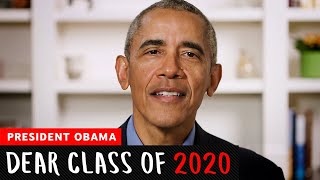 Barack Obama on Democracy and Hope: Dear Class of 20202020 · 15 min · full transcript