Climate and Diplomacy
Obama’s case for clean-energy leadership, climate action, and negotiated breakthroughs with Iran and Cuba.

“…as long as I'm President of the United States, Iran will not get a nuclear weapon…”Third presidential debate, Lynn University, 2012 · 44:07
The lesson
Obama treats climate policy as part of national renewal, not as a side issue. His argument is that the country should not fall behind in the technologies that will shape future jobs and industries, and that facing long-term problems is part of responsible self-government12. In that sense, climate action is both an economic strategy and a test of whether citizens can still choose a future instead of drifting into it13.
That future-facing mindset runs through his broader view of American strength. He argues that the country lives in a period of rapid change, so leadership requires confidence, adaptation, and practical investment rather than fear or nostalgia43. Clean energy fits this pattern because it asks America to stay ahead of the curve and compete in a century where knowledge, technology, and innovation matter more than ever15.
In foreign policy, Obama makes a parallel case for discipline. His first responsibility is security, but he rejects the idea that every challenge should be met with military force first; he says America leads best when power is combined with diplomacy and coalition-building67. That is the logic behind his approach to Iran: be clear about the objective, keep pressure and alliances in place, and use negotiation to prevent a more dangerous outcome8910.
The same reasoning explains his opening to Cuba and his broader diplomatic posture. Obama argues that old cycles of suspicion can harden into habits that block progress, so effective leadership sometimes means trying a new beginning when isolation has stopped producing results1112. This is not softness in his framework; it is a smarter use of American influence, aimed at improving security while widening the space for change through engagement rather than reflexive escalation713.
Across climate, Iran, and Cuba, the unifying idea is that American leadership is strongest when it is forward-looking, confident, and cooperative. Obama links national progress to the ability to work together, argue constructively, and compromise without surrendering core goals1415. He sees both domestic problem-solving and international diplomacy as exercises in democratic maturity: resisting cynicism, choosing facts over fear, and trusting that citizens still have the power to set the country's course162.
5 principles from Barack Obama
Treat climate action as economic strategy
Obama links climate policy to competition, jobs, and industrial leadership. Apply this by asking not only what problem a policy solves, but also what capabilities and industries it helps build for the future.
“I want to focus on our future.”
Lead with strength and diplomacy together
Security matters first in Obama's framework, but force alone is not a strategy. Apply this by defining your objective clearly, using leverage patiently, and combining pressure with negotiation when the goal is a durable outcome.
“…my first job as commander-in-chief, Bob, is to keep the American people safe…”
Break stale cycles with a new beginning
Obama argues that suspicion can become self-perpetuating, so leadership sometimes requires changing the terms of the relationship. Apply this by noticing where inherited conflict is producing no gains and testing whether engagement can open possibilities that isolation cannot.
“This cycle of suspicion and discord must end.”
Face change with confidence, not retreat
Obama's response to disruption is to invest, adapt, and compete rather than deny that the world is changing. Apply this by treating major shifts as reasons to build new strengths instead of defending old arrangements at any cost.
“We live in a time of extraordinary change…”
Compromise is part of democratic strength
For Obama, effective leadership depends on constructive debate and a willingness to work with disagreement. Apply this by holding firm on ends while staying flexible on means, especially when broad cooperation is needed to solve long-term problems.
“Democracy grinds to a halt without a willingness to compromise…”
Moments to watch
In his own words
The quotes behind the lesson, word for word from the transcripts. Numbers match the lesson above.
“We cannot cede to other nations the technology that will power new jobs and new industries…”
“You and I, as citizens, have the power to set this country's course…”
“I want to focus on our future.”
“We live in a time of extraordinary change…”
“America thrived in the 20th century because we made high school free, sent a generation of GIs to college, trained the best workforce in the world. We were ahead of the curve. But other countries caught on. And in a 21st century economy that rewards knowledge like never before, we need to up our game. We need to do more. By the end of this decade, two in three job openings will require some higher education -- two in three. And yet, we still live in a country where too many bright, striving Americans are priced out of the education they need. It's not fair to them, and it's sure not smart for our future.”
“…my first job as commander-in-chief, Bob, is to keep the American people safe…”
“When we make rash decisions, reacting to the headlines instead of using our heads; when the first response to a challenge is to send in our military -- then we risk getting drawn into unnecessary conflicts, and neglect the broader strategy we need for a safer, more prosperous world. That's what our enemies want us to do. I believe in a smarter kind of American leadership. We lead best when we combine military power with strong diplomacy; when we leverage our power with coalition building; when we don't let our fears blind us to the opportunities that this new century presents. That's exactly what we're doing right now. And around the globe, it is making a difference.”
“…as long as I'm President of the United States, Iran will not get a nuclear weapon…”
“Here, here's one thing I've learned as Commander-in-Chief: you've got to be clear both to our allies and our enemies about where you stand and what you mean. Now, you just gave a speech a few weeks ago in which you said we should still have troops in Iraq. That is not a reason for making sure that we are taking advantage of the opportunities and meeting the challenges of the Middle East. Now, it is absolutely true that we cannot just meet these challenges militarily. And so what I've done throughout my presidency and will continue to do is, number one, make sure that these countries are supporting our counterterrorism efforts; number two, make sure that they are standing by our interests in Israel's security because it…”
“We were able to refocus our attention on not only the terrorist threat but also beginning a transition process in Afghanistan. It also allowed us to refocus on alliances and relationships that had been neglected for a decade. And, Governor Romney, our alliances have never been stronger—in Asia, in Europe, in Africa, with Israel, where we have unprecedented military and intelligence…”
“This cycle of suspicion and discord must end.”
“We have the power to make the world we seek, but only if we have the courage to make a new beginning.”
“That's American strength. That's American leadership.”
“Democracy grinds to a halt without a willingness to compromise…”
“The future we want - opportunity and security for our families; a rising standard of living and a sustainable, peaceful planet for our kids - all that is within our reach. But it will only happen if we work together. It will only happen if we can have rational, constructive debates. It will only happen if we fix our politics. A better politics doesn't mean we have to agree on everything.”
“Over the past six years, the pundits have pointed out more than once that my presidency hasn't delivered on this vision. How ironic, they say, that our politics seems more divided than ever. It's held up as proof not just of my own flaws -- of which there are many -- but also as proof that the vision itself is misguided, naïve, that there are too many people in this town who actually benefit from partisanship and gridlock for us to ever do anything about it. I know how tempting such cynicism may be. But I still think the cynics are wrong.”
Reflect
- Where in your work are you treating a long-term challenge as a burden rather than as a chance to build new capability?
- Think of a conflict or stalled relationship in your life. What would combining firmness about your goal with openness to a new beginning look like?
- When you face uncertainty, do you tend to reach for control, retreat, or collaboration? What would a more confident, future-focused response be?
Check your understanding
Go deeper
 Barack Obama on Equality and Climate: Second Inaugural Address2013 · 224 min · full transcript
 Barack Obama on State of the Union: A stronger future together2015 · 62 min · full transcript
 Barack Obama on the Future of America: Final State of the Union2016 · 61 min · full transcript
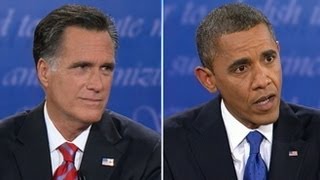 Barack Obama on Foreign Policy and Iran: Final Debate Exchange2012 · 92 min · full transcript
 Barack Obama on Relations With the Muslim World: A new beginning2009 · 59 min · full transcript
 Barack Obama on Hope and Change: 2012 Acceptance Speech2012 · 39 min · full transcript