Governing Through Crisis
Leadership means steady action when the stakes are highest.

“Then, last August, after years of painstaking work by our intelligence community, I was briefed on a possible lead to bin Laden. It was far from certain, and it took many months to run this thread to ground. I met repeatedly with my national security team as we developed more information about the possibility that we had located bin Laden hiding within a compound deep inside Pakistan. And finally, last week, I determined that we had enough intelligence to take action, and authorized an operation to get Osama bin Laden and bring him to justice. Today, at my direction, the United States launched a targeted operation against that compound in Abbottabad, Pakistan.”Address from the White House on bin Laden's death, 2011 · 3:27
The lesson
Obama treats crisis leadership as a test of clear diagnosis first. In the financial collapse, he argues that leaders must see both the immediate emergency and the deeper system failure behind it, not confuse a short-term rescue with a full solution123. That same mindset appears in his broader governing language: a crisis is real, serious, and costly, but it must be named accurately so action matches the problem45.
From there, his next move is protection of ordinary people, not abstract institutions. In the financial crisis, he insists that government action should be judged by whether it helps families facing threats to jobs, homes, savings, and college plans, while also protecting taxpayers if public money is used678. Even in national security, the principle is to defend the public while staying disciplined about means, as shown by the targeted operation against bin Laden after extended intelligence review and preparation910.
Obama also presents crisis leadership as disciplined urgency: act fast, but not recklessly. He repeatedly argues that delay can make damage worse, whether the issue is economic recovery or health reform, yet speed has to be paired with judgment, oversight, and accountability11125. In his framing, steadiness means resisting both paralysis and panic.
A further part of his approach is holding onto national values while under pressure. After the bin Laden raid, he connects force with restraint and insists that the country can defend itself without abandoning its principles or broadening a fight into a clash with an entire religion131415. In domestic politics, the same moral discipline appears as responsibility, compromise, and the refusal to let fear or faction overwhelm democratic problem-solving161718.
Finally, Obama treats crisis not only as something to survive but as a chance to build a better future. He argues that disruption exposes old weaknesses and creates an opening to reject a broken status quo, whether in the economy, democracy, or social life192021. Hope, in this view, is not passive confidence; it is the decision to use a hard moment to create fairer systems and a stronger civic culture222324.
5 principles from Barack Obama
Diagnose the whole crisis, not just the headline
Obama’s approach starts by separating the visible emergency from the deeper conditions that produced it. In practice, that means asking what must be stabilized immediately and what structural weakness must be fixed so the crisis does not repeat.
“…this isn't the beginning of the end of this crisis; this is the end of the beginning.”
Protect the public, especially ordinary families
He measures crisis policy by its effect on people outside elite institutions. Apply this by asking who bears the risk, who gets protected first, and how accountability is built in when public resources are used.
“It's not about helping banks, it's about helping people.”
Move swiftly and wisely
Obama rejects both delay and impulsiveness. The practical standard is urgent action with enough discipline, review, and oversight to keep speed from becoming carelessness.
“So, we have to move swiftly, and we have to move wisely.”
Defend people without abandoning values
For Obama, crisis does not justify moral drift. Strong leadership protects the country while keeping actions targeted, rejecting broad prejudice, and staying true to democratic and human values.
“…the United States is not -- and never will be -- at war with Islam.”
Use crisis to remake what was failing
He treats disruption as an opening to build a better normal instead of restoring a flawed old one. In your own work, this means asking what bad habit, broken system, or stale assumption the crisis has made impossible to ignore.
“You can create a new normal.”
Moments to watch
In his own words
The quotes behind the lesson, word for word from the transcripts. Numbers match the lesson above.
“You know, we are at a defining moment in our history.”
“…this isn't the beginning of the end of this crisis; this is the end of the beginning.”
“So, the question I think that we've got to ask ourselves is, yes, we've got to solve this problem short term, and we are going to have to intervene—uh, there's no doubt about that—but we're also going to have to look at how is it that we shredded so many regulations? We did not set up a 21st century regulatory framework to deal with these problems, and that in part has to do with an economic philosophy that says that regulation is always bad. Are you going to vote for the plan?”
“Greatness is never a given; it must be earned.”
“The cost of inaction will be far greater.”
“It's not about helping banks, it's about helping people.”
“…we've got to make sure that taxpayers, when they are putting their money at risk, have the possibility of getting that money back and gains…”
“You know, we are at a defining moment in our history. Our nation is involved in two wars, and we are going through the worst financial crisis since the Great Depression. And although we've heard a lot about Wall Street, those of you on Main Street, I think, have been struggling for a while. And you recognize that this could have an impact on all sectors of the economy, and you're wondering, how's it going to affect me? How's it going to affect my job? How's it going to affect my house? How's it going to affect my retirement savings or my ability to send my children to college? So, we have to move swiftly, and we have to move wisely. And I've put forward a series of proposals that make sure that we protect taxpayers as we engage in this important…”
“…the United States has conducted an operation that killed Osama bin Laden…”
“Then, last August, after years of painstaking work by our intelligence community, I was briefed on a possible lead to bin Laden. It was far from certain, and it took many months to run this thread to ground. I met repeatedly with my national security team as we developed more information about the possibility that we had located bin Laden hiding within a compound deep inside Pakistan. And finally, last week, I determined that we had enough intelligence to take action, and authorized an operation to get Osama bin Laden and bring him to justice. Today, at my direction, the United States launched a targeted operation against that compound in Abbottabad, Pakistan.”
“So, we have to move swiftly, and we have to move wisely.”
“It must not wait, and it will not wait another year.”
“…the United States is not -- and never will be -- at war with Islam.”
“These efforts weigh on me every time I, as Commander-in-Chief, have to sign a letter to a family that has lost a loved one, or look into the eyes of a service member who's been gravely wounded. So Americans understand the costs of war. Yet as a country, we will never tolerate our security being threatened, nor stand idly by when our people have been killed. We will be relentless in defense of our citizens and our friends and allies. We will be true to the values that make us who we are. And on nights like this one, we can say to those families who have lost loved ones to al Qaeda's terror: Justice has been done. Tonight, we give thanks to the countless intelligence and counterterrorism professionals who've worked tirelessly to achieve this outcome.”
“As we do, we must also reaffirm that the United States is not -- and never will be -- at war with Islam. I've made clear, just as President Bush did shortly after 9/11, that our war is not against Islam. Bin Laden was not a Muslim leader; he was a mass murderer of Muslims. Indeed, al Qaeda has slaughtered scores of Muslims in many countries, including our own. So his demise should be welcomed by all who believe in peace and human dignity. Over the years, I've repeatedly made clear that we would take action within Pakistan if we knew where bin Laden was. That is what we've done.”
“The time has come to set aside childish things.”
“Democracy grinds to a halt without a willingness to compromise…”
“The future we want - opportunity and security for our families; a rising standard of living and a sustainable, peaceful planet for our kids - all that is within our reach. But it will only happen if we work together. It will only happen if we can have rational, constructive debates. It will only happen if we fix our politics. A better politics doesn't mean we have to agree on everything.”
“You can create a new normal.”
“We have to work to make things better.”
“I want to focus on our future.”
“Hope is not a lottery ticket, it's a hammer for us to use in a national emergency.”
“Because you don't have to accept what was considered normal before. You don't have to accept the world as it is. You can make it into the world as it should be and could be. You can create a new normal. One that is fairer, and gives everybody opportunity, and treats everyone equally, and builds bridges between people instead of dividing them. Just as America overcame slavery and Civil War, recessions and Depression, Pearl Harbor and 9/11, and all kinds of social upheaval, we can emerge from our current circumstances stronger than before, better than before. But, as has always been true at key moments in history, it's gonna depend on young people like you to go out there and rewrite what is possible.”
“That's the America I know. That's the country we love. Clear-eyed. Big-hearted. Optimistic that unarmed truth and unconditional love will have the final word. That's what makes me so hopeful about our future. I believe in change, because I believe in you. The American people. And that's why I stand here confident that the State of our Union is strong. Thank you, God bless you, and God bless the United States of America. (applause)”
Reflect
- Think of a crisis you have faced at work, school, or home. What was the immediate problem, and what deeper weakness was driving it underneath?
- When you act under pressure, are you more prone to hesitation or impulsiveness? What would it look like to move both swiftly and wisely in your next high-stakes decision?
- What “old normal” in your life or organization should not be restored after a disruption because the crisis revealed it was already failing?
Check your understanding
Go deeper
 Barack Obama on Inaugural Address: Hope, Unity, and Renewal2009 · 99 min · full transcript
 Barack Obama on Financial Crisis: The 2008 Debate on Recovery2008 · 96 min · full transcript
 Barack Obama on Health Care Reform: A Call to Act Now2009 · 54 min · full transcript
 Barack Obama on the Bin Laden Raid: Justice Has Been Done2011 · 9 min · full transcript
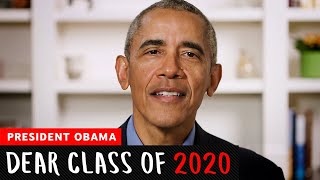 Barack Obama on Democracy and Hope: Dear Class of 20202020 · 15 min · full transcript
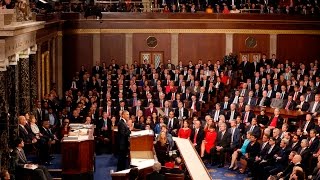 Barack Obama on the Future of America: Final State of the Union2016 · 61 min · full transcript