Middle-Class Economics
Opportunity is built through work, skills, fairness, and public investment.

“You know, we are at a defining moment in our history. Our nation is involved in two wars, and we are going through the worst financial crisis since the Great Depression. And although we've heard a lot about Wall Street, those of you on Main Street, I think, have been struggling for a while. And you recognize that this could have an impact on all sectors of the economy, and you're wondering, how's it going to affect me? How's it going to affect my job? How's it going to affect my house? How's it going to affect my retirement savings or my ability to send my children to college? So, we have to move swiftly, and we have to move wisely. And I've put forward a series of proposals that make sure that we protect taxpayers as we engage in this important…”First presidential debate, 2008 · 2:35
The lesson
Obama’s economic argument starts with a simple claim: broad prosperity depends on the middle class, not just on gains at the top. In the 2012 debate, he contrasts his approach with what he sees as top-down tax-cut economics and argues that growth is stronger when policy is built around ordinary families, fair opportunity, and balanced deficit choices rather than benefits concentrated on the wealthy. The point is not only moral; it is also practical, because an economy is more durable when more people can participate in it.
From that premise, he argues for active public investment in the foundations of work: education, training, energy, and infrastructure. Across the debate, the 2015 State of the Union, and the final State of the Union, he returns to the idea that skills are now essential in a changing economy and that government should help people get them, including through community college and retraining123. In his view, these are not optional extras after growth happens; they are part of how growth is created and shared.
Health care fits into this same economic framework. In the 2009 address to Congress, Obama presents reform not as a separate social issue but as part of national recovery and long-term competitiveness, arguing that delay would deepen existing weaknesses45. That logic reflects a larger pattern in his thinking: when a major system is raising costs and limiting security, fixing it becomes an economic policy as well as a moral one.
The financial crisis sharpens another part of his argument: markets need rules, oversight, and accountability. In the 2008 debate, he says government may need to act quickly in an emergency, but it should do so in a way that protects taxpayers and avoids rewarding failure without conditions678. He treats regulation not as hostility to markets, but as the framework that keeps finance connected to the real economy of jobs, homes, savings, and college plans9.
By 2015 and 2016, Obama’s message becomes forward-looking: recovery is not the finish line, and change should be met with confidence rather than retreat. He argues that once crisis has eased, the task is to expand opportunity through wages, worker protections, family supports, research, technology, and clean energy, while also building enough political trust to act together101112. Middle-class economics, in this sense, is both an agenda and a test: whether public choices help more people gain security, skills, and a fair chance in a changing century.
5 principles from Barack Obama
Build growth from the middle out
Judge economic ideas by whether they strengthen working and middle-class families, not just by whether they reduce taxes at the top. In practice, that means asking who gains purchasing power, security, and opportunity from a policy.
Treat education and training as economic policy
Skills, college affordability, and retraining are part of growth strategy, not side issues. Apply this by viewing school, community college, and workforce programs as investments in future productivity and access to better jobs.
“It's not a nice-to-have -- it's a must-have.”
Act on structural problems before delay gets costlier
When a system like health care is weakening household security and national competitiveness, waiting can do more damage than reform. Use this principle by comparing the cost of action with the cost of letting a problem compound.
“It must not wait, and it will not wait another year.”
Pair intervention with accountability
Emergency action in a crisis may be necessary, but it should include oversight, transparency, and taxpayer protection. Apply this by rejecting both extremes: doing nothing in a collapse or writing blank checks without rules.
“So, we have to move swiftly, and we have to move wisely.”
Face economic change with confidence and shared responsibility
Technological and global change are real, but Obama argues the answer is investment, adaptation, and cooperation rather than fear or nostalgia. In your own work, focus on what new supports and capabilities people need to succeed under new conditions.
“We live in a time of extraordinary change…”
Moments to watch
In his own words
The quotes behind the lesson, word for word from the transcripts. Numbers match the lesson above.
“It's not a nice-to-have -- it's a must-have.”
“America thrived in the 20th century because we made high school free, sent a generation of GIs to college, trained the best workforce in the world. We were ahead of the curve. But other countries caught on. And in a 21st century economy that rewards knowledge like never before, we need to up our game. We need to do more. By the end of this decade, two in three job openings will require some higher education -- two in three. And yet, we still live in a country where too many bright, striving Americans are priced out of the education they need. It's not fair to them, and it's sure not smart for our future.”
“We live in a time of extraordinary change…”
“It must not wait, and it will not wait another year.”
“The cost of inaction will be far greater.”
“So, we have to move swiftly, and we have to move wisely.”
“…we've got to make sure that taxpayers, when they are putting their money at risk, have the possibility of getting that money back and gains…”
“So, the question I think that we've got to ask ourselves is, yes, we've got to solve this problem short term, and we are going to have to intervene—uh, there's no doubt about that—but we're also going to have to look at how is it that we shredded so many regulations? We did not set up a 21st century regulatory framework to deal with these problems, and that in part has to do with an economic philosophy that says that regulation is always bad. Are you going to vote for the plan?”
“You know, we are at a defining moment in our history. Our nation is involved in two wars, and we are going through the worst financial crisis since the Great Depression. And although we've heard a lot about Wall Street, those of you on Main Street, I think, have been struggling for a while. And you recognize that this could have an impact on all sectors of the economy, and you're wondering, how's it going to affect me? How's it going to affect my job? How's it going to affect my house? How's it going to affect my retirement savings or my ability to send my children to college? So, we have to move swiftly, and we have to move wisely. And I've put forward a series of proposals that make sure that we protect taxpayers as we engage in this important…”
“The shadow of crisis has passed, and the State of the Union is strong.”
“I want to focus on our future.”
“The future we want - opportunity and security for our families; a rising standard of living and a sustainable, peaceful planet for our kids - all that is within our reach. But it will only happen if we work together. It will only happen if we can have rational, constructive debates. It will only happen if we fix our politics. A better politics doesn't mean we have to agree on everything.”
Reflect
- Which matters more in your current work or community: higher skills, lower costs, stronger protections, or better public investment? Explain using Obama’s middle-class lens.
- Think of a problem you usually treat as social or moral rather than economic. How would Obama’s framework recast it as part of growth, security, or competitiveness?
- Where do you see the biggest risk of false choice: between growth and fairness, markets and regulation, or short-term action and long-term investment?
Check your understanding
Go deeper
 Barack Obama on Financial Crisis: The 2008 Debate on Recovery2008 · 96 min · full transcript
 Barack Obama on Health Care Reform: A Call to Act Now2009 · 54 min · full transcript
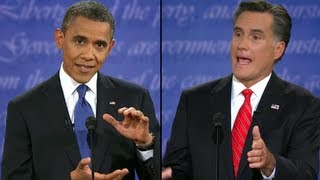 Barack Obama on Jobs and Taxes: The 2012 Debate Case2012 · 93 min · full transcript
 Barack Obama on State of the Union: A stronger future together2015 · 62 min · full transcript
 Barack Obama on Hope and Change: 2012 Acceptance Speech2012 · 39 min · full transcript
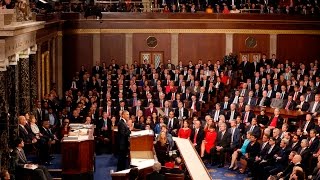 Barack Obama on the Future of America: Final State of the Union2016 · 61 min · full transcript