The American Promise
Start with Obama’s basic story: hope against cynicism.
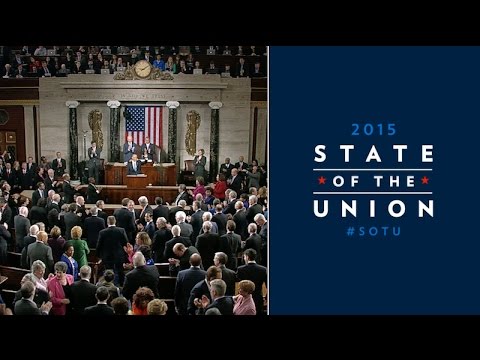
“Over the past six years, the pundits have pointed out more than once that my presidency hasn't delivered on this vision. How ironic, they say, that our politics seems more divided than ever. It's held up as proof not just of my own flaws -- of which there are many -- but also as proof that the vision itself is misguided, naïve, that there are too many people in this town who actually benefit from partisanship and gridlock for us to ever do anything about it. I know how tempting such cynicism may be. But I still think the cynics are wrong.”State of the Union Address, 2015 · 50:13
The lesson
Obama’s basic story about America starts with a choice: cynicism says the country is too divided or too stuck to live up to its ideals, while hope says the promise is still real if citizens act on it. In the 2004 convention speech, he presents America not as rival camps but as one people bound by common values and common obligations, which makes national unity a moral claim, not just a campaign slogan12. Later, he explicitly rejects the idea that division and gridlock prove the larger vision false, insisting that cynicism is tempting but wrong3.
For Obama, the American promise means more than abstract patriotism. It includes equality, opportunity, and the belief that ordinary people should have a fair chance to build a decent life through work, education, and mutual concern, as described in the 2004 keynote’s focus on dignity and opportunity for working families. Hope matters here because it is not passive wishing; it is confidence in possibilities that are not yet visible, paired with the willingness to keep working because the country has more to do45.
Obama also argues that democracy works from the bottom up. His victory speeches frame political change as something built by volunteers, small donors, workers, and neighbors rather than handed down by famous leaders, so the election becomes evidence that participation can still move the country67. That is why politics, at its best, is about service and shared purpose rather than ego: it turns private hopes into common action8.
But the promise of America is inseparable from responsibility. In the inaugural address and victory speeches, Obama says freedom comes with duties to one another, that citizenship asks for sacrifice, and that national greatness is something a people must earn through discipline, work, and public spirit rather than assume automatically91011. This is why his version of hope is demanding: it calls people to set aside smallness, face crises honestly, and contribute to the common good1213.
Taken together, Obama’s idea of America is a shared project. The country’s strength comes from believing that our destinies are linked, refusing to treat opponents as enemies, and trusting that progress is still possible even in hard times14915. The promise is not that history guarantees success, but that citizens can renew the nation when they choose unity, effort, and responsibility over fear and cynicism.
5 principles from Barack Obama
Choose hope over cynicism
Obama treats cynicism as a real temptation, especially when politics looks divided or disappointing. Applying this means refusing to confuse present dysfunction with permanent truth, and continuing to act as if improvement is possible through collective effort.
“Over the past six years, the pundits have pointed out more than once that my presidency hasn't delivered on this vision. How ironic, they say, that our politics seems more divided than ever. It's held up as proof not just of my own flaws -- of which there are many -- but also as proof that the vision itself is misguided, naïve, that there are too many people in this town who actually benefit from partisanship and gridlock for us to ever do anything about it. I know how tempting such cynicism may be. But I still think the cynics are wrong.”
See America as one people
Obama’s argument is that the nation cannot be reduced to hostile tribes without losing something essential about democracy. In practice, this means starting from shared values and obligations even when disagreement is sharp.
“There is not a liberal America and a conservative America. There is the United States of America.”
Treat politics as service, not performance
For Obama, politics matters because it affects real lives and gives ordinary people a way to shape the future together. Apply this by judging political work by whether it serves people and builds common action, not by whether it flatters leaders.
“That's why we do this. That's what politics can be.”
Link rights to responsibilities
Obama’s version of the American promise includes freedom and opportunity, but also duty, sacrifice, and care for others. To apply this, ask not only what you are owed by a community or country, but what you owe in return.
“The belief that our destiny is shared, that this country only works when we accept certain obligations to one another and the future generations; so that the freedom which so many Americans have fought for and died for comes with responsibilities as well as rights. And among those are love and charity and duty and patriotism. That's what makes America great.”
Earn renewal through work
Obama does not present national greatness as automatic or self-sustaining. Renewal requires discipline, honesty about problems, and sustained effort from citizens and institutions alike.
“Greatness is never a given; it must be earned.”
In his own words
The quotes behind the lesson, word for word from the transcripts. Numbers match the lesson above.
“There is not a liberal America and a conservative America. There is the United States of America.”
“I am my brother's keeper, I am my sister's keeper.”
“Over the past six years, the pundits have pointed out more than once that my presidency hasn't delivered on this vision. How ironic, they say, that our politics seems more divided than ever. It's held up as proof not just of my own flaws -- of which there are many -- but also as proof that the vision itself is misguided, naïve, that there are too many people in this town who actually benefit from partisanship and gridlock for us to ever do anything about it. I know how tempting such cynicism may be. But I still think the cynics are wrong.”
“In the end, that is God's greatest gift to us, the bedrock of this nation: a belief in things not seen…”
“We have more work to do.”
“Block by block. Brick by brick. Calloused hand by calloused hand.”
“I will never forget who this victory truly belongs to. It belongs to you. It belongs to you. I was never the likeliest candidate for this office. We didn't start with much money or many endorsements. Our campaign was not hatched in the halls of Washington. It began in the backyards of Des Moines, in the living rooms of Concord, in the front porches of Charleston. It was built by working men and women who dug into what little savings they had to give $5, $10, and $20 to the cause. It drew strength from the young people…”
“That's why we do this. That's what politics can be.”
“The belief that our destiny is shared, that this country only works when we accept certain obligations to one another and the future generations; so that the freedom which so many Americans have fought for and died for comes with responsibilities as well as rights. And among those are love and charity and duty and patriotism. That's what makes America great.”
“Greatness is never a given; it must be earned.”
“This is the price and the promise of citizenship.”
“The time has come to set aside childish things.”
“All this we can do. All this we will do.”
“…we are not enemies, but friends.”
“…the best is yet to come…”
Reflect
- Where are you most tempted toward cynicism in your work or civic life, and what would it look like to choose disciplined hope instead?
- What responsibilities come with the rights and opportunities you value most, either in your community, workplace, or family?
- If you took seriously the idea that your destiny is tied to other people’s, what decision would you make differently this month?
Check your understanding
Go deeper
 Barack Obama on Politics of Hope: Audacity in Boston2004 · 22 min · full transcript
 Barack Obama on Inaugural Address: Hope, Unity, and Renewal2009 · 99 min · full transcript
 Barack Obama on Election Victory: Yes We Can2008 · 17 min · full transcript
 Barack Obama on Hope & Democracy: The Best Is Yet to Come2008 · 30 min · full transcript