Health Care as Security
The Affordable Care Act as Obama’s argument that reform expands freedom, fairness, and economic stability.
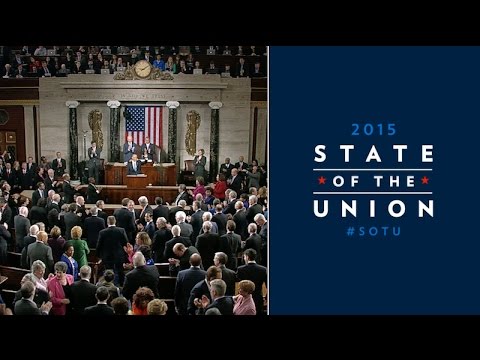
“The shadow of crisis has passed, and the State of the Union is strong.”State of the Union Address, 2015 · 3:32
The lesson
Obama treats health care reform as part of a larger argument about security. In his view, a strong middle class needs more than growth in the abstract; it needs protections that make family life less fragile and the economy more dependable. That is why he presents reform not as a side issue, but as part of the work of recovery, renewal, and widening opportunity.123
A core part of his case is urgency. He argues that delay is not neutral, because rising health care problems put pressure on families and weaken the country’s long-term position. So reform becomes a test of whether government will act on a structural problem instead of waiting for it to get worse.41
Obama also frames health care as a freedom issue, not only a budget issue. In his broader public philosophy, programs that protect people against major risks can expand real liberty by making it easier for people to pursue opportunity with less fear. That fits his larger claim that America’s promises become meaningful when citizens accept obligations to one another and build institutions that make equality more real in practice.56
He links that moral argument to economic fairness. His speeches repeatedly connect national strength to whether ordinary people have the tools and stability they need, whether in education, work, or family life. Health care reform belongs in that same category: not a luxury, but a foundation for middle-class security and a country that competes by investing in its people.378
Finally, Obama presents the Affordable Care Act as an example of democratic action under difficult conditions. Big reforms are slow, contested, and require persistence, compromise, and citizen involvement. So the achievement matters not only because of policy results, but because it demonstrates his broader belief that Americans can still use self-government to solve hard problems together.9101112
5 principles from Barack Obama
Treat health care as economic security
Obama’s point is that health policy is not separate from middle-class life; it shapes whether families can feel stable and whether the economy rests on a broad base. Apply this by asking how any reform affects everyday security, not just top-line growth.
“The shadow of crisis has passed, and the State of the Union is strong.”
Measure the cost of doing nothing
He insists that delay has consequences, especially on long-running problems. When evaluating a difficult reform, compare the risks of action with the risks of inaction rather than assuming postponement is safer.
“It must not wait, and it will not wait another year.”
See public provision as a way to widen freedom
Obama argues that collective protections can make liberty more real by reducing fear and insecurity. Use this lens when a policy debate is framed as government versus freedom; ask whether the policy actually increases people’s practical room to live, work, and choose.
“We hold these truths to be self-evident, that all men are created equal…”
Invest in people to strengthen the nation
His economic argument is that long-term competitiveness depends on building the capacities of ordinary Americans. Health care fits that same logic alongside education and other supports that help people participate fully in the economy.
“We cannot cede to other nations the technology that will power new jobs and new industries…”
Expect reform to require persistence and participation
Obama does not present major change as quick or frictionless. If you want durable reform, expect compromise, citizen engagement, and sustained effort instead of a single decisive moment.
“…change is never easy and never quick…”
In his own words
The quotes behind the lesson, word for word from the transcripts. Numbers match the lesson above.
“The cost of inaction will be far greater.”
“The shadow of crisis has passed, and the State of the Union is strong.”
“It's not a nice-to-have -- it's a must-have.”
“It must not wait, and it will not wait another year.”
“We hold these truths to be self-evident, that all men are created equal…”
“The belief that our destiny is shared, that this country only works when we accept certain obligations to one another and the future generations; so that the freedom which so many Americans have fought for and died for comes with responsibilities as well as rights. And among those are love and charity and duty and patriotism. That's what makes America great.”
“America thrived in the 20th century because we made high school free, sent a generation of GIs to college, trained the best workforce in the world. We were ahead of the curve. But other countries caught on. And in a 21st century economy that rewards knowledge like never before, we need to up our game. We need to do more. By the end of this decade, two in three job openings will require some higher education -- two in three. And yet, we still live in a country where too many bright, striving Americans are priced out of the education they need. It's not fair to them, and it's sure not smart for our future.”
“We cannot cede to other nations the technology that will power new jobs and new industries…”
“…change is never easy and never quick…”
“Democracy isn't a spectator sport.”
“Yes, we can. Not yes, she can. Not yes, I can. Yes, we.”
“You and I, as citizens, have the power to set this country's course…”
Reflect
- Where in your own work or community do you see a hidden cost of inaction that people treat as normal?
- What is one policy or institutional support you once thought of as a benefit, but could instead view as a form of security or freedom?
- How do you decide when a hard reform is worth pursuing even if it will be slow, controversial, and incomplete at first?
Check your understanding
Go deeper
 Barack Obama on Health Care Reform: A Call to Act Now2009 · 54 min · full transcript
 Barack Obama on Equality and Climate: Second Inaugural Address2013 · 224 min · full transcript
 Barack Obama on Hope & Democracy: Democratic convention farewell2008 · 49 min · full transcript
 Barack Obama on State of the Union: A stronger future together2015 · 62 min · full transcript