Barack Obama on National Security
Obama treats national security as the job of protecting Americans with targeted force, strong alliances, diplomacy, and clear limits that keep the country both safe and true to its values.
- Keeping Americans safe is the first duty of the president, but force should be used carefully and for clear aims.
- He favors targeted counterterrorism over open-ended wars and points to the bin Laden raid as the model.
- He argues America is stronger when it combines military power with diplomacy, sanctions, and alliances.
- He rejects framing the fight against terrorism as a war against Islam.
- He believes legitimacy matters: security policy should reflect law, restraint, and American values.
National security starts with protecting Americans
Obama frames national security first as a basic duty of the commander in chief: keep the American people safe. He presents this as the starting point for every later choice about war, diplomacy, alliances, and counterterrorism.1
That priority does not mean passivity after an attack. He says the United States should not tolerate threats to its security or stand aside when Americans have been killed, and he connects that duty to defending friends and allies as well.2
At the same time, he ties vigilance to endurance rather than panic. His approach is to remain alert at home and abroad without letting fear dictate policy.34
Use force precisely, not recklessly
Obama supports military force when it is necessary, but he insists it should be disciplined and tied to a concrete objective. The clearest example is the operation that killed Osama bin Laden, which he describes as a targeted mission built on years of intelligence work and authorized only after he judged the intelligence sufficient.56
He emphasizes that even successful force should be bounded by care and restraint. In announcing the raid, he stresses that it was carried out carefully to avoid civilian casualties and without American losses, showing his preference for narrow, high-confidence action over broad escalation.2
This view is also moral, not just tactical. He argues that war may sometimes be necessary, but it is never something to romanticize, and peace still demands responsibility and sacrifice.78
The lesson of Iraq is to match military action to strategy
Obama treats Iraq as a warning about what happens when the United States uses force without sound strategy. He says the military was not used wisely there and argues that later battlefield gains did not erase the larger strategic error.910
For him, the core mistake was not just poor execution but choosing the wrong focus. He argues the United States should have concentrated on those responsible for 9/11 rather than being drawn into a war that diverted attention and resources.11
That is why he contrasts rash decisions with smarter leadership. He warns against reacting to headlines or making the military the first answer to every challenge, because that invites unnecessary conflicts and weakens broader strategy.4
Diplomacy and alliances are part of hard power
Obama does not separate national security from diplomacy; he treats diplomacy as one of the main tools that makes security policy effective. He says America leads best when it combines military power with strong diplomacy and coalition building rather than acting from fear alone.4
This approach shapes how he talks about Iran, Syria, and the wider Middle East. He pairs firm lines with nonmilitary pressure, saying Iran will not obtain a nuclear weapon on his watch while also presenting sanctions, coordination, and international backing as essential.12
He also argues that alliances are themselves a strategic asset. In defending his record, he says refocusing after Iraq helped strengthen neglected relationships and made American alliances stronger across multiple regions.13

“…as long as I'm President of the United States, Iran will not get a nuclear weapon…”Third presidential debate, Lynn University, 2012 · full transcript →
America is safer when it rejects a clash with Islam and upholds its values
Obama repeatedly argues that the fight against terrorism must not be turned into a civilizational war. He says the United States is not at war with Islam and describes bin Laden not as a Muslim leader but as a murderer whose victims included many Muslims.1415
That idea is strategic as well as moral. In Cairo, he calls for ending the cycle of suspicion and discord and replacing it with mutual interest and mutual respect, suggesting that durable security requires reducing alienation that extremists exploit.16
More broadly, he believes American legitimacy matters. He argues that force should be constrained by law and human dignity, and that lasting peace depends on political freedom, rights, and opportunity, not only the absence of war.817
Obama on national security, in his own words
“…as long as I'm President of the United States, Iran will not get a nuclear weapon…”
Where to watch
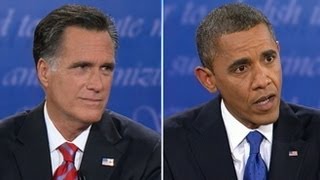 Barack Obama on Foreign Policy and Iran: Final Debate Exchange2012 · 92 min · full transcriptBest single overview of his security doctrine: protect Americans, strengthen alliances, pressure Iran, and avoid careless military entanglement.
 Barack Obama on the Bin Laden Raid: Justice Has Been Done2011 · 9 min · full transcriptShows how he thinks about targeted counterterrorism, intelligence, justice, and limits in the use of force.
 Barack Obama on War and Peace: The Nobel Lecture2009 · 37 min · full transcriptExplains the moral logic behind his view that force can be necessary but must be restrained by law and human dignity.
 Barack Obama on Iraq War Strategy: Mistakes, Surge, and Withdrawal2008 · 93 min · full transcriptGives the clearest account of what he thinks Iraq taught America about strategy, judgment, and misuse of military power.
 Barack Obama on Relations With the Muslim World: A new beginning2009 · 59 min · full transcriptExplains why he rejects treating terrorism as a war with Islam and why mutual respect matters for long-term security.
 Barack Obama on State of the Union: A stronger future together2015 · 62 min · full transcriptSummarizes his mature view of smarter American leadership through diplomacy, coalitions, and disciplined power.
Questions people ask
- How did Barack Obama decide to authorize the bin Laden raid?
- How did Barack Obama say America should lead in the world?
- What did Barack Obama mean when he said justice has been done?
- What did Barack Obama say about America's role in the Middle East?
- What did Barack Obama say about Islam and the fight against al Qaeda?
- What did Barack Obama say about alliances in foreign policy?
Sources
Every quote above, word for word from the transcripts. Numbers match the text.
“…my first job as commander-in-chief, Bob, is to keep the American people safe…”
“These efforts weigh on me every time I, as Commander-in-Chief, have to sign a letter to a family that has lost a loved one, or look into the eyes of a service member who's been gravely wounded. So Americans understand the costs of war. Yet as a country, we will never tolerate our security being threatened, nor stand idly by when our people have been killed. We will be relentless in defense of our citizens and our friends and allies. We will be true to the values that make us who we are. And on nights like this one, we can say to those families who have lost loved ones to al Qaeda's terror: Justice has been done. Tonight, we give thanks to the countless intelligence and counterterrorism professionals who've worked tirelessly to achieve this outcome.”
“We must -- and we will -- remain vigilant at home and abroad.”
“When we make rash decisions, reacting to the headlines instead of using our heads; when the first response to a challenge is to send in our military -- then we risk getting drawn into unnecessary conflicts, and neglect the broader strategy we need for a safer, more prosperous world. That's what our enemies want us to do. I believe in a smarter kind of American leadership. We lead best when we combine military power with strong diplomacy; when we leverage our power with coalition building; when we don't let our fears blind us to the opportunities that this new century presents. That's exactly what we're doing right now. And around the globe, it is making a difference.”
“…the United States has conducted an operation that killed Osama bin Laden…”
“Then, last August, after years of painstaking work by our intelligence community, I was briefed on a possible lead to bin Laden. It was far from certain, and it took many months to run this thread to ground. I met repeatedly with my national security team as we developed more information about the possibility that we had located bin Laden hiding within a compound deep inside Pakistan. And finally, last week, I determined that we had enough intelligence to take action, and authorized an operation to get Osama bin Laden and bring him to justice. Today, at my direction, the United States launched a targeted operation against that compound in Abbottabad, Pakistan.”
“But war itself is never glorious…”
“Peace requires responsibility; peace entails sacrifice.”
“…we did not use our military wisely in Iraq…”
“…that was a tactic designed to contain the damage of the previous four years of mismanagement of this war…”
“We ended the war in Iraq, refocused our attention on those who actually killed us on 9/11…”
“…as long as I'm President of the United States, Iran will not get a nuclear weapon…”
“We were able to refocus our attention on not only the terrorist threat but also beginning a transition process in Afghanistan. It also allowed us to refocus on alliances and relationships that had been neglected for a decade. And, Governor Romney, our alliances have never been stronger—in Asia, in Europe, in Africa, with Israel, where we have unprecedented military and intelligence…”
“…the United States is not -- and never will be -- at war with Islam.”
“As we do, we must also reaffirm that the United States is not -- and never will be -- at war with Islam. I've made clear, just as President Bush did shortly after 9/11, that our war is not against Islam. Bin Laden was not a Muslim leader; he was a mass murderer of Muslims. Indeed, al Qaeda has slaughtered scores of Muslims in many countries, including our own. So his demise should be welcomed by all who believe in peace and human dignity. Over the years, I've repeatedly made clear that we would take action within Pakistan if we knew where bin Laden was. That is what we've done.”
“This cycle of suspicion and discord must end.”
“Our actions matter and can bend history in the direction of justice.”
How this guide was made: drafted with AI from the full transcripts of the recordings cited, then checked: every quotation must match a transcript word for word and be the speaker's own words, and an independent review gates accuracy. Methodology and corrections.
