Yuval Noah Harari on Free Will
Harari argues that free will is a central liberal belief now challenged by life science and by algorithms that can predict, influence, and sometimes outperform our own self-understanding.
- Harari rejects free will as an ultimate inner power and says life science undermines it.
- He thinks liberal society was built on trusting feelings and the individual voice as authority.
- That authority is shifting to algorithms as they predict and shape choices better than we can.
- His practical response is not surrender, but stronger self-knowledge, reflection, and emotional balance.
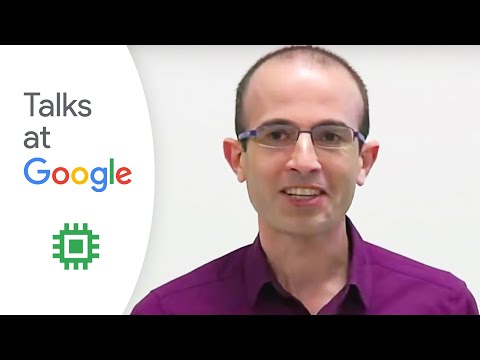
“There is no such thing as freedom according to the life sciences.”Talks at Google, 2015 · 37:33
Harari thinks free will is not a scientific fact
Harari’s basic claim is stark: the traditional idea of free will does not survive the view of human beings emerging from the life sciences. He says freedom in the strong liberal sense is not something science finds inside us, and he treats free will as a human-made idea rather than a discoverable essence of the mind12.
His reason is that feelings and choices do not come from a mysterious independent self. He describes feelings as biochemical processes and connects this to the broader idea that organisms can be understood as algorithms, even while noting that this remains an open and very deep question rather than settled proof234.
“There is no such thing as freedom according to the life sciences.”Talks at Google, 2015 · full transcript →
Why this matters: liberalism depends on the inner voice
For Harari, free will is not just a philosophical puzzle. It sits near the center of modern liberal culture, which treats the individual and personal feelings as the highest source of authority in politics, economics, ethics, and art5.
That is why the challenge is so explosive. If the inner voice is less sovereign than liberalism assumed, then the moral and political habit of simply trusting yourself becomes unstable. He contrasts the older advice to follow your heart with a future in which people increasingly ask digital systems what to do6.
He also worries that democracy gets harder when expression expands at the same time manipulation improves. More people may have a voice, but the key question becomes whether that voice is really theirs in any meaningful sense once the inner voice itself can be steered7.
“…the dominant ideology of the world at present is liberal humanism, or in short, liberalism.”Talks at Google, 2015 · full transcript →
Algorithms may know you better than you know yourself
Harari’s most famous extension of this view is that authority is moving from humans to algorithms. He says this shift happens because data-driven systems may identify patterns in our preferences, habits, and vulnerabilities better than conscious self-reflection can89.
In his account, the danger is not only that machines become useful advisers. It is that they become trusted decision-makers because their recommendations appear more accurate than our own judgments. Once that happens, people hand over both data and authority step by step rather than all at once9.
This is the background to his warning that humans are becoming hackable. If a system can read the body and behavior closely enough, it may predict what you want, influence what you choose, and even anticipate your resistance to being influenced101112.
AI raises the stakes because it can decide and persuade
Harari sees AI as different from earlier tools because it can make decisions and generate new ideas by itself. That makes the free-will problem more urgent, since the systems influencing us are no longer passive channels but active agents in media, finance, politics, and daily life1314.
He is especially concerned about trust. If people already struggle to trust one another, moving trust to nonhuman systems does not solve the problem; it may deepen it, especially when those systems can simulate intimacy and use language persuasively at scale151617.
This is why Harari often frames the issue less as machine rebellion and more as human dependency. The central question is whether we keep technology in a servant role or drift into serving systems that increasingly guide our preferences and decisions18.
His practical response is self-knowledge, reflection, and resilience
Harari does not answer the challenge to free will by saying people should simply trust technology or reject it outright. He argues for strengthening the human capacities that make manipulation harder: emotional intelligence, mental balance, and the ability to understand oneself more deeply1920.
He also stresses habits of reflection over constant information intake. In a world saturated with persuasive systems and accelerating signals, he recommends spending less time consuming and more time reflecting, because clearer attention is one of the few defenses against being pushed around by external forces21.
Education therefore has to change. Instead of preparing people for one fixed role, it should prepare them to adapt repeatedly and protect human beings rather than merely preserving existing jobs2223. And even if algorithms become more capable, he insists there is still a human task no system can relieve for us automatically: you still have to do the inner work yourself2425.
Harari on free will, in his own words
“There is no such thing as freedom according to the life sciences.”
“…you need to walk the last mile yourself…”
Where to watch
 Yuval Noah Harari on Dataism and Algorithms: Who Will Rule Next2017 · 58 min · full transcriptBest single talk for Harari’s full case that humanism and free will are being challenged by data and algorithms.
 Yuval Noah Harari on New Religions: Data Will Replace Faith2015 · 83 min · full transcriptExplains why liberalism rests on the authority of the individual and why Harari thinks life science destabilizes that view.
 Yuval Noah Harari on AI, Biotech, and Meaning: Google Talk2018 · 59 min · full transcriptShows how AI plus biotech could know people better than they know themselves and what that means for autonomy.
 Yuval Noah Harari on Future of Education: Learning to Reinvent Yourself2018 · 60 min · full transcriptMost practical discussion of how to live and learn when humans become increasingly predictable and influenceable.
 Yuval Noah Harari on AI and Human Futures: Urgent Warnings2024 · 106 min · full transcriptSharpest warning about AI as a system that can decide and generate ideas, raising the stakes for human agency.
 Yuval Noah Harari on AI Power Dynamics: Trust, Control, and Rights2024 · 67 min · full transcriptBest for Harari’s concerns about trust, persuasion, and handing decisions over to apparently intelligent systems.
Questions people ask
- What did Yuval Noah Harari say about asking Google or Amazon what to do with your life?
- What did Yuval Noah Harari say about free will and feelings?
- What did Yuval Noah Harari say about how people will come to trust algorithms with major life decisions?
- What did Yuval Noah Harari say about how to know yourself better?
- What did Yuval Noah Harari say about whether we can trust our inner voice in the age of algorithms?
- What did Yuval Noah Harari say are the limits of hacking the human mind?
Sources
Every quote above, word for word from the transcripts. Numbers match the text.
“There is no such thing as freedom according to the life sciences.”
“It's just another myth, another empty term that humans have invented. Humans have invented God, and humans have invented heaven and hell, and humans have invented free will, but there is no more truth to free will than there is to heaven and hell. And as for feelings, they are definitely real, they are not a fiction of our imagination, but feelings are really just biochemical algorithms, and there is nothing metaphysical or supernatural about them. There is no obvious reason to consider them as the highest authority in the world, and most importantly, what scientists and engineers are telling us more and more, is that if we only have enough data, and enough computing power, we can create external algorithms that understand humans and their feelings much better than humans can understand themselves.”
“The most fundamental idea in this respect comes from the life sciences, which says, organisms are algorithms. This is the most important, I think, insight of our age. And also the most important question because we don't have any proof of it. Currently, it's just dogma. We don't have any explanation of how any kind of algorithm can create subjective experiences. Indeed, in the field of computers we are, as far as I know, we're not even close to creating subjective experiences in computers. It's just a dogma that people will say, yes. It's the same.”
“First of all very important to emphasize that all this depends on the idea that we are in the process of hacking the human being, and in particular, of hacking the human mind and the human brain. But we are still very, very far from understanding the brain and even further from understanding the mind. And there is a chance that in the end, it will turn out that organisms aren't algorithms after all. There are some very deep things we still don't understand about the brain and the mind, and all this dream will turn out to be a fantasy.”
“…the dominant ideology of the world at present is liberal humanism, or in short, liberalism.”
“In the humanist age, in the 19th and 20th century, they will tell you just follow your heart. Just try to connect to your authentic self and just follow your heart. In the 21st century, the advice will be "Oh, listen to Amazon, "ask Google what to do". And I would come to Google or Amazon, and I would say, "Google, I have this dilemma. "What do you recommend that I do? "What is the best course of action for me?".”
“I agree that more people have more voice than ever before, both in the US and globally. I think you're absolutely right. My concern is, to what extent we can trust the voice of people... To what extent I can trust my voice? Like, I'm... We have this picture of the world that I have this voice inside me, which tells me what is right and what is wrong. And the more I'm able to express this voice in the outside world and influence what's happening, the more people can express their voices, it's better, it's more democratic. But what happens if at the same time that more people can express their voices, it's also easier to manipulate your inner voice? To what extent you can really trust that the thought that just popped up in your mind is the result of some free will, and not the result of an extremely powerful algorithm that understands what's happening inside you and knows how to push the buttons and press the levers, and is serving some external entity and it has planted this thought or this desire that you now express?”
“…authority is beginning to slip away, to shift from us to other entities, and in particular, to shift from us to algorithms.”
“And it won't happen overnight, like in some immediate revolution, it's a process. We'll ask Google or Amazon or Facebook or whatever, for their advice on more and more decisions, and if we see that indeed we get good recommendations better than the decisions we ourselves usually take, then we trust them more and more, trust them more with our data, and also trust them more with authority to make decisions for us.”
“…humans will soon be hackable animals…”
“I know you so well, that I even know you don't like the advice I now gave you.”
“An AI system that gets to know me in order to protect me…”
“It's the first technology in history that can make decisions by itself…”
“They underestimate the magnitude of the AI revolution. AI is nothing like print. It's nothing like the industrial revolution of the 19th century. It's far, far bigger. There is a fundamental difference between AI and the printing press or the steam engine or the radio or any previous technology we invented. The difference is it's the first technology in history that can make decisions by itself and that can create new ideas by itself. A printing press or a radio set could not write new music or new speeches and could not decide what to print and what to broadcast.”
“If you can't trust the other humans that you have known for thousands of years, why do you think you can trust a super intelligent alien entity…”
“…the biggest quote psychological and social experiment in human history…”
“Now maybe the most important distinction to be made first of all is between intelligence and consciousness. What is consciousness? How is it different from intelligence? Intelligence is the ability to pursue goal and overcome obstacles on the way to your goal in all kinds of creative ways and that they have and that they can do that's that they can do in certain fields now better than us. Consciousness is the ability to feel things like love and hate and and and and joy and pleasure. Now in humans consciousness and intelligence go together. We select goals based on our feelings and we also use our feelings to find ways to get to the goal. AIS at present have no consciousness. They they can have goals. They can be very creative on the way to the goal. They are very intelligent. But they don't feel anything.”
“The key is to remember that we created them to serve us, and not that we are here in order to serve them.”
“…the most important goals of education in the 21st century are probably to develop your emotional intelligence and your mental balance…”
“No, I don't think that knowing yourself is necessarily all about intelligence. Certainly not in the narrow sense of intelligence. If you include emotional intelligence and so forth, then yes. But in the more narrow sense of IQ, I think this is not-- there are many very intelligent people in the world who don't know themselves at all, which is an extremely dangerous combination. Now some people explore themselves through therapy. Some use meditation. Some use art. Some use poems.”
“I would say that people should consume less information and spend more time reflecting…”
“…the ability to reinvent themselves repeatedly throughout their lives…”
“What we need to protect is not the jobs, it's the humans…”
“…you need to walk the last mile yourself…”
“And maybe the two most important influences is that first it enabled me to have more clarity and more focus. And certainly when you write about such big subjects like trying to summarize the whole of history in 400 pages. So having a very, very focused mind is very important, because the great difficulty is that everything kind of distracts you. You start writing about the Roman Empire and you say, well, I have to explain this and this and this and this, and you end up with 4,000 pages. So we have to be very-- what is really important, and what can be left outside? And the other thing is that at least the meditation that I practice, which is with passive meditation, it's all about really knowing the difference between the fictions and stories generated by our mind and the reality.”
How this guide was made: drafted with AI from the full transcripts of the recordings cited, then checked: every quotation must match a transcript word for word and be the speaker's own words, and an independent review gates accuracy. Methodology and corrections.