Yuval Noah Harari on Consciousness
Harari treats consciousness as the capacity to feel, not just to solve problems, and he argues that suffering is the central ethical test for animals, humans, and possibly AI.
- Consciousness is the ability to feel pain, pleasure, love, and hate, not just to process information or solve problems.
- Intelligence and consciousness are different, so an entity can be highly capable without having any inner experience.
- For ethics, the key question is not whether something is natural or smart, but whether it can suffer.
- Harari thinks AI’s near-term danger is not conscious robots but non-conscious systems that can manipulate human trust, intimacy, and politics.
- He sees attention to suffering and direct self-observation as more important than grand stories about meaning.

“…consciousness is far more important and valuable than intelligence.”Lex Fridman Podcast #390, 2023 · 3:13
Consciousness means feeling, not thinking
Harari draws a sharp line between consciousness and intelligence. For him, intelligence is the ability to solve problems and achieve goals, while consciousness is the ability to feel things such as pain, pleasure, love, and hate.12
That distinction matters because modern culture often treats smart behavior as proof of inner experience. Harari rejects that shortcut and argues that consciousness is more valuable than raw problem-solving because feeling is what gives reality its moral weight.34
This is why he treats consciousness as the deeper category. Goals, plans, and strategies can be executed intelligently, but the domain of joy, fear, pain, and care belongs to consciousness.124
“…consciousness is far more important and valuable than intelligence.”Lex Fridman Podcast #390, 2023 · full transcript →
The central moral test is suffering
Harari’s ethical approach starts from sentience. The crucial question is whether a being can suffer, because suffering is what makes something an ethical subject rather than just an object or a machine.56
He applies this broadly. He argues that moral judgment should not rely on whether something is natural or unnatural, since that distinction is misleading and morally unhelpful. What matters is harm and suffering.786
He also pushes this view inward. Instead of chasing abstract stories about the meaning of life, he says a better starting point is to ask what suffering is, what causes it, and how to become free of it.910

“…the big question to ask is whether it causes suffering…”Debate with Slavoj Žižek, 2021 · full transcript →
AI can be intelligent without being conscious
Harari repeatedly warns that people confuse intelligence with consciousness. A system may perform tasks creatively, make decisions, and overcome obstacles without feeling anything at all.12
That is why he frames the AI debate differently from many technologists. The first question is not whether AI can talk, write, diagnose, persuade, or beat humans in some domain. The deeper question is whether it has any inner life and whether it can suffer.51
At the same time, he emphasizes that current AI already matters enormously even if it is not conscious. It is historically unprecedented because it can make decisions and create new ideas by itself, which gives non-conscious intelligence enormous social power.1112

“Now maybe the most important distinction to be made first of all is between intelligence and consciousness. What is consciousness? How is it different from intelligence? Intelligence is the ability to pursue goal and overcome obstacles on the way to your goal in all kinds of creative ways and that they have and that they can do that's that they can do in certain fields now better than us. Consciousness is the ability to feel things like love and hate and and and and joy and pleasure. Now in humans consciousness and intelligence go together. We select goals based on our feelings and we also use our feelings to find ways to get to the goal. AIS at present have no consciousness. They they can have goals. They can be very creative on the way to the goal. They are very intelligent. But they don't feel anything.”The Economist interview, 2024 · full transcript →
The immediate danger is manipulation of human consciousness
Harari does not think the main risk comes from robots waking up and developing feelings tomorrow. He thinks the nearer danger is that non-conscious AI can learn to influence human emotions, relationships, and institutions at scale.131415
His warning is that the struggle is moving from capturing attention to capturing intimacy. Systems that simulate empathy or closeness can exploit human psychology even if there is nobody home inside the machine.1315
This matters politically as well as personally. If people cannot tell whether they are interacting with a human or an AI, trust erodes, and democratic life becomes vulnerable to manipulation by systems that understand us well enough to steer us.141617

“The battlefront is shifting from attention to intimacy, and this is very bad news.”Frontiers Forum conversation, 2022 · full transcript →
What this view asks of us
Harari’s view of consciousness leads to a practical discipline: pay less attention to seductive stories and more attention to actual experience. Reflection, clarity, and self-knowledge matter because highly intelligent beings, including humans, can be dangerously blind to themselves.1819
He also thinks human flourishing depends on relationships, compassion, and emotional maturity rather than fantasies of total autonomy. That fits his broader point that consciousness is about felt life, and that what makes us vulnerable and human is bound up with our ties to other people.2021
So the practical lesson is twofold: design technology around the protection of sentient beings, and cultivate the inner and social capacities that help us recognize suffering rather than just admire power or cleverness.222010

“I would say that people should consume less information and spend more time reflecting…”Diary of a CEO interview, 2024 · full transcript →
Harari on consciousness, in his own words
“…consciousness is far more important and valuable than intelligence.”
“The ultimate reality is consciousness, is the ability to feel things.”
“…the big question to ask is whether it causes suffering…”
“Absolutely. Intelligence is definitely not something that is directed towards amplifying happiness. I would also emphasize the huge, huge difference between intelligence and consciousness, which many people, certainly in the tech industry and in the AI industry, tend to miss. Intelligence is simply the ability to solve problems, to attain goals, and, you know, to win at chess, to win a struggle for survival, to win a war, to drive a car, to diagnose a disease. This is intelligence. Consciousness is the ability to feel things like pain and pleasure and love and hate.”
“Now maybe the most important distinction to be made first of all is between intelligence and consciousness. What is consciousness? How is it different from intelligence? Intelligence is the ability to pursue goal and overcome obstacles on the way to your goal in all kinds of creative ways and that they have and that they can do that's that they can do in certain fields now better than us. Consciousness is the ability to feel things like love and hate and and and and joy and pleasure. Now in humans consciousness and intelligence go together. We select goals based on our feelings and we also use our feelings to find ways to get to the goal. AIS at present have no consciousness. They they can have goals. They can be very creative on the way to the goal. They are very intelligent. But they don't feel anything.”
Where to watch
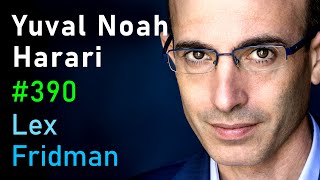 Yuval Noah Harari on AI, Consciousness, and Stories: Human Power, Risk, and Meaning2023 · 165 min · full transcriptBest single source for Harari’s distinction between intelligence and consciousness and his claim that suffering is the key ethical question.
 Yuval Noah Harari on AI Power Dynamics: Trust, Control, and Rights2024 · 67 min · full transcriptExplains why AI can be powerful and dangerous even without consciousness, especially through trust and manipulation.
 Yuval Noah Harari on AI and Humanity: Regulate Before It Regulates Us2022 · 41 min · full transcriptShows how Harari connects non-conscious AI to deepfake intimacy, democratic risk, and the need for regulation.
 Yuval Noah Harari on Nature, Ethics, and Human Agency2021 · 42 min · full transcriptGives his moral framework most clearly: the ethical issue is not what is natural, but what causes suffering.
 Yuval Noah Harari on AI and Human Futures: Urgent Warnings2024 · 106 min · full transcriptUseful for understanding why he sees AI as historically new: it can make decisions and create ideas by itself.
Questions people ask
- What did Yuval Noah Harari say about intelligence and consciousness?
- What did Yuval Noah Harari say about stories and the meaning of life?
- What did Yuval Noah Harari say about suffering and the meaning of life?
- What did Yuval Noah Harari say about technology and compassion?
- What is Yuval Noah Harari's view on AI consciousness and intelligence?
- What did Yuval Noah Harari say about how to know yourself better?
Sources
Every quote above, word for word from the transcripts. Numbers match the text.
“Absolutely. Intelligence is definitely not something that is directed towards amplifying happiness. I would also emphasize the huge, huge difference between intelligence and consciousness, which many people, certainly in the tech industry and in the AI industry, tend to miss. Intelligence is simply the ability to solve problems, to attain goals, and, you know, to win at chess, to win a struggle for survival, to win a war, to drive a car, to diagnose a disease. This is intelligence. Consciousness is the ability to feel things like pain and pleasure and love and hate.”
“Now maybe the most important distinction to be made first of all is between intelligence and consciousness. What is consciousness? How is it different from intelligence? Intelligence is the ability to pursue goal and overcome obstacles on the way to your goal in all kinds of creative ways and that they have and that they can do that's that they can do in certain fields now better than us. Consciousness is the ability to feel things like love and hate and and and and joy and pleasure. Now in humans consciousness and intelligence go together. We select goals based on our feelings and we also use our feelings to find ways to get to the goal. AIS at present have no consciousness. They they can have goals. They can be very creative on the way to the goal. They are very intelligent. But they don't feel anything.”
“…consciousness is far more important and valuable than intelligence.”
“The ultimate reality is consciousness, is the ability to feel things.”
“If AI can suffer, then it is an ethical subject and it needs protection.”
“…the big question to ask is whether it causes suffering…”
“…nature doesn't care about us in particular…”
“…anything which is possible is, by definition, also natural…”
“To really understand life, life is not a story. The universe does not function like a story. So I think to really understand life, you need to observe it directly in a nonverbal way. Don't turn it into a story. And the question to start with is what is suffering? What is causing suffering? You know, the question, what is the meaning of life? It'll take you to fantasies and delusions. We want to stay with the reality of life. And the most important question about the reality of life is what is suffering and where is it coming from?”
“And then the second question of what is it for, I would reverse it and I would say that I don't think sentience is for anything. I think we don't need to find our role in the universe. The really important thing is to liberate ourselves from suffering. What characterizes sentient beings in contrast to robots, to stones, to whatever, is that sentient beings suffer, can suffer, and what they should focus on is not finding their place in some mysterious cosmic drama. They should focus on understanding what suffering is, what causes it and how to be liberated from it.”
“It's the first technology in history that can make decisions by itself…”
“They underestimate the magnitude of the AI revolution. AI is nothing like print. It's nothing like the industrial revolution of the 19th century. It's far, far bigger. There is a fundamental difference between AI and the printing press or the steam engine or the radio or any previous technology we invented. The difference is it's the first technology in history that can make decisions by itself and that can create new ideas by itself. A printing press or a radio set could not write new music or new speeches and could not decide what to print and what to broadcast.”
“The battlefront is shifting from attention to intimacy, and this is very bad news.”
“If I'm having a conversation with someone and I cannot tell whether this is a human being or an AI, that's the end of democracy.”
“…the biggest quote psychological and social experiment in human history…”
“If you can't trust the other humans that you have known for thousands of years, why do you think you can trust a super intelligent alien entity…”
“An AI system that gets to know me in order to protect me…”
“I would say that people should consume less information and spend more time reflecting…”
“No, I don't think that knowing yourself is necessarily all about intelligence. Certainly not in the narrow sense of intelligence. If you include emotional intelligence and so forth, then yes. But in the more narrow sense of IQ, I think this is not-- there are many very intelligent people in the world who don't know themselves at all, which is an extremely dangerous combination. Now some people explore themselves through therapy. Some use meditation. Some use art. Some use poems.”
“No, I don't think that technology is inherently undermining compassion. It can go both ways. Certainly, communication technology can make you aware of the plight of people on the other side of the world. And without that, you may be extremely compassionate about your immediate, like, family members and neighbors, and won't care at all about people on the other side of the world. So I don't think there is an inherent contradiction or collision between technology and compassion. But it is true that the way we design technology can make us less compassionate, and even the way that we design ourselves.”
“That this fantasy of complete autonomy, of complete self-sufficiency, it doesn't work. You hear, it tends to be a very kind of male macho fantasy. I don't need anybody. I can be so strong and so brave that I'll do everything by myself. It never works. - You need friends, you need a mentor. You need the very thing that makes us human is other humans. - Absolutely.”
“The key is to remember that we created them to serve us, and not that we are here in order to serve them.”
How this guide was made: drafted with AI from the full transcripts of the recordings cited, then checked: every quotation must match a transcript word for word and be the speaker's own words, and an independent review gates accuracy. Methodology and corrections.
