Sara Blakely on Women in Business
Sara Blakely sees women in business as powerful problem-solvers who should trust their intuition, own their ambition, and build around how women actually feel.
- Start with a real problem you personally understand
- Treat feminine energy and intuition as business strengths, not liabilities
- Expect rejection and self-doubt, but keep moving anyway
- Women should feel comfortable with ambition, money, and independence
- Build products and workplaces around how women feel, not just how they look

Women build best when they solve a problem they truly know
Blakely’s view starts with proximity to the problem. She built her business from a frustration she personally had, and she repeatedly returns to the idea that her strongest ideas come from lived experience rather than abstract market theory12.
That matters for women in business because she sees firsthand consumer knowledge as an advantage. In categories designed mostly by people who do not use the product, women founders can spot what is missing faster and design something meaningfully better23.
She also ties ambition to usefulness. Her goal was not just to start a company, but to invent something she could sell at scale that would make people feel good, which frames entrepreneurship as service as much as success4.
“…my inspiration was my own butt…”Fortune Most Powerful Women interview, 2013 · full transcript →
Feminine energy is a superpower in leadership
Blakely rejects the idea that women have to lead like men to be taken seriously. She argues that feminine energy, intuition, and a different style of building are not weaknesses to hide but strengths to use deliberately567.
That shows up in how she made decisions. She says she honored her own inner knowing instead of forcing herself into an older model of business, and she was intentional about not flattening that part of herself just to fit expectations67.
Her broader habit is to question default assumptions. She is constantly asking why things are done a certain way, which helps explain why she thinks women can create breakthroughs precisely when they stop accepting inherited rules about products, leadership, or markets89.
Rejection, fear, and self-doubt are normal—persistence is the differentiator
Blakely does not present women in business as naturally fearless. She is clear that self-doubt was hard, that she faced repeated rejection, and that hearing no over and over can intensify uncertainty rather than magically build confidence1011.
Her answer is not to wait for fear to disappear. She pushes through by making regret the bigger fear, using that mindset to take action even when she feels scared, unsure, or out of place121314.
She also learned early to reinterpret failure. Instead of defining failure by the outcome, she was taught to define it as not trying, which makes experimentation and resilience central to her view of women’s advancement in business15.
Women should own ambition, money, and independence
Blakely treats ambition and money as healthy subjects for women, not taboo ones. She does not accept the idea that money is inherently corrupting, and she describes success as something that amplifies character rather than replacing it171819.
That perspective supports a more expansive role for women in business. Earning money can mean freedom, generosity, and the ability to help others, not just personal gain2021.
She is especially direct about financial independence. Her warning not to let a man control you with money makes independence part of women’s business empowerment, not a side issue22.
Build around how women feel, and create workplaces that support them
Blakely’s standard for product design is emotional as well as functional. She wants to improve how women feel in what they wear, and she says that focus should come before image, marketing, or tradition3.
That is why she obsesses over the product itself. In her view, no amount of branding can save something that does not genuinely work for the woman using it, so women-centered businesses must keep refining until the experience is dramatically better3.
Her thinking also extends to culture. She has spoken about wanting Spanx to be a supportive workplace, especially for women and working mothers, which suggests that women in business should not only make female-centered products but also build female-centered environments.

“I HAVE BEEN ADVOCATING FOR WOMEN THROUGH PRODUCT. THAT'S HOW I FEEL. AND THE TEAM AT SPANX FEELS THAT WAY. WHEN I STOOD IN THE MANUFACTURING PLANTS TWO YEARS AGO, I WAS ONE OF THE ONLY WOMEN IN THE PLANT. THEN WE'RE MAKING UNDERGARMENTS. I'M LIKE WE'RE NOT COMFORTABLE IN THEM. SPANX HAS BEEN TAKING THE POSITION OF FOCUS ON HOW SHE FEELS FIRST IN EVERYTHING WE MAKE. EVERY PROTOTYPE. SOMETIMES IT TAKES MANY, SOMETIMES WE NEVER LAUNCH A PRODUCT. WE'RE ALWAYS HOW DO YOU FEEL. WE WANT WOMEN TO HAVE THAT SPANX FEELING.”NBC Today interview, 2014 · full transcript →
Blakely on women in business, in her own words
“I saw the feminine as a superpower.”
“I'm going to honor my intuition.”
Where to watch
 Sara Blakely on Betting on Yourself: Build What Women Need2025 · 21 min · full transcriptBest single overview of her case for intuition, feminine energy, and building what women actually need.
 Sara Blakely on Entrepreneurship and Leadership: Building Spanx2023 · 22 min · full transcriptStrong on ambition, money, failure, and the kind of workplace she wanted to create for women.
 Sara Blakely on Female Entrepreneurship: My Inspiration Was My Own Butt2013 · 17 min · full transcriptShows how a woman founder can turn a personal frustration into a category-changing business.
 Sara Blakely on Entrepreneurship: Start Small, Think Big46 min · full transcriptUseful for understanding self-doubt, rejection, and how she persisted without abandoning her style.
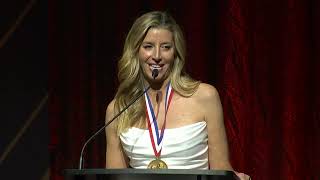 Sara Blakely on Inventing With Confidence: Hall of Fame Induction2023 · 6 min · full transcriptConcise statement of her belief that invention is about self-belief and solving problems for women.
Questions people ask
- What did Sara Blakely say about building Spanx with feminine energy?
- What did Sara Blakely say about starting products from a personal problem?
- What did Sara Blakely say was the hardest part about getting Spanx off the ground?
- What does Sara Blakely say she fears most?
- How does Sara Blakely build confidence and make bold decisions?
- What did Sara Blakely say about designing products for women?
Sources
Every quote above, word for word from the transcripts. Numbers match the text.
“…my inspiration was my own butt…”
“Well, I for me everything starts with a problem and it's usually a problem that I'm experiencing. Um I couldn't find a solution of what to wear under white pants. I got frustrated with the undergarment options and then with sneaks obviously high heels are very uncomfortable and have been for like hundreds of years and I really wanted to take a new fresh approach at that. I think it's interesting that both of the industries that I decided to go in and try to disrupt were were really kind of on the decline.”
“I HAVE BEEN ADVOCATING FOR WOMEN THROUGH PRODUCT. THAT'S HOW I FEEL. AND THE TEAM AT SPANX FEELS THAT WAY. WHEN I STOOD IN THE MANUFACTURING PLANTS TWO YEARS AGO, I WAS ONE OF THE ONLY WOMEN IN THE PLANT. THEN WE'RE MAKING UNDERGARMENTS. I'M LIKE WE'RE NOT COMFORTABLE IN THEM. SPANX HAS BEEN TAKING THE POSITION OF FOCUS ON HOW SHE FEELS FIRST IN EVERYTHING WE MAKE. EVERY PROTOTYPE. SOMETIMES IT TAKES MANY, SOMETIMES WE NEVER LAUNCH A PRODUCT. WE'RE ALWAYS HOW DO YOU FEEL. WE WANT WOMEN TO HAVE THAT SPANX FEELING.”
“I want to invent my own product that I can sell to millions of people that will make them feel good.”
“I saw the feminine as a superpower.”
“I'm going to honor my intuition.”
“What would it look like for me? Like what? And that's part of why I was really careful about getting investors. I was like, I'd rather bootstrap it and kind of honor this divine feminine and this knowing inside of me along with my masculine, but I didn't want to squash the feminine to get to where I wanted to be. And so I was very intentional about trying to create Spanx with a lot more feminine energy, which at the time — it's getting better, but at the time feminine was really seen as a weakness, in my opinion. It felt like it wasn't taken seriously, and I saw it as a superpower.”
“I think the latter. I'm always asking why in everything.”
“I think the latter. I'm always asking why in everything. It's like why is it like this? Why? Why? Why? How long has it been this way? Why hasn't it? who was the first to think of this? Could it be better? So, I think it's more about not accepting the status quo. And you know, I want to just mention I've been working on my mindset since I'm 16 years old. I started listening to tapes. I'm dating myself uh by Dr. Wayne Dyer and it was how to be a no limit person. But it was really talking about visualizing what you want, manifesting it, law of attraction, not fearing failure, not caring what other people think about you. And um that is really important especially as women for us to find that confidence because if you are going to say I want to buck the whole system. That's scary. You have to have a lot of inner strength and a and a very strong inner compass to be able to stand in that space.”
“I heard the word no for two straight years…”
“There were two things that were happening. One was my own self-doubt was a really hard part of the journey and then the beginning of all the manufacturers that I was having to cold call, and talked to to try to get my product made were all men. And it was much harder to explain and to try to get them to understand the concept of what the product was. So I heard the word no for two straight years trying to get it made, which then increases the self-doubt that can happen and one of the interesting things about being an inventor is you don't go to school for it. There isn't an inventor class. You can't major in inventing. And so it's really a belief system in yourself and the willingness to look stupid or to have people laugh at you or to fail at something that you believe, you're your own gut check on that.”
“My fear of regret is greater than the fear of doing it.”
“I use my own mortality a lot to help me walk through the door and make that cold call.”
“I'm scared about regrets. So I'm scared about the things that I'm gonna leave on the table when I'm all done and I'm 60, 70, 80, and I can't do them. I don't want to look back and be like, I didn't do this because fill in the blank. So your fear of regret is greater than the fears of not doing? My fear of regret is greater than the fear of doing it.”
“Failure for my brother and me became about not trying versus the outcome.”
“I do not subscribe at all to "money is the root of all evil.”
“…money just makes you more of who you already were…”
“I feel like success just makes you more of who you already were. I feel like money and success just does that, so it's like it holds a magnifying glass up to who you are. People always ask me that, and I am like, I don't know who else to be, I am who I am. So the money, the success, and so I like to say if you were a jerk before you got really successful, and a lot of money, you become a bigger jerk, really. And if you were insecure, you'll become more insecure, if you were nice, you become nicer. If you were generous, you become become more generous, it's literally just a magnifying glass.”
“…the power of paying things forward…”
“Richard Branson is, you know, all about stepping way outside of your comfort zone. We have a lot of similarities with the branding of our companies and sort of the marketing and PR aspect of him being the face of the Virgin brand. I've learned a lot of tips by observing and speaking to him about that. And Oprah, she's always taught me from afar the power of paying things forward and also the power of being authentic. She's just authentically who she is, and that's very powerful. So some examples of how I've been paying it forward is at Spanx, we have a leg up program where we hire a female entrepreneur that's just starting out like I was, and we put her in our catalog that goes out to over a million subscribers.”
“Don't ever let a man control you with money.”
How this guide was made: drafted with AI from the full transcripts of the recordings cited, then checked: every quotation must match a transcript word for word and be the speaker's own words, and an independent review gates accuracy. Methodology and corrections.