Sara Blakely on Post-Success Purpose: Grief, Growth, and Enough
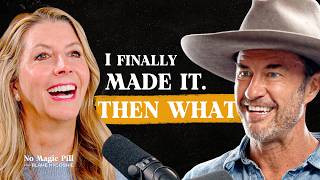

What Blakely talks about
Sara Blakely speaks on the No Magic Pill podcast in 2026 about post-success purpose, selling Spanx, grief, money, and rebuilding her sense of self after major achievement.
Also known as: What Nobody Sees After You Achieve Everything; No Magic Pill with Blake Mycoskie.
Sara Blakely reflects on what happens after major success: the grief of selling Spanx, the identity shift that follows, and the emotional work required to move on. She describes how a persistent inner “call” led her to let go of Spanx, even though she loved it deeply.
She also talks candidly about money, shame, and self-worth, saying money magnifies who you already are. Her advice to ask whether money is fun to make, spend, and give away became a turning point for the host as well.
A major theme is mental health and midlife change: Blakely explains how hormonal shifts, sleep loss, and the pressure to perform intensified her grief. She shares how therapy-adjacent support, hormone treatment, and deeper self-work helped her rebuild from a place of wholeness rather than proving.
Sara Blakely and Blake Mycoskie alternate; Blakely speaks most of the time with Mycoskie hosting and prompting.
In her words
“Money is really fun to make, really fun to spend, and really fun to give away”
“You can miss it and still not want it back.”
“You can make the right decision and still be sad.”
“In order to discover new land, you must be willing to lose sight of the shore.”
“I don't want to go to war.”
Key points
- Selling something you love can still bring grief, even when it is the right decision.
- Blakely says major life calls are often quiet, repeated, and felt in the body.
- Money is a magnifier: it can amplify generosity, insecurity, or anything else already present.
- Her hardest struggles after Spanx were tied to both emotional grief and hormonal imbalance.
- She worked for years on shifting from proving herself to creating from joy and wholeness.
- Blakely wants her children to know their worth is not tied to performance.
- She sees product design as a way to advocate for women and improve what men made without that perspective.
Full transcript: Sara Blakely, No Magic Pill podcast interview (2026)
I have just spent 16 years of my life being taught what [music] to think, and no one has ever taught me how to think. Instead of being the passenger of my thoughts, I became the driver, and I never knew I could be the driver. >> My guest today is Sara Blakely, the woman who started Spanx [music] with $5,000, built it into a billion-dollar company, and became the youngest woman to make the Forbes billionaire list. After selling Spanx, [music] she went on and did it again with her new shoe company, Sneaks. >> When I first started Spanx, two men came up to me at a cocktail party. One guy looks at me and goes, "Yeah, well, I hope you're ready, 'cause business is war." And [music] they both kind of laughed and then walked off, and I remember thinking, "I don't want to go to war." >> She also has an incredible marriage to another serial entrepreneur and coach,
[music] Jesse Itzler, and four amazing kids. How she balances it all while taking care of her own mental health will be a big part of this conversation. >> And this is the thing I want to say about mental health. Like, I have all the resources and I still [music] couldn't see my way through it or get the right help that I needed because it's not on [music] society's checklist to check in on someone who society kind of is like thinking just made all this money and has achieved their goals. It's not on the checklist of like grief. >> For almost 15 years, we've been checking in on each other and today's conversation will take us back to some of those conversations and what resulted from the advice we shared. >> I checked in with [music] you after I sold Spanx 'cause I was in a tremendous
Amount of grief. So, I called you in a moment of deep, deep pain. >> I remember that. >> And [music] was like, "Hey, I'm struggling. I'm in a lot of pain. Talk to me." >> Okay, Sara. Welcome to the show. And my first question is, do you remember how we met? >> Did we meet at Bill Gates'? >> We did. >> [laughter] >> That's right. Good. >> HOW MANY PEOPLE CAN SAY THAT? THAT WAS WILD. I, I remember. I wasn't sure if that was the first time. It was at his house. >> And do you remember when we met? This is the thing I, I love about the story. As I was thinking about it is we met at Bill Gates', which was totally random. I mean, it was like these, all these CEOs, like the most powerful people in the world. You and I were by far the
Youngest people there. >> We were like totally the outsiders a little bit at that group. The founder bootstrappers or something like in, we were younger. >> Yeah, and we were just at the beginning of our journeys. And I remember when I met you for the first time, I was completely out of breath. So here's the other question. Do you remember why I was completely out of breath? >> The staircase? >> No. >> [laughter] >> I had found a secret room in Bill Gates's house. There was a trampoline room. >> Oh, right, right, right. With the trampoline room. >> It was and the whole [laughter] floor was a trampoline and the walls were padded. And I had been bouncing around and I came out of the door and there you and Jesse were and I was like, "Hi, I'm—" >> [laughter] >> "I'm Blank." Did you go in the room? >> Oh, yeah. I was doing flips. >> Yeah, it was so fun. I >> about the trampoline room. >> Yeah. There's a lot of interesting
Things you could do when you have that much money, but a trampoline room is one that I never would have seen coming. >> I remember also their movie theater was just to the side of the trampoline room, and they had Dorothy's original ruby slippers from The Wizard of Oz in a case there. And then their library had like all these Michelangelo original sketches. It was like, it was not your average house. >> No, not, not at all. >> But I remember meeting you and just thinking like everyone did, like, "Wow, this is the guy who created this really beautiful philanthropic arm to business in a way that was one for one," and like I was so excited to meet you. >> Well, thank you very much. As we were saying earlier, one of the things that I think we initially connected on was our companies were growing very rapidly, and we had no investors. And so we didn't have a board of directors. We didn't
Have, like, people to call. And so we kind of exchanged numbers and said, "Hey, I'm here if you need me." And that kind of started what is really a unique relationship. I was telling my partner about it. We know each other not that well. >> Right. >> But we've had these conversations over 15 years at pivotal moments in our life because we were kind of the only people we knew that could relate in the exact same situation of, you know, building these fast-growing companies with no investors, no board members. >> Totally. >> And so, I really appreciated how, like, we have been connected all these years, but not like a normal friendship where you talk all the time. It's like we talk during the really important times. >> Right. >> And one of the things as I was going back over our conversations, and I've talked about this on many podcasts, I don't know if you've heard it yet or not.
That always gives you credit to this, but you gave me, in one of our conversations, probably the most important pieces of advice about money that anyone had ever given me. Because, at that time, I was honestly feeling a little bit of shame around how much money I made in selling TOMS. Because here I was, I started it to help kids get shoes, and I built the business model based off the cost of the production in Argentina. But then, when we scaled, the cost went way down. And so, not only were we helping kids get shoes, but we were making lots of money. And then I sold it, and I remember calling you and just being like, "Man, I just — this money thing — I just, does not feel good." And so, what did you tell me? >> I said, "Blake, money is really fun to make, really fun to spend, and really fun to give away." >> And so, you always got to have fun. >> Yeah. And I also really believe this,
But I feel like money just makes you more of who you already are. If you're generous and make money, you become more generous. If you're insecure, you become more insecure. If you're a jerk, you become a bigger jerk. It's literally like putting a magnifying glass over you, and I always like to tell people that because a lot of times people's relationship with money and their self-worth around money and success is a big part of what's blocking them without them realizing it. 'Cause for—I'm sure this happens to you—but for 26 years, I mean, people come up to me like, "Can I have 10 minutes of your time? And how did you start?" And >> Yeah. >> you know, I listen to them, and sometimes very quickly within like five or six minutes, I can tell that they don't have the right mindset around money. It comes from so many places in our life. It comes from society. It may
come from religion. It may come from parents. It may come from an uncle who got a bunch of money and then went crazy and left his family, and you associate like that's what happens when you have money, you know, and so there's all this framing that's happening starting at a young age around money. I've just had a very healthy relationship with it and a mindset around it. I think it's energy. I love—I love it flowing to me, through me, out from me. The amount of things I've been able to do with money has been so fun. >> And then that's the thing that you really opened my eyes to is like this is not something to feel ashamed of, but it was really the personal work. Like you said, it was giving a spotlight on something else that was blocked, which was at that point—and I haven't realized it till recently—was I didn't feel that I was enough. So I didn't feel that I was deserving of it. >> Yeah, I was going to say, where did the shame come from?
>> Exactly. So because I had this core wound of never feeling enough, then when I made all this money I didn't feel like I deserved it, and so then I didn't have a good relationship to it. But I do think your advice about thinking about: is it fun to make? Is it fun to spend? Is it fun to give away? 'Cause I actually loved giving it away. I just had a hard time spending it, 'cause I felt like, well, if I'm giving it away, like that is fun, and I love—I've always been very generous, but when I want to spend it on something for myself is when I had the shame. And so you helped unblock that, and I've had crazy vacations and have some awesome classic cars because of you. So, thank [laughter] you. >> I love that I could help out in that way. >> My classic car collection should be in honor of Sara [laughter] Blakely. >> Just put a vanity plate Sara on one of them. >> I might put that on one of them. That's [laughter] great. >> I love spending, you know how some of the
ways, obviously one of the most fun ways to spend money is to spoil the people we love. >> Yes. >> Which is great. >> And right. And so every year on my birthday since I turned 35—it's been 20 years—that I take my 11 friends, most of them from childhood that I've known since age two, three, seven, I take them on a surprise trip, and I've been doing this now 20 years, and the only thing they know, Blakely, is hot, cold, or passport. It's the only thing they know. And they don't know where they're going, and these are all working… Most of them are all working moms who have never taken a second for themselves. Like, they're always planning, doing, making decisions. So, these are five nights where they make zero decisions, and they just get whisked away. >> I love it. >> And it's so much fun. I love it. This
past year we just did a combo. We did Vegas and Sedona. So, we did partying and healing. >> Nice. >> But we went to the Eagles at the Sphere this year. Yeah, we did. We started with the partying. But the Eagles at the Sphere was like a spiritual experience. I would >> The Sphere. The Sphere is cool. My friends just went and took their kids to The Wizard of Oz, and they said it was amazing as well. Well, that's one conversation I remember, and I have a whole list of them. But is there any specific conversation that you can think of where you're like, that led me to taking this move or doing this in my life? >> I just remember I checked in with you after I sold Spanx. >> Yes. >> 'Cause I was in a tremendous amount of grief. >> Yes, I remember that. >> Knew you were further ahead of me on the journey and had already parted ways with TOMS. So, I called you in a moment of deep, deep pain. >> I remember that.
>> And was like, "Hey, I'm struggling. I'm in a lot of pain. Um, talk to me." >> Where do you think that pain was coming from? Because I think that a lot of people who watch or listen to the show are people who maybe have had an exit or have, you know, spent their whole life chasing this achievement thinking that was the thing. But I'm curious, in your word, where was that pain coming from, and then how did you ultimately work through that? >> Well, I would answer the question in two parts. The first one is choosing to let go of something you love that deeply and have put your entire heart and soul into for 21 years. I was the sole owner of Spanx for 21 years. So, in a sense, it felt like I was its mother and its father. And I was very protective and gave it my all as far as servicing women
And trying to create better products for women that I felt they deserved. But there came a calling for me. And I say this, like, we get callings throughout our life. >> Sure. >> And when you are called, a lot of times it's easier to ignore the call because it's very painful a lot of times to accept the call. It can be scary, and a lot of times accepting a call puts you in the unknown, which is something that makes humans— that liminal transitional time— very uncomfortable. And the call is also a whisper. >> Mhm. >> So, for many, for many years, I really say you have to kind of be quiet with yourself and allow yourself these times to let your mind wander, which is where all my best nuggets, all my best thinking, the word Spanx, all my inventions, everything has come from when I let my mind wander. And I
identified my mind wanders the best in the car. I intentionally >> do lots of road trips? >> I, I intentionally spend time in the car. So, when I was working at Spanx, I lived 6 minutes from the office, but I would get in the car an hour before I had to be at the office and drive aimlessly around Atlanta. >> That's amazing. I love that. >> Friends all called it my fake commute. They're like, "Are you on your fake commute?" I'm like, "Well, listen, that's where I get all my downloads." But anyway, I got the call, and it had been whispering and tapping me on the shoulder for a while, like, "It's time. You're supposed to let this go, let it go into its next version of itself, and also your own version of yourself, like to become a more expansive version," whatever that meant. My key decision for selling was I realized I had spent 21 years of my life with 80% of my mental share on Spanx. >> Mhm.
>> And I became really curious about what I would think about and what my life could feel like if it wasn't 80%— >> Mhm. >> —on Spanx. >> Interesting. >> That was really the crux of my decision. >> That was the call. And, and someone who's listening or thinking, like, I can see someone right now being like, "Okay, I've been getting this kind of like late at night, I have this thought, or when I go on a run, or in the shower, like it's been with me." How does someone determine whether this is a call to act on or this is something that is, you know, coming from another place? Like, I mean, how did you know that? 'Cause that's such a big decision. >> Big decision. I think it's very personal. For me, it just kept coming up for me. >> It was consistency of it. It wasn't like, oh, I was in a weird mood that day or I was frustrated and I felt that way.
So, it was consistency of the call. Was, um, a feeling, a feeling— >> Yeah. >> —in your body. >> I think this is a much more responsible way to make huge life decisions than the way I do it where I have an idea and I make a huge decision like in 30 seconds. >> But that's worked out for you, too. >> It has. It's worked out sometimes, maybe not in my romantic relationships, but other than that, it's been pretty good. >> Yeah. >> So, you had the call. >> The call. I let it go. >> And you let it go, but you still had pain. >> Oh, yeah. I mean, and I kind of knew. I was like, when you let go of something you love, like I was no longer going to be in control of Spanx. And I also knew if I sell it, I have to sell the majority of it in order to achieve the mental share, right? Like, 'cause I was like, if I still own the majority, it's not going to achieve what my body and my soul is craving. >> Yeah.
>> So, I let it go. I went into profound grief. And then the second part of the equation that I was going to tell you is I don't know if this triggered it or it was going to happen inevitably, but to make an enormous life decision at the exact same time that you go into severe perimenopause is probably not ideal. So, if I could go back and say, "Sara, what about the timing of this?" But I was in such hormonal imbalance and my body was in extreme fluctuations that I wasn't used to. >> Yeah. >> And that compounded how I was feeling. It, it gave me very deep depths of sadness. I think because I made the decision at the same time, it was easy for me to go, "Wow, this is a much harder decision emotionally than I thought it was." >> Yeah. >> So, I wasn't able to tease out like, "Sara, your body is in crisis
emotionally and chemically." And so, it was 18 months after I sold Spanx that I was able to suss out the two and go, "Oh, this is also very physical and I need help." >> Wow. >> That's— >> You know, like chemically, hormonally. >> And what did that journey look like? What was the first step for you in kind of getting the help that you needed? What did that look like? >> Like my friends doing an intervention. It was after— >> Could tell you were suffering. >> Everyone in my inner circle knew I was suffering. Um, and it was very painful for them to watch. Then it was after my birthday trip. I took my friends, which they know is like my favorite time of the year, and I pretty much cried the whole trip. >> That's it. Yeah. >> And I was in the Bahamas with all my favorite people and they're like, "What is happening, Sara?" >> That reminds me of when I was really in
My highest of my suffering state, and I was weaning off these different pharmaceuticals I'd been put on when I was misdiagnosed as bipolar. I went on a surf trip with my buddies to Nicaragua. And I love surfing. It's like my favorite thing to do with my buddies. And we do surf trips very similar to your trips. And my friends knew I was in a really bad state when I didn't want to watch Netflix in the room and not go surfing. >> Yeah. >> And they were like, "What is happening?" >> Right. >> And I just—I couldn't get the energy. I couldn't get any enthusiasm around it. But that is the thing about mental health. It's like when, when, when you're suffering, it doesn't matter what your physical health is. It doesn't matter what your circumstances are. If your mind's not right or your hormones, in your case maybe hormones and mind's not right, it's really hard to do anything. And so, so you go on this birthday trip, you're not yourself, you're crying all the time. >> And this is the thing I want to say.
About mental health, like I have all the resources and I still couldn't see my way through it or get the right help that I needed. Like when you're in that state, it's really hard. You know, 'cause you're like, I'm someone who started a brand, an international brand, with five grand. Like of course if I'm suffering, I can like call the right people, figure it out. But when you're in that place, it's very hard to do. So my friends noticed this after the trip. They stayed in Atlanta. A good friend stayed in Atlanta, called my mother, she flew in, and they didn't leave until I got on the phone with hormone doctors who then prescribed me progesterone right away 'cause I hadn't been sleeping either. >> That's—that you really—not sleeping plus depressive thoughts can really be a nasty combo. Yeah.
>> So then as soon as I started progesterone, it was wild. Within like 5 days, I felt more like myself. It's like, wow, that's crazy. I can't believe how long and how hard I suffered. But I think that, you know, I love quotes. I collect quotes. And the three quotes that I would say best described, especially my first 18 months of selling and letting go of Spanx in the way that I did, the first one is: "In order to discover new land, you must be willing to lose sight of the shore." >> Oh, I like that. Yeah. >> Which is really hard to do. >> Yeah. Yeah. >> Like when you're—it's like burning the bridges. >> When you're floating out on that dinghy and you can't see the land and you let go of the land, you're like, >> [gasps] >> Why did I do that? Why did I do that? And then the second quote is, "You can miss it and still not want it back."
>> Mhm. That's a really good quote. I feel like that is exactly my situation with TOMS. Like when I sold and I missed it, but I definitely had felt like I spiritually and emotionally was ready to move on to a different phase of my life and I had kind of gotten, you know, tired of that, that character, if I will, you know, the TOMS guy. Like >> Same. I'm the Spanx girl. >> Yeah, exactly. >> Flashed everywhere I go. >> Exactly. And I was ready for, you know, to kind of set that avatar down and step into a new one. And so I love that. I've never heard that quote: "You can miss it and still not want it back." >> Not want it back. Which is—it's very powerful. And the third quote is, "You can make the right decision and still be sad." >> These are good quotes for business. These are good quotes for relationships. These are good quotes for parenting. I
Mean— >> Is a relationship really? I mean, everyone's always like, don't take it personally. I'm like, last time I checked, business is personal. It's made up of people. The business felt like—for my friends who haven't founded a business, I explain everything that I'm feeling through relationship. >> They can connect through—They can connect through relationship. >> But for entrepreneurs, we fully understand that business is the most personal thing I do. I mean, that's why I always hire my friends. And I want to work with them—friends. >> Yeah, people like, well, why would you hire friends or work with friends? >> I'm like, because I spend most of my time working >> [laughter] >> so that way I get to at least be with my friends when I'm doing it. It's the most personal thing. I'm glad that you said that because I think a lot of people maybe don't necessarily understand that and I think those three quotes are a great example of how business and relationship is is very similar.
>> I have been using an AI emotional support app called Sonia. [music] And it has had a huge impact on my mental health. Now, it does not replace my traditional therapist. [music] But I use Sonia in between. I use it at 6:00 a.m. when I can't call my [music] therapist and that has made all the difference in the world. So, I spoke to the founders of Sonia and we have a special code for this community. It [music] is friend of Blake. So, when you download the Sonia app, you want to give it a try, put friend of Blake in there and you'll get two months [music] for free and I guarantee you it will have a huge impact on you as it's had on me. So, now back to the show. >> So, this is what I tell founders. If you, if and when you're ready to sell, >> Yeah. >> It will still potentially cause you grief and letting go of anything you love is part of the process, but it's a
Necessary. It's like the chrysalis, right? Like when the caterpillar becomes the butterfly or goes to the next stage, it basically, like, becomes goo. >> Gooey mess, yeah. >> It's like this death of ego. It's the death of almost your former self, in a way, and shedding yourself. So, that is going to feel—something you're going to feel something with that. But to make that decision, that's the only way you get to the next stage of where you're headed. But I say if you make that decision, be very ready to let go of the outcome because I mean, you can't control the outcome. So, you have to be ready emotionally to say this thing is either going to continue to thrive, or it might actually disappear. >> Yeah. >> And I have to be okay with either. >> Yeah, it's been hard for me watching TOMS has really suffered since I sold, and you know, it's just become less and
less relevant, and I've seen it really suffer. And it's been hard. It's really hard, you know. I wish I was more prepared. I think part of the reason I went into almost seven years of a pre-depressed, depressed state was I wasn't prepared for selling. And it seems like, you know, with these quotes and even though you went through the grief, you had some good coaching and you were prepared. What else? >> No, you weren't? Oh, so you—this is all counterintuitive. Oh, okay. So, it came later. Okay, so you weren't prepared either. You just— >> How you can be prepared. >> I think the only thing is you potentially hear a conversation like this, you meet another founder that's been through it. I mean, this is why we're doing this show. >> For? That's literally like you're here because you want to help whoever it might—this might be intended for, and that's why I'm doing it. >> Yeah. It's great. I really appreciate it because I think that if
you or I had heard this show or something like it before, having a little bit of preparation I think would have gone a long way. >> I agree. >> And— >> But here's what I think is important for your listeners to understand. >> Great. >> If you could go back and do it over again, would you still sell TOMS? >> Yes. >> Same. >> Yeah. >> So that's where I think people need to understand— >> Yeah. Yeah. There's no regret. >> Regretting the decision. I'm just being honest with the journey of what that decision meant for me and what I kind of had a sense that it would mean for me. And I think this conversation is important for other founders and other family members or friends of founders. >> Yeah. >> To kind of just go, oh, heads up. >> Yeah. >> Because it's not on society's checklist to check in on someone who society kind
of is like thinking just made all this money and has achieved their goals and all of this. It's not on the checklist of like grief. >> Totally. Why? I mean, I talked to Kevin Love, five-time NBA All-Star, you know, won a championship with LeBron. I mean, he had his biggest panic attack a few games after winning the championship. And it's because, you know, it—whether it's sports, whether it's jobs, whether it's relationships, we think like this is the thing that's potentially going to make me feel whole or feel great or, in my case, feel enough. It happens, and then you have this grief, and you also are realizing that that didn't necessarily solve some of the underlying things that you need to deal with. And so, at the same time, it also is kind of a great gift because it is what pushes us into deeper personal growth. I know that
you've done a lot of work since you sold Spanx. You know, what would you say are, besides learning this and having this coach, what are what's something else that was really beneficial for you in kind of working through this and growing yourself on a more, I guess, from your inner perspective? >> I will say I've been working on myself my whole life. So, I started listening to Wayne Dyer when I was 16 years old. Imagine me, in like 1986, sitting in my bedroom on Clearwater Beach listening to cassette tapes in my boombox about this man's voice who's saying visualize what you want, manifest things into your life, law of attraction, not fearing failure, not caring what other people think about you. >> Yeah. >> That was very kind of not mainstream in 1986. >> Yeah. >> But the minute I put those cassette
tapes in my boombox, I sat on the floor of my bedroom and started to cry. And I remember thinking, I have just spent 16 years of my life being taught what to think, and no one has ever taught me how to think. >> Ooh, interesting. Yeah. >> And I was like, "Wow. >> Wait. >> I can think about how I think?" And now I've just read, like, in the last two weeks, that's called metacognition, which I didn't even know was a thing, but I guess it's thinking about your own thinking, which I've done my whole life. >> Yeah. >> Narrating your own thoughts. What happened to me at 16 is instead of being the passenger of my thoughts, I became the driver. And I never knew I could be the driver. >> Oh, wow. >> So, I thought I just had to be a passive recipient of like all the thoughts happening, the self-doubt, the this, the that. I mean, and so, I became so fascinated with how I could reframe my
thinking. And that is the sole reason I am sitting here and, you know, me and I, the world knows me, is because why did a girl on Clearwater Beach who never took a business class, failed the LSAT twice, wanted to be a lawyer, tried out to be Goofy at Disney World, but I was too short? >> I didn't know that. >> I'm the height of a chipmunk. I'm in a chipmunk-like— >> I didn't know. Did I end up here? And it's really reframing my mind at such an early age and becoming so interested in that. >> Part of, I think, all of our healing journeys is getting more of an awareness and understanding of where our thoughts come from, and where patterns come from in our life, and what patterns serve us and what patterns don't. >> Yeah. >> You and I both have been to Hoffman. I would love to talk a little bit about that because I think that came post selling Spanx.
>> I went—come into your journey? >> I sold Spanx November of 2021 and I went January 10th or something. >> Oh, right away. >> To Hoffman. >> Okay, yeah. 'Cause I remember you calling me and saying, "What are some of the things you did post-sale?" >> Hoffman because of you. I heard you on a podcast in a time that I was like hurting. >> Yeah. >> And trying to figure out like I felt very disoriented. >> Yeah. >> I just sold Spanx. And I felt disoriented. Anyway, I heard you mention it on a podcast and I just—I signed up. I didn't even go to the website. >> Yeah. >> I didn't [clears throat] even know what Hoffman was. All I knew was Blake said— >> [laughter] >> He liked it. That's it. >> That's a lot of trust in me on a podcast. Wow. >> I went [laughter] and didn't know a thing and I showed up and I'm sharing a bathroom with someone I didn't know.
>> Let's back up for a second 'cause there's a lot of people who don't know what Hoffman is. What is Hoffman? >> Hoffman is a process that some gentleman, I guess with the last name Hoffman, came up with over 50— >> Bob Hoffman came up with 50 years ago. It's 7 days of going in deep inner work. >> Yeah. >> The best way I can describe it is really getting connected with your higher self and recognizing patterns that you created in your family dynamic mostly around love and wanting to feel love and be loved, and the patterns that you created in response to your mother and your father and maybe your siblings. Some of them serve you and some of them don't. >> Correct. >> And this uncovers the patterns that you're meant to let go of or that might still be holding you back because of that dynamic. And so it's deep forgiveness of your family,
>> Yeah. >> Which is very freeing. And also it's aligning your body, mind, spirit, and intellect. >> Yes. >> Which when all four of those are in harmony and in sync, you feel a peace you never knew existed. >> And freedom. I mean, I will say like for me, I went to Hoffman in 2016 as I've talked about on a bunch of podcasts. Probably the Tim Ferriss one is when you heard 'cause we went deep into it 'cause it was such a life-changing experience for me because I had never had those four things connected. I never— >> I don't know who has. I mean, literally in the whole wide world. They call the mental chatter 'cause there's always like, you know, your intellect saying one thing, your emotional child's like, "But this and that," and they all are in harmony. >> Yeah. >> And it's quiet. >> Yeah. >> And you're just like—
>> And the great thing about Hoffman is, and Bob Hoffman is a genius, and Raz and Liza who've been shepherding it for the past 30 years are amazing. Raz passed this year. Rest in peace. He was a good friend of mine. Is, you know, they create this process where you just have to go and just let go. It is so perfectly orchestrated. Every single day, they take you on this journey and it's one that we can't share too many details about because part of the process is a surprise of the experiences that they take you through physically and mentally to help you arrive at this deep understanding of self. I mean, I really believe that me going to Hoffman was the beginning of my spiritual life in a way of my deep understanding of myself and why I do the things. And the freedom that comes from that. I'm curious like
Of your takeaways. What was probably your biggest takeaway that had a lasting impact for you from Hoffman? >> Definitely the peace between being aware and that meditation they teach you about, like asking your intellect and the four parts of yourself what it needs from you. >> Yeah. >> So, checking in has been really interesting for me on, you know, my body, your body, your physical body, how it's feeling, your mind, your intellect, which is kind of the ego. I think probably the biggest thing is just sort of my old operating systems and really analyzing them and saying, you know, is this operating system the one that I want to use for the second act of my life? >> It really does help you. I mean, that quadrant 80 check-in is so simple. It's like a 10-minute meditation, but it
Really helps you check in with each. >> Know what I'm remembering? I don't know if you ever received it, but at the end, they tell you to write letters. They give you cards. >> You—I got a letter from you. >> Yeah. >> Yeah. I've saved all my letters. >> I wrote—I barely—I don't—I mean, like I said, we check in with each other. I feel like the spiritual business bond with you. No. And I think I wrote it to like my mom and my dad and my brother and you. >> Well, I feel very honored. >> I was there because of your podcast. >> I was so happy when I got that letter. And I love [snorts] all the letters that I've gotten over the years of people who've gone because of that. >> [clears throat] >> People. I know you've sent people. It's one of the best gifts. >> Yeah, it's actually one thing I'm going to do in the show notes is I'm going to put some information about Hoffman and also have a scholarship fund. So, 'cause it is expensive. And so, for people who can't afford it, they can apply to my scholarship. >> Oh, nice. >> Um, yeah. I've sent a lot of people over the years.
>> I also, then right after Hoffman, went and did MEA, Modern Elder Academy in Cabo, that Chip Conley created. And that was really beautiful, too, because that was seven days with a bunch of strangers I didn't know. And he's really talking about reframing midlife. There's a lot of emotion around midlife, and midlife is filled with transitions, and society hasn't really set us up or supported us on transitions. >> Totally. >> His thought was like, instead of it being a midlife crisis, it's a midlife chrysalis. You're actually really, you know, you're changing. The first half of our lives is very ego-driven, right? It's a lot of accumulation, >> achievement, >> security, achievement. What am I producing? What's my status? What's my title? What have I been able to, like, do? And then you get to this place where
that feels not necessarily what you want to be the main driving force. So I thought it was really interesting when we were talking about you—you go from proving to improving. >> Mhm. I like that. Yeah, it's great. >> I think improving school, 'cause it's that I am in front of the word proving, 'cause you go more inward. But I spent a lot of my energy and time. >> Elder is great. I love it. I had Chip on the show and he's become a dear friend. I've taught at Modern Elder a couple times. You should think about teaching there. It's really fun to go back and kind of share the wisdom that you've learned in helping people in the second half. >> Right. >> And for me, I actually did a whole thing on enough because what I realized is the first half of my life I did not feel I was enough. That came from a core wound as a child, and I spent all these years
trying to prove, and no matter how much success I had with Tom's, no matter, you know, in my relationship, my family, whatever, I never felt that I was enough. And then these past years, I really worked—or past two years now—to heal that. I realized I get to do everything again but from a place of wholeness. These different companies that I'm involved in now, or even the podcast, they might look to the outside world like I'm doing kind of the same thing that I did then, just with a new brand, kind of like we'll get into Sneaks in a minute. But actually, I'm doing it from a place of not needing to prove myself. So I'm enjoying it more. I feel lighter in my body when I do these things. I feel like it's just like I get to this, you know? And so I really learned that, and then going back and talking about that at Modern Elder was so fun because I say to teach is to learn. So I feel like when this whole concept of I really am enough, not
because of what I do or what I built or what the world thinks of me, but just because I exist, it really solidified actually down in Baja. I was teaching, and I was like, I actually really feel it. Like my, I mean teaching it is like when I realized like no, I—I'm not here worried what people are going to think or if they like my curriculum or if they wear the bracelet. I'm here just because I'm like this is 'cause it's coming from joy. And so I'm glad you brought up Modern Elder Academy. I think it's an amazing resource for people, especially as they enter midlife. And if they're thinking about changing careers or they change a relationship or they have a big, you know, event in their life, it's just such a great place to go. And I had a great conversation with Chip because we both have, unfortunately, lost some dear friends to suicide. And so we really went into, you know, how that unfortunately happens most of the
time in a midlife situation when someone just kind of gives up. >> Right. >> And so I'm glad you brought up that. You know, you're wearing a bracelet, so I appreciate wearing the enough bracelet. I called you and Jesse like at the very beginning of sending them out at the holidays. Has that been ever something you've struggled with, or is that when I talk about it, do you can you be like, "Yeah, I've had times where I haven't felt like enough," or is that something that hasn't been one of your issues? >> What drove me more is feeling the need to prove. So I don't know if proving comes from the core of I'm not enough, but I feel like from a very, very young age, being a woman, I felt this very innate feeling to prove my worth. >> Mhm. >> I was just as capable, just as intelligent, and I almost felt it the
weight of it on behalf of women. Which is kind of crazy 'cause I remember feeling that way as early as like three. >> Oh, wow. >> I—I >> I thought you were going to say as early as 30, not three. >> Like I remember being a little girl and looking around and being like, "Woah, there's like fine print here that nobody's talking about and this doesn't feel right." And so >> But where I'm sitting now is if I'm really fueled by proving, what fuels me if I don't feel like I have anything left to prove? In trying to find this, like, create from joy, create from this place, but I—I get very excited and fired up in the proving state. It gives me a lot of fuel [clears throat] and a lot of energy, but it can also burn you out. It can also be very hard on your body and your nervous system. But I will
Say that, that's the energy that I—and I didn't have a word for it when I was little, and now I do. It's called patriarchy. >> [laughter] >> Yeah. >> I didn't know what that meant. >> Totally. >> But it just felt like something didn't feel right on, like women I saw, friends dimming their light to, you know, be accepted or to make men comfortable. Or growing up, the main message I got was, like, you know, you'll be able to marry anyone you want. Aren't you a lucky little girl? And I remembered being little and thinking, is there another option? Is there another option? Like, do you know? Because I didn't know. I didn't grow up in a town with women that worked very much. I didn't have a model like that. My mom got married at 21, had me at 22, and was a stay-at-home mom.
So, I—I just saw her without any power. And it was weird as a little girl to be like, she has no power, but everyone's telling me that's the goal. >> Wow. >> I was like, hmm, I don't know. I don't know. Like, watching my mom have to, like, you know, have an allowance and ask my dad for the new— >> Oh my gosh. >> iron at Sears that automatically cuts off without you having to turn it off, and her asking my dad at dinner, and me watching and thinking, I'm eight and I have an allowance and she's my mom and has an allowance. Like, that is not really what I want to position I want to be in. And then my mom and dad got separated and divorced, and my mom had never really worked and didn't have savings or a 401k or any kind of savings and had dedicated her life to raising us
and supporting my dad's legal career. You know, it was interesting as a little girl. I was very perceptive of it, maybe beyond my age. >> How many times in building Spanx, when you were in the limelight, you're at Bill Gates' house, you're on the cover of magazines, like, did you have ever any mental challenges during that time, or was it just so exciting that you were just riding the ride? >> No, I was always on and off mental challenges. Oh, yeah. >> that—that—that pressure was so strong. >> Very intense pressure and very stressful at times and very beautiful. Like, I am so beyond grateful to Spanx. Like, what Spanx, the people I've been able to meet, the women I've been able to impact. I mean, to hear from women for that many years, you changed my life, which is the main phrase that people say when they meet me, is like I don't take
that lightly. Like Jesse actually called it out on me. He's like, "Sarah, how many products do you have in your life where you would actually attach the phrase 'you changed my life'?" >> Yeah. >> And I was like, "Whoa, right?" And that's how it was, like, such an emotional feeling for women. I think that the products we started creating out of love and how they feel and not just how they look, and like they were just feeling something very powerful when they were able to wear Spanx and put Spanx on. But I also felt very much when I first started Spanx, two men to me at a cocktail party, and they go, "Sarah, we just read about you in the AJC here in Atlanta. Congrats, you invented something." And I was 29. I was like, "Yes, I did. And—and I'm so excited." And then one guy looks at me and he goes, "Yeah, well, I hope you're ready 'cause business is war." And the other guy tapped me on the shoulder and
goes, "Yep, business is war. I hope you're ready." And they both kind of laughed and then walked off, and I was left with such a sick feeling and I went home to my apartment here in Atlanta, and I sat on the floor and I remember thinking, "I don't want to go to war." >> Yeah. >> Why would I want to go to war? >> Yeah. >> I'm going to do this so different. And I remember thinking, "I'm going to do this so divinely guided by the feminine." >> Mhm. >> I love the masculine in me, and I always think there's a balance. We all have masculine and feminine in both of us. And the feminine has been so squashed on the planet for about 3,000 years. >> Yeah. >> But I was like, "I appreciate the masculine. It's going to help me do this, but I am not leaving the feminine behind because she is a superpower." And so I used total intuition, and I think part of not having any investors was an intuitive feeling that I had >> Yes. >> that was going to keep me really
connected to the feminine. >> I think this is my sister. You know, my sister, founder of Aviator Nation. >> Found this out. You know, I'm always in Aviator Nation. So I was like, we're in all the time. >> You didn't know that's my sister? >> I found it out recently. I was like, this makes perfect sense. >> And she [laughter] owns 100%. No investors. >> The water of this family? >> Know. >> My brother's an inventor and an entrepreneur. >> Oh, wow. We should have, like, a we should have a meet up. >> Of us, seriously. >> We definitely go on a trip together. But yeah, but Paige I think has done such an amazing job of that as well. As—and, you know, she owns 100% no investors, just like us. And it's the same type situation. You know, it's where we have to kind of balance those two things. As I think about that in this—this aspect of—and I really appreciate you saying that you really felt this from age three, which I was not expecting. This need to prove. And it makes a lot of
Sense with, you know, >> Well, yeah, and at the age of three, just the recognition that something doesn't feel right. >> And so >> Something about how women are being treated, viewed, like the whole thing was like, this does not feel right. It doesn't feel fair, and it doesn't feel right. And then I think the proving probably came a little bit later than three, maybe seven. >> Seven. >> Seven? [laughter] >> But, the proving really drove you and I mean, it's not easy to start a company that becomes a billion-dollar company, no investors, bootstrapping. Like, there's a tremendous amount of drive that comes with that. And that proving energy is, you know, kind of fueling that. And my not enoughness kind of fueled mine. So, part of it I'm thankful for, part of it I'm not. But, now I think about Spanx, which I'm so excited 'cause I'm a shoe person. And when I saw you doing this, I was like, yes.
And I remember one of our calls early on, you were asking me about shoe stuff and what do I think about the industry and this and that. >> [laughter] >> So, when I saw it come out, I was like, oh, I totally understand where that conversation is going from. But, doing Spanx now, how does it feel different today than versus when you were creating Spanx? 'Cause I'm really curious. >> I mean, it feels so much less pressure. So, the thing about me is I love to invent things that didn't exist or improve things that did exist on behalf of women. I almost feel like I've been advocating for women through product. It's like, okay, these products have been made mostly by men for a very long time. They don't wear them. And so, the lens of like, how do you feel has been kind of absent. >> I have to tell you, this is where I want
to tell you about the green Spanx. >> Okay. >> It just reminded me this about when you said men don't wear them. >> [laughter] >> So, right? Okay. >> You're going to prove me wrong. >> No, no, no, no, no. This is, you're going to love this story. When we first started TOMS, we had just the original TOMS shoe, flat, right? I was at a barbecue for July 4th in Malibu. I'll never forget it. We had heard a lot of feedback from women saying, "I love your mission. I love the one for one. I want to give shoes to kids as well, but I do not wear flat shoes. I have to wear a heel. Like, I never go out of the house without a heel. Will you please make a heel?" >> [laughter] >> And this is going on forever. I mean, for like two years. So, finally I was like to the team, I was like, "You know, let's do this wedge." So, we came up with this wedge idea and we put it out. We put it out right before July 4th this year. I'm at the barbecue and I'm getting food in the buffet line. This woman says, "Oh my god, are you the TOMS
founder?" And I'm like, "Yeah, yeah." And she's like, "I was on your website the other day and I've never bought a pair of TOMS because I just don't wear flats, but I saw you're doing a wedge." She says, "Is it comfortable?" And I said, "Yeah, it's super comfortable." And she looks at me, she goes, "How do you know?" And I was like, "You're right, I don't know." [laughter] So, here's what I did. I wear size 9 and a half. The next Monday, I got a size 11 women's, which would be a men's 9 and a half, and I wore wedges for a week all over Los Angeles. [laughter] Now, this is before social media. It would have been an amazing campaign if we would have been able to capture it, but I wore them for a week and then I was able to say they're really comfortable. I wore them the whole week. So, >> But you're a special kind of man. But that's where your mind went. But that's where your mind went because let me tell
you, I have had the idea for a long time. Like anytime I was interviewed in the public, "So, what's next for Sara Blakely?" I'd always laugh and go, "Oh, I'd love to have someone or I'd love to invent a comfortable stiletto and then retire." And I would laugh. So, I was lobbying it out to the universe. Like, "Okay, everybody." No, I mean, I've got like quotes and videos all the way dating from 2002 of me saying, "I really want a comfortable high heel." And then after many years of saying it publicly, it still hadn't happened and I'd look in my closet every day and get ready and be like, "God, please. Like God, there's not the option I'm looking for." And I'd put on these flawed options that killed my feet or whatever. I asked the universe for a sign, which I always do when I make big decisions, and I said, "Universe, am I supposed to be the one to do this? Like, give me a sign. It
has to be pretty obvious. And, by the way, I'm busy enough with kids, so you know, I'm kind of hoping the sign's like, no." And then, two days later, I was running out the door to Spanx. I flip on the morning news, which I rarely had time to do. I put on CBS and in that moment, Gayle King is interviewing Christian Louboutin. >> Okay. >> And that's pretty unusual for hard news, right? I mean, it was like the top of the... I was like, "Huh." So, that piqued my interest. I'm like, I just asked for a sign. This is interesting. Gayle in the interview goes, "Christian, I love your suit shoes. They're a work of art." Takes her shoe off, holds it up in the air, and goes, "But, I got to tell you, by the end of the day, I could be crippled." And I, as a product designer and lover of how women feel, and thinking he's going to lean in and go, "I know, I know,
"We're working on it." And he looks at, at, um, Gayle and he goes, "I know," he goes, "I do not want my shoes to be comfortable." And he goes, "In fact, if my shoes are comfortable, I take it as an insult." >> What? Amazing. >> So, I was like, "Okay, got it. Thanks, universe. All right. Not only is no one working on it, they don't care." >> They don't care. >> So, I that day, I told my team, I've been talking about this publicly. I took two girls off of bras 'cause bras are really technical. I don't know how to make a shoe. They didn't know how to make a shoe. I didn't know how to make shapewear, but you know, the beginner's mindset is what's the magic. >> Yeah, it's the magic. >> Like, "Let's try it." And it took me 10 years to get it made because, you know, all the luxury heels are made in Europe, and the, uh, amount of resistance I got,
and I would get 6 months into a factory working with them, and they would fire me, and then another factory 8 months, and then another factory even 10 months, which is devastating 'cause then you're starting over. But, every single person that I talked to was a man. And the question I would ask is, "Have you ever worn them?" And they would get offended. >> Yeah. >> And they'd go, me? No. >> You need me as a business partner. >> They would turn bright [laughter] red and they'd be like, no, no, no. And I'm like, so interesting. You're third generation heel maker. Like your grandfather taught your father who taught you and it's never occurred to any of you to put it on. And so, um, eventually I got one guy named Tony to put it on. We found a heel big enough, and the minute he put it on, he goes, "Oh, wow. Okay. I'm going to help you."
>> Amazing. I didn't know that Sneaks was 10 years in the making. It, it makes me, you know, it's funny. This, one of the companies that I co-founded this year is Morning Water, which you turned out to be one of our first customers. Did you know that? >> Oh, I have it in my water here right now. I drink it every morning. >> Did you know I was involved when you bought it? >> At first. >> [laughter] >> It was amazing. >> I know. And then I'm like, Blake, Blake and his sister are making all my favorite things. >> Funny thing about that was, is my business partner, Austin, he has this—There's this really cool AI technology now for Shopify. It's called, um, Outer Signal. Do you know about this? >> I don't know. >> Oh, you've got to get your Sneaks. So, it tells you incredible data about your customers. >> Oh, cool. >> And so, we had it set for like anyone who has over this many followers or has this net worth or they all these things. So, we could find out interesting things
about our customers. And so, he texted me and he said, hey, Sarah Blake was one of our very first customers. And I'm like, I know her, but I don't think that's the reason she bought it. So, you just heard about it and, and you use it all the time. >> I use it all the time. >> But the reason I bring it up is it was like six years in the making. So, I had been making this formula myself on surf trips because I started taking creatine and I felt like it helped me and then also was taking all these electrolytes and I had all these like pills and all these things I was taking. And so, I had it and then I just started using it and then like seven years later, I met this guy, Austin. He's like, "Hey, can I actually do this?" And I said, "Yeah, go for it." So, I backed him. But it's cool when these things take that long. >> Yeah. >> There's so much joy from that. >> Doing Core Power Yoga Sculpt, and I fill
up my big huge Morning Water powder and water and that's what I drink throughout the whole class, and I feel amazing. Brain fog's real. >> It is real, especially if you get mid-age. As Sara just shared, she starts every single day with her morning water and so do I. If you've tried to purchase Morning Water the last few months, we've been sold out. Today, we're officially back in stock and announcing our next Morning Water challenge. During the month of November, I'd like you to join me for 30 days in starting each day with a simple win. Together, we drink one glass of Morning Water and get at least 5 minutes of sunlight each morning. And when you sign up, you'll get a 30-day supply of Morning Water, a glass bottle,
30 days of access to the Hard Work Pays [music] Off Workout App, and access to our private community group. Finish the challenge, write a review, and we'll send you another 30-day supply of Morning Water for free. There's absolutely no risk here. You try it for 30 days. If you do not like it, we will refund 100% of your money back. We're opening up to 2,000 spots for this challenge. Our last [music] challenge sold out in less than 2 weeks. So, go to morningwater.co. Again, that's morningwater.co and sign up today. Just remember to use the code NO MAGIC PILL when signing up. Let's make November your best month ever. This year, I met some engineers
from Nike who invented a new type of office chair that has not only changed my life but actually saved my back, especially because I'm on about 5 hours of Zoom calls every day. The Move Lab chair has two different pivot points under the seat, which keeps your body in continuous micro movements all day. The founders told me it is the equivalent of taking 3,000 steps. And all the lubrication of your joints and the blood flow is why my back no longer hurts and I can focus on my work so much better. I loved it so much that I actually joined the team as a co-founder. And I will be sending one to every person I know when we launch this fall. If you're interested in learning more or
Pre-ordering one, we only have 500 in the first run. You can check us out at movlab.com. And that's spelled M-O-O-V-L-A-B dot com. >> But as far as Sneaks goes, I'll just tell you it's super fun. I feel so happy that I'm hearing the same phrase that women are coming up to me and going, "This is life-changing." Women who put them on either cry, dance, or take off running. And I'm like, "Where are you going?" You're like, "I just can't believe how stable they are." That and the three things I did that I wanted to solve was: The first one was I wanted to open up the toe box because it squeezes our toes and is very uncomfortable, this pointy-toe situation. The second thing I did was I changed the weight distribution, which was not easy to do, and that's what our patents are on. But
In a traditional high heel, for about since the 1500s, they've been made almost the same way. There's been very little evolution, which as a product person I also find really interesting. I love looking at products that haven't really evolved. And then ones that are iterating every 30 days, you know, there's like wild variations between that. But the high heel is kind of like what they were wearing in the 16 and 1700s. And so I let my mind's like, "What could be different? And how could we make this better?" But the second thing I did is I changed the weight distribution because 80% of the weight has been on the woman's ball of her foot, and 20% has been on the heel. >> Okay. >> And that's what hurts. This hurts really bad. So then I changed the distribution inside the heel, so it's almost more 50/50. So your weight sits back more on the heel, even though you're in a 3-in
stiletto. So it's this really wild feeling when you have them on 'cause you're like, "Wait, I kind of feel flat on the ground." And the third thing I did was whole foot support because there's always been a gap between the heel and the ball of the foot on women that's sort of suspended, and I created some support there. I'm really proud of them. It's so fun. I have a very small team. I'll tell you a story that no one knows. When I—I created Sneaks, it was ready to launch and it was going to launch in 3 days and I had already done two press interviews. And I woke up in the morning and I got out of bed and went, "It's not time." >> Wow. >> "It's not time. It's not time for me emotionally and I'm not clear and I want to be clear that I'm doing this from the right place." >> There you go. There you go. >> And I need more time. Like I still was,
you know, disoriented and still from, say, Spanx and a lot of stuff going on personally and emotionally how I was feeling and I called my team, which was very small, and through tears I said, "I think we need to postpone the launch." And they're like, "Sara, we've already done press interviews. Like, what are we going to tell them? Like you want to postpone it to next Friday?" And I go like this, "I want to postpone it for a year." >> Wow. >> And they were like, >> Oh my gosh. >> And so >> And you got this just from like a download? Like now this is—you weren't thinking about this a lot. This is like just all of a sudden. Some so interesting when people listen to it it's interesting. >> Gut feeling that was like it is not ready in time for you. >> And you weren't ready emotionally? >> No. >> Yeah. >> And maybe trusting the universe, maybe it wasn't the right time to launch. I have to believe that it wasn't. So we sat on the inventory for 1 year.
>> That takes balls as that I mean wow. >> And they stayed on and I traveled with my family and I got more centered and 1 year later I was still not fully emotionally where I felt I needed to be. >> Yeah. >> And through tears I sat with my very small team and my dad was in the meeting and I said, "Do you guys believe in this product?" And they said, "Yes, we do. We think it's amazing. It's the only heel we want to wear now." And I said, "Okay." I said, "I am not fully emotionally where I need to be, but I want if you guys believe in this, let's do it." And then we launched and it was great and, you know, wild reaction 'cause it's very disruptive and new and so I knew it was going to create this massive conversation of love it, hate it, what
is it, it's weird, which gets me so excited. >> Totally. As an entrepreneur, we love that. >> In the world of sameness and there's so much of the same stuff, like to come up with something that just feels different is exciting. And of course it's done with love and my whole love of like how do I make women feel better? The only thing that I was like, huh, it comes with a company. >> Yeah, now there's a work. I mean, that's kind of feel like the enough bracelet. Like I was so excited to put this message out to the world and then all of a sudden like now I have 12 employees. >> And inventory. [laughter] And a website. >> Exactly. Exactly. >> [laughter] >> So I'm still reconciling that, but I love I love making women feel better. That's honestly the the headline. I just want to make women feel good and supported and loved and comfortable. 'Cause in the fashion world, which is where
I've mostly invented, it's been a, it an industry that cares a lot about how we look but hasn't necessarily cared about how we feel. >> Yeah, totally. >> And so I was like, hmm, I'm interested in the intersection of those two. Like how you still want to look great, but you should also feel good. You deserve that. And I think it's so interesting cuz the industry even came up with a tagline for kind of like we don't really care how you feel, which is "beauty is pain," which is what my grandmother told my mother, which then told me. And I grew up going, okay, beauty is pain, okay. Well, why does beauty have to be pain? Shouldn't. >> I love it. I love your enthusiasm for this. It reminds me a lot of when I have a new idea, whether it's Morning Water, the Enough Bracelet, or whatever, it's just like you feel like you just have to birth it into the world. Right? It's like you don't have a choice. It's like when it once it captures your mind, it's like I have to do this. But there is a price with that because you have four
kids, amazing husband. Like how do you balance it all? Like I started the conversation in the introduction saying I want to really understand because I always try to make sure that like what we do with this show is give people really solid takeaways. People who might be stressed, might be overwhelmed, might feel stuck. But a lot of what I think has been hard on me and my mental health journey is seeking this balance. But you seem to do a really good job of that. So what are some of the key things that how do you balance this? How do you still have these great relationships? How do you be a great mom and birth these huge ideas into the world? >> So, I would say that the way that I've been collectively able to balance is I set an intention of the things that matter to me. >> Okay. >> And so, I like if I have pillars, it's my health, >> Mhm.
>> my family, >> Yeah. >> my friends, and my community. >> Yeah. >> And I don't know what the fourth one is. I know there's one there, but like I have these different pillars and I want to make sure they're all, they're not all being attended to at the same time. >> Yes. Okay, you, you focus on Yeah. >> I have like my friends, >> Yeah. >> my family, >> Yeah. >> my work, >> Yeah. >> that was probably the one. [laughter] My work and my health, there were times where my health took a backseat. >> Got it. >> There were times when my friends took a backseat. There were times when my family, like it's kind of an ebb and flow. This is what I would tell people. Balance is kind of this nebulous, like elusive thing. Prioritize what you want to prioritize and kind of mentally score yourself on those but give yourself flexibility cuz like if you're doing something really intense, sometimes some
of those take a little bit of a backseat. I mean, obviously you don't want to abandon any of them. Just make sure that there are a scorecard for yourself that matter and then if you're measuring it and trying to be intentional about it, I mean, like I'm sitting where I am in my life with all of those pillars in a pretty good place. >> Yeah. >> Were they always in a perfect place at certain times? No. >> Of course not. >> But they are because I've cared >> Yeah. >> and I've also been clear about that. And then the other thing I would say is really pay attention to the negative self-talk. >> Mhm. >> More than working on am I balanced? Is this balanced? Am I doing enough of like my work and my family in one given day? It was like I was so relentless with my negative self-talk >> Yeah. >> around balance >> Yeah. >> and like especially once I became a mother, it was pretty relentless that I just woke up one day and was like, that's what I'm really going to work on.
I'm really going to work on catching my negative self-talk, reframing it, stopping it in its tracks, and like giving a new narrative, like a talk track of that you got this, you know, forgive yourself and like this is where you're meant to be right now instead of like, why aren't you with your kids and why are you why aren't you working and why are It was just like >> self-talk is the worst. >> so so It was like my shoulders I could see my whole body just like folding in on itself because of how much of that negative self-talk was happening. >> Yeah, because we're, cuz we have this preconceived belief that we should be able to do all of it at the highest level at all times. >> It's not true. >> true. Like you said, sometimes we have to, we maybe aren't in the best physical fitness because we're getting ready to launch and we're just grinding and we
also still have to get the kids to school. And and so yeah, so I think that, you know, really catching that negative self-talk what Like when you start to hear something now that's negative self-talk. So for someone who's really saying, "Yeah, gosh, I'm I'm dealing with that. I'm struggling with that." How do you catch it and how do you reframe it? >> So the first big huge thing is being the observer of your thought, which I worked on since 16. I'm not the passenger, I'm in the driver's seat. So I'm like aware of my thoughts a lot instead of just being my thoughts. So that awareness is huge cuz then once you're aware, you're like, "Huh, where did that thought come from and was that serving me or is that >> Is that even true? >> Is that even true? Was that beating me up?" So I go through a mental exercise when I have a thought. Is that true? You know, what is it serving? Just being able to question it helps me a lot. But I talk back to it.
>> Yeah, that's good. >> I'm just like, "Whatever," or you know, "Not now." I appreciate you beating me up right now, but like I'm not really going to go there, and you start to—it starts to lose a lot of its power over you. >> Totally. And when you get out of balance, I'm curious, 'cause I've heard people answer this question differently. Do you feel it more physically first or mentally first? Like when things are really out of balance. Like where are the warning signs to you? >> It's always been more mental. >> Mental, okay. >> But I start feeling overwhelmed, I start feeling—I start getting more negative self-talk. I feel overwhelmed is a good word. I will feel, um, sad. I will feel >> These are your triggers to kind of pay attention. >> And in the balance, you know, a huge one, you know, you said friends, family, relationships. From what I've seen, and like I said, we only know each other
through these like very important check-ins. But it seems you have an amazing marriage, you have these amazing kids, and you have like the greatest friends. For someone who's thinking, 'cause I think so much a part of our mental wellness is centered on our relationships. Tony Robbins told me once, he said, you know, the greatest predictor of the rest of your life are the five people you spend the most time with. >> Mhm. >> And I was like, that is absolutely true. And in the times of my life when I've really been suffering, I look at the five people I spend a lot of time with, and it was a reflection of that. In the times that I've been thriving, I look at the five people. So, who are those five people to you, and how do they impact your mental wellness every day? >> I mean, they're—they're my childhood friends. They're the people who've known me most of my life. My husband, my brother, my family's a given, but my
friends are friends that I've had from age three, one since age seven, and then one started with me in the Spanx journey, and some I met in middle school. And I've made later in life friends. Like I have three friends right now that came into my life as a result of selling Spanx that are now really my core—core also group that I love, um, and feel connected to and nourished and supported by. But yeah, I think that, you know, my five people are just people I feel very comfortable around. And you're the same. When you're the face of a brand, >> Yeah. >> and you're recognized everywhere you go for being the face of the brand, being able to come home and just sit with people, and if I want to stare at the wall and not even say a word, they're
like completely fine with it. There's no pressure. There's no—and not that I was performing, but it's just there's an expectation of feeling like you need to be on. I just—I always love to default back to the people that I don't feel like I need to be on for at all. >> Gosh, isn't that the best? If anyone's listening or watching, like make sure that you are surrounding yourself with people you don't have to be on for, 'cause that's exhausting. Business relationships and personal relationships. Now Jesse, I want to talk for a moment. You guys have—how long have you been married? >> I think 18 years. 18 or 19 years. We got married in 2008. >> And you're both crazy entrepreneurs. Yes. So what's that like? I mean are you guys talking shop at dinner? Are you guys like advising each other? Like I'm so curious what it must be like to be
[laughter] in your home. >> It's intense in all these beautiful ways, but it is intense. We did not marry the opposite. Like there's no real balance going on there. It's like fuel on fuel. It's like >> Yeah. >> So my husband, for people who don't know, he's Jesse Itzler and he started in rap. >> Yeah. Yeah. Yeah. He wrote the Knicks song. >> He wrote the Knicks song "Go New York Go," which now is being chanted everywhere, but he started in rap, was like on MTV. It was two white rappers. >> It's Mix Master Mike and Run-DMC. I mean when I read the 30 [laughter] days of the monk, was that it? Uh >> Yeah, and Living with the Seal. Living >> Living with the Seal. I was just like, oh my, this is amazing. >> Yeah. >> Started in rap then >> Then then he wrote songs for sports teams. Then he started a jet company called Marquis Jet and ended
up selling that into NetJets. Then he was on the ground floor of Zico coconut water, 'cause he's an ultra marathon runner and was like coconut water is the way of the future. And then, like, I mean, he's written two books. Like anyway, it's—we discuss ideas. >> Yeah. >> I'm married to an idea vending machine. So about 10 times a day he's like, "Sarah, Sarah, I got an idea. Can I run it by you?" I'm like, "Sometimes I'm in my closet going like >> [laughter] >> Give me a minute. Give me a minute." But he—you know what? He has so much enthusiasm for life. I've never met anyone more enthusiastic about life, about people, about ideas. I mean he wakes up and he's like I might only have 17,000 days left. Let's go. >> [laughter] >> I'm like, Oh my god, and I like to sit and think
and let my mind wander. He likes to be in motion at all times. He likes to be moving all day, every day. So, I'm—I know I've gotten good at like protecting myself from that and not feeling like the biggest loaf because while we're going for a walk, he'll go, "Do you want to run after this?" And then while we're running, he'll be like, "Do you want to swim laps?" And like while we're swimming laps, in between breaths, he's like, "You want to go ride bikes?" I'm like, "Jesus," [laughter] "like I just want to sit here." But, um >> But, it works. 18 years. >> He's super fun. I had a crush growing up on Gene Wilder, Willy Wonka, and I feel like I married my Willy Wonka. >> Go. >> He looks like, like a cuter, you know, cuter Willy Wonka, but anyway, he's fun and we have four kids and our kids are 10 to 11-year-olds and a 16-year-old. >> Wow. >> So, we got married later in life. I was 37 and he was 40 and we both got married
For the first time then. It's wild. It's fun. >> It's amazing. >> He's a lot of fun, but we mostly talk about ideas. >> Yeah. >> Ideas and I talk, I try to talk about feelings. >> Mhm. >> Okay, I'm the feeling, yeah. Crusader in my family. I call them Feeling Fridays and I feel this responsibility 'cause I'm raising three boys to connect them to their feelings >> that. >> and help them be able to express their feelings. >> Yeah, great. >> So, >> We all could use a little bit more of >> my husband, that's not his core strength. >> But, I But, I'm >> It's not. I'll be like, "Honey, let's talk about our feelings." And it's like he's gone for a run. But, you know what I did the other day for like >> I 'cause I was trying to, you know, I'm really trying to get through to him. I'm like, "Let's see. How do I do this?" So, I decided to speak in sports. >> Okay. >> I was like, "Honey, I'm going to speak his language." I'm like, "Have you ever played tennis with someone who doesn't hit the ball back?" And he's like,
"Yeah, it sucks." >> It's the worst. >> I'm like, "You got to hit the ball back." >> [laughter] >> And he's like, "Oh, what?" I'm like, "If I tell you how I'm feeling, I need you to hit the ball back." >> That's a great analogy. For anyone who's listening or watching, I'm going to, I mean, so sometimes in relationships, it's really hard to communicate and find the vocabulary they understand. Jesse understands sports. >> Soon as I said, "Hit the ball back," he was like, "Oh." I go, "Like it's, it's not fun to play with someone who doesn't hit the ball back, right?" He's like, "Right." I'm like, "Guess what happens? Like eventually, you stop wanting to play tennis. You don't even get out the racket 'cause you're like they're not going to hit the ball back." But what I realized about my husband is he came from a very loving family, but they did not express how they felt. And it is a muscle. Like it is very Like I can tell that he's feeling a lot,
but like the connection for how to express it is not really been owned. >> that's for a lot of men. I mean, I I speak for myself. I can feel things a lot, but getting from the feeling to being able to express it and feeling comfortable to express it is taking me 10, 20 years of therapy. >> I know. Right. And you know what he says he I realized he's much more comfortable writing it. So I might say something to him and he'll go, "Can I Can I write something down?" >> [laughter] >> "Can I get you back and answer?" "Can I get your paper and write it and pass it to me?" But >> Hey, whatever works. >> Anyway, it works, right? But I'm determined with my kids and I have one kid in particular that's like, "Feelings." And rolls his eyes and he kind of checks in with dad like, "I got you. You got me. This feelings thing." >> We're out of here. >> And I'm like, "No, no, no." I'm like, "Guys." And I'm trying to sell them. I'm
like, "Listen, you feel better when you talk about your feelings. If you don't talk about your feelings, they stay trapped inside of you. They can make you sick. >> Yeah. >> They can make you not feel well." And I said, "And here's the thing about when you talk about a feeling, it's gone. It's out of your body and then you feel lighter and you feel better." So I'm literally trying to explain it that way to my little boys and they're kind of like, "I don't know if I'm all the way there, but I I think I'm sort of getting there buying and I'm like, "What's even the point of this?" Because to cry or to let things come up feel scary. Especially if you don't do it a lot, it can feel like you're going to get overcome by it. Or like, "Will I Will I get through to the other side? Like what happens if I let myself feel this stuff?" And I keep telling them like, "You can tell me things that you you know are you want to feel about me that might not be great. Like you're not
going to hurt my feelings. Like you can still love me and tell me things that are bothering you about me and we can talk about it and it'll be lighter." And so I'm trying to give them a lot of permission too to to to be able to feel safe to talk it. >> I mean, I think a lot of people are parents that watch this show. And, you know, I have >> Feelings Friday. >> Feelings Friday. >> of spaghetti. >> There you go. I mean, that's that's a takeaway right there. Feelings Friday. And with a lot of people that have kids, I have a feeling that there's a lot of high-performance culture. >> Yes. >> You and Jessie. How do you inspire your kids by the amazing stuff you're doing, but also not have them feel that their self-worth or their enoughness ties to going out and a company that, you know, you know, helps [snorts] women all over the world or one of Jessie's many, you know,
inspiring talks. Like that that's something I really was curious to talk about today. Because just for myself as a parent who is a high performer and wanting to put that pressure on my kids, how do you do it? Like is there any any specific intentions or is it specific conversations you have or vocabulary you have with your kids so that they know that their you know, love or worth is not tied to performance? >> I just talk about it. >> Yeah. Openly. >> And honestly, openly. And yesterday I had a conversation with my son Charlie, who's really good at everything. And I told him I was doing this podcast. I explained who you were. >> Cool. >> He's like, "Oh, yeah, Mom, cool. I remember. You gave me the enough bracelet for Christmas." >> I love it. >> "Yeah, I did." >> Awesome. >> And he's like And then I'm like, "Charlie, you know, do you feel like
"You're doing these things to feel enough or do you already feel enough?" So, we started having this conversation because of this podcast. And he's like, "No, Mom, I just like football." I'm like, "Okay, cool. Just checking in, you know, like >> Yeah. >> And I just like sports. But I spend a lot of time talking to the kids. And I will say things like, "You know, I don't know what your path is going to be, but you really need to get quiet and listen to it. And whatever it is is going to be really special for you. So, I'm trying not to put pressure on them like you're you're supposed to outdo me or you're supposed to financially, you know, it's just like. So, I just keep kind of saying it's my job as your parent to kind of figure out, expose you to a lot of things, and then, you know, support you in a however I can and what you choose." And my daughter the other day, she goes,
"Well, Mom, what if I don't become this big entrepreneur? I might just want to be a teacher." And I go, "Tepper, that's amazing." >> Amazing. Yeah. And support. And that's what comes across in everything whether it's Spanx or it's your relationship with your kids. I mean just you radiate love. I mean just give them love. I mean that's, you know, and support. And that's what comes across in everything whether it's Spanx or it's Spanx or it's your relationship with your kids. I mean just you radiate love. I mean >> you reminded me of part of in my checklist of to do sneakers or not cuz I was checking in I'm like am I still in proving mode like is this I got to know in my inner core where this is coming from. But one of the things in the pro list
was my children can be a part of it because my children didn't see the build of Spanx. They've seen the aftermath but they didn't see the hustle. They didn't see the grind. They didn't see the super ups and downs and disappointments. So, I named like the shoe I have on right now is called the Tepper and I launched with the Tepper which is my daughter's name and I just launched, actually a few days ago, the Charlie which is named after my son Charlie, a really cool strappy sandal. >> name is Charlie. >> Oh yeah. And so anyway, it's like involving them. I I get feedback from them when I got a lot of negative comments on the style you know just as many positive but I made sure I shared the negative ones with them at the dinner table and they were just like their eyes were so big like mom are you
okay? And I'm like yes and let me tell you why. >> I just love the way you parent. This is great. This has been so inspiring. I I could talk all day with you about this. >> I just want to thank you for being there for me during different points of the journey and like even the way you've been so vulnerable especially as a man and going out there and speaking your truth. Like, you don't know how many people you're impacting, but that one day that I was in a lot of pain listening to your podcast where you brought up Hoffman and what that led me to. Being able to see you talk about this, especially I just want to say as a man, how powerful and important that is in our society and for young men and women and other founders and everybody. So, keep doing what you're doing. I love it. I'm always here to support and >> This has been wonderful.
>> Yeah. >> If this episode spoke to you, please share it with a friend, family member, or someone you love. Because No Magic Pill is not just a podcast. It's a resource to help us all live better lives. Hit the subscribe button so you never miss an episode, and let us know what you think by leaving a comment. A quick note that this episode is for informational and entertainment purposes only and is not [music] intended as medical advice. Always consult a qualified healthcare professional regarding any medical questions or [music] concerns you may have.
From YouTube captions, lightly punctuated for readability. Timestamps link to the video above. Errors are possible.
Cite this recording
Sara Blakely, “No Magic Pill podcast interview (2026)”, 2026. Transcript and video: Thinkers Archive, https://thinkersarchive.com/sara-blakely/post-success-purpose-no-magic-pill-2026/
Quoting a passage? Link to its exact moment: every timestamp above has its own anchor (for example https://thinkersarchive.com/sara-blakely/post-success-purpose-no-magic-pill-2026/#t-132).