Richard Branson on Dyslexia
Richard Branson sees dyslexia as a difference that pushed him toward practical learning, simple communication, delegation, and big-picture leadership rather than as a weakness to hide.
- He is proud to be a dyslexic thinker and tells young people not to be worried about it.
- Dyslexia pushed him away from traditional schooling and toward hands-on learning through building things.
- It made him simplify, focus on strengths, and delegate weaknesses to people better than him.
- He treats dyslexia as part of what helped him become an entrepreneur and team builder.
He frames dyslexia as a strength, not a stigma
Branson does not talk about dyslexia as something to apologize for. He says he is proud of being a dyslexic thinker and wants young people with dyslexia not to be worried by the label. His advice is to stop fixating on the areas where school says you are weak and to pay attention to the areas you genuinely enjoy and can grow in.
That matters because his view is practical, not merely inspirational. He does not claim every difficulty disappears. Instead, he says people can build around weaker areas, either by improving over time or by structuring their work so others help where they are stronger.
Dyslexia pushed him out of rote schooling and into real-world learning
Branson links dyslexia to his struggle in conventional school and to the path he took afterward. In his account, being dyslexic and doing poorly at school pushed him to create his own route early, starting with a youth magazine as a teenager.
He describes that magazine as his real education. Running it forced him to learn by doing: editing, interviewing people, figuring out printing, advertising, paper, and distribution. What began as an outlet for young voices became the training ground that helped him become an entrepreneur.
It taught him to focus on strengths instead of pretending to be good at everything
A central part of Branson's view is that dyslexia forced clarity about what he could and could not do well. Rather than trying to master every weakness personally, he learned to concentrate on the parts of work that fit his strengths and interests.
This is one reason his advice to dyslexic people is so concrete: identify what energizes you, put real effort there, and do not let weaker areas define your whole future. That same pattern shows up in how he thinks about entrepreneurship more broadly, as coming up with ideas that improve other people's lives rather than conforming to somebody else's template for competence.3

“An entrepreneur is simply coming up with an idea that makes other people's lives better.”BBC Radio 1 interview/promo for Screw It, Let's Do It!, 2006 · full transcript →
Dyslexia made him a delegator and team builder
Branson repeatedly connects dyslexia with delegation. He says that when he was young and dyslexic, he needed people better than him around him. That is not a side note in his story; it is part of how Virgin was built.4
This helps explain why he puts so much emphasis on finding strong people and inspiring them. His leadership model is not based on being the smartest technical expert in the room. It is based on assembling talented people, trusting them, and letting them handle the things they do better than he can.5
He gives the same advice directly to dyslexic people. If you start a business, you can delegate the areas you are not great at and find others who can deal with them. In his view, that is not a compromise. It is good leadership.
The payoff is big-picture thinking, simpler communication, and action
Branson's broader business style helps show how he thinks dyslexia applies in practice. He tends to focus on the big picture, on what would make customers' lives better, and on moving from idea to action. He defines entrepreneurship simply: come up with an idea that improves other people's lives.3
He also pairs boldness with structure. Even when he backs adventurous ideas, he stresses protecting the downside. That combination fits the leadership style he describes elsewhere: stay focused on the essential point, simplify, and build support around the details you do not need to own yourself.6
So the practical lesson from Branson is not that dyslexia magically creates success. It is that the constraints can push you toward useful habits: clearer priorities, stronger teams, more practical learning, and more courage to build your own way of working.5
Branson on dyslexia, in his own words
“An entrepreneur is simply coming up with an idea that makes other people's lives better.”
Where to watch
 Richard Branson on Entrepreneurship and Saying Yes: Screw It, Let's Do It2006 · 34 min · full transcriptBest starting point for how Branson connects dyslexia, school struggles, and his first entrepreneurial education.
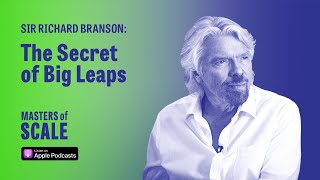 Richard Branson on Brand Diversification: Keep Asking Why Not2022 · 36 min · full transcriptMost direct on dyslexia making him rely on people better than himself and become a delegator.
 Richard Branson on Business, Innovation and Giving Back: TED Talk2004 · 30 min · full transcriptShows how that lesson turns into a leadership philosophy built around finding and inspiring the right people.
 Richard Branson on Creativity and Entrepreneurship: Take Bold Risks2016 · 40 min · full transcriptAdds how Branson's big-picture, practical style shows up in business decisions and risk-taking.
 Richard Branson on Entrepreneurship and Risk: How He Caps the Downside2017 · 88 min · full transcriptUseful for seeing the mature version of his thinking on resilience, focus, and learning from experience.
Questions people ask
Sources
Every quote above, word for word from the transcripts. Numbers match the text.
“An entrepreneur is simply coming up with an idea that makes other people's lives better.”
“I was 15, I was dyslexic, and I needed people better than me to be around.”
“…companies are all about finding the right people, inspiring those people…”
“Take great chances and yet predict or protect the downside…”
How this guide was made: drafted with AI from the full transcripts of the recordings cited, then checked: every quotation must match a transcript word for word and be the speaker's own words, and an independent review gates accuracy. Methodology and corrections.
