Noam Chomsky on Philosophy
Chomsky sees human nature as including innate mental structure, ordinary creative powers, and a drive toward freedom that should shape both science and politics.
- Human beings are not blank slates; they bring built-in mental structure to experience.
- Creativity is a normal human capacity, shown most clearly in language, inquiry, and work.
- Because people need freedom to develop, social institutions should expand participation and reduce domination.
- Chomsky ties morality to stable features of human nature, not just to power or convention.
- His politics follows from his anthropology: systems that turn people into instruments deform human life.
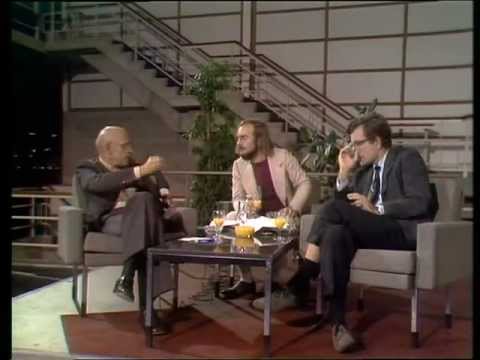
“…this instinctive knowledge, if you like, this schematism…”International Philosophers' Project debate, Eindhoven, 1971 · 8:18
Human nature includes innate structure, not just learned habits
Chomsky’s starting point is that people do not build their minds from experience alone. He argues that human beings come with an internal framework that organizes what they can learn, especially in language. That is why limited and imperfect input can still lead to rich knowledge12.
This is not just a technical claim in linguistics. It is part of a broader view that explanation in the human sciences has to uncover the inner principles that make knowledge possible, rather than merely listing patterns from the outside23.
“…this instinctive knowledge, if you like, this schematism…”International Philosophers' Project debate, Eindhoven, 1971 · full transcript →
Creativity is ordinary and central to being human
For Chomsky, creativity is not a rare gift possessed only by exceptional artists or thinkers. It is a basic feature of normal human life, visible in how people use language, form ideas, and respond to new situations. He treats this capacity as one of the clearest windows into what human beings are like by nature45.
That is why creative work matters so much in his political thought. If people are naturally driven to inquire, make, and understand, then a good society cannot treat them as passive recipients of orders or as tools for someone else’s ends46.
Freedom is a human need, so domination is a human problem
Chomsky connects his picture of human nature directly to freedom. If human beings are naturally active, searching, and creative, then institutions should be judged by whether they allow those powers to develop. He presents the ideal not as obedience under wise rulers, but as free cooperation among equals78.
This is why he is deeply hostile to systems of concentrated power, whether state or corporate. When work becomes fragmented, hierarchical, and controlled from above, the person is diminished rather than developed. In that condition, social order may persist, but human flourishing does not96.
His politics grows out of this view of the person
Chomsky’s libertarian socialism follows from his account of human nature. Since people have intrinsic creative capacities, the right social form is one that maximizes participation, autonomy, and meaningful association rather than elite management. He points toward decentralized forms of organization that let people shape the conditions of their own lives812.
This is also why he thinks both state socialism and capitalist democracy fall short. Each leaves major decisions in the hands of concentrated power, and each tends to train people into passivity instead of self-government.
Human nature also grounds moral judgment and responsibility
Chomsky does not treat justice as only a mask for power. He says there is some stable basis for moral judgment, which fits his larger belief that human beings have a definite nature and definite needs. Without that, it becomes harder to explain why oppression is not merely disliked but wrong13.
This moral side of his view appears in his account of intellectual life as well. If some people have greater access, education, or public standing, then they have stronger obligations to expose domination and help others act effectively. Responsibility follows from human capacities and social position alike14.
“I think there is some sort of an absolute basis…”International Philosophers' Project debate, Eindhoven, 1971 · full transcript →
Chomsky on philosophy, in his own words
“…man is born to inquire and create…”
“I think there is some sort of an absolute basis…”
Where to watch
 Noam Chomsky on Human Nature: Creativity, Justice, and Power1971 · 70 min · full transcriptBest single statement of how innate creativity, justice, and freedom fit together in Chomsky’s view of human nature.
 Noam Chomsky on Libertarian Socialism: The State and Freedom1970 · 57 min · full transcriptShows how his picture of the human person leads to libertarian socialism and a critique of both state and corporate domination.
 Noam Chomsky on Generative Grammar: The Galilean Challenge2019 · 75 min · full transcriptExplains the linguistic side of the argument: why human beings must have innate structure to acquire language.
 Noam Chomsky on Radical Intellectuals: Responsibility and Power2010 · 58 min · full transcriptApplies his moral view of human beings to civic duty, public truth-telling, and the responsibilities of intellectuals.
Questions people ask
- What did Noam Chomsky say about capitalism and democracy?
- What did Noam Chomsky say about libertarian socialism?
- What did Noam Chomsky say critical intellectuals should do in society?
- What did Noam Chomsky say about the job of critical intellectuals?
- Why does Noam Chomsky say scientists should look for the simplest theory?
- Why did Noam Chomsky support anarcho-syndicalism?
Sources
Every quote above, word for word from the transcripts. Numbers match the text.
“…this instinctive knowledge, if you like, this schematism…”
“…the holy grail was genuine explanations of fundamental properties of human language…”
“Anything short of that is not a genuine explanation.”
“…a fundamental element of human nature is the need for creative work…”
“…man is born to inquire and create…”
“The worker will remain a fragment of a human being…”
“…man is in his essence a free, searching, self-perfecting being…”
“…a federated, decentralized system of free associations…”
“…the state is a profoundly anti-human institution…”
“Now a federated, decentralized system of free associations, incorporating economic as well as social institutions, would be what I refer to as anarcho-syndicalism; and it seems to me that this is the appropriate form of social organization for an advanced technological society, in which human beings do not have to be forced into the position of tools, of cogs in the machine. In which the creative urge that I think is intrinsic to human nature, will in fact be able to realize itself in whatever way it will. I don't know all the ways in which it will.”
“I think there is some sort of an absolute basis…”
“…privilege plainly confers opportunity and opportunity confers responsibility…”
How this guide was made: drafted with AI from the full transcripts of the recordings cited, then checked: every quotation must match a transcript word for word and be the speaker's own words, and an independent review gates accuracy. Methodology and corrections.


