Noam Chomsky on Capitalism And Democracy
Chomsky argues that capitalism concentrates private power so heavily that formal elections remain, but real democratic control is narrowed, distorted, and often overridden by wealth.
- Capitalism concentrates wealth, and concentrated wealth becomes concentrated political power.
- He sees capitalist democracy as formally democratic but tightly limited and biased toward private power.
- Neoliberalism deepened this by weakening unions, public institutions, and working-class influence.
- For Chomsky, real democracy requires expanding popular control in workplaces, education, and public life, not just voting.
- This matters because elite control blocks action on existential dangers like climate and nuclear war.
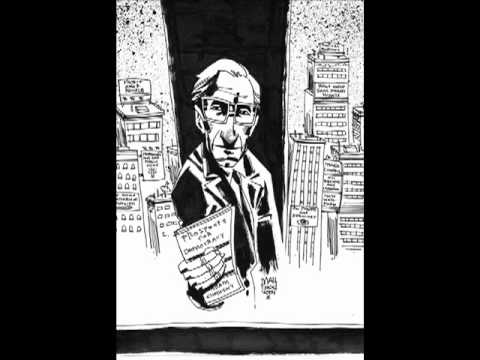
“The worker will remain a fragment of a human being…”Sound Seminar, Poetry Center of the New York YM-YWHA, 1970 · 19:49
Capitalism narrows democracy by concentrating power
Chomsky’s basic view is direct: capitalist societies may hold elections and preserve civil liberties to some extent, but political life operates inside boundaries set by concentrated private power. He argues that democratic choice is restricted both by wealth that dominates policy and by institutions that train people for passivity rather than self-government. In that sense, capitalism and democracy are not natural partners but opposing pressures inside the same society.
He repeatedly describes modern U.S. society as one where power is increasingly concentrated in a small sector of corporate and private wealth. That means the key question is not only who votes, but who sets the agenda, writes the rules, funds campaigns, shapes employment, and determines what options are treated as realistic.2
This is why Chomsky treats inequality as a democratic problem, not merely an economic one. When wealth becomes highly concentrated, public influence shrinks and institutions respond more to investors and major owners than to the broader population.4
Why he thinks private power is anti-democratic
Chomsky’s criticism is rooted in a larger idea of human freedom. He argues that people are naturally creative, inquisitive, and capable of self-direction, so social institutions should be judged by whether they enlarge or suppress those capacities. Systems that subordinate people to hierarchy, routine obedience, and outside control violate that standard whether the boss is the state or private capital.567
That is why he does not treat the market as automatically liberating. In industrial capitalism, he argues, labor is fragmented, controlled from above, and stripped of meaningful human development. If most people spend much of their lives inside institutions they do not govern, democracy in the polling booth sits on top of authoritarianism in everyday life.8
He also rejects the idea that the problem is only the state. He criticizes state power sharply, but he pairs that critique with a parallel criticism of concentrated private power, arguing that both can become systems of elite rule. His preferred direction is broader social control from below, not rule by bureaucrats and not rule by owners.97
“The worker will remain a fragment of a human being…”Sound Seminar, Poetry Center of the New York YM-YWHA, 1970 · full transcript →
Neoliberalism made the conflict worse
Chomsky sees the neoliberal era as a deliberate transfer of power upward. In his account, policy since the 1970s has weakened labor, intensified financialization, and restructured public institutions around market discipline, all while presenting these changes as efficiency or modernization. The result is not a freer democracy but a society where business classes gain more leverage and the public has less.
He connects this directly to attacks on unions, public education, and social welfare. Unions matter in his view not only for wages but because they are among the few institutions through which ordinary people can organize durable counter-power against concentrated wealth. When they are weakened, inequality rises and democratic participation becomes thinner and more frustrated.
He makes the same point in concrete policy areas. Trade arrangements presented as free trade are, in his view, structured around investor rights, and even basic services like health care become distorted when organized around private profit and administrative complexity rather than public need. These are examples of capitalism reshaping democracy so that institutions answer upward.101112
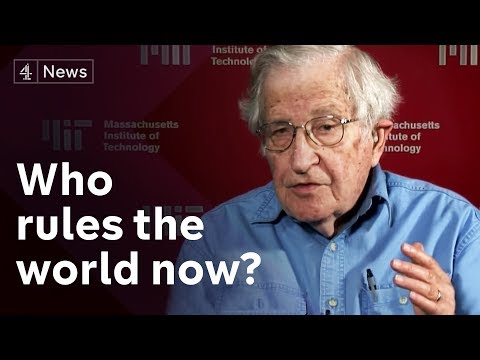
“The so-called free trade agreements are not free trade agreements. In fact to a large extent they’re not even trade agreements. These are investor right agreements. There’s a reason why they’re kept secret from the public and as soon as you look them you see why. Notice I say secret from the public, not secret. They’re not kept secret, they’re not secret to the corporate lawyers and lobbyists who are writing the detailed regulations. Of course in the interests of their constituents, doesn’t happen to be the public of the world or their own countries. So these are highly protectionist for the benefit of private power, so-called intellectual property rights, effectively raise tariffs.”Channel 4 News interview, 2011 · full transcript →
Why public anger grows under capitalist democracy
Chomsky links right-wing backlash, cynicism, and social breakdown to this long erosion of democratic substance. If people experience decades of stagnation, precarity, and powerlessness while being told they live in a responsive democracy, anger will look for outlets. It can move toward constructive reform, but it can also be redirected into demagoguery, racism, fear, and authoritarian politics.
He treats the Trump era as an especially blunt display of this structure. Rather than hiding elite rule, it seemed to advertise it, showing in exaggerated form how a political system can be run by billionaires and corporate interests while still claiming democratic legitimacy. That spectacle, for Chomsky, did not break with the system so much as expose it.14
He also warns that distraction can keep the public focused on sensational controversies while deeper attacks on public-interest programs continue in the background. A degraded democracy is easier to manage when the population is mobilized around spectacles instead of the underlying institutions that shape wealth and power.15

“It's set now. The Trump Administration is kind of a caricature of this. It's, uh, it's always pretty much true, but here they’re—it’s as if they’re kind of purposely trying to flaunt the fact that this country is run by, uh, Goldman Sachs and billionaires and nobody else counts. W.R. Ross, Betsy DeVos, all of them. I mean, it’s, it’s almost like a shocking parody, as if they’re trying to show the what we all know is true is dramatically true, and we’re going to show it to you. Uh, the interesting—an interesting question, the one you raise, is how are they maintaining support among—…”Democracy Now! interview, 2017 · full transcript →
Democracy for Chomsky means power from below
Chomsky’s alternative is not simply bigger government or cleaner elections, though reforms can matter. His deeper standard is whether institutions are organized to let people think for themselves, participate meaningfully, and control the conditions of their lives. That includes education aimed at intellectual self-defense, not passive test-taking, and workplaces that do not treat human beings as instruments.1656
This is why he identifies with libertarian socialist ideas. He argues that genuine freedom requires checking both state domination and capitalist domination, while extending democratic control through society more broadly. Democracy, in this sense, is not just a constitutional arrangement but a way of organizing social and economic life.7
He also sees this as urgently practical. Concentrated wealth and weakened democracy make it harder to confront the largest human threats, especially nuclear war and climate catastrophe. If public institutions are captured by private power, society becomes less capable of acting on the problems that matter most.17181920
“I'd like to make clear my own point of view in advance so you can evaluate and judge what I'm saying. I think that the libertarian socialist concepts, and by that I mean a range of thinking that extends from left-wing Marxism through anarchism, I think that these are fundamentally correct and that they are the proper and natural extension of classical liberalism into the era of advanced industrial society. In contrast, it seems to me that the ideology of state socialism—that is what has become of Bolshevism—and of state capitalism, the modern welfare state, these of course are dominant in the industrial countries and the industrial societies, but I believe that they are regressive and highly inadequate social.”Sound Seminar, Poetry Center of the New York YM-YWHA, 1970 · full transcript →
Chomsky on capitalism and democracy, in his own words
“…power is overwhelmingly and increasingly, in recent years, in the hands of a very narrow sector of corporate wealth, private wealth and power…”
“The worker will remain a fragment of a human being…”
“I'd like to make clear my own point of view in advance so you can evaluate and judge what I'm saying. I think that the libertarian socialist concepts, and by that I mean a range of thinking that extends from left-wing Marxism through anarchism, I think that these are fundamentally correct and that they are the proper and natural extension of classical liberalism into the era of advanced industrial society. In contrast, it seems to me that the ideology of state socialism—that is what has become of Bolshevism—and of state capitalism, the modern welfare state, these of course are dominant in the industrial countries and the industrial societies, but I believe that they are regressive and highly inadequate social.”
“It's set now. The Trump Administration is kind of a caricature of this. It's, uh, it's always pretty much true, but here they’re—it’s as if they’re kind of purposely trying to flaunt the fact that this country is run by, uh, Goldman Sachs and billionaires and nobody else counts. W.R. Ross, Betsy DeVos, all of them. I mean, it’s, it’s almost like a shocking parody, as if they’re trying to show the what we all know is true is dramatically true, and we’re going to show it to you. Uh, the interesting—an interesting question, the one you raise, is how are they maintaining support among—…”
Where to watch
 Noam Chomsky on Libertarian Socialism: The State and Freedom1970 · 57 min · full transcriptBest for his foundational argument that capitalism, state power, freedom, and democracy must be judged together.
 Noam Chomsky on Inequality and Democracy: Trump, Sanders, and Power2017 · 41 min · full transcriptBest short bridge from inequality to democratic breakdown in recent U.S. politics.
 Noam Chomsky on Neoliberalism and Democracy: Power, Reform, and Decline2021 · 65 min · full transcriptBest for how neoliberalism shifted power toward business and weakened labor, education, and public life.
 Noam Chomsky on War, Democracy, and Climate: Can We Choose?2020 · 110 min · full transcriptBest for the long historical story linking attacks on labor and social democracy to today’s crises.
 Noam Chomsky on Trump, Democracy, and Nuclear Risk2017 · 72 min · full transcriptBest for seeing how elite power operates through contemporary policy and political distraction.
Questions people ask
- What did Noam Chomsky say about Adam Smith and power?
- What did Noam Chomsky say about TTIP and free trade agreements?
- What did Noam Chomsky say about capitalism and democracy?
- What did Noam Chomsky say about intellectual self-defense in education?
- What did Noam Chomsky say about libertarian socialism?
- What did Noam Chomsky say about the Trump administration and wealth in politics?
Sources
Every quote above, word for word from the transcripts. Numbers match the text.
“…power is overwhelmingly and increasingly, in recent years, in the hands of a very narrow sector of corporate wealth, private wealth and power…”
“They’re designed for the benefit of investors.”
“…man is in his essence a free, searching, self-perfecting being…”
“…man is born to inquire and create…”
“I'd like to make clear my own point of view in advance so you can evaluate and judge what I'm saying. I think that the libertarian socialist concepts, and by that I mean a range of thinking that extends from left-wing Marxism through anarchism, I think that these are fundamentally correct and that they are the proper and natural extension of classical liberalism into the era of advanced industrial society. In contrast, it seems to me that the ideology of state socialism—that is what has become of Bolshevism—and of state capitalism, the modern welfare state, these of course are dominant in the industrial countries and the industrial societies, but I believe that they are regressive and highly inadequate social.”
“The worker will remain a fragment of a human being…”
“…the state is a profoundly anti-human institution…”
“The so-called free trade agreements are not free trade agreements. In fact to a large extent they’re not even trade agreements. These are investor right agreements. There’s a reason why they’re kept secret from the public and as soon as you look them you see why. Notice I say secret from the public, not secret. They’re not kept secret, they’re not secret to the corporate lawyers and lobbyists who are writing the detailed regulations. Of course in the interests of their constituents, doesn’t happen to be the public of the world or their own countries. So these are highly protectionist for the benefit of private power, so-called intellectual property rights, effectively raise tariffs.”
“The U.S. health care system is an international scandal.”
“I mean, there's an awful lot of work that's done just in managing systems that isn't really necessary at all. I mean, you can see it in the United States. One place where you see it dramatically is if you go into a hospital. Before you can—you know, you go into the emergency room, you've had to do a number of times—and before you can even be looked at, you have to fill a lot of paperwork out. You know, is the insurance company going to pay for it? Is there a small something in the small print you didn't notice? So you have to show you can pay for it myself, and on and on.”
“It's set now. The Trump Administration is kind of a caricature of this. It's, uh, it's always pretty much true, but here they’re—it’s as if they’re kind of purposely trying to flaunt the fact that this country is run by, uh, Goldman Sachs and billionaires and nobody else counts. W.R. Ross, Betsy DeVos, all of them. I mean, it’s, it’s almost like a shocking parody, as if they’re trying to show the what we all know is true is dramatically true, and we’re going to show it to you. Uh, the interesting—an interesting question, the one you raise, is how are they maintaining support among—…”
“…the one issue that seems to, uh, inflame the Democratic opposition is the one thing that has some justification…”
“If you want intellectual self-defense, that means teaching people how to think, how to think for themselves, not pass a test. I don't care if you pass a test or not. I mean, in a serious scientific university like MIT, nobody cares about test scores.”
“The greatest danger is – there are two huge dangers that the human species faces.”
“Everything else fades into insignificance in comparison to them.”
“There are two huge problems: one is the growing threat of nuclear war…”
“…two major threats to survival begin to converge…”
How this guide was made: drafted with AI from the full transcripts of the recordings cited, then checked: every quotation must match a transcript word for word and be the speaker's own words, and an independent review gates accuracy. Methodology and corrections.

