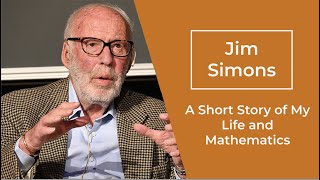
Jim Simons on Quantitative Investing
Jim Simons saw quantitative investing as a scientific search for repeatable patterns in prices, run by great researchers and followed with strict discipline rather than intuition.
- He believed markets contain patterns that can be studied mathematically and statistically.
- The big turning point was replacing fundamental judgment with fully model-driven trading.
- Once you use models, you must follow them consistently instead of overriding them by gut feel.
- His edge came from hiring great scientists and letting smart people improve models bit by bit together.
- He thought luck mattered a lot, even alongside skill, infrastructure, and good hiring.
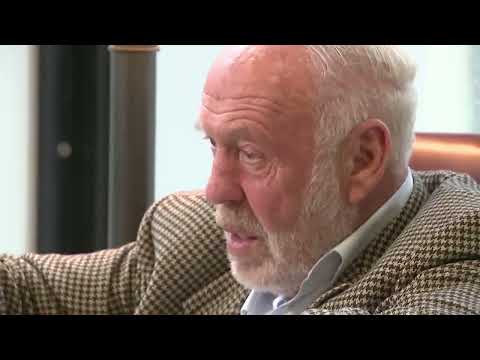
“And in looking at the patterns of prices, I could see that there was something we could study here, that there were maybe some ways to predict prices mathematically or statistically. And I started working on that and then brought in some other people and gradually we built models, and the models got better and better, and finally the models replaced the fundamental stuff. So it took a while. I would have thought with your background in mathematician this would have almost occurred to you immediately, like you would have straight away seen this. Well, what was the 2-year delay? >> Well, two things. I saw it pretty early but, and I brought in a guy who was a…”Public forum at CUNY Graduate Center, 2007 · 27:01
Quant investing starts with the belief that prices have patterns
Simons did not enter markets as a businessman first. He came in as a mathematician who became convinced that price behavior contained patterns worth studying. He said he could see in prices something that might be predicted mathematically or statistically, and that insight led him to start building models rather than relying only on market stories12.
That mindset fit the kind of work he already enjoyed: looking at data, designing algorithms, and testing ideas. He traced a lot of that habit back to codebreaking and computer work, where the job was to study signals, build models, and see whether they captured something real345.
“And in looking at the patterns of prices, I could see that there was something we could study here, that there were maybe some ways to predict prices mathematically or statistically. And I started working on that and then brought in some other people and gradually we built models, and the models got better and better, and finally the models replaced the fundamental stuff. So it took a while. I would have thought with your background in mathematician this would have almost occurred to you immediately, like you would have straight away seen this. Well, what was the 2-year delay? >> Well, two things. I saw it pretty early but, and I brought in a guy who was a…”Public forum at CUNY Graduate Center, 2007 · full transcript →
The decisive move was from fundamental trading to 100% models
Simons described a gradual transition, not an instant revelation. He started with more conventional trading approaches, but over time the models improved enough to replace the fundamental side. In his telling, that was the major strategic break: systematize the process, trust the research, and keep improving the machinery126.
By his own summary, the firm eventually became entirely model-based. He pointed to that as the point after which the organization truly committed to quantitative investing as its operating system rather than as a supplement to human judgment76.

“By 1988, it was 100% models.”IHES profile video · full transcript →
A quant process only works if you obey the model
Simons was unusually blunt about discipline. If trading decisions come from models, then the models have to be followed consistently. He argued against the common temptation to second-guess a signal because of a hunch, fear, or sudden story about the market89.
That principle reveals how he thought about edge. The advantage is not just discovering a predictor; it is building a process that can act on predictors reliably, day after day, without emotion breaking the chain between research and execution108.
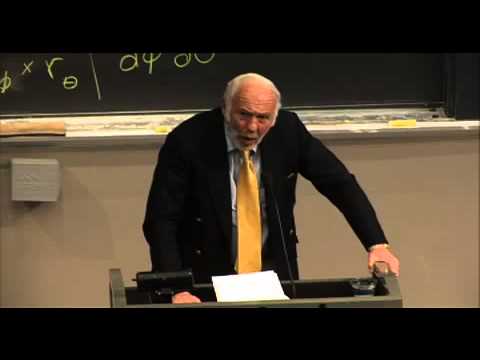
“…if you're going to trade using models, you just slavishly use the models…”Abel Prize conversation, 2021 · full transcript →
The real edge is people, collaboration, and constant incremental improvement
Simons did not present quantitative investing as a single genius formula. He said the core was starting with great scientists, then creating an environment where strong people could work together on hard problems. He repeatedly emphasized taste in hiring and partnering with the best people available111213.
He also described progress as cumulative. Smart researchers keep inching forward, finding one new idea here and another there, until the overall system becomes much better. That view makes quant investing look less like discovering one secret and more like running a research lab that compounds many small gains1410.
This also explains why his background in mathematics mattered even though markets are not pure math. He felt more like a mathematician than a businessman, and he built a firm around mathematicians, physicists, computer scientists, and others who could attack market data scientifically151611.
“…the real secret sauce is that we start with great scientists…”Abel Prize conversation, 2021 · full transcript →
Quant investing is powerful, but luck still matters
Simons resisted the idea that success in markets can be explained as pure brilliance. He openly said luck played a major role and returned to that theme in different settings. Even with strong models and strong people, outcomes still depend partly on timing, circumstance, and being in the right place at the right moment17181913.
That did not make him dismissive about method. Instead, it made him more realistic. Build the best scientific process you can, hire exceptionally well, do something different from the pack, and still stay humble about what you do not control201113.
“The last word up there is luck. Luck. Good luck.”Abel Prize conversation, 2021 · full transcript →
Simons on quantitative investing, in his own words
“…the real secret sauce is that we start with great scientists…”
“…if you're going to trade using models, you just slavishly use the models…”
“By 1988, it was 100% models.”
“…you have a lot of smart guys and they keep inching away and getting a new idea here and a new idea there…”
“The last word up there is luck. Luck. Good luck.”
Where to watch
 Jim Simons on Quantitative Investing: Common Sense and Good Luck2021 · 63 min · full transcriptBest concise statement of his mature view: great scientists, strict use of models, and the role of luck.
 Jim Simons on Quantitative Investing: From Math to Medallion2016 · 88 min · full transcriptBest account of how he moved from intuitive trading to a systematic, research-driven firm.
 Jim Simons on Mathematics and Investing: A Life Between Worlds7 min · full transcriptShortest clear summary of the end state: fully model-based trading by 1988 and a mathematician’s mindset.
 Jim Simons on Mathematics to Quant Investing: From Geometry to Markets2007 · 61 min · full transcriptUseful for seeing how pattern-finding, algorithms, and early intuition about prediction fed into investing.
 Jim Simons on Mathematics And Quant Investing: From Proofs to Markets160 min · full transcriptHelpful for understanding his language about finding predictors and enjoying algorithmic, data-driven work.
Questions people ask
- How did Jim Simons go from intuition-based trading to quantitative investing?
- What did Jim Simons say about choosing partners and working with other people?
- What did Jim Simons say about how to succeed in mathematics and business?
- What did Jim Simons say about luck and success?
- What did Jim Simons say caused the financial crisis?
- Why did Jim Simons think his IDA experience mattered for Renaissance Technologies?
Sources
Every quote above, word for word from the transcripts. Numbers match the text.
“And in looking at the patterns of prices, I could see that there was something we could study here, that there were maybe some ways to predict prices mathematically or statistically. And I started working on that and then brought in some other people and gradually we built models, and the models got better and better, and finally the models replaced the fundamental stuff. So it took a while. I would have thought with your background in mathematician this would have almost occurred to you immediately, like you would have straight away seen this. Well, what was the 2-year delay? >> Well, two things. I saw it pretty early but, and I brought in a guy who was a…”
“There should be a way to systematize it…”
“I liked counting. I liked doubling: 2, 4, 8, 16—all the way up to 128…”
“What we were supposed to do is, uh, break Russian codes.”
“But I really liked that whole process. I liked everything about it. I like designing an algorithm uh you know coming up with some attack, designing an efficient algorithm to uh to test it out and uh seeing how it came out. I mean you know it was uh like fishing or something. I don't know. I actually I don't like fishing because you never catch anything. But here I felt uh we might catch something every once in a while. And uh it was a lot of fun. I liked I I liked it all. And I'd never seen anything like that. So um yes, you're right. Later on that experience of making models, looking at data, making models to try to interpret the data uh was certainly learned there. Uh and I if I hadn't been there uh I think the the business that we built later would never have occurred.”
“From then on, we never looked back.”
“By 1988, it was 100% models.”
“…if you're going to trade using models, you just slavishly use the models…”
“Whatever the model says, they do.”
“…we found lots of predictors over the years…”
“…the real secret sauce is that we start with great scientists…”
“Partner with the very best people you can find. And some people want to work alone their whole lives, but partnering is a great thing. And it amplifies what you can do. But you have to choose your partners carefully. I’ve been lucky enough to have wonderful partners, both in the financial business and in mathematics, and now in the foundation. So work with the best people you can find because that’s going to make your work better.”
“Better personality for doing that. We underestimate, uh, the role of luck. It's typical that if someone fails at something, he'll say, "I had bad luck." And if he makes a success, he'll say, "I was a smart guy, and, uh, oh, I was just lucky." Uh, people don't usually say that, uh, when, when, uh, if they make a big success. And, of course, obviously not everyone can make a big success, but, uh, I think that luck played a role. I was in the right place at the right time. But I, I really, I think what I'm good at is getting good people to, uh, work together. So it was more, you would think it more…”
“…you have a lot of smart guys and they keep inching away and getting a new idea here and a new idea there…”
“…deep down, I feel more like a mathematician than I do like a businessman…”
“The businessmen looked at me like a mathematician, and the mathematicians looked at me like a businessman…”
“We were extremely successful. I think it was just plain good luck…”
“The last word up there is luck. Luck. Good luck.”
“The good luck--if I hadn't called my stockbroker the day I did, Lenny would have held on to that gold.”
“And the first is just to do something that everybody else isn’t doing. If you run with the pack you’ll probably lose. You might win, but more likely you’ll lose. Try to come up with a different way of doing things or different set of problems to attack. And I think, anyway, that's what I did.”
How this guide was made: drafted with AI from the full transcripts of the recordings cited, then checked: every quotation must match a transcript word for word and be the speaker's own words, and an independent review gates accuracy. Methodology and corrections.