The Jim Simons Course
After graduating, you will understand how Simons connected mathematical beauty, scientific rigor, models, teams, luck, and philanthropy into one way of thinking.

- 12 chapters
- 55 verbatim quotes
- 17 recordings
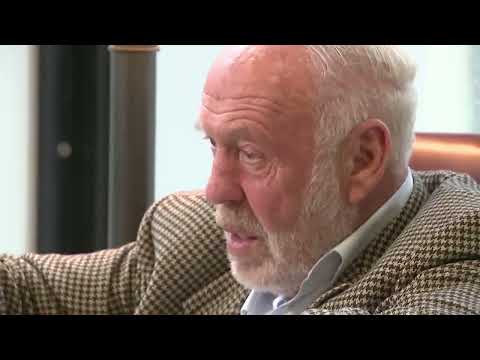
“It was very natural and I I always liked it.”Public forum at CUNY Graduate Center, 2007 · 0:00
About this course
Jim Simons was an American mathematician known for work in differential geometry and topology, including Chern-Simons theory, and later the founder of Renaissance Technologies. He also helped build Stony Brook’s mathematics department and, with Marilyn Simons, created the Simons Foundation.
His life is unusually instructive because it joins pure mathematics, codebreaking, investing, institution-building, and philanthropy. Again and again, Simons returns to the same themes: beauty, hard problems, talented collaborators, data, disciplined models, and support for basic science.
This course is built from transcribed recordings and answered questions on Thinkers Archive. Each chapter points you to the most relevant primary recordings, so you can learn Simons’s ideas in his own words.
Curriculum
- The Mathematical TemperamentStart where Simons starts: with beauty, clarity, and play.
- Geometry as LanguageStokes’ theorem, manifolds, holonomy, and the pull of structure.
- Hard ProblemsMinimal varieties, failed starts, and the discipline of research.
- Chern-Simons IdeasHow characteristic classes became a bridge to physics.
- Geometry Meets PhysicsBasic science pays off in ways nobody can schedule.
- Codes and ComputersThe bridge from pure math to algorithms, statistics, and models.
- From Trading to ModelsThe decisive move from intuition to systematic, model-driven investing.
- Building RenaissanceGreat scientists, open culture, infrastructure, and no gut overrides.
- Scientists and DataRenaissance was built more like a scientific lab than a Wall Street trading desk.
- Luck, Risk, JudgmentHow Simons talks about chance without surrendering to it.
- Tiny Edges, Many BetsMedallion’s power came from small statistical advantages repeated broadly under tight risk control.
- Giving It AwayScience, teachers, institutions, and philanthropy built around talent.
- GraduateFinish every chapter to earn your certificate.



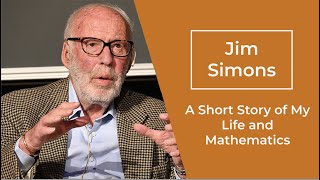

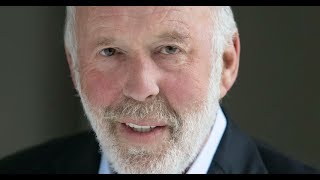


has graduated from The Jim Simons Course, completing all 12 chapters on Jim Simons's ideas, in his own words.
- Follow beauty and clarity, because Simons repeatedly treats mathematical elegance as a reliable guide to worthwhile work.
- Work on hard problems, but choose them with taste and surround them with the right tools and people.
- Basic science matters because abstract ideas can become useful decades later in ways nobody predicted.
- Learn across domains: Simons’s move from geometry to codebreaking to investing depended on transferring habits of thought, not copying subject matter.
- If you use models, follow them consistently rather than overriding them whenever intuition gets nervous.
- Build teams of exceptional people and create an open research culture where ideas, data, and criticism circulate.