Building Renaissance
Great scientists, open culture, infrastructure, and no gut overrides.
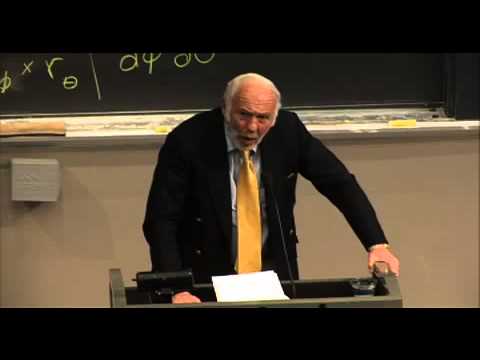
“…the real secret sauce is that we start with great scientists…”Abel Prize conversation, 2021 · 34:04
The lesson
Renaissance did not begin with a magic formula. In Simons’s account, the core advantage was the combination of excellent scientific talent, strong collaboration, and a serious research process built around models rather than stories about markets. He repeatedly points to hiring as foundational: start with outstanding scientists, work with very smart people, and build around strong collaborators rather than lone heroes123.
That hiring philosophy was tied to a specific style of thinking. Simons believed there should be a way to turn market ideas into a system, and his earlier experience with algorithms, data, and testing helped shape that instinct45. The goal was not one predictor or one breakthrough, but an ongoing research engine that could keep finding signals over time, which is why he describes the work as discovering many predictors rather than relying on a single insight64.
A decisive step in building Renaissance was the shift away from discretionary judgment toward a fully model-based process. Simons describes the firm moving all the way to model-driven trading, and once that transition was made, he presents it as a turning point they did not reverse78. The reason is discipline: if you claim to trade from models, then overriding them with gut instinct breaks the whole method9.
Culture mattered because disciplined models still require people to create, challenge, and improve them. Simons emphasizes respect alongside compensation, suggesting that high-performance research environments need both intellectual quality and a culture where strong people want to work together1011. His comments on taste in mathematics also help explain the standard he sought: judgment still matters, but mainly in choosing problems, people, and approaches—not in improvising trades after the system is built9.
Simons also leaves room for humility. He credits luck as part of the story, even while insisting that careful hiring, collaboration, and systematic execution were central to Renaissance’s success1211. That combination is useful for builders: control the parts you can control—people, process, infrastructure, discipline—while recognizing that outcomes are never explained by skill alone112.
5 principles from Jim Simons
Start with great people
Simons treats talent quality as the base layer of the organization. In practice, this means recruiting exceptional people, especially those who raise the level of everyone around them, instead of trying to compensate for weak talent with process alone.
“…the real secret sauce is that we start with great scientists…”
Build research as a collaborative system
He consistently describes success as coming through collaborators and teams, not solitary brilliance. Apply this by designing work so ideas can be shared, tested, and improved across specialties rather than trapped inside individuals.
“I, I, I added this morning, in reflecting on what it is that I've accomplished, I've really always had outstanding collaborators. Really outstanding. In math, it was Churn, of course, uh, Chiger, uh, Sullivan—all members of the National Academy at one point or another. In business, it was Jim Ax and Henry Laufer and Peter Brown and Bob Mercer and that machine learning exercise. And in philanthropy and in life, of course, Maryland. So there it is, there's my talk, and…”
Systematize what works
Simons’s instinct was to turn promising observations into repeatable procedures. When you find something useful, define it clearly, test it, and make it part of a process that can run consistently instead of depending on memory or intuition.
“There should be a way to systematize it…”
Do not override the model with gut feel
Once a model-based process is chosen, discretionary exceptions can quietly destroy its integrity. Use human judgment upstream in designing and evaluating the system, but downstream in execution, follow the rules consistently.
“…if you're going to trade using models, you just slavishly use the models…”
Pair rigor with humility
Simons credits both scientific rigor and luck. The practical lesson is to work seriously on what you can control while staying modest about outcomes and avoiding the story that success proves infallibility.
“The last word up there is luck. Luck. Good luck.”
In his own words
The quotes behind the lesson, word for word from the transcripts. Numbers match the lesson above.
“…the real secret sauce is that we start with great scientists…”
“Work with the smartest people you can, hopefully smarter than you…”
“I, I, I added this morning, in reflecting on what it is that I've accomplished, I've really always had outstanding collaborators. Really outstanding. In math, it was Churn, of course, uh, Chiger, uh, Sullivan—all members of the National Academy at one point or another. In business, it was Jim Ax and Henry Laufer and Peter Brown and Bob Mercer and that machine learning exercise. And in philanthropy and in life, of course, Maryland. So there it is, there's my talk, and…”
“There should be a way to systematize it…”
“But I really liked that whole process. I liked everything about it. I like designing an algorithm uh you know coming up with some attack, designing an efficient algorithm to uh to test it out and uh seeing how it came out. I mean you know it was uh like fishing or something. I don't know. I actually I don't like fishing because you never catch anything. But here I felt uh we might catch something every once in a while. And uh it was a lot of fun. I liked I I liked it all. And I'd never seen anything like that. So um yes, you're right. Later on that experience of making models, looking at data, making models to try to interpret the data uh was certainly learned there. Uh and I if I hadn't been there uh I think the the business that we built later would never have occurred.”
“…we found lots of predictors over the years…”
“By 1988, it was 100% models.”
“From then on, we never looked back.”
“…if you're going to trade using models, you just slavishly use the models…”
“People work for a combination of money and respect.”
“Better personality for doing that. We underestimate, uh, the role of luck. It's typical that if someone fails at something, he'll say, "I had bad luck." And if he makes a success, he'll say, "I was a smart guy, and, uh, oh, I was just lucky." Uh, people don't usually say that, uh, when, when, uh, if they make a big success. And, of course, obviously not everyone can make a big success, but, uh, I think that luck played a role. I was in the right place at the right time. But I, I really, I think what I'm good at is getting good people to, uh, work together. So it was more, you would think it more…”
“The last word up there is luck. Luck. Good luck.”
Reflect
- Where in your work are you still relying on individual judgment when you could define a repeatable system instead?
- If you say you are data-driven or model-driven, where do you still make convenient exceptions? What would stricter execution require?
- Think about the last team you built or joined: did you optimize more for raw talent, collaboration, or control? What would Simons likely change?
Check your understanding
Go deeper
 Jim Simons on Quantitative Investing: Common Sense and Good Luck2021 · 63 min · full transcript
 Jim Simons on Math, Codes, and Investing: A Life in Five Parts103 min · full transcript
 Jim Simons on Mathematics And Quant Investing: From Proofs to Markets160 min · full transcript
 Jim Simons on Quantitative Investing: From Math to Medallion2016 · 88 min · full transcript
 Jim Simons on Philanthropy and Science: Making a Difference2019 · 82 min · full transcript
 Jim Simons on Mathematics and Investing: A Life Between Worlds7 min · full transcript
- What did Jim Simons say about choosing partners and working with other people?
- What did Jim Simons say about hiring and recruiting talent?
- What did Jim Simons say about how to succeed in mathematics and business?
- What did Jim Simons say about luck and success?
- What did Jim Simons say about the importance of collaborators?