Jim Simons on Mathematical Career: From Minimal Surfaces to Chern-Simons

What Simons talks about
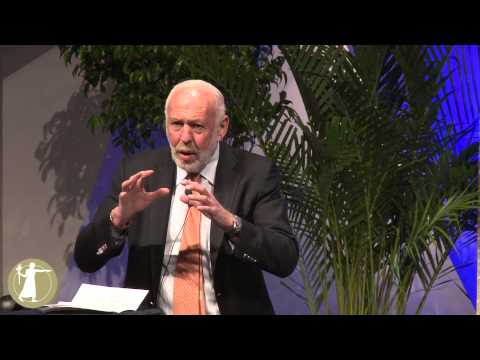
Jim Simons gave this NAS Research Briefings lecture on his mathematical career, tracing a path from minimal surfaces and characteristic classes to Chern-Simons invariants and later applications in physics.
Also known as: NAS Research Briefings lecture; NAS Research Briefings: James Simons - My Peregrinations through Mathematics.
Jim Simons reflects on the mathematical path that shaped his career, starting with differential geometry, minimal surfaces, and Plateau’s problem. He explains how geometric ideas led him to work on characteristic classes and topological invariants, and how collaboration with Shiing-Shen Chern opened the door to the Chern-Simons invariants.
He also describes how those ideas later proved unexpectedly useful in physics, from quantum field theory to quantum computing. The talk matters because it shows how abstract mathematics can produce deep theories with applications far beyond the original problem.
Simons speaks throughout.
In his words
“And I didn't publish anything during those five years, but it was worth it because I learned a lot about that stuff.”
“That opened the floodgates in a way of, uh, the theory of characteristic classes”
“You do something in basic mathematics or basic science, and you really don't know where it's going to go.”
Key points
- Simons describes his early training at MIT and Berkeley and his work in differential geometry.
- He explains minimal surfaces and Plateau’s problem, including the role of singularities and dimension limits.
- He recounts his move into characteristic classes through Euler’s and Gauss’s results.
- He describes developing invariants with Chern, later known as Chern-Simons invariants.
- He notes that these mathematical ideas unexpectedly became important in physics.
- He briefly connects his later work to machine learning, hedge funds, and philanthropy.
Full transcript: Jim Simons, My Peregrinations through Mathematics
Well, I'm certainly honored to be a member of this organization and to represent my class. The last time I represented my class, I was president of my eighth-grade graduating class, and I forgot my speech in the middle. I've never remembered it ever since, so hopefully— but I had notes this time. So, uh, you know, I've had a variegated life in science. I did love it when I was a little boy, and I went to MIT and was mentored by Singer as an undergraduate, and we went out to Berkeley to get a PhD under Bert Kostant. That was in 1961.
And my thesis and the field that I worked in was the differential geometry. My thesis was published in a good journal; I was very happy about that. I taught at MIT and at Harvard for the next three years, and then spent four years at the Institute for Defense Analysis. That was a super secret code-cracking think tank in Princeton, but it was not a bad place, and I could do mathematics there as well as try to crack codes. But the first five years after my PhD, I worked on one area, which is high-dimensional versions of
what are called minimal surfaces, which we'll get to in a moment. And I didn't publish anything during those five years, but it was worth it because I learned a lot about that stuff. And so here's a two-dimensional minimal surface. There's a picture of it there. It's a minimal surface: a surface that minimizes area with respect to its boundary. So if you take a wire frame, a loop, maybe twist it up and so on, dip it in a soap film, and you pull it out, you'll get this nice surface that spans it. And that's, and that minimizes area among any competing surfaces. So
that was a quite a time-honored subject in mathematics, and it was heavily analytic, a lot of partial differential equations and stuff that I was not especially fond of. But I took a geometric approach. I wanted to understand the geometry in full generalization if you could. So the ambient manifold here, here this is in three-dimensional space, it's a two-dimensional surface. But I was trying to understand the general concept of k-dimensional minimal varieties in n-dimensional Riemannian manifolds, not necessarily a Euclidean space, but always they minimized their area, of course. It was a high-dimensional analog
with respect to their boundary, and I proved some nice general theorems. And finally turned to a problem called Plateau's problem. And Plateau's problem is back to this one. Here's another minimal surface. You've got an idea, see? That's one. So its boundaries are those two rings, the one on the top and the one on the bottom. And the surface is what you see inside; that's all colored. That's minimizing the area for anything that's bounded by those two disjoint rings. So the question was, can you always do this? Can you always, given any
boundary, let's say a simple closed curve or maybe a pair of loops like that, get a surface that really does the job and doesn't have any singularities? It's smooth; it's differentiable; it doesn't have points or creases or anything like that. And this problem was first solved in 1930 by Jesse Douglas. And in fact, he won the first Fields Medal for that work. He spent his whole life teaching at CCNY, where they had no graduate school at all. But he, you know, he was a terrific mathematician. This is an active field ever since then, but
these dimensions didn't jump up finally. A guy named Almgren raised that by one dimension. He showed that in four-dimensional space, given a three-dimensional boundary, you could always find a story — yeah, in four-dimensional space — three-dimensional boundary— no, no, four-dimensional space, a two-dimensional boundary, yes, sorry, two-dimensional boundary, you can always get a three-dimensional spanning thing. The inside has to be higher dimension than the boundary. So that was the first step in raising the dimension of the solutions to this problem, and it expanded, and it was smooth, no creases, no mess.
So I went through this, my studies, and then following turns to this problem. And a lot of work had been done, so but geometry could really play a role, not differential equations. So I proved that this is true: you can always do this through dimension seven. So up through dimension seven, you'd have a five-dimensional boundary and a six-dimensional surface. This is Euclidean space. That was all fine. So I gave one proof that went all the way up through dimension seven, and in dimension eight, my proof didn't work anymore, and I found a counterexample, or what was
proposed a counterexample, which was a cone. So there was a — you have to be in eight-dimensional space. You take, for those who might have some notion of what I'm saying, you take the three-sphere cross the three-sphere, sitting there in eight-dimensional space: a three-sphere in one four dimensions and another three-sphere in the other four dimensions. You take that cross product, you get a six-dimensional boundary; you connect all the points in that boundary to the origin of the eight-dimensional Euclidean space, and you get a cone. It has a point, but that turned out to be minimal among all local competitors. So it was a
a proposed counterexample that was, as far as I could get. The paper got published; it was with all these stuff; it was a good paper. And a year later, three Italians — Bombieri, Giusti, and the Giorgi, I think the Giorgi led the charge — they proved that that cone, which was locally minimum, was actually globally minimum, and that was the end of the problem. So Plateau's problem was— Plateau was a guy, as I said, Plateau's problem; he was a person, was killed. That was the end of that line of questioning. You couldn't do it anymore if there'd be singularities there. So after I work, I went to Stony Brook University and new
University. As chair, I was pretty young to be chair, but they had reached the bottom of the barrel, I think, in looking for chairman. So, uh, they picked me and was fine. We built up a good department and I started studying something called characteristic classes, which I wanted to understand. And I'll give you an example of the origins of characteristic classes. It goes back to 1750 or so and Euler, a great mathematician, scientist, and general oiler. So here's what he observed. So try to picture this. I don't think I need another slide, no.
Picture a sphere that you tile. You cover it with tiles. They could be triangular, hexagonal. They don't have—they can all be different shapes, but as long as they're tiles, they sort of fit together, and you cover this whole sphere with tiles. And then you do a count. Well, there are points called vertices where edges come together. Let's count the number of those. Let's count the number of edges and let's count the number of tiles, the faces of this thing. And you take vertices, the number of those, subtract the number of edges, and add the number of faces. Okay, vertices minus edges plus faces, and you get a number.
Of course, what number do you get? You get two, you got two. Well, why? I mean, suppose I used triangles instead of hexagons or squares or I mixed it all up and did 67 million of these tiles; you still get two. So, uh, but if you did this with the surface of a doughnut, a so-called torus, you get zero. Once again, no matter how you did it, you get zero. And if you did it with a torus with two holes, like a pretzel, you know, donut with two holes, you'd get minus two, and three holes you get minus four, and so on. So,
these were—this was called a topological invariant, and it really, uh, distinguished between, uh, well, spheres and toruses, and—but it was quite amazing that no matter how you did it, you always got the same answer. So now there was that result. Then the famous mathematician Gauss came along. Now remember, going back, this didn't have to do with really the shape of the sphere. It could have been a squishy sphere. It could have been a football. It could have been a hot dog. As long as you could deform it into a sphere, it didn't really matter. Once you put the hole and made it a torus, that was a different story. Now Gauss came along studying geometry. He was
you know, a fabulous mathematician. He did all kinds of stuff, but he studied geometry, and he came up with a definition of a surface which was now geometric size; it had a metric on it. It was a real—it wasn't squishy. It was a rigid surface of some sort. The notion of curvature: every point there was curvature, and this could be a positive number or a negative number, and it would vary all over the—all over the surface. I won't describe how you exactly, you know, define that, but a saddle point has negative curvature, and something like a point on a regular sphere would have positive curvature. So, okay, and then he did something interesting.
He integrated that over the whole surface, and what did he get? He got two pi times what we've now called the Euler characteristic. So if you did it over a regular, uh, sphere, you integrated its curvature—it doesn't have to, you know, it could be a funny-shaped sphere, but you have plenty of curvature, you integrate that, and what you are going to get is 2 pi times 2 or 4 pi. And if you did it over a torus, you're going to get 0, and so on. So he related the curvature of a surface, which is a geometric notion at every point—it's a geometric notion, not a
topological notion—to its topology, to this Euler characteristic, and that was really one of the most beautiful theorems in all of mathematics. Now there were—it was—there were other topological invariants that were subsequently discovered, uh, and so on. But to generalize this, uh, Gauss-Bonnet theorem to higher dimensions, which in principle one should have been able to do, was very awkward
and had been not doable. You kind of knew what to integrate, but you couldn't prove that this was going to be the right answer. People who had tried had very complicated approaches, and then a young Chinese mathematician named Chern, 1944, he came along, and he proved this formula, this high-dimensional formula, or not even—they have to be even-dimensional manifolds—in the most elegant imaginable way. The title of the paper, uh, I think had the word "short" in it. I'm not sure. It was simple, intrinsic, whatever it was. It was, I don't know, you could write it down in two pages, uh, you could write
down this proof in two pages, and he proved that theorem, and that opened the floodgates in a way of, uh, the theory of characteristic classes, which are topological measures but how they could be interpreted geometrically. And he and André Weil established right after that—they were friends—uh, what's called the Chern–Weil homomorphism, which related all kinds of so-called characteristic classes, topological measurements, to geometric, uh, geometric formulas and measurements of that sort. So that's where I started. I wanted to learn
this subject, and the first thing I wanted to do was find—well, find a combinatorial formula for the signature. Now combinatorial is like that Euler's first thing: vertices minus edges, some formula just in terms of a triangulation or something that could explain a topological invariant of a four-dimensional manifold called its signature. It was easily defined. The signature was easily defined in terms of some other things but not in terms of these triangulations or whatever. So I worked on that just to sort of get my feet wet in this field.
And it was going good. I had this integral; I was trying to get rid of various pieces and got to turn them into combinatorial things. But then there was one piece that resisted. It was not malleable to whatever hammers I hit it with. And then I realized that this piece had some interest. It was—I called it this pesky term—but it had some independent interest. And with it, I was able to define a function of a three-dimensional manifold, which was a very interesting function. It depended on the metric on the manifold, but it was what was called a conformal invariant, which, you know, doesn't matter. Anyway, I got this number.
Actually, it wasn't a number. It was a number only up to an integer; you didn't know the integer part. So you could think of it as a point on the circle, if you like. But it was a number modulo the integers. So it was 0.723 or 1.723 or 6.723. It was the 0.723 that mattered. And this was a geometric invariant. It led to some nice results. You calculated in two different ways. And I showed this to Chern, and he took one look. I said, "Ah, we can generalize this to all dimensions," and he had the technique to do that. I didn't. I didn't even know what he was
talking about at first, but I soon learned. And so, together, we wrote this paper creating these invariants in all—in all dimensions. And here, I think there—there's Chern; it's the older guy—and me, there's the younger guy. And you can see I'm not Chinese, and that he is. And underneath, our business point, these are slides from his first exposition to this at an international congress a few years after we did the work that somehow got rescued.
So, there it was. However, what was interesting—or what else was interesting—ten years later or so, Ed Witten and some other physicists found that this stuff was useful in physics, not only in string theory and quantum field theory. Other people applied it to condensed matter physics, and now these Chern-Simons invariants are really kind of ubiquitous in many aspects of physics: the quantum Hall effect, whatever that is, even—I think—you have to get something cold, but I'm not sure. And even in quantum computing. I was just out in the steps with someone who
was working on quantum computing, and he told me that these terms are used in that now. So, who knew? I mean, as you can tell, I don't know any physics. I didn't know any physics then; I don't know any physics now. But it was a pure serendipity. But, as many of you know in the audience, you do something in basic mathematics or basic science, and you really don't know where it's going to go. You don't know what application it might find. It might find none; it might just be a beautiful result or experiment. But often, it finds its way to applications that you may never have occurred to you. Well, after that, I worked with
another partner, Jeff Cheeger. Here, I'll show you something which I won't even explain. You see that? It's a diagram, right? It's very—it's a very pretty one, I think. But I won't tell you what's inside. But that sort of started a little mini field called differential homology. And it led to some questions that I found extremely frustrating, so frustrating, in fact, that I didn't even want to look at pure mathematics anymore. And in 1977, I left academia; I left
pure mathematics, and I didn't do any mathematics for—it says here—26 years, which I think is approximately right. And instead, I started a hedge fund. Now, if you can think of a jump from, you know, Chern-Simons invariants to hedge funds—it was a big jump. But anyway, I thought that would be something interesting to do. And we built models of financial markets. We modeled financial markets, and that actually seemed to work pretty well. We brought in mathematicians and physicists, astronomers, computer scientists— all kinds of people who actually wanted to make some money, I think. But it's always a motive.
But the work was fun. It turned out to be a huge exercise in what today is known as machine learning. We just kept finding anomalies in the data that would predict, allow you to better and better predict what was coming, what was coming next. And, luckily, this was enormously successful. And today, it's a right-here-thriving enterprise: 300 people, 100 PhDs, still churning away predicting markets that way. Well, while I was learning to make money,
my wife Marilyn was learning to give it away. And I think she didn't hope to give it away quite as fast as it was coming in. But she was pushing, pushing pretty hard there. So in 1993, she started a foundation. And at first, it was—oh yeah, yeah, that's easier to understand than the diagram that was there before. There's Marilyn and another guy. At first, it was kind of a general-purpose foundation, gave to various good causes. But gradually, we converged on supporting basic science, and that's what we
do today. We support life science and physical science and mathematics of all sorts: neuroscience, oceanography. I think there are some people in this room who may have been beneficiaries of that support. And after I left the business—the Renaissance money-making business—I joined, I joined Marilyn at the foundation. And somehow or other, after those 27 years, I went back to doing some pure math with a guy named Dennis Sullivan, who was a famous mathematician. So that's pretty much my talk.
I, I, I added this morning, in reflecting on what it is that I've accomplished, I've really always had outstanding collaborators. Really outstanding. In math, it was Churn, of course, uh, Chiger, uh, Sullivan—all members of the National Academy at one point or another. In business, it was Jim Ax and Henry Laufer and Peter Brown and Bob Mercer and that machine learning exercise. And in philanthropy and in life, of course, Maryland. So there it is, there's my talk, and
From YouTube captions, lightly punctuated for readability. Timestamps link to the video above. Errors are possible.
Cite this recording
Jim Simons, “My Peregrinations through Mathematics”. Transcript and video: Thinkers Archive, https://thinkersarchive.com/jim-simons/mathematical-career-nas-briefings/
Quoting a passage? Link to its exact moment: every timestamp above has its own anchor (for example https://thinkersarchive.com/jim-simons/mathematical-career-nas-briefings/#t-133).