Jim Simons on Mathematics
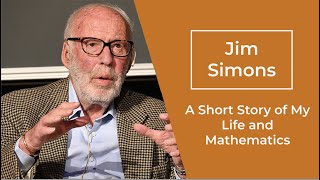
Jim Simons sees mathematics as a natural, beautiful way of thinking—clearer and more permanent than ordinary life, and often valuable long before anyone knows how it will be used.
- He loved mathematics from childhood because counting, patterns, and logical structure felt natural to him.
- Beauty mattered: Stokes’ theorem was a decisive experience that pulled him toward differential geometry.
- He valued theorems and proofs because math offered unusual clarity and permanence.
- He worked on deep abstract geometry without aiming at applications, yet those ideas later became useful in physics.
- He thought mathematical progress is often collaborative and cumulative, built by strong partners and many small advances.
Mathematics felt natural to him from the start
Simons’s attachment to mathematics began early and seems to have come less from ambition than from temperament. He describes liking numbers, counting, doubling, and simply thinking for its own sake, which made mathematics feel like the most natural activity in the world.
That matters because it explains the tone of his later career. He was not drawn in by status or by a plan for utility first; he was drawn in because the subject fit his mind and gave pleasure.
Beauty, especially in Stokes’ theorem, shaped his mathematical taste
For Simons, mathematics was not just correct; it was beautiful. Again and again he points to Stokes’ theorem as a turning point, describing it as an epiphany that made him want to enter differential geometry.
What attracted him was the way one idea could unify many cases at once. He saw Stokes’ theorem as a sweeping generalization of the fundamental theorem of calculus across dimensions, and that kind of elegant structure became the model for what he wanted from mathematics.
This helps explain why geometry, manifolds, characteristic classes, and related ideas became central in his work. He was pulled toward fields where form, structure, and conceptual unity are especially strong.9
Proof gave mathematics its clarity and permanence
Simons was especially attracted to theorem-proof reasoning. He says the idea of theorems and proofs strongly appealed to him, which fits his broader sense that mathematics offers a kind of clarity other fields often do not.
He even contrasts mathematics with ordinary business life by suggesting that mathematical objects feel more real and lasting than everyday commercial things. The point is not that the world is unreal, but that mathematics has a special permanence: its truths do not go out of date.11
That permanence also explains why he could devote himself so completely to the subject for years. Mathematics was not just a job or a toolkit for him; it was a stable intellectual world worth living in.11

“Mathematics was my life, uh, for, uh, those years. Uh, it was, uh, so it seemed, you know, the most natural thing in the world to be always thinking about mathematics and, uh, so when I did leave the field after about 20 years in my late 30s and one of some business guy, I guess, and I went into business and business guy said to me, uh, well, how do you like the real world, you know, kind of joking around, and I said, well, you somehow it seems to me that, uh, something like the integers has a great deal more reality than some McDonald's stand or whatever, you know, that's here today and gone tomorrow and the integers are forever. So I think I implicitly, if not explicitly, I think like most mathematicians felt that these concepts were really, uh, h of an eternal nature. Uh, and so, uh, it was, that was my notion.”Science Lives interview · full transcript →
He pursued deep abstraction without needing immediate applications
Simons’s mathematical work moved through differential geometry, minimal varieties, characteristic classes, Chern-Simons theory, and differential cohomology. In talking about that work, he often emphasizes the internal logic of the subject: one problem opens another, and one conceptual advance can open the floodgates to an entire area.9
He also describes periods of slow effort and uncertainty, including stretches where he learned a great deal without publishing and periods of technical frustration. That shows a view of mathematics as long, patient work rather than steady visible output.
Just as important, he did not think basic mathematics needs an immediate justification. His view is that good basic science often travels in directions nobody can predict at the time.
Abstract mathematics can become useful in surprising ways
One of Simons’s strongest lessons is that pure mathematics can later matter a great deal outside mathematics. He says plainly that when you do basic mathematics or science, you do not know where it will go, and he treats that uncertainty as normal rather than as a weakness.
His own career gave him a vivid example. Ideas he helped develop with Chern later became important in physics, including quantum field theory and other areas far beyond the original geometric setting.
This is also why mathematics connects naturally to the rest of his life. The habits of abstraction, modeling, and algorithmic attack carried over into codebreaking and later statistical modeling, even though those were very different domains.
Mathematics advances through collaborators and unusual problems
Simons does not present mathematics as the work of an isolated genius. He repeatedly stresses the value of outstanding collaborators and says partnering with the best people amplifies what you can do.
He also sees progress as cumulative. Sometimes a field moves because many smart people keep pushing it forward bit by bit, generating new ideas here and there until something larger becomes possible.
Alongside collaboration, he valued choosing problems that were not crowded. His advice to avoid running with the pack fits his own mathematical path: he liked distinctive problems, hard conceptual questions, and the chance to open a new route.
Simons on mathematics, in his own words
“Mathematics was my life, uh, for, uh, those years. Uh, it was, uh, so it seemed, you know, the most natural thing in the world to be always thinking about mathematics and, uh, so when I did leave the field after about 20 years in my late 30s and one of some business guy, I guess, and I went into business and business guy said to me, uh, well, how do you like the real world, you know, kind of joking around, and I said, well, you somehow it seems to me that, uh, something like the integers has a great deal more reality than some McDonald's stand or whatever, you know, that's here today and gone tomorrow and the integers are forever. So I think I implicitly, if not explicitly, I think like most mathematicians felt that these concepts were really, uh, h of an eternal nature. Uh, and so, uh, it was, that was my notion.”
Where to watch
 Jim Simons on Mathematics and Luck: A Life in Ideas81 min · full transcriptBest single overview of why mathematics captivated him, especially the beauty of Stokes’ theorem and the path from pure math to later applications.
 Jim Simons on Mathematics And Quant Investing: From Proofs to Markets160 min · full transcriptBest for his sense that mathematics offers clarity, proof, and permanence unlike ordinary life.
 Jim Simons on Mathematical Career: From Minimal Surfaces to Chern-Simons23 min · full transcriptBest short account of his research arc from geometry to characteristic classes and why basic mathematics matters even without known uses.
 Jim Simons on Chern-Simons Forms: From Gauss-Bonnet to Physics68 min · full transcriptBest if you want to see how Simons actually thinks through geometry, Gauss-Bonnet, and the conceptual roots of Chern-Simons theory.
 Jim Simons on My Life in Mathematics: From Geometry to Quant Investing2014 · 52 min · full transcriptGood concise life-and-math talk connecting early fascination, mathematical beauty, and later modeling work.
Questions people ask
- What did Jim Simons say about Stokes' theorem and why he chose mathematics?
- What did Jim Simons say about choosing partners and working with other people?
- What did Jim Simons say about how to succeed in mathematics and business?
- What did Jim Simons say about the reality and permanence of mathematics?
- What did Jim Simons say about how math leads to unexpected applications?
- Why did Jim Simons think his IDA experience mattered for Renaissance Technologies?
Sources
Every quote above, word for word from the transcripts. Numbers match the text.
“…the roots of the subject that's come to be known as differential cohomology…”
“Mathematics was my life, uh, for, uh, those years. Uh, it was, uh, so it seemed, you know, the most natural thing in the world to be always thinking about mathematics and, uh, so when I did leave the field after about 20 years in my late 30s and one of some business guy, I guess, and I went into business and business guy said to me, uh, well, how do you like the real world, you know, kind of joking around, and I said, well, you somehow it seems to me that, uh, something like the integers has a great deal more reality than some McDonald's stand or whatever, you know, that's here today and gone tomorrow and the integers are forever. So I think I implicitly, if not explicitly, I think like most mathematicians felt that these concepts were really, uh, h of an eternal nature. Uh, and so, uh, it was, that was my notion.”
How this guide was made: drafted with AI from the full transcripts of the recordings cited, then checked: every quotation must match a transcript word for word and be the speaker's own words, and an independent review gates accuracy. Methodology and corrections.