Jim Simons on Philanthropy
Jim Simons treats philanthropy as a practical extension of his life in math and finance: put major resources behind excellent people, basic science, strong institutions, and the incentives that let talent do lasting work.
- He frames his life in three parts: math, money, and giving most of it away.
- He prefers philanthropy that funds outstanding people and serious basic science.
- He likes durable institutions, such as research centers and the Flatiron Institute, not one-off gestures.
- He thinks incentives matter: if society wants better teachers, it must make teaching more attractive.
- He is willing to support long-horizon research because important discoveries often have unpredictable uses.

Philanthropy was the third act of his life
Simons describes his life in a blunt sequence: first math, then money, then giving almost all the money away. That makes philanthropy look less like a side project and more like the final use of success in business.1
He does not present giving as random generosity. In the talks here, it appears as a deliberate effort to move resources from a successful private enterprise into fields he thinks matter deeply, especially science and education.12
He concentrates giving where knowledge compounds
Simons puts science at the center of his philanthropy. He says the great majority of it should go there, which fits his repeated focus on mathematics, physics, biology, computation, and autism research.2
The logic is consistent with how he thinks as a mathematician: important work can pay off in ways nobody can predict in advance. His view is that knowledge created in basic research can travel far beyond its starting point, so it is worth supporting even when the use is not immediate.4
That is also why he helped build places for deep basic research in areas like geometry and physics. He wanted serious research and training to continue in fields whose long-run significance may exceed what anyone can currently foresee.4
“Ninety percent of it should be science…”Simons Foundation short biography talk, 2022 · full transcript →
His core rule is to back excellent people
Simons's simplest philanthropic principle is to work with the smartest people available. He applies this not only in business, but also in how he thinks about science and institution-building.6
This matters because his giving is not mainly about attaching money to abstract causes. It is about finding unusually capable researchers, teachers, and leaders, then giving them the resources and environment to do first-rate work.6
That approach also helps explain why he values respect along with pay. If you want talented people to choose difficult, socially useful work, you have to create conditions where they are both properly supported and properly valued.8
He likes institutions that can outlast him
Simons does not talk like a donor chasing headlines. He is drawn to structures that can keep producing knowledge over time: centers, institutes, workshops, collaborations, and research communities.9
The Flatiron Institute is the clearest example of what this means in practice. He speaks about it with unusual pride, which suggests that for him philanthropy works best when it creates an enduring home for high-level research rather than a temporary burst of support.9
The same instinct appears in his support for geometry and physics. He wanted a place where a fertile overlap of fields could keep developing, not just a short-term project tied to one fashion in science.
In education, he follows incentives rather than slogans
Simons is especially concrete when he talks about math education. He argues that the real problem is not gadgets or vague reform talk, but the shortage of teachers who truly know math and science well.12
His remedy is equally concrete: raise compensation and make the profession attractive enough that strong quantitative people will seriously consider it. He says that if a profession lacks qualified people, the answer is to raise pay, and he wants teaching to become a real alternative for talented candidates.1314
This shows a broader principle in his philanthropy. He does not assume good intentions are enough; he looks for the mechanism that changes outcomes. In this case, better educational results require changing the labor market for teachers.131412

“…the solution, of course, if you don't have enough qualified people in a certain profession, is to raise the—raise the compensation of the profession…”Milken Institute Global Conference panel, 2014 · full transcript →
Simons on philanthropy, in his own words
“Ninety percent of it should be science…”
“…the solution, of course, if you don't have enough qualified people in a certain profession, is to raise the—raise the compensation of the profession…”
“I want to make the job sufficiently attractive so that at least it is an alternative…”
Where to watch
 Jim Simons on Philanthropy and Science: Making a Difference2019 · 82 min · full transcriptBest single overview of how his philanthropy evolved and why he backs science, institutions, and top researchers.
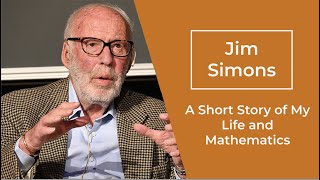 Jim Simons on Math and Philanthropy: A Short Story of My Life2022 · 16 min · full transcriptShortest direct statement of his life arc from math to money to giving, including his science-first emphasis.
 Jim Simons on Math Education: Raise the Bar for Teachers2014 · 5 min · full transcriptBest example of his practical philanthropic style: define the bottleneck, then change incentives.
 Jim Simons on Geometry and Physics: Math, Science, and Purpose60 min · full transcriptShows why he funds basic research in geometry and physics and how he thinks about long-term scientific value.
 Jim Simons on Math, Codes, and Investing: A Life in Five Parts103 min · full transcriptUseful for understanding why the Flatiron Institute matters so much to him.
Questions people ask
- What did Jim Simons say is the main problem with U.S. math education?
- What did Jim Simons say about the future of autism research?
- Why does Jim Simons disagree with putting more computers in classrooms?
- What is Jim Simons most proud of?
- What did Jim Simons say about funding math and science teachers in New York?
- What did Jim Simons say about hiring and recruiting talent?
Sources
Every quote above, word for word from the transcripts. Numbers match the text.
“I did a lot of math, I made a lot of money, and I gave almost all of it away.”
“Ninety percent of it should be science…”
“You never know where something will go.”
“Work with the smartest people you can, hopefully smarter than you…”
“People work for a combination of money and respect.”
“I am as proud of the Flatiron Institute as I am for anything else I ever did.”
“There are so many other people beating around this issue without getting to the heart of it. Oh, we got to put computers in the classrooms. You don't have to do that. Nice, but you don't have to do that. No one is talking about the obvious thing: having better, more knowledgeable teachers. And it so offends me to see the obvious solution not undertaken. These billions and…”
“…the solution, of course, if you don't have enough qualified people in a certain profession, is to raise the—raise the compensation of the profession…”
“I want to make the job sufficiently attractive so that at least it is an alternative…”
How this guide was made: drafted with AI from the full transcripts of the recordings cited, then checked: every quotation must match a transcript word for word and be the speaker's own words, and an independent review gates accuracy. Methodology and corrections.
