Jim Simons on Differential Cohomology
Simons presents differential cohomology as the natural refinement of characteristic classes that keeps both topology and geometry in view through forms, connections, and differential characters.
- Differential cohomology grew out of Simons’s work on characteristic classes, Chern-Weil theory, and Chern-Simons forms.
- Its point is to refine ordinary cohomology by keeping geometric data such as connections and curvature, not just topological classes.
- Differential characters are central in Simons’s account: they map smooth cycles to R/Z while fitting together with forms and integral cohomology.
- Simons treats the subject as mathematically compelling in its own right, not only as a byproduct of other problems.
- He also stresses that ideas from this line of work later became important in physics.
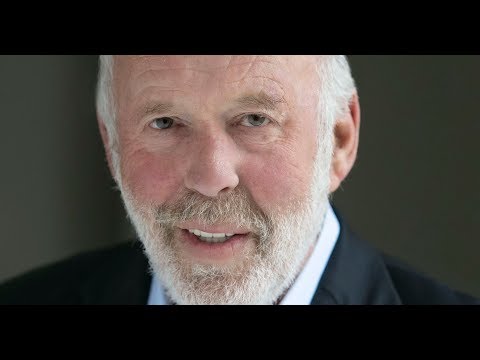
“So now, roughly at the same time that Cheeger and I were doing the stuff I just showed…”MSRI workshop talk, 2010 · 15:14
Differential cohomology starts from characteristic classes, not from abstraction alone
Simons frames differential cohomology historically and geometrically. In his account, the subject grows out of attempts to understand classical invariants such as Euler characteristic and signature, then through Gauss-Bonnet and Chern’s intrinsic approach into the modern theory of characteristic classes.12
He repeatedly connects this development to the expansion opened by Chern’s ideas. For Simons, the move from specific curvature formulas to a general theory of characteristic classes was a decisive step, one that created the setting in which differential cohomology could emerge.31
The subject keeps topology and geometry together
The main attraction of differential cohomology, in Simons’s telling, is that ordinary cohomology is not enough when one wants to remember geometric structure. Characteristic forms come from curvature and connections, while cohomology classes capture global topological information; differential cohomology is the framework that keeps both at once.14
That is why differential characters matter so much in his presentation. They refine integral cohomology rather than replace it, and they do so by retaining data tied to smooth cycles and differential forms.45
Chern-Simons forms are one of the bridges into differential cohomology
Simons places Chern-Simons forms at the center of the story because they arise naturally when comparing characteristic forms. In his mathematical narrative, transgression links curvature-built forms to secondary invariants, and that bridge leads directly toward the structures later organized as differential cohomology.16
This is not just a polished retrospective. Simons describes concrete struggles that came from trying to understand flat bundles and related numerical questions, and those struggles helped push the subject beyond standard characteristic-class theory.67
Simons saw differential cohomology become a subject of its own
One striking feature of Simons’s view is that differential cohomology was not merely a tool invented for a single computation. He says it became something worth studying on its own, which shows how he came to regard the framework as independently meaningful and structurally rich.8
That judgment fits his broader mathematical temperament. He was drawn to theorem-proof structure and to ideas that open entire areas, so it makes sense that he emphasizes the subject’s internal coherence rather than treating it as a technical add-on.98
Its reach extends from pure geometry to physics and K-theory
Simons also highlights the unexpected reach of these ideas. Work that began in basic geometry and topology later proved useful in physics, including quantum field theory and other areas, which for him illustrates how foundational mathematics can travel far beyond its starting point.1011
He further presents differential cohomology as a pattern that extends beyond ordinary cohomology to K-theory. That extension reinforces his view that the subject is not an isolated construction but part of a broader geometric language for combining topological classes with differential data.512
“So now, roughly at the same time that Cheeger and I were doing the stuff I just showed…”MSRI workshop talk, 2010 · full transcript →
Simons on differential cohomology, in his own words
“…the roots of the subject that's come to be known as differential cohomology…”
“…it ended up being something that seemed worthy of study on its own…”
Where to watch
 Jim Simons on Differential Cohomology: the mathematical roots2013 · 96 min · full transcriptBest single talk for Simons’s own account of how differential cohomology grew from characteristic classes, curvature, and differential characters.
 Jim Simons on Differential Cohomology: Roots, Diagrams, and K-Theory2010 · 57 min · full transcriptBest for the structural picture: differential characters, the basic diagram, and the extension toward differential K-theory.
 Jim Simons on Chern-Simons Forms: From Gauss-Bonnet to Physics68 min · full transcriptBest for the geometric roots in Gauss-Bonnet, Chern-Weil theory, and the emergence of Chern-Simons forms.
 Jim Simons on Mathematical Career: From Minimal Surfaces to Chern-Simons23 min · full transcriptBest short overview of how this work fit into Simons’s career and why it later mattered beyond pure mathematics.
Questions people ask
- What did Jim Simons say about trying to compute the signature of a 4-manifold?
- What did Jim Simons say about the importance of collaborators?
- What did Jim Simons say about the later applications of Chern-Simons theory?
- What did Jim Simons say differential characters are?
- Why did Jim Simons leave academia and go into business?
Sources
Every quote above, word for word from the transcripts. Numbers match the text.
“…the roots of the subject that's come to be known as differential cohomology…”
“A Simple Intrinsic Proof of the Gauss-Bonnet Theorem…”
“…that opened the floodgates in a way of, uh, the theory of characteristic classes…”
“In generalizing this stuff in '73 with Chigi, we define something called differential characters, and this is where I was going to stop in this— what, how much time? This is a good time to stop; it's a logical stop. I'm going to stop. Yeah, 15-minute break. It does anyone have a question? All right, go ahead. You know, what is a— what P P P spin? Yes.”
“That's my talk on the roots of differential…”
“Some of this morphed into things called differential characters, which I did with... but I was always... I was here. And in fact, it's this work that led me. If you look at this for flat bundles, you've got some really interesting questions, and they have to do with whether certain numbers are rational or not. And I went two years without any appropriate technology—no, I think it would have mattered—trying to prove certain numbers were rational, and it drove me irrational, and I left and went into business and never—never turned back for quite a while. Any other questions? Anyway, I hope you're all having a good time at the conference, and…”
“So I said, okay, I want to learn this stuff. I'm going to look at a C, try to get a combinatorial formula for that form, for that, uh, index by integrating what turned out to be a characteristic form, a well-known character, in fact, the first Pontryagin form, first Pontryagin class divided by three, I believe, gives you the signature. So I said, oh, I'll just integrate that thing. I'll let it get corners and edges and faces. I'll see what the limit is, and, uh, there, there will be, I'll get a nice formula. Well, that did not work.”
“…it ended up being something that seemed worthy of study on its own…”
“The idea of theorems and proofs really appealed to me…”
“…you do something in basic mathematics or basic science, and you really don't know where it's going to go.”
“What was interesting—or what else was interesting—ten years later or so, Ed Witten and some other physicists found that this stuff was useful in physics, not only in string theory and quantum field theory. Other people applied it to condensed matter physics, and now these Chern-Simons invariants are really kind of ubiquitous in many aspects of physics: the quantum Hall effect, whatever that is, even—I think—you have to get something cold, but I'm not sure. And even in quantum computing. I was just out in the steps with someone who…”
“So now, roughly at the same time that Cheeger and I were doing the stuff I just showed…”
How this guide was made: drafted with AI from the full transcripts of the recordings cited, then checked: every quotation must match a transcript word for word and be the speaker's own words, and an independent review gates accuracy. Methodology and corrections.
