Jim Simons on Quantitative Investing: Common Sense and Good Luck

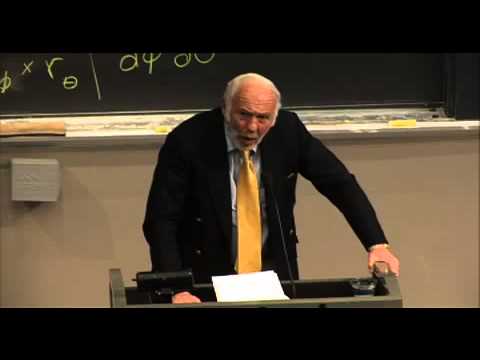
What Simons talks about
Jim Simons took part in this Abel Prize conversation in 2021, discussing his path from mathematics to Renaissance Technologies, model-driven investing, firm culture, philanthropy, and the financial crisis.
Also known as: A conversation with Jim Simons: Mathematics, Common Sense and Good Luck; Mathematics, Common Sense, and Good Luck: My Life and Careers; James Simons - Mathematics, Common Sense, and Good Luck.
Jim Simons traces his path from mathematics to founding Renaissance Technologies, explaining how his early work in geometry and gauge theory shaped his approach to problem-solving. He describes the shift from fundamental trading to a fully model-driven investment process, emphasizing that the firm’s success came from disciplined use of data and models rather than intuition.
He also lays out the culture behind Renaissance: hire top scientists, give them strong infrastructure, and keep the organization open so ideas spread quickly. Simons closes by discussing the Simons Foundation, basic science, and his views on the financial crisis, arguing that common sense and incentives matter as much as technical sophistication.
Mark Kastner introduces the session, Is Singer gives the formal introduction, and Simons speaks at length in the main talk and Q&A.
In his words
“The real secret sauce is that we start with great scientists”
“No compartmentalization.”
“If you're going to trade using models, you just slavishly use the models”
“The last word up there is luck. Luck. Good luck.”
Key points
- Simons says Renaissance’s edge came from great scientists, strong infrastructure, and an open research culture.
- He argues that if you use models, you must follow them consistently rather than override them by gut feel.
- He describes the move from fundamental trading to 100% model-based trading as a decisive turning point.
- He credits luck, but also says taste in hiring and scientific rigor were central to the firm’s success.
- He explains why he believes the financial crisis was driven by bad mortgages and bad incentives, not quant models.
- He says the Simons Foundation focuses heavily on basic science, especially math, physics, biology, and autism research.
- He argues that math teachers should actually know math, especially in high school.
Full transcript: Jim Simons, Abel Prize conversation (2021)
So, uh, I'm Mark Kastner. I'm the Dean of the School of Science, and, uh, I'm only going to say a couple of words. Um, I began this series of talks, uh, last year because I realized that, uh, we have a number of people who are, uh, graduates of MIT very often, um, who have accomplished really unusual things in their careers. And, uh, in our classes, we talk about the heroes in our field, whether it's physics or mathematics or biology, uh, who've done great things academically, but we rarely talk about those heroes who've changed the world in
other ways. Um, and so this colloquium series is to let the community see, um, how much you can do with a science education. Um, um, so, um, my job is to introduce the introducer, and the introducer is Is Singer. Uh, Is Singer, um, is, uh, Institute Professor, uh, one of our greatest mathematicians. Uh, he, he has won so many prizes that if I listed them, that would take up all of everybody's time. Uh, but I will mention the National Medal of Science and the, uh, Abel Prize, which is the Nobel Prize of Mathematics. Um, one of our true heroes
uh, is, is going to introduce our speaker. That S in careers should be capitalized to emphasize the number of things that Jim has done. The amazing accomplishments of Jim. I, in this talk, I'm going to focus on Jim in mathematics
and a little bit of me mixed in because, in some ways, Jim was my teacher; in other ways, I was Jim's teacher. Jim was 17 when he entered MIT as a freshman in 1955. He was a brilliant math student, graduating in 3 years, and during those 3 years took, uh, graduate courses. He stayed for an additional year at MIT in which he took two reading courses. One for me on Lie groups and Lie algebras that turned out to be very useful. People ask me what Jim was like
as an undergraduate. I quote from a 2008 article, The Codebreakers. At MIT, Simons worked hard and played hard, mostly late-night poker. All all the years that I've seen Jim in the Cambridge area, poker was a passion, and I think poker poker remains a passion with Jim. Jim went to UC Berkeley as a graduate student, and in due course Professor Bertram Kostant became his thesis advisor. Bert moved to MIT later,
and in fact as a professor emeritus from MIT as of '93. There's Bert right there. For his thesis, Jim was trying to simplify the derivation of a special list of Lie groups. That list had been derived from geometry by Borel and Parthasarathy in a very complicated way. And Jim felt because the answer was so simple—I won't describe it, uh, because, uh, that's very technical—there should be a simple way of getting that list of special Lie groups. He learned that I was similarly motivated, and so
he, uh, sent me a note asking whether we could meet at Christmas time when he was coming back to, uh, see his parents. It was a memorable occasion because we had an enormous blizzard at MIT the day we were supposed to meet, a blizzard that most of you know. You could barely walk, much less drive, but the two of us did show up in my office and spent the afternoon talking about the problem, that really there should be a more direct solution and ways that one might attack it.
Jim went back to Berkeley, and in 3 months' time solved the problem, and that solution became his thesis. He then came to MIT, spent a year as an instructor at MIT, in which he wrote up that thesis, prepared it for publication, and it was sent to the prestigious Annals of Mathematics, and it was accepted as, uh, a paper for the Annals. As a joke, at that time we decided that, uh, Jim was my honorary student, and I
was Jim's honorary teacher. Actually, Jim taught me a lot, uh, over a period of time. First, in the '70s, he, uh, told me and showed me that gauge theories in physics was the same as connections on fiber bundles in mathematics, bread and butter of geometry. Moreover, he showed me that famous dictionary that connected the technical terms in gauge theory with those, uh, in geo- geometry, and that's where I first got interested in quantum field theory, particularly in terms of gauge theories. Many years later,
Jim showed me, uh, Chern-Simons invariants in geo- very important in geometry, in fact an elegant extension of Chern characteristic classes. Uh, an important development in geometry, and what perhaps much more striking, or as striking I should say, was the fact that it turned out to be very important in what we call topological quantum field theory. So, all the physicists were quite excited about that development of Chern-Simons, and they've been using Chern-Simons ever since. Any rate, uh,
he taught me that, but we felt as a joke that, uh, he was my honorary student, and he could call me for advice, and as his honorary teacher, I would give it. Jim systematically ignored my advice. And with positive results, but as positive effects, but as a result, I claim some responsibility for his successes. A case in point was his call from the Institute for Defense Analyses in 1968. Should he accept an offer from, uh, Stony Brook, State University at
Stony Brook, uh, as chair of the department? My response was, as a faculty member doing research and teaching, great. As chair of the department doing all that kind of administrative work, absolutely no. Of course, Jim ignored my advice. And what was the effect? Jim came to Stony Brook as chair. He built up the department terrificly, uh, particularly in differential geometry. He completed some work he was doing at the Institute for research work he was
Doing some very special work, uh, doing at the Institute, uh, for Defense Analyses that led to his winning the Veblen Prize in 1975. Jim, Jim left the math department in '76 after being stuck on a math problem for a long period involving, uh, Chern-Simons. He turned to other interests and finally founded Renaissance Technologies. I know nothing about hedge funds, and I'm going to leave that problem of Renaissance Technologies to Jim, but I can say this: having visited
visited their offices often enough, it's the best math physics department in the world. Jim retired recently, and I'm happy to report that finally he's following my advice. He's now back doing research in mathematics and very interesting research at that. I was only going—I was going to stop there, but I'm compelled to mention the Simons Foundation run by Jim and his wife Marilyn. In my view, the foundation is very generous and very astute in what it supports. I mention a few things.
Autism research, Math for America, the new Simons Center for Geometry and Physics and its beautiful new building, and finally, the terrific support for math and physics everywhere. In particular, our math department at MIT has gotten an enormous amount of support from the Simons Foundation. I leave it at that. I'm very happy to introduce you to my very good friend, my teacher, and my student, Jim Simons. Well, that was a heck of an introduction
for which I think is because I was worried that my talk would be too long. And he has just gave about half of it. So, I can concentrate on the second half and, uh, fit the whole thing in the, uh, in the time allotted. Well, actually it's a—it's a great—it's a great pleasure to be here. I've been in this room before, I believe. It looks familiar. But, uh, everything else about the institute has changed, changed a great deal. I always wanted to come here. I grew—lived in the area and I wanted to come here and study mathematics when I was a kid. And, uh, I'll tell you about an amusing bump on the road.
Uh, so, when I was, uh, 14, I had a job in Christmas time in Breck's Garden Supply place. I don't know, maybe it's still here or not. Anyway, I worked in the basement in the stock room putting away stock. That was my job, and I was terrible at it. I couldn't remember where the hell anything went, and, uh, it didn't seem—there seemed to be no system and they were—they were not pleased with my work and demoted me. If you can imagine a demotion from that level, but I was demoted to floor sweeper, uh, which I, uh, I loved, 'cause it was easy, uh, I could, uh, took no brain work and I could think and I liked to walk and think,
and what was nicer than that? And you get paid for it and push a broom. Anyway, Christmas came and the season was over and they, uh, the basement area was run by two men and a woman. They had the job of the stock room, and so they, in the course of saying goodbye to me, they, you know, tried to be nice and said, "Well, what, you know, what's your future plans?" I said, "Well, you know, I want to study mathematics and go to MIT." Well, they thought that was the funniest thing they had ever heard. The guy who couldn't remember where to put the—sh, you know, the sheep manure, uh, he's going to be a mathematician at MIT. Well, I, I, uh,
I fooled them. I applied to MIT and I was accepted. But then, uh, I got this call. I got a call from Wesleyan University. I'd never heard of Wesleyan University. I was, you know, a high school student. I didn't know everything. And they said, "Well, we've heard about you and we'd really like you to apply to Wesleyan." So, I made a few inquiries. It sounded nice. I said, "Okay." So, and they said, "Come down for the weekend. We'll do this for you and that and go to a class." I don't know, I must have come down on a Friday. Whatever it was, I had a lovely time at Wesleyan. It was a beautiful place. And I was swept off my feet by their, uh, you know, interest and prettiness of
the place and so on. So, I applied to Wesleyan and I was rejected. So, there was no choice. I mean, I, I was—I was—I was destined, I was destined for this, uh, for this place. So, anyway, I did come and I did study mathematics and it went all right. And one of the clinchers for a career in mathematics occurred when I first saw—Now, there was a professor named Warren Ambrose who was a very inspiring mathematician. Some of the older folks here probably remember Ambrose. Uh, Singer I didn't know at that time, but there was a joint called Jack and
Marion's, which was at, uh, Coolidge Corner, and I've learned it disappeared in 1971, but this was 1956 or '57 and it was open until 3:00 in the morning, and we used to go there sometimes late at night to get a sandwich, I and my friends. And one night I saw Ambrose come in—miss midnight, 1:00 in the morning—and this other older fellow, Singer, uh, I later discovered, and he was—he must have been in his 30s by then. Uh, and Ambrose was maybe 50. Anyway, they came in, sort of dressed like kids, sat down at a table, and were busily doing mathematics. And then on several occasions after that I'd see them come in, and I thought, "This is the coolest thing in the world."
I mean, what a—what a life. Just to get up at 2:00 in the—you know, go out at 2:00 in the morning with your friends and do mathematics over coffee and probably cigarettes in those days. I don't—I don't remember. But so that was the clincher. That seemed like the world's—like the world's greatest, greatest career. And—and I—I pursued it. Uh, I did play a little poker, it's true, uh, along the way, and, um, along with Ambrose and Singer, I made two other good friends at MIT, two boys from Colombia. And when we graduated, someone asked me out in the meeting room there, was it true that I drove a motorbike?
to Brazil? Well, it was almost true. We did, uh, with my Colombian friends, ride motor scooters to Bogota. Now, from Boston—Boston to Bogota we did. And that was, uh, was miraculous that I survived, uh, that excursion. But we did get to Colombia, and that had a big impact on me 'cause I'd never been—I don't even think I'd set foot in Canada. Uh, and now here I am in Colombia. And in those days, it was a—well, it was an undeveloped country, but it looked to me like I could do anything. I mean, any business could flourish in Colombia 'cause they didn't have them. And, uh, and these, uh, boys that I went to
MIT with, they were very bright boys. And I knew, since they always beat me at poker, that they probably would be good businessmen, which it—which it, uh, which it turned out that they were. Well, get back to that in a moment. Anyway, that was graduation. I went out to Berkeley. I'm delighted to see my thesis advisor right over here, Bert—Bert Kostant. And, uh, he taught me a lot. And, uh, then I came back to teach, to teach at MIT. Uh, but en passant, I convinced my friends that they in Colombia, that they really should start some kind of a business because, uh, they were cut out for it, and I told them
I was going to come down, which I did, and not leave until, uh, we found something that we could start. Uh, I had no money, by the way. I had no status in this. Uh, the threat that I wouldn't leave, uh, was not, uh—well, maybe, maybe it worked, now that I think of it. Anyway, maybe they did want to get rid of me, but in those two weeks, uh, we did find a business and they did start that business, and I—I scraped up some money, and my father invested in—so on. We had a little piece of that business, which, uh, later provided the basis of a career change.
Uh, but, uh, so, I was teaching at MIT. I had invested in this business by borrowing money. Uh, couple years were going by. I needed to start paying off these loans, and like many a business, uh, that you start, we expected dividends within 18 months. Uh, we had a—remarkably poor old view of how a business works. Uh, we did eventually get dividends about 12 years, uh, later, uh, in good amounts actually finally, but, uh, I needed to pay back some of these—some of these debts, and, um, so, I went to the Institute for Defense Analyses in
Princeton, New Jersey. This was a joint on the Princeton campus at that time where they did secret government work and paid quite a lot, and you could spend half your time doing your own mathematics and half your time doing their work, whatever their work was. It involved computers. Involved computers. And I—well, you know, it was secret. I don't want to talk about it. They knew and—and I and I knew. And I loved both. I loved it all. It was great. I turned out I wasn't bad at their work. It was extremely interesting to model things and see them
programmed up—God knows not by me but someone else could program them up and test out theories, models—would it work, would it would not work—and at the same time mathematics was going extremely well, and I did do the work there that, uh, subsequently got this Bubble Prize, solved a, you know, kind of a major problem in geometry, and it was going swimmingly. I was—it was a—it was a great experience. I was there. But then this was the time of the Vietnam War, and the president of this organization, two—two steps up from my local boss, a guy named Maxwell Taylor—some of the people with gray hair in the room might
remember General Maxwell Taylor. He ran this outfit, and he wrote a crazy article, which was, well, I thought it was crazy, in the New York Times Magazine section, saying how we were going to win the Vietnam War, and it was just, you know, victory was days away or whatever it was that he was touting. And I didn't agree with that. Now, the work we were doing had nothing to do with the Vietnam War, but it annoyed me that my head of my organization could take such a silly point of view, and I wrote a nice letter to the New York Times expressing that view, which they kindly published. In that same Sunday edition, several
weeks later. So now I was on the watch list. I didn't know it, but I was on the watch list for the—for this place. And then a guy came along a few months later, three or four, and he was a—he announced that he was a reporter for Newsweek magazine, and he was doing an article on people who work for the Defense Department but were opposed to the war, and he was having a hard time finding anyone to interview, but he heard about me, he read my letter, could he interview me? And I said sure. What did I know? Of course you could interview me. Of course. You could see how sophisticated I was at that time. So he said, well, you know, what—what do you do? Well, I blathered on about this and that, but I said, but my algorithm has been
Since they say you can do 50% of your work on mathematics and the other 50% on their work, right now I'm doing only mathematics, and I'm, but I'm keeping careful records, and when the war is over then I'll do an equal amount of their work. And that's my approach. So no, I mean, you know, it's not unreasonable. So I went back to tell my local boss I, that was the first intelligent thing that had occurred to me, a little late perhaps, but that I decided I better tell my, my local boss that I gave this interview. And he said, you did. And then what did you say? And I said, well I said, what I—
said. He said, hmm. He said, I better call Taylor. I pick up the phone, called this General Maxwell Taylor. There was a little silence at the other end. I, so on, and he couldn't hear what Taylor was saying, and then he hung up. He looked at me and said, you're fired. So I'm fired? I mean, I, I'm fired. He said, you're fired. And, well, it was the first time and happily the last time I was ever fired, but I was fired summarily. And I said, well, I'm a permanent member, that was my title, permanent member. He said, I'll tell you the difference. And then when I started, I was a temporary member, I was a temporary member, and then—
I became a permanent member. So he said, I'll tell you the difference between a temporary member and a permanent member. I said, yes. He says, a temporary member has a contract. Well, I guess it was true. I had a letter when I was a temporary member, but when I became a permanent member, I didn't have a contract. And so there I was out on my ear, but not especially worried. And I did go against Izzy's advice, and I did take the job as chairman at Stony Brook. I figured it was better to be a fireroar than a fiery. And there was a fair amount of firing—
regrettably that had to be done. The department was very weak. But we hired a lot of people, we had a good time, and we did build a good department. And I did do some mathematics there that ended up with Chern that ended up being pretty useful in physics. And it was there that I did learn about the Bohm-Aharonov experiment and the relation, the apparent relation between what we mathematicians called, you know, bundles with connection, and what the physicists called gauge theory. And I did run off to MIT and sit at—no, MIT, he was in—I think he was at Rockefeller that year—and sat in some—
place over coffee and explained this connection. And it was a very, very exciting time, and it was, I think there were conversations like that going on perhaps in lots of coffee shops around about how physics and the way it was evolving and the geometric side of mathematics were really becoming quite intertwined, and now they're inextricably intertwined as far as I can, as far as I can see. So those were all—you know, those were all good times. But then, as is said, as he's been giving my talk, I did get frustrated. I was stuck. I was—
really stuck on a problem. I was trying to prove a certain number was irrational. I guess you all know what an irrational number is. It might not seem so important that a number be rational or irrational, but in this case it seemed to have a lot of, a lot of implications. And I was wholly incapable of solving this problem. And it's still an open problem. This whole area—it's a great set of problems about volumes and whether they're rational in some sense. So anyway, I was very frustrated. I had been, I was on the wrong side of a divorce. I was on the, turned out on the right side of my next marriage. I did have a—
new girlfriend who's standing, sitting right there, my new girlfriend, and my South American business at long last started paying some dividends. In fact, it started paying a lot of dividends. And I had some money, and I invested that money and found out that I wasn't bad at it. And all of this was made me think, okay, it's time for a change. And so 1976, I was 38. I felt I'd been a mathematician all my life but really sort of since I was 18, I think. I was, so I, I guess I spent 20 years in that game and decided to go into business and never occurring that I would apply mathematics to the—
business. I mean, did subsequently, but I just felt, you know, you read the newspapers, you, you, you think you'll do pretty well, but, and, and we did, we did okay. But after a little bit, I started collecting some data, and I figured there's something to be modeled here, there's something to be modeled here, like we used to do in the old IDA days. So I brought in the best modeler in the world, Lenny, a guy named Lenny Baum from IDA, and persuaded him to come, and we're going to make these models and do great. And Lenny started making models with me, and we were fooling around, but I kept trading, and then Lenny—
seemed to get, have, get less and less interested in models and more and more interested in reading the newsreel—that, in those days, it was just a roll, it would tick away, and you'd read the news—and Lenny was always reading the news instead of thinking about models. And then he started having opinions on what was going to go up and what was going to go down. This was all foreign currencies, bonds, that kind of stuff. And I started listening to him, and he was right. He was right. He was right enough times to say, okay, the hell with the modeling, let's just, uh, let's just try to make some money, and, uh—
We had a remarkable run in the two years since I said the hell with the modeling. We multiplied our investors' money by 12. Now then, that was even after that phase. That's a— that sounds pretty good, right? For, uh, it was—we were incredibly lucky. See, the last word up there is luck. Luck. Good luck. Good luck, and we surely had good luck. I had good luck in my career. So, but in the back of my mind was, "Well, okay, Lenny doesn't want to build models, but maybe we could build some, someone else could come in and build models." And another fellow, Jim Ax, who was quite a famous mathematician, left Stony Brook to come and—and he did build some models. So
those next years was a combination of fundamental trading. I did venture capital. I invested in all kinds of things, but the models kept being built and working better and better. And finally, at the end of about a 10-year run, uh, it was clear to me that this gut-wrenching business of fundamental— I mean, you know, if you're doing fundamental trading, one morning you come in, you feel like a genius, you know, your positions are all your way, and you think, "God, I'm really smart." And look at all the money I made overnight. And then the next day you come in and they go, "Oh no, they got you." And you—you feel like an idiot. There—there was—we were pretty good at it, but it just didn't seem to be a way to live your life, you know, uh, so let
building models go with the models. So, by 1988, I decided it's going to be 100% models. And it—and it has been ever since in the business that we built. So, some firms, uh, you know, investing firms say, "Oh, they have models." And what they typically mean is, you know, we have a model and it—it advises the trader what to do and if he likes the advice, he'll take it, and if he doesn't like the advice, he won't take it. Well, that's—you can't—that's not science. Uh, you can't simulate how you would do how—how was—how were you feeling when you got out of bed, uh, you know, 13 years ago when you're looking at historical simulations? Did you like what the model
said or didn't you like what the model said? That's a hard thing to backtest. So, if you're going to trade using models, you just slavishly use the models. You do whatever the hell it says, no matter how smart or dumb you might think it is at that moment. And that, uh, turned out to be a wonderful decision. So, we built a business, uh, 100% based on building computer models, um, starting in those areas that—that I—I mentioned, currencies, uh, financial instruments, uh, gradually, uh, moving to stocks and finally to anything that moved. Uh, well, it had to be, uh, tradable. Had to
be liquid. We—I was always liquid, but and, uh, you know, bringing in data. Data. In those days, you—we, you know, we sent gals down to the New York Federal Reserve to copy histories of interest rate numbers. I mean, they didn't exist in the '70s. You couldn't go and buy data, and there was certainly not online deliveries of all this stuff. So, to make build the original models, we needed to collect a lot of data by hand, which we did. And, uh, but gradually, um, you know, we got smarter, the models got better, we brought in more and more people. It's said, uh, we have the best math and physics department in the world at Renaissance. I don't think that's quite true.
Uh, on the other hand, it ain't bad. Uh, we have a lot of smart, uh, smart guys, and uh, and we certainly hired people who were good at that kind of work. So, we started this thing called the Medallion Fund in 1988. In 1993, we closed it to any new investment by outsiders. Just employees could invest. Uh, by 2002, we started taking out the outsiders altogether, buying them out, and by 2005, there weren't any left. So, since then, last 5 years, this vaunted Medallion Fund has been owned 100% by by the employees.
Uh, which today are about 300—300 employees. And, well, so people would always ask me, "Well, what's the secret? How come?" Because we're not the only quant firm in the world. We're not the only guys who have, you know, made models. Uh, I disparage some who whom model making was sort of a part-time thing, but there were certainly other offices. But we seem to have done better than than anybody. We had really established a a remarkable record. So, people always ask me, "Well, what's the secret?" You know, what are the secrets? Not going to—I'm not going to tell you the various predictive signals and so on and so forth. Uh
Unless—no, I'm definitely not going to. We'll keep that—that's even bigger secrets than that, uh, their stuff down there at IDE. It was—it's—these secrets are, are, uh, we try to guard them, but the real secret sauce is that we start with great scientists. We start with first-class people who've done first-class work or we believe have reason to believe will do first-class work. And—and because I was there at the beginning and a few other people who had been pretty good at at math and science, we had, uh, we had good taste and that—that's, uh, stayed, stayed with the company.
The second thing is, we provide people with a great infrastructure. And I've had people come to us from all over. When they come to work, they said they never saw—it’s more easy to get to work here than anyplace else. The data is easily—so, we have someone in the—we have an alumnus here, uh, that I saw earlier who could have testified to that. I'm not going to ask him to do so, but he—he would. Uh, so, the infrastructure. Give people a good infrastructure. And I think the most important thing that we do is have an open atmosphere. So, my belief is the best way to conduct research, uh, on a broad scale is to make sure, as much as possible, that everybody
Knows what everybody else is doing, at least as quickly as possible. Sometimes you've got an idea; you want to keep it to yourself for a little while. You don't want to look like an idiot, but the sooner, the better. Start talking to other people about what you're doing, because that's what will stimulate things the fastest. No compartmentalization. No, we don't have any little groups to say, "Here is our system, and we developed it, and now you run it and we get paid based on that," and so on. None of that. Everybody meets once a week. All the researchers meet. Any new idea gets brought up, discussed, vetted, and hopefully put into production. So, it's an open atmosphere.
And people get paid based on the overall profits. You don't get paid just on your work. You get paid based on the profits of the firm. So everyone has an interest in really everyone else's success. And those policies, no one of which seemed so remarkable, turned out to be a pretty winning combination: great people, great infrastructure, open environment, and trying to get everyone compensated roughly based on the overall performance. And that's worked, and it continues to work. So, that made a lot of money. Made an
awful lot of money. So we started a foundation, my wife and me, in 1994. And at first it was, I believe, in her dressing room, if I'm not mistaken. Is that right? Is this your—It was a little box with the folders in it, and she didn't even have that big a dressing room. So it was tight quarters. But gradually, it expanded, and she hired a few people and then a few more. So we have this foundation, which has actually grown quite considerably, not only in size in terms of dollars given out, but I think in terms of sophistication. And
well, it's great. So, you know, my first career was a mathematician, and my second career was this business of being a businessman. And now my third career is kind of being a philanthropist. And so, what does our foundation do? Well, it's one of the very few, I think, that's focused almost exclusively on basic science. So, we support basic mathematics, basic physics, a lot of biology, but primarily it's serious research across the board. I think we have an autism project, which is interesting, but it's
we do it from the ground up—understanding the genetics, trying to understand the neuroscience, and get insight into this condition, which will provide insight into how our normal brains work. So, you know, we're focused on basic science. And that's very gratifying. Marilyn and I can feel good about that approach. And so, it's pretty good. We do other things as well on a small scale, but that's the main thing. And I don't think there is... We were talking to some people the other day—there's probably not a foundation of our size
that is as focused just on basic science. Now, at first, we gave to institutions. We gave some money to MIT there. We did help the math department. I think there are a few endowed professorships here and so on, but in later years, we've been more focused. We've been focused on making bridges between mathematics and physics and the life sciences at the Institute for Advanced Study and at IHES in France. That's been important, and at Rockefeller, that's been important to us. The autism has been important. Now we're getting more focused in math and physical science, looking at individual projects. MIT has
an application to us for a theoretical computer science institute. And they're not the only applicant, as I know they know. It's a very good application, I have to say. But I also have to confess that there are a few other good ones, too. But some place is going to get a great institute for theoretical computer science. So those are the kinds of things. Those are the kinds of things that we do. And so I retired from Renaissance at the end of '09 and have never been so busy. People always say, "Well, now that you're retired, you know, what are you doing?"
I'm busy as hell. So, you know, even we have Math for America, something that we started seven or eight years ago to try to improve the teaching of mathematics. Everyone's concerned about it—the American kids in mathematics education. Well, we've taken the view—so we have a narrow view. Our view is: have teachers of mathematics who know mathematics. Now you might think, "Well, of course." But regrettably, especially when you get to high school, the majority of the teachers of math actually don't know much math.
So that's not a productive environment in order to stimulate the kids in learning math or science or anything else. I mean, you sign up for Italian lessons, you know, you don't want a Chinese speaker, you want an Italian speaker. You know, the guy with Italian books as well. I'm trying—I’m learning this, and don't worry. You would say, "You know, I'd like somebody else, please. I'd like somebody else." But the kids don't have a choice in the matter. So we're trying to do that, and we're doing it. Okay, so why don't we have enough of... I don't want to dwell on this point, but why don't we have enough teachers of math and science in the high schools who...
Know the subject? And one answer is, well, if they knew the subject well, they'd also know enough to work for Google or Goldman Sachs or God knows where. Because today, the world is so much more quantified, and the economy is so much more based on quantitative methods than it was 30 or 40 years ago. So, uh, the difference in the quality of the job, the pay, and the respect is so great for someone who's actually qualified to do a good job of teaching high school mathematics that they get pulled away and don't often find themselves, uh, in the classroom anymore. So you have to make the job better. That means pay these folks more.
Which we do in New York through our program and a few other cities and provide them more respect and support, which we do. So, uh, you know, if you pay a guy 25% more and make him feel or her feel special, all of a sudden the career is a lot better. You make the career better, people stay in, will stay in the career. If it stays the way it is, people won't stay in the career. And if we don't, uh, it isn't going to be a good situation. Uh, so this is something you probably all have have given some thought to. So.
I'll conclude this. I was talking to my wife about, uh, this talk and what I might say, and she said, "Well, you know, you should end with values." Well, I said, "I'm not sure I have any values. I would, I, I—" She assured me that I had some values if only I could think hard about them. Uh, so, uh, I guess I do have some values, and I think they have got to me. So I'm calling them guiding principles. Value sounds like a very serious business. Uh, but I'll tell you some guiding principles which I think have worked pretty well. So one thing I've always done is do something new. I, I love to do something new.
And I don't like to run with the pack. Uh, for one thing, I'm not such a fast runner. So, uh, you know, if you're one of n people all working on the same problem in different places, if well, me, I know I would, I'd be last. I, I, you know, I'm not going to win that race. But if you can think of a new problem or a new way of doing something that other people aren't all working on at the same time, maybe that'll give you a chance. So do something new. Second, collaborate with the best people you possibly can. When you see a person, get to know a person who seems like a, like a great guy or a great gal to work with in something, try to find a way to do it. Because
Uh, that, that gives you some reach and some scope. And it's also fun to work with terrific people. I wrote down here, be guided by beauty. I really mean that. I think pretty much everything I've done has had an aesthetic component, at least to me. Now you might think, "Well, building a company that's trading bonds, what's so aesthetic about that?" But it is. What's aesthetic about it is doing it right. Doing it right, getting the right kind of people and approaching the problem and doing it right. And if you feel that you're the first one to do it right, and I think we were, that's a terrific feeling, and it's a beautiful thing to do something right. It's also
A beautiful thing to solve a math problem or create some mathematics that people hadn't thought of before. So be, be guided by beauty is not such a bad principle. And then I wrote down, don't give up. Uh, at least try not to give up. And sometimes even, it's appropriate to be at something, to be trying to do something for a hell of a long time. And finally, hope for some good luck. So that's it. Jim has offered to answer some
questions. Okay. Hi, Jim. Yes, my question is, in economics, there's sometimes non-convex production curves, there's imperfect competition. In financial markets, the liquidity of a market can vary, its efficiency can vary, there's asymmetric info. So I was curious, do people at Renaissance, do they do, you have a discrete mathematics team, and do you look at fat tail risk as well as the continuous variance? Well, that's considerably more technical a question than I expected. I might as well give a lecture on differential cohomology. Uh, but yes, I suppose we consider all
those things. Um, we certainly look at risk modeling. Risk is, is important to do. The fat tail risk refers to the fact that risk in financial markets is typically not a normal distribution. The tails of the distribution are heavier and the inside is, is not as, is not as heavy. So understanding that is, is real important. Um, you know, we, we look at everything we possibly can and analyze everything we can. And, uh, uh, so far we've gotten it reasonably right. Another question. Do you consider high frequency trading
to be socially useful? And if so, uh, how much? Okay. The question was, do I consider high frequency trading to be socially useful? And if so, how much? How much can you make out of it or how you, how you—how useful? Uh, I consider high frequency trading to be natural and definitely socially useful. What's happened is, what's happened is that as the markets have become, uh, electronic and computers have been applied to generating prices and accepting trades and all the rest, the markets have grown
tremendously more liquid. Spreads have come down. The bid-ask spreads have come down. The fellows who used to be, you know, the specialists on the floor, specialists of old, they were supposed to be the market makers, you know. Well, they were full of baloney. They would create very wide spreads, and at the first sign of trouble, they would—they would disappear. Uh, with the electronic trading has come the ability to trade fast, and that has brought spreads down and it has brought market impact down. So, there's two things that happen when you buy a stock. One thing, you pay a little typically, you will pay a little bit above the mid price. Just
As if you sell it, you'll sell it for a little bit below the mid price. But the other thing that happens is infinitesimally, perhaps, you move the market. Well, if you buy 100 shares, you're probably going to not going to move the market. But if you buy 100,000 shares, you probably are going to move the market. Well, how much are you going to move it? Well, if you're the only buyer out there, you're going to move it a heck of a lot. But if there's a lot of buyers and if you're the only one around these sellers, but if there's a lot of people active in that market, 100,000 shares might go very easily. So, the more volume, the better. And it's volume that's been created by these high-frequency traders. So, I think the research shows that the costs of trading,
spreads and market impact have come down, come down a great deal, and it's all due to high-frequency traders. So, uh, is it socially useful? Well, if you think liquid, you know, highly liquid markets are socially useful, then I think so. Will there ever be glitches? Uh, there could be. There was, uh, there was a glitch I think they called it the flash crash of a few months ago, and for 8 minutes or so, some market took a dive and then it came right back. I mean, it came right back. No, but I mean, it's an important point. In 1987, when the stock market crashed, it went down 25% in half a day and it didn't recover for 6 months. Because there was nobody there on the other side. There were only there were,
This thing recovered, this flash crash recovered because someone had made a mistake, I presume. Some kind of order went in that was much too big. Uh, there was nervousness in the market. It was already down 3% and it took a dive and everyone stood back and said, "Oh my God, what's going on?" Well, but then the algorithms kicked in and, you know, uh, all this trading just came back and this thing disappeared in 10 minutes. So, it was a little destabilizing, but it was a whole lot different from the crash of 1987. So, that's a long answer to a short question. Yes, I think high-speed trading is socially useful and I think that the people who argue against it are
wrong. Hey, how was the uh, few years of fundamental trading that you did before I started Renaissance Technologies? How was the modeling when you first started Renaissance Technologies? What were the algorithms? Say, talk right into that mic. Say, can you hear me now? Um, I was wondering how the few years of fundamental trading that you'd done when you first started Renaissance influenced the modeling that you did. Oh, how did they influence the model? Yeah, would you have built your models very differently, you think, had you not had the trading experience? Okay, how did my experience in fundamental trading affect the models that gradually got built? I think that they taught us something. Uh, I think they
taught us something. The early models that we built were pretty crude and I think were inspired by just sort of looking at the, looking at what we'd seen. Uh, being in the markets is a good way to observe them. Uh, you know, you really look at them when you have something riding on them. So, uh, I would say it was influential. But, uh, yeah. Yeah, I think so. I think it's a good thing for anybody to do, even if he's a quant, to get some experience in just, you know, trading something. But, uh, did that answer your question? Okay, one more. So, my question is, um, what kinds of things should people in
the public be paying attention to among the economic indicators and just things that are going on which are rather bewildering in this world? What are the important things that we should be looking at? Hm. Let me just, just to give you a, I mean, a simple example. When I look at the, you know, the national debt, it sort of looks like maybe it's twice everybody's salary. That's how much they owe. Uh, or we'll need to pay off or something. I, I don't know. I mean, you know, bringing it down to scale. But for a normal person, how do you interpret what's going on? How do we interpret those $65 billion in CDOs, you know? Yeah, I understand. I understand. Trillions.
The question is, you know, the economy, not only the United States, but in the world, looks kind of unbalanced, unsettled. There's big debts being built up by countries and we have, obviously, a recession in the United States and we're busy bailing out banks and, you know, where's it all going? Where do we, you know, where's it all going? Going to hell in a handbasket or what? And what should we be, what should we be looking at? Well, I think all the things you mentioned are worth looking at. The national debt as a fraction of GNP was considerably higher, even than it is today, right after the Second World War. Uh, and we never paid off that debt. What we did was grow the GDP. So, but the denominator got bigger and bigger and after a while, we were back
in the box. So, uh, there's nothing better under most circumstances, in my opinion, than some good growth. And I don't think we're taking steps in the United States to promote that good growth because I think we should be maybe even printing more money and building infrastructure and doing some things that the country is lagging in, which would get some more people back to work and would put us in a better position to compete even if we do have some inflation. It's not the worst thing in the world. Uh, is inflation. But, uh, so, I don't think there's any. You know, what happened in this collapse is
The United States got a lot poorer. And it got a lot poorer because the value of everybody's house went down. And most people's net worth was associated to their home. And they had been borrowing against the rising prices in their home, you know, home equity loans. That had fueled a lot of growth, and that came to an end. So, we had two bad things happen. People's balance sheets were decimated, and not only couldn't they borrow anymore, but they had to be paying back debt. A balance sheet disaster.
It is not something that's just going to get fixed very fast. We're going to take a number of years, I think, to rebuild, to rebuild from this base. And is the government doing the right thing or the wrong thing? I mean, I'm not a big fan of this government. I'm not a big fan of the tax bill that just passed, except that there was a clapper up there. No, there's one clapper. I mean, it did... it obviously made no sense to continue the tax cut for rich guys like me. That made no sense whatsoever.
And for some of you out here, probably it didn't make much sense. But if that was the price to pay, as it apparently was, because we have a rather timid president, that was the price to pay for extending the unemployment and making some other, you know, and keeping the tax cuts for less affluent people, and one thing and other, it wasn't the worst thing in the world. So, it looks like maybe it'll produce a little extra growth. But that's what we need. We do need growth. And my own view is I'd rather have it at the risk of inflation than have no growth and say we held the dollar value of our dollar. You know, who gives a... who cares if everyone's out of work? You know, you got 20% unemployment, and you got a wonderful dollar. Is that helpful? Okay, anyway, over there. Look at that guy. He's hiding.
Insofar as there was something wrong with some of the models, evidently not the ones you used, but others, what were some of the key things wrong with what was going on with some of the models? You're talking about the long-term economic modeling that the quant attributed to quants that some had said was an important part of the financial meltdown.
Oh, that was wrong. The quant models had nothing whatever to do with the financial meltdown as far as I can see. What had to do with the financial meltdown was based on subprime mortgages being created that were no damn good. And they were created because there was a market for them. So these subprime mortgages, you lend money to people that you would never, if you were the lender, dream of lending money under these circumstances. On the other hand, if your uncle said, "Don't worry. You lend it and I'll buy the paper," you might say, "Well, okay, uncle. If you say you'll buy the paper, I'll lend the money." You lend the money, buy the paper, sell the paper to the uncle.
This paper got securitized, and at the end of the day, stamped AAA. Now, who the hell did that? The rating agencies stamped this paper AAA, and they stamped it AAA either because they were idiots, which I think is largely the case, but also because their fees were paid by the issuers of this rotten paper, who wouldn't have issued it in the first place if they didn't expect to get AAA. And then there's the whole chain. This whole chain. I mean, you know, in the old days, you would go to the bank—really old days—you go to the bank, you want to buy a house,
the bank actually was the one who lent you this money. The bank was going to hold the mortgage, the bank was going to service the mortgage, and the bank wanted you to pay. So, the banks were, you know... but now a bank loans you the money for a microsecond, and they sell it to the next guy. So, it had very little to do with quant models. It's true that quants were designing these packages of mortgages, but the underlying statistics—what's the probability that this mortgage is going to get paid off? What's the probability that a guy who's had seven jobs in eight years in four different cities and who has simply stated that he earns, you know, whatever, what's the probability that he's really going to pay off his mortgage? Anyone with common sense, common sense up there, would think it's pretty darn close to zero.
But that fact was not taken into account in the underlying statistics, so that's enough. That's a long answer. We'll do one more, I think. Lucky me. When creating models to trade the markets, would you recommend focusing on creating models around fundamental economic data or on price behavior such as the S&P 500 or oil, gold, or a combination of both? Thank you.
I mentioned Warren Ambrose in the beginning of my talk, this mathematician who inspired me. I'm actually going to answer your question. I went to him one day early in my career, and I said, "Professor Ambrose, I mean really early, is it best to learn a lot about one area of mathematics or learn a little bit about a lot of areas of mathematics?" And he looked at me, and he said, "One can make the cliché either way." And that was the end of the discussion. So, there isn't any right answer to the question you asked. All those things are—
Good. It's good to use economic models. It's good to use, uh, you know, uh, price histories. It's good to, it's good to use, make models using all these things, and there isn't any—there isn't any right or wrong to that answer. So, let's thank Jim for a great.
From YouTube captions, lightly punctuated for readability. Timestamps link to the video above. Errors are possible.
Cite this recording
Jim Simons, “Abel Prize conversation (2021)”, 2021. Transcript and video: Thinkers Archive, https://thinkersarchive.com/jim-simons/quantitative-investing-abel-prize-conversation-2021/
Quoting a passage? Link to its exact moment: every timestamp above has its own anchor (for example https://thinkersarchive.com/jim-simons/quantitative-investing-abel-prize-conversation-2021/#t-141).