Jim Simons on Model-Driven Trading
Jim Simons’s view of model-driven trading is simple: search for repeatable statistical signals, build systems around them, and then follow the models with discipline instead of second-guessing them.
- Simons moved from fundamental trading to models after seeing that price patterns could be studied statistically.
- His key rule is consistency: if you trade with models, you follow them rather than override them with intuition.
- Model-driven trading depends on discovering many predictors, not one magic formula.
- The edge comes from strong scientists, algorithms, and collaboration as much as from any individual model.
- He also stresses humility: success involves luck as well as skill and process.
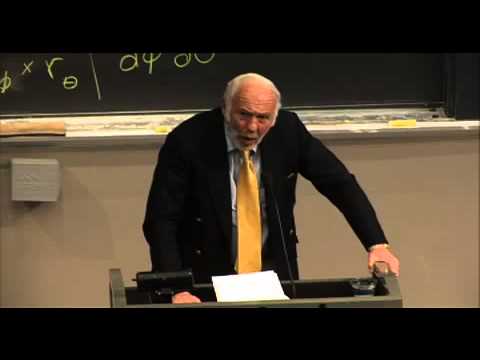
“…if you're going to trade using models, you just slavishly use the models…”Abel Prize conversation, 2021 · 31:10
He turned to models when he saw markets as patterns to study
Simons did not begin with a fully systematic investing philosophy. He gradually came to believe that market prices contained patterns that could be examined mathematically and statistically, and that this was something worth studying seriously1.
That shift mattered because it changed trading from a judgment-heavy activity into a research problem. In his telling, once he saw recurring structure in prices, the natural next step was to systematize the search for signals rather than rely on traditional market stories12.
He describes the eventual replacement of fundamental trading by models as a real turning point. Once the firm made that transition, it committed more fully to a model-driven way of operating and did not go back13.
For Simons, using models means obeying them
Simons’s most practical point is not just that models can help, but that model-driven trading requires discipline. If a team builds models and then overrides them whenever emotion or opinion gets in the way, it is no longer really trading on models4.
He frames this almost as a rule of conduct: once the research process is good enough to trust, execution should be faithful to the output. That is why he emphasizes doing what the model says, not what a trader feels like doing in the moment54.
This idea explains why his approach is so different from discretionary investing. The value is not only in finding signals, but in having the organizational discipline to act on them consistently over time45.
The real work is finding many small predictors
Simons does not present model-driven trading as a single brilliant formula. He says his firm found many predictors over time, which suggests a cumulative process of research, testing, and refinement rather than one breakthrough that solved markets all at once6.
That makes his philosophy more practical and less mystical. The job is to keep looking for useful signals, improve the models, and let the process evolve as new findings are added16.
This also helps explain why he thought there should be a way to systematize trading. If markets contain enough recurring statistical tendencies, then building an organized research engine is more important than chasing a single grand theory26.
Great models require great scientists and infrastructure
Simons repeatedly ties success in quantitative trading to people. He says the starting point is great scientists, which shows that model-driven trading is not just about code or data, but about the quality of minds generating and testing ideas7.
He also stresses partnership and collaboration. His advice to work with the best people you can find fits the way he built research-driven organizations: ideas improve when strong people challenge and amplify one another8.
This emphasis makes sense in light of his own background. He enjoyed designing algorithms, testing them against data, and seeing whether they caught something real, and he later described that experience as foundational for making models and interpreting data9.
His model-driven mindset came from mathematics and algorithms
Simons’s attraction to model-driven trading is easier to understand when you see how naturally he was drawn to abstract structure and pattern-finding. He liked mathematics from early on and was motivated by its clarity and beauty rather than by status or conventional business goals10111213.
That background mattered because it trained him to look for hidden structure beneath messy surfaces. Markets may look noisy, but his instinct was to ask whether there was an underlying form that careful analysis could uncover1114.
His later work with algorithms and data gave him the practical toolkit to pursue that instinct. He describes enjoying the whole cycle of designing an algorithm, testing an idea, and building models to interpret data, which is essentially the operating rhythm of model-driven trading9.
Even with strong models, he stayed humble about luck
Simons does not describe model-driven trading as mechanical certainty. He openly says luck played a role in success, and he returns to that point often enough that it is part of his worldview, not just a throwaway comment151617.
That humility matters because it keeps model-driven trading from turning into overconfidence. A good process can improve the odds, but it does not eliminate randomness or guarantee that every result is earned entirely by skill1617.
So his philosophy combines rigor with modesty: build better models, follow them faithfully, assemble excellent people, and still remember that outcomes are never fully under your control741617.
Simons on model-driven trading, in his own words
“…if you're going to trade using models, you just slavishly use the models…”
“Whatever the model says, they do.”
Where to watch
 Jim Simons on Quantitative Investing: Common Sense and Good Luck2021 · 63 min · full transcriptBest single overview of why Simons favored models over intuition and why he thought they had to be followed consistently.
 Jim Simons on Quantitative Investing: From Math to Medallion2016 · 88 min · full transcriptShows the transition from fundamental trading to a systematic approach and why he believed trading could be systematized.
 Jim Simons on Mathematics to Quant Investing: From Geometry to Markets2007 · 61 min · full transcriptUseful for hearing how he first saw price patterns as something mathematical and statistical to study.
 Jim Simons on Mathematics And Quant Investing: From Proofs to Markets160 min · full transcriptBest for his description of finding many predictors and enjoying the process of testing algorithms against data.
 Jim Simons on My Life in Mathematics: From Geometry to Quant Investing2014 · 52 min · full transcriptConcise statement of his execution principle: do what the model says.
Questions people ask
- How did Jim Simons go from intuition-based trading to quantitative investing?
- What did Jim Simons say about choosing partners and working with other people?
- What did Jim Simons say about how to succeed in mathematics and business?
- What did Jim Simons say about luck and success?
- What did Jim Simons say caused the financial crisis?
- Why did Jim Simons think his IDA experience mattered for Renaissance Technologies?
Sources
Every quote above, word for word from the transcripts. Numbers match the text.
“And in looking at the patterns of prices, I could see that there was something we could study here, that there were maybe some ways to predict prices mathematically or statistically. And I started working on that and then brought in some other people and gradually we built models, and the models got better and better, and finally the models replaced the fundamental stuff. So it took a while. I would have thought with your background in mathematician this would have almost occurred to you immediately, like you would have straight away seen this. Well, what was the 2-year delay? >> Well, two things. I saw it pretty early but, and I brought in a guy who was a…”
“There should be a way to systematize it…”
“From then on, we never looked back.”
“…if you're going to trade using models, you just slavishly use the models…”
“Whatever the model says, they do.”
“…we found lots of predictors over the years…”
“…the real secret sauce is that we start with great scientists…”
“Partner with the very best people you can find. And some people want to work alone their whole lives, but partnering is a great thing. And it amplifies what you can do. But you have to choose your partners carefully. I’ve been lucky enough to have wonderful partners, both in the financial business and in mathematics, and now in the foundation. So work with the best people you can find because that’s going to make your work better.”
“But I really liked that whole process. I liked everything about it. I like designing an algorithm uh you know coming up with some attack, designing an efficient algorithm to uh to test it out and uh seeing how it came out. I mean you know it was uh like fishing or something. I don't know. I actually I don't like fishing because you never catch anything. But here I felt uh we might catch something every once in a while. And uh it was a lot of fun. I liked I I liked it all. And I'd never seen anything like that. So um yes, you're right. Later on that experience of making models, looking at data, making models to try to interpret the data uh was certainly learned there. Uh and I if I hadn't been there uh I think the the business that we built later would never have occurred.”
“It was very natural and I I always liked it.”
“It was just a beauty. It was just a beauty of it.”
“I was just a kid who just liked thinking.”
“And it made me appreciate the beauty of mathematics.”
“Mathematics was my life, uh, for, uh, those years. Uh, it was, uh, so it seemed, you know, the most natural thing in the world to be always thinking about mathematics and, uh, so when I did leave the field after about 20 years in my late 30s and one of some business guy, I guess, and I went into business and business guy said to me, uh, well, how do you like the real world, you know, kind of joking around, and I said, well, you somehow it seems to me that, uh, something like the integers has a great deal more reality than some McDonald's stand or whatever, you know, that's here today and gone tomorrow and the integers are forever. So I think I implicitly, if not explicitly, I think like most mathematicians felt that these concepts were really, uh, h of an eternal nature. Uh, and so, uh, it was, that was my notion.”
“We were extremely successful. I think it was just plain good luck…”
“The last word up there is luck. Luck. Good luck.”
“Better personality for doing that. We underestimate, uh, the role of luck. It's typical that if someone fails at something, he'll say, "I had bad luck." And if he makes a success, he'll say, "I was a smart guy, and, uh, oh, I was just lucky." Uh, people don't usually say that, uh, when, when, uh, if they make a big success. And, of course, obviously not everyone can make a big success, but, uh, I think that luck played a role. I was in the right place at the right time. But I, I really, I think what I'm good at is getting good people to, uh, work together. So it was more, you would think it more…”
How this guide was made: drafted with AI from the full transcripts of the recordings cited, then checked: every quotation must match a transcript word for word and be the speaker's own words, and an independent review gates accuracy. Methodology and corrections.
