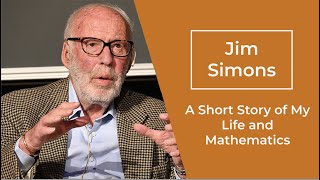
Jim Simons on Math Education
Jim Simons thought math education improves when schools recruit and keep teachers who truly know math, mainly by making teaching a more respected and better-paid career.
- The main problem is too few teachers who deeply know math and science.
- Technology is secondary; teacher quality is the decisive lever.
- Teaching loses talent because quantitative people can earn more elsewhere.
- The fix is to make teaching a real alternative through pay, support, and status.
- He backed this view by building programs to recruit and retain strong teachers.

“What's going on? The answer, to my way of thinking, is very simple: we don't have enough high school teachers who really know math and, for that matter, science so well. So why is that? Forty years ago or 50 years ago, if a person knew that much mathematics, oh, he could be an engineer of some sort, or he could—he could teach. But along came computers, biotechnology, a whole bunch of stuff, and suddenly people…”Milken Institute Global Conference panel, 2014 · 0:44
The central problem is weak teacher supply, not lack of gadgets
Simons gave a very direct diagnosis of why U.S. math education struggles: too few high school teachers really know mathematics and science at a high level. He treated that as the heart of the problem, not as one issue among many.1
He was especially frustrated that debates often drift toward classroom technology and other side issues while avoiding the more important question of who is actually teaching math. In his view, computers can be useful, but they are not the thing schools most need to fix first.2
“What's going on? The answer, to my way of thinking, is very simple: we don't have enough high school teachers who really know math and, for that matter, science so well. So why is that? Forty years ago or 50 years ago, if a person knew that much mathematics, oh, he could be an engineer of some sort, or he could—he could teach. But along came computers, biotechnology, a whole bunch of stuff, and suddenly people…”Milken Institute Global Conference panel, 2014 · full transcript →
Why good math teachers are hard to keep
Simons thought the labor market had changed against teaching. Decades ago, someone strong in mathematics might choose between a few professional paths, but newer industries created many better-paid alternatives for quantitatively skilled people.1
Because of that, schools are competing for talent against engineering, computing, biotechnology, and related fields. Simons's point was simple: if a profession cannot attract enough qualified people, compensation has to rise.31
His solution was better incentives: money, support, and respect
Simons did not talk about teaching as a purely moral calling that should rely on sacrifice. He believed schools should make the job attractive enough that strong math people can seriously choose it instead of leaving for industry.4
That meant higher compensation, but not only compensation. He also emphasized that people work for both money and respect, so a stronger profession needs both better pay and higher standing.35
This is why his education philanthropy focused on recruitment and retention, not just abstract reform. He wanted a structure that would bring excellent teachers in, support their training, and give them reasons to stay.4
Math for America shows what he thought practical reform looks like
Simons did not stop at diagnosis. He created Math for America to recruit strong math teachers and keep them in the classroom by improving the economics and attractiveness of the job.4
The model included extra stipends and support for advanced study, and he pointed to growth in New York as proof that states could build a serious core of knowledgeable, committed math and science teachers. He also suggested that state-level action might work better than waiting for federal action.
This reflects a broader habit in Simons's thinking: if you know the bottleneck, build an institution around it. In math education, the bottleneck was teacher quality and retention.1
His own love of math helps explain the standard he wanted
Simons's view of education was shaped by how he experienced mathematics himself. He loved number patterns early, found math natural, and was drawn to its beauty rather than to external rewards.789
That helps explain why he cared so much about knowledgeable teachers. If mathematics is a subject with deep structure and beauty, students need teachers who genuinely understand it, not just people moving through a syllabus.91
He also believed valuable outcomes often come from deep understanding pursued for its own sake. His reflections on pure mathematics leading to later applications fit his educational outlook: strong foundations matter, even when the payoff is not immediate.
Simons on math education, in his own words
“What's going on? The answer, to my way of thinking, is very simple: we don't have enough high school teachers who really know math and, for that matter, science so well. So why is that? Forty years ago or 50 years ago, if a person knew that much mathematics, oh, he could be an engineer of some sort, or he could—he could teach. But along came computers, biotechnology, a whole bunch of stuff, and suddenly people…”
“There are so many other people beating around this issue without getting to the heart of it. Oh, we got to put computers in the classrooms. You don't have to do that. Nice, but you don't have to do that. No one is talking about the obvious thing: having better, more knowledgeable teachers. And it so offends me to see the obvious solution not undertaken. These billions and…”
Where to watch
 Jim Simons on Math Education: Raise the Bar for Teachers2014 · 5 min · full transcriptHis clearest, most concentrated statement of what is wrong with math education and how to fix it.
 Jim Simons on Mathematics to Quant Investing: From Geometry to Markets2007 · 61 min · full transcriptShows the kind of early attraction to math and sense of beauty that helps explain why he cared about strong teaching.
 Jim Simons on Math, Codes, and Investing: A Life in Five Parts103 min · full transcriptAdds personal context on how teachers and early mathematical curiosity shaped his life.
 Jim Simons on Philanthropy and Science: Making a Difference2019 · 82 min · full transcriptGives his broader view that careers run on both money and respect, which fits his teacher-retention argument.
Questions people ask
Sources
Every quote above, word for word from the transcripts. Numbers match the text.
“What's going on? The answer, to my way of thinking, is very simple: we don't have enough high school teachers who really know math and, for that matter, science so well. So why is that? Forty years ago or 50 years ago, if a person knew that much mathematics, oh, he could be an engineer of some sort, or he could—he could teach. But along came computers, biotechnology, a whole bunch of stuff, and suddenly people…”
“There are so many other people beating around this issue without getting to the heart of it. Oh, we got to put computers in the classrooms. You don't have to do that. Nice, but you don't have to do that. No one is talking about the obvious thing: having better, more knowledgeable teachers. And it so offends me to see the obvious solution not undertaken. These billions and…”
“…the solution, of course, if you don't have enough qualified people in a certain profession, is to raise the—raise the compensation of the profession…”
“I want to make the job sufficiently attractive so that at least it is an alternative…”
“People work for a combination of money and respect.”
“I liked counting. I liked doubling: 2, 4, 8, 16—all the way up to 128…”
“It was very natural and I I always liked it.”
“It was just a beauty. It was just a beauty of it.”
How this guide was made: drafted with AI from the full transcripts of the recordings cited, then checked: every quotation must match a transcript word for word and be the speaker's own words, and an independent review gates accuracy. Methodology and corrections.