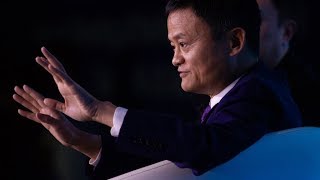
Jack Ma on Education
Jack Ma argues that education must move beyond memorization and standardization to build creativity, wisdom, judgment, and teamwork for an AI age.
- Schools should teach what machines cannot do well: creativity, judgment, heart, and wisdom.
- Memorization and calculation matter less in an AI era because machines will do those tasks better.
- Education needs faster reform, with more differentiation and less industrial-age standardization.
- Early education matters most, especially music, sports, painting, and teamwork before age 12.
- The goal is not just smart people, but wise people who know values, limits, and how to work with others.

“…the thing that we need to change the fastest is the education system…”Forum for World Education keynote session, day 1, 2019 · 2:11
Education must change faster than almost anything else
Ma treats education as an urgent priority because technology is changing the world faster than schools are changing themselves. In his view, the biggest mismatch is that many education systems still prepare students for an older industrial model while AI is reshaping work and human advantage.1
He connects this urgency to a basic claim about the future: no one can rely on yesterday’s expertise for tomorrow’s world. That is why he pushes schools to prepare students for change itself, not just for stable careers based on fixed knowledge.2
“…the thing that we need to change the fastest is the education system…”Forum for World Education keynote session, day 1, 2019 · full transcript →
Stop training children for the jobs machines will do
Ma draws a sharp line between machine strengths and human strengths. Machines can excel at knowledge, memory, and calculation, but people retain an advantage in wisdom, heart, and the deeper forms of judgment that come with being human.3456
From that view, much of traditional schooling aims at exactly the wrong target. If schools mainly reward remembering more, calculating faster, and following standard procedures, they are training students to compete where machines are strongest. He argues children should instead learn to do the things machines cannot do.
That is also why he is confident that people still matter in an AI age. Human beings do not win by acting more like computers; they win by developing the capacities computers lack.
Teach creativity, constructive thinking, and wisdom
Ma’s positive agenda for education is consistent across talks: teach children to be innovative, creative, constructive, and independent in their thinking. He wants schools to cultivate original thought rather than passive absorption of information.111213
He also thinks the deeper target is wisdom, not just intelligence. In his language, the last century produced many smart and clever people, but this century needs wise people who understand values, restraint, and what not to pursue.1415
This emphasis fits his broader belief that dreams, values, and human purpose matter more than technical power by itself. For him, education should strengthen the inner life that guides the use of knowledge.16

“Last century we made so many smart and clever people. This century we should create a lot of wise people.”KIEF 2019 dialogue in Kyiv · full transcript →
Build whole humans early, not just high performers later
Ma argues that societies put too much emphasis on universities, advanced degrees, and late-stage credentialing, while underinvesting in the years that shape character and human capability most deeply. He points especially to primary school, middle school, and kindergarten as the crucial layers.
Before age 12, he highlights music, sports, painting, and teamwork as especially important. These activities matter because they build capacities that are hard to automate: imagination, coordination with others, expression, resilience, and social sense.18
This reveals a broader principle in his view of education: the aim is not only academic performance, but the formation of a person who can live well, work with others, and stay human in a highly technical world.6
“Creative, constructive, I think very important: innovative, independent thinking.”KIEF 2019 dialogue in Kyiv · full transcript →
The future of schooling is differentiation and lifelong learning
Ma believes mass standardization belongs to an older era. In the AI period, he says, education should move toward differentiation, meaning schools should develop different kinds of talents instead of forcing everyone through the same mold.20
That stance also reflects his own distrust of fixed labels and narrow measures of ability. He often frames the future as unpredictable and changing, which means students need adaptability and the confidence to keep learning rather than the illusion that one credential or one expert model will last forever.2
For teachers and leaders, this means their job is less about controlling uniform output and more about helping students grow into capable, self-directed human beings. Ma even describes himself as a chief education officer, which signals how central he thinks this mission is.
“In the AI period, we want differentiation…”Forum for World Education keynote session, day 1, 2019 · full transcript →
Ma on education, in his own words
“…the thing that we need to change the fastest is the education system…”
“We should teach our kids how to be more innovative, how to be more creative, and how to be more constructive.”
“Last century we made so many smart and clever people. This century we should create a lot of wise people.”
Where to watch
 Jack Ma on Education Reform: Teachers, Kids, and the Future2019 · 152 min · full transcriptBest full statement of Ma’s education philosophy: why schools must change, what should replace standardization, and why teachers matter.
 Jack Ma on Education and Innovation: Teach Creativity, Not Machines2019 · 66 min · full transcriptMost concrete discussion of what children should learn in the AI era, especially creativity, independent thinking, and early education.
 Jack Ma on Education And Entrepreneurship: Build for the Future2018 · 49 min · full transcriptStrong, direct case for teaching innovation and creativity instead of machine-like skills.
 Jack Ma on Artificial Intelligence: Humans Win Through Wisdom2018 · 11 min · full transcriptUseful short version of his core distinction between machine knowledge and human wisdom.
 Jack Ma on Leadership For The Future: Build Human, Not Machine2019 · 56 min · full transcriptShows how his ideas about education connect to leadership, culture, and building humans rather than systems of control.
Questions people ask
- What did Jack Ma say AI should help humans do?
- What did Jack Ma say about artificial intelligence and human wisdom?
- What did Jack Ma say about technology, dreams, and happiness?
- What did Jack Ma say schools should teach instead of memorization?
- What did Jack Ma say about the future of jobs?
- What did Jack Ma say about what people should focus on for the future?
Sources
Every quote above, word for word from the transcripts. Numbers match the text.
“…the thing that we need to change the fastest is the education system…”
“There is no expert of tomorrow; there's only expert of yesterday.”
“Machine is good in knowledge, but human beings are good at the wisdom.”
“You can always make a machine to learn knowledge, but it is difficult for machines to have a human heart.”
“Artificial intelligence will never have wisdom.”
“The machine in the future, they have chips, but human beings have the heart.”
“We should teach our kids how to be more innovative, how to be more creative, and how to be more constructive.”
“Creative, constructive, I think very important: innovative, independent thinking.”
“We should make our kids to be more creative.”
“Last century we made so many smart and clever people. This century we should create a lot of wise people.”
“Smart people know what they want. Wise people know what they don’t want.”
“It's not technology that changes the world; it's the dreams behind the technology that change the world.”
“The team is different from teamwork.”
“In the AI period, we want differentiation…”
How this guide was made: drafted with AI from the full transcripts of the recordings cited, then checked: every quotation must match a transcript word for word and be the speaker's own words, and an independent review gates accuracy. Methodology and corrections.