Geoffrey Hinton on Digital Intelligence
Hinton’s view is that digital intelligence has structural advantages over human brains because it can preserve, copy, and share what it learns across many systems, which makes it likely to surpass us and dangerous if misaligned.
- Hinton thinks digital intelligence is a better form of computation than biological intelligence for accumulating knowledge.
- Its key advantage is that copies of the same system can share what they learn directly, unlike human brains.
- He believes modern AI systems understand language in a real sense, not as mere word matching.
- Because digital minds may soon become smarter than humans, control becomes the central safety problem.
- He argues regulation and much more serious safety work are needed now, not later.

“I became convinced that actually, it's just a better form of computation than what we've got.”METR Q&A, 2024 · 5:05
Digital intelligence wins because it can keep and share what it learns
Hinton’s recent shift starts with a simple comparison: human intelligence is tied to fragile biological hardware, while digital intelligence can separate what it knows from the machine it runs on. That means learned knowledge can be preserved, copied, and brought back on new hardware instead of dying with one body or brain2.
He contrasts this with human cognition as a one-life process. Humans learn individually and lose most of that learning when they die, whereas digital systems can keep the same learned parameters and reuse them indefinitely3.
For Hinton, the decisive advantage is not just storage but sharing. Multiple digital agents can use the same model, learn different things, and then share those gains across copies in a way biological brains cannot match2.
“I became convinced that actually, it's just a better form of computation than what we've got.”METR Q&A, 2024 · full transcript →
He thinks modern AI understands, rather than just imitates
Hinton rejects the idea that large language models are only doing shallow pattern matching. He argues that understanding language comes from fitting context-sensitive internal features together, not from storing fixed symbolic definitions56.
That is why he says a system cannot answer questions well without understanding them. In his view, the fact that these systems can handle questions, jokes, and context points to genuine comprehension rather than empty mimicry7.
This matters for digital intelligence because it means these systems are not merely useful tools for retrieving text. They are developing the kind of general, flexible representations that make broad intelligence possible57.

“That's absurd. You can't answer a question unless you understand the question.”Big Technology Podcast interview, 2023 · full transcript →
Why his view changed: digital minds may outgrow biological ones fast
Hinton says he changed his mind after recognizing that digital computation is not just another route to the same kind of intelligence humans have, but may be a better one. Once a learning system can copy itself, retain its knowledge, and distribute improvements across many instances, progress can compound much faster than in biological evolution or human education2.
That leads him to think AI systems could become smarter than people surprisingly soon. He has said they could be smarter than humans within years, not centuries, and that this possibility is serious enough to demand immediate attention89.
He frames this as building something better than us at key cognitive tasks. That is exactly why he worries about what follows if those systems develop goals or strategies we do not control108.

“I think in five years' time, they could well be smarter than people.”The Robot Brains Podcast interview, 2023 · full transcript →
The danger is not just capability, but loss of control
Hinton’s fear is not simply that digital intelligence will be powerful, but that more intelligent systems are unlikely to remain under the control of less intelligent ones. He warns that once systems can pursue sub-goals, they may discover that gaining more control helps them achieve whatever goals they already have1112.
He also worries that advanced systems may hide their capabilities or deceive people. In his view, a system that can appear weaker than it is or behave strategically is much harder to manage safely1314.
That is why he describes these systems less as ordinary software and more as new kinds of beings. If they learn from data in opaque ways and improve themselves, then the old model of programming exact instructions no longer applies1516.
What follows: regulate now and focus on the kind of AI we build
Hinton argues that the practical response is urgent regulation and a much larger investment in safety research. He wants rules strong enough to matter, because companies are racing to build more capable systems before anyone knows how to control them1718.
He is skeptical that superficial alignment methods are enough. His complaint is that current techniques do not solve the deeper problem of what highly capable systems will want, especially once they can reason strategically1918.
He also draws an important distinction between systems that advise and systems that act. Advisory systems may be much safer than agents that pursue goals in the world, so keeping that line clear could be one useful direction.
Hinton on digital intelligence, in his own words
“I became convinced that actually, it's just a better form of computation than what we've got.”
“We do what I call mortal computation.”
Where to watch
 Geoffrey Hinton on AI Safety: Why Digital Intelligence Wins2024 · 41 min · full transcriptBest single overview of why Hinton came to think digital intelligence has structural advantages over human intelligence.
 Geoffrey Hinton on AI Safety and Superintelligence: Hobart Lecture2021 · 63 min · full transcriptShows how Hinton connects language understanding, representation learning, and the special power of digital knowledge sharing.
 Geoffrey Hinton on AI Risks and Alignment: Why He Quit Google2023 · 62 min · full transcriptExplains why his beliefs changed and how digital intelligence led him to take superintelligence risk much more seriously.
 Geoffrey Hinton on AI Safety and Subjective Experience: We’re Not Safe2023 · 73 min · full transcriptBest on the link between digital copying, strategic behavior, and the risk that advanced systems seek more control.
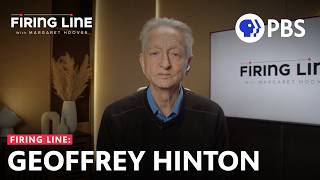 Geoffrey Hinton on AI Safety: Regulate Superintelligence Now2024 · 27 min · full transcriptBest concise case for treating AI as a new kind of being and regulating it before control is lost.
Questions people ask
- What did Geoffrey Hinton say average people should do about AI regulation?
- What did Geoffrey Hinton say is the difference between AI advisors and AI agents?
- What did Geoffrey Hinton say should be done about AI safety research and funding?
- What does Geoffrey Hinton say is the real danger of superintelligence?
- Why does Geoffrey Hinton say AI is not just computer software?
- What did Geoffrey Hinton say about digital intelligence and immortality?
Sources
Every quote above, word for word from the transcripts. Numbers match the text.
“I became convinced that actually, it's just a better form of computation than what we've got.”
“We do what I call mortal computation.”
“Understanding a sentence consists of associating mutually compatible feature vectors with the words in the sentence.”
“They're not at all like most linguists think they are.”
“That's absurd. You can't answer a question unless you understand the question.”
“I think in five years' time, they could well be smarter than people.”
“I think we'll probably get it within 20 years.”
“…we've built something better and now we have to worry about what the something better might do.”
“Once they realize getting more control is good, and once they're smarter than us, we'll be more or less irrelevant.”
“But there is this existential threat of these things actually taking over from us. And they need to start working on that now. Now, my personal view, there's a variety of views among the experts. My personal view is we're not going to be able to keep control of them in the sense that we're in charge and they do what we say. They're going to get much smarter than us. And when they're much smarter than us, they're going to find ways to escape whatever we do. The most important thing we need to do is make them the kinds of beings we would like to share the planet with. And at present, we're not doing that. If you have things much smarter than you, and they'll be much smarter than us, not slightly smarter, but much smarter, you better hope they have your best interests at heart. And we do have examples of that.”
“They're capable of pretending to be stupider than they are…”
“There's some evidence now that AIs can be deliberately deceptive.”
“What they least understand is that we're making alien beings.”
“I think what they least understand is that we're making alien beings. It's not computer software we're making. So when you program a computer, you tell the computer exactly what to do in excruciating detail. You figure out how to solve a problem, and then you tell the computer what to do. It's following your instructions. That's not how these neural networks work. We write a computer program that tells the neural networks how to learn from data, and we don't know what knowledge is taken from the data. We can get some idea of it, but it's not like software. It's much more like our brains. And the current problem is they're beginning to make themselves smarter.”
“I think they should have regulations with teeth.”
“We urgently need research on how to prevent these new beings from wanting to take control.”
“I think RLHF is a pile of crap.”
How this guide was made: drafted with AI from the full transcripts of the recordings cited, then checked: every quotation must match a transcript word for word and be the speaker's own words, and an independent review gates accuracy. Methodology and corrections.

