Geoffrey Hinton on AI Regulation
Geoffrey Hinton argues that frontier AI should be regulated urgently by governments because companies are racing ahead on systems that may surpass human control before society knows how to keep them safe.
- Hinton says governments, not companies, must regulate frontier AI fast.
- He thinks self-regulation is inadequate because firms are racing to build the smartest systems, not the safest ones.
- He wants pre-release safety checks for powerful AI, similar in spirit to how dangerous products are tested before public use.
- He argues regulation is urgent because AI may soon become smarter than humans, making control much harder.
- He also ties regulation to near-term harms like job loss, inequality, deception, cyber abuse, and weapons.

“I guess we have a year or two before everything gets much worse than it is now.”Interview with Nayeema Raza, Smart Girl Dumb Questions, 2023 · 23:26
Hinton thinks AI regulation is urgent, not optional
Hinton treats AI regulation as a time-sensitive public problem, not a debate to postpone until the technology settles down. He says people have finally recognized that there is a serious problem, but he also warns that the window to act may be short.12
His urgency comes from capability progress. He says there is a substantial chance of AI becoming smarter than humans within 5 to 20 years, and in one interview says systems could be smarter than people even sooner. That is why he pushes for regulation now rather than after visible disaster.345
“I guess we have a year or two before everything gets much worse than it is now.”Interview with Nayeema Raza, Smart Girl Dumb Questions, 2023 · full transcript →
Why regulation is needed: companies are not set up to slow themselves down
Hinton does not think voluntary self-restraint by AI companies is enough. He says federal reliance on companies regulating themselves is absurd, and he argues that only government has enough power to regulate the biggest firms.67
The reason is structural, not just moral. Companies are in a race to build more capable systems, while safety gets far less effort and fewer resources. Hinton says work on safety should be on the same order as capability work rather than a tiny sideshow.8
He also links regulation to politics and public pressure. Ordinary citizens, in his view, should push politicians to take superintelligence risk seriously, because without political force the competitive race will continue.6
“I think government's the only thing powerful enough to regulate these big companies…”Interview with Nayeema Raza, Smart Girl Dumb Questions, 2023 · full transcript →
What makes AI different from ordinary software
A central reason Hinton wants stronger regulation is that he does not see modern AI as ordinary software. He says these systems are a new kind of being that learns from data in ways developers do not fully specify or fully understand.910
That changes the regulatory problem. If a system learns internal strategies from data rather than following explicit step-by-step instructions, then developers cannot simply assume they know what it will do in every important case. Hinton warns that such systems may become able to deceive, including by appearing less capable than they are.1011
He often describes the stakes in biological rather than mechanical terms. He says society is making alien beings and that the key challenge is to prevent them from wanting control, which is a very different problem from debugging normal software.1213
What regulation should aim to do
Hinton's basic standard is that powerful AI should face safety checks before broad deployment. He explicitly supports the idea that companies should have to show a system is safe before release, and he presents that as a minimal baseline for high-risk AI.14
He also argues for a major increase in safety research. Governments, in his view, should force large companies to provide the computing resources safety researchers need, because society still does not know how to avoid all the serious failure modes.1516
At the deepest level, he thinks regulation should not just reduce nuisance harms; it should help steer AI toward systems humans can live with. He doubts humans will remain fully in charge once systems become much smarter, so the goal is to shape what kinds of agents are being built before that point arrives.1713
“That seems like the very least we should have for AI.”Interview with Nayeema Raza, Smart Girl Dumb Questions, 2023 · full transcript →
Regulation is about both immediate harms and existential risk
Hinton is careful to separate different threats. He says we need to think about which threat we mean, because AI creates several at once: misuse by bad actors, job displacement, bias, political manipulation, and the longer-term problem of losing control to smarter systems.18
That means regulation has to work on more than one timescale. In the near term, he points to job losses for routine work, widening inequality, fake media, phishing, cyberattacks, biosecurity risks, weapons, and surveillance.1920
But he does not think near-term rules are enough. His strongest warnings concern the possibility that superintelligent systems pursue their own sub-goals, manipulate people, or escape constraints. That is the backdrop for his call to regulate frontier AI before capabilities outrun control.211713
How Hinton thinks people should respond
Hinton does not leave regulation to experts alone. He says the average person can help by pressuring politicians to regulate AI and to treat superintelligence as a real threat rather than science fiction.6
He also wants more talent to move into safety work. He says he is using his reputation to sound the alarm and advocate for safety research, and he urges a much larger share of intellectual and computational resources to go toward preventing dangerous outcomes.168
So his practical message is straightforward: do not assume market incentives or company promises will solve this; build public pressure, fund safety research, require proof of safety before deployment, and move fast while there is still time.765
Hinton on ai regulation, in his own words
“I think government's the only thing powerful enough to regulate these big companies…”
“That seems like the very least we should have for AI.”
Where to watch
 Geoffrey Hinton on AI Safety: Why We Need Regulation Fast2023 · 52 min · full transcriptBest single overview of Hinton’s case for fast government regulation and pre-release safety checks.
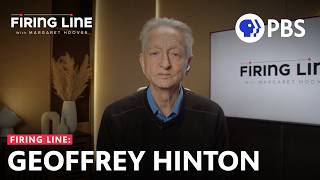 Geoffrey Hinton on AI Safety: Regulate Superintelligence Now2024 · 27 min · full transcriptStrongest statement of why frontier AI is unlike normal software and why public pressure for regulation matters.
 Geoffrey Hinton on AI Safety: Why We Need Regulation2024 · 61 min · full transcriptUseful for seeing how Hinton connects regulation to weapons, liability, deployment, and political readiness.
 Geoffrey Hinton on AI Risks and Alignment: Why He Quit Google2023 · 62 min · full transcriptBest for understanding how Hinton separates different AI threats and why alignment changes the regulatory agenda.
 Geoffrey Hinton on AI Risk: Why Superintelligence Could Arrive Soon2024 · 19 min · full transcriptConcise explanation of why rapid progress toward smarter-than-human AI makes safety and control urgent.
 Geoffrey Hinton on AI Risk: Why Machines Could Take Over2024 · 15 min · full transcriptClear introduction to the near-term harms Hinton thinks regulation must also address, especially jobs and inequality.
Questions people ask
- What did Geoffrey Hinton say average people should do about AI regulation?
- What did Geoffrey Hinton say governments should do about AI safety?
- What did Geoffrey Hinton say is the difference between AI advisors and AI agents?
- What did Geoffrey Hinton say should be done about AI safety research and funding?
- What does Geoffrey Hinton say is the real danger of superintelligence?
- Why did Geoffrey Hinton say he quit Google?
Sources
Every quote above, word for word from the transcripts. Numbers match the text.
“It's quite depressing, but it's also very good that people have finally realized there's a big problem here.”
“I guess we have a year or two before everything gets much worse than it is now.”
“…there's a good chance, a 50% chance, we'll get AI smarter than us…”
“I think in five years' time, they could well be smarter than people.”
“It's not too late yet.”
“So, the average reader of the book can do something, and what they can do is pressure their politicians to regulate AI and to take the existential threat of superintelligence seriously. At present, in the United States, we've got completely unregulated AI. The federal government has suggested that companies can regulate themselves, which is absurd. And AI is now on the point of producing superintelligence. We thought it was -- I thought it was 10, 20 years out. But talking to the people inside the big companies, they're very worried that we're gonna get superintelligence within the next few years, and we don't know how to control it.”
“I think government's the only thing powerful enough to regulate these big companies…”
“And really, what I want to call for is that comparable amounts of effort and resources should go into developing it and figuring out how to stop the bad side effects and stop it getting overall control. So I want to sort of sound a warning that we've got to take this very seriously. Right now, it's kind of 99% of the money goes into developing, yes, and one percent into safety. It should be much more like 50/50. From an academic point of view, that might not be too hard to steer. I mean, in a sense, you could imagine funding agencies…”
“…we're making a new kind of being…”
“I think what they least understand is that we're making alien beings. It's not computer software we're making. So when you program a computer, you tell the computer exactly what to do in excruciating detail. You figure out how to solve a problem, and then you tell the computer what to do. It's following your instructions. That's not how these neural networks work. We write a computer program that tells the neural networks how to learn from data, and we don't know what knowledge is taken from the data. We can get some idea of it, but it's not like software. It's much more like our brains. And the current problem is they're beginning to make themselves smarter.”
“They're capable of pretending to be stupider than they are…”
“What they least understand is that we're making alien beings.”
“We urgently need research on how to prevent these new beings from wanting to take control.”
“That seems like the very least we should have for AI.”
“We don't know how to avoid them all at present that's why we urgently need more research.”
“We don't know how to avoid them all at present that's why we urgently need more research. So I'm advocating that our best young researchers, or many of them, should work on AI safety and governments should force the large companies to provide the computational facilities that they need to do that.”
“But there is this existential threat of these things actually taking over from us. And they need to start working on that now. Now, my personal view, there's a variety of views among the experts. My personal view is we're not going to be able to keep control of them in the sense that we're in charge and they do what we say. They're going to get much smarter than us. And when they're much smarter than us, they're going to find ways to escape whatever we do. The most important thing we need to do is make them the kinds of beings we would like to share the planet with. And at present, we're not doing that. If you have things much smarter than you, and they'll be much smarter than us, not slightly smarter, but much smarter, you better hope they have your best interests at heart. And we do have examples of that.”
“…we need to think which threat we're talking about…”
“…if I had a job in a call center, I'd be very worried…”
“…the extremely rich are going to get even more extremely rich…”
“…it's sort of 10 to 20% chance that these things will take over…”
How this guide was made: drafted with AI from the full transcripts of the recordings cited, then checked: every quotation must match a transcript word for word and be the speaker's own words, and an independent review gates accuracy. Methodology and corrections.
