What did Geoffrey Hinton say average people should do about AI regulation?
Geoffrey Hinton says ordinary people should pressure their politicians to regulate AI and take the existential threat of superintelligence seriously. He argues that the U.S. currently has essentially no meaningful regulation and that self-regulation by companies is absurd. He also says superintelligence may arrive within a few years, so the public should act now.
“So, the average reader of the book can do something, and what they can do is pressure their politicians to regulate AI and to take the existential threat of superintelligence seriously. At present, in the United States, we've got completely unregulated AI. The federal government has suggested that companies can regulate themselves, which is absurd. And AI is now on the point of producing superintelligence. We thought it was -- I thought it was 10, 20 years out. But talking to the people inside the big companies, they're very worried that we're gonna get superintelligence within the next few years, and we don't know how to control it.”
Key takeaways
- Pressure elected officials to regulate AI.
- Treat superintelligence as a serious public-policy issue.
- Don't assume companies can safely regulate themselves.
Context
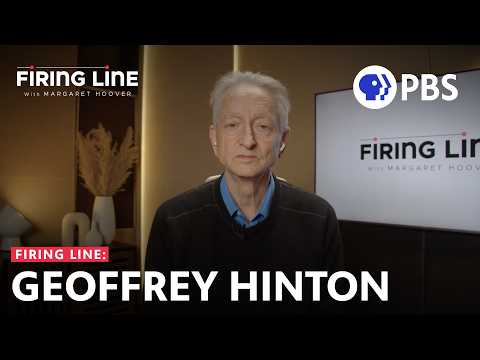
In a 2024 PBS Firing Line interview about his book and the risks of advanced AI, Hinton explains what he wants readers to do. The quote above is taken word for word from the recording's transcript.
In the transcript
…and Daniel Loeb Foundation, The Beth and Ravenel Curry Foundation, Cliff and Laurel Asness, and by the following. >> Dr. Geoffrey Hinton, welcome to "Firing Line." >> Thank you for inviting me. >> Your forthcoming book, entitled "Smarter Than Us," opens with a letter that you received from a mother of a teenage girl who was unable to sleep because she was so terrified by your warnings about artificial intelligence.
So, the average reader of the book can do something, and what they can do is pressure their politicians to regulate AI and to take the existential threat of superintelligence seriously. At present, in the United States, we've got completely unregulated AI. The federal government has suggested that companies can regulate themselves, which is absurd. And AI is now on the point of producing superintelligence. We thought it was -- I thought it was 10, 20 years out. But talking to the people inside the big companies, they're very worried that we're gonna get superintelligence within the next few years, and we don't know how to control it.
>> What does the general public least understand about the threat of AI and the threat of superintelligence? >> I think what they least understand is that we're making alien beings. It's not computer software we're making. So when you program a computer, you tell the computer exactly what to do in excruciating detail. You figure out how to solve a problem, and then you tell the computer what to…
Read the full transcript of Firing Line with Margaret Hoover, PBS interview
Topics
What others said about artificial intelligence
- What did Elon Musk say is the real danger of artificial intelligence?
- What did Jensen Huang say about why AI inference demand is exploding?
- What did Demis Hassabis say about hallucinations and confidence scores in AI?
- What did Andrej Karpathy say about whether reasoning models can generalize beyond math and code?
More questions about Geoffrey Hinton
- Why does Geoffrey Hinton say AI is not just computer software?
- What does Geoffrey Hinton say is the real danger of superintelligence?
- What did Geoffrey Hinton say about how AI can be creative and understand analogies?
- What did Geoffrey Hinton say about whether large language models understand language?
- What did Geoffrey Hinton say about how large language models work?
- What did Geoffrey Hinton say sleep is for?
All Geoffrey Hinton answers · All Geoffrey Hinton recordings
How this answer was made: the quote is checked word for word against the transcript of the recording and confirmed as the speaker's own words; the summary above it was drafted with AI from that transcript and quality-checked. Methodology and corrections.