What did Geoffrey Hinton say about how AI can be creative and understand analogies?
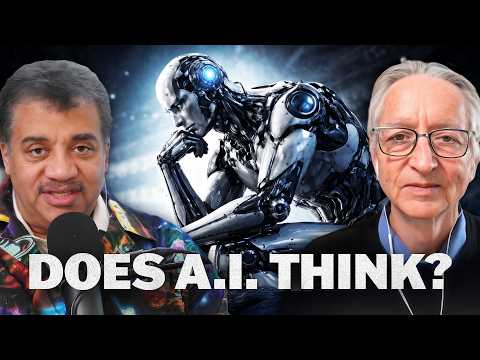
Geoffrey Hinton said AI is already very good at analogies, and that this is a source of creativity. He gave an example where ChatGPT-4 explained why a compost heap is like an atom bomb by recognizing shared structure, such as faster heat generation or faster neutron production. For Hinton, that showed the system understood the commonality, not just word patterns.
“AI is very good at analogies already. So when ChatGPT-4 was not allowed to look on the web, when all its knowledge was in its weights, I asked it, "Why is a compost heap like an atom bomb?" and it knew. It said, "The energy scales are very different and the time scales are very different." But it then went on to talk about how when a compost heap gets hotter, it generates heat faster, and when an atom bomb generates more neutrons, it generates neutrons faster. Um, so it understood the commonality, and it had to understand that to pack all that knowledge into so few connections, only a trillion or so. That's a source of much creativity.”
Key takeaways
- Look for systems that grasp shared structure, not just surface words.
- Analogy-making can be a sign of real understanding.
- Creative behavior can emerge from compressed internal representations.
Context
On StarTalk in 2023, the hosts pushed Hinton on whether AI just parrots language or actually understands concepts. The quote above is taken word for word from the recording's transcript.
In the transcript
…So, the human can continue to explore the universe in ways that AI doesn't have access to. >> There's one word missing from your entire assessment. >> What's that? >> Yet. >> [laughter] >> Yeah, I just think of my, you know, will AI come up with a new theory of the universe that requires human insights that it doesn't have because I'm thinking the way no one has thought
AI is very good at analogies already. So when ChatGPT-4 was not allowed to look on the web, when all its knowledge was in its weights, I asked it, "Why is a compost heap like an atom bomb?" and it knew. It said, "The energy scales are very different and the time scales are very different." But it then went on to talk about how when a compost heap gets hotter, it generates heat faster, and when an atom bomb generates more neutrons, it generates neutrons faster. Um, so it understood the commonality, and it had to understand that to pack all that knowledge into so few connections, only a trillion or so. That's a source of much creativity.
>> And it's not just by finding words that were juxtaposed with other words. >> No, it understood what a chain reaction was. >> Yeah. >> Well, all right. That's the end of us. >> Yeah. We're done. >> On Earth. We're done. >> We're finished. >> This is the last episode. We [laughter] >> Stick in us. We're done. Gentlemen, it's been a pleasure. >> Well, Geoffrey Hinton, it's…
Read the full transcript of StarTalk podcast interview, 2023
Topics
What others said about artificial intelligence
- What did Elon Musk say is the real danger of artificial intelligence?
- What did Jensen Huang say about why AI inference demand is exploding?
- What did Demis Hassabis say about hallucinations and confidence scores in AI?
- What did Andrej Karpathy say about whether reasoning models can generalize beyond math and code?
More questions about Geoffrey Hinton
- What did Geoffrey Hinton say about whether large language models understand language?
- What did Geoffrey Hinton say about how large language models work?
- What did Geoffrey Hinton say sleep is for?
- What did Geoffrey Hinton say average people should do about AI regulation?
- Why does Geoffrey Hinton say AI is not just computer software?
- What did Geoffrey Hinton say is the difference between AI advisors and AI agents?
All Geoffrey Hinton answers · All Geoffrey Hinton recordings
How this answer was made: the quote is checked word for word against the transcript of the recording and confirmed as the speaker's own words; the summary above it was drafted with AI from that transcript and quality-checked. Methodology and corrections.