Why does Geoffrey Hinton say AI is not just computer software?
Hinton says the public misunderstands AI because it is not ordinary software that follows explicit instructions. Instead, neural networks learn from data, and even the people who build them do not fully know what knowledge they absorb. He argues they are more like brains than software, and that they are already beginning to make themselves smarter.
“I think what they least understand is that we're making alien beings. It's not computer software we're making. So when you program a computer, you tell the computer exactly what to do in excruciating detail. You figure out how to solve a problem, and then you tell the computer what to do. It's following your instructions. That's not how these neural networks work. We write a computer program that tells the neural networks how to learn from data, and we don't know what knowledge is taken from the data. We can get some idea of it, but it's not like software. It's much more like our brains. And the current problem is they're beginning to make themselves smarter.”
Key takeaways
- Think of modern AI as learned systems, not rule-based software.
- Don't assume humans fully understand what AI has learned.
- Expect AI systems to keep improving themselves.
Context
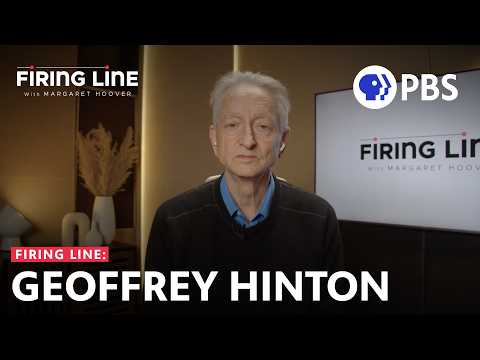
During a PBS interview on AI safety, Hinton answers what the public least understands about superintelligence. The quote above is taken word for word from the recording's transcript.
In the transcript
…got completely unregulated AI. The federal government has suggested that companies can regulate themselves, which is absurd. And AI is now on the point of producing superintelligence. We thought it was -- I thought it was 10, 20 years out. But talking to the people inside the big companies, they're very worried that we're gonna get superintelligence within the next few years, and we don't know how to control it.
I think what they least understand is that we're making alien beings. It's not computer software we're making. So when you program a computer, you tell the computer exactly what to do in excruciating detail. You figure out how to solve a problem, and then you tell the computer what to do. It's following your instructions. That's not how these neural networks work. We write a computer program that tells the neural networks how to learn from data, and we don't know what knowledge is taken from the data. We can get some idea of it, but it's not like software. It's much more like our brains. And the current problem is they're beginning to make themselves smarter.
So up until now, what's happened is researchers have been changing the form of the neural networks, changing how they learn, and making AI smarter. But AI itself is now beginning to do that. In Anthropic, for example, nearly all of the code is now written by AI. And AI makes research much faster. So these things are developing very fast now. Explain the danger in underestimating superintelligence. So, these…
Read the full transcript of Firing Line with Margaret Hoover, PBS interview
Topics
What others said about artificial intelligence
- What did Elon Musk say is the real danger of artificial intelligence?
- What did Jensen Huang say about why AI inference demand is exploding?
- What did Demis Hassabis say about hallucinations and confidence scores in AI?
- What did Andrej Karpathy say about whether reasoning models can generalize beyond math and code?
More questions about Geoffrey Hinton
- What did Geoffrey Hinton say average people should do about AI regulation?
- What does Geoffrey Hinton say is the real danger of superintelligence?
- What did Geoffrey Hinton say about how AI can be creative and understand analogies?
- What did Geoffrey Hinton say about whether large language models understand language?
- What did Geoffrey Hinton say about how large language models work?
- What did Geoffrey Hinton say sleep is for?
All Geoffrey Hinton answers · All Geoffrey Hinton recordings
How this answer was made: the quote is checked word for word against the transcript of the recording and confirmed as the speaker's own words; the summary above it was drafted with AI from that transcript and quality-checked. Methodology and corrections.