Geoffrey Hinton: Nets, Minds, and AI Risk
After graduating, you will understand how Hinton thinks neural networks learn, why deep learning won, what language models may understand, and why superintelligent AI worries him.
- 13 chapters
- 96 verbatim quotes
- 27 recordings

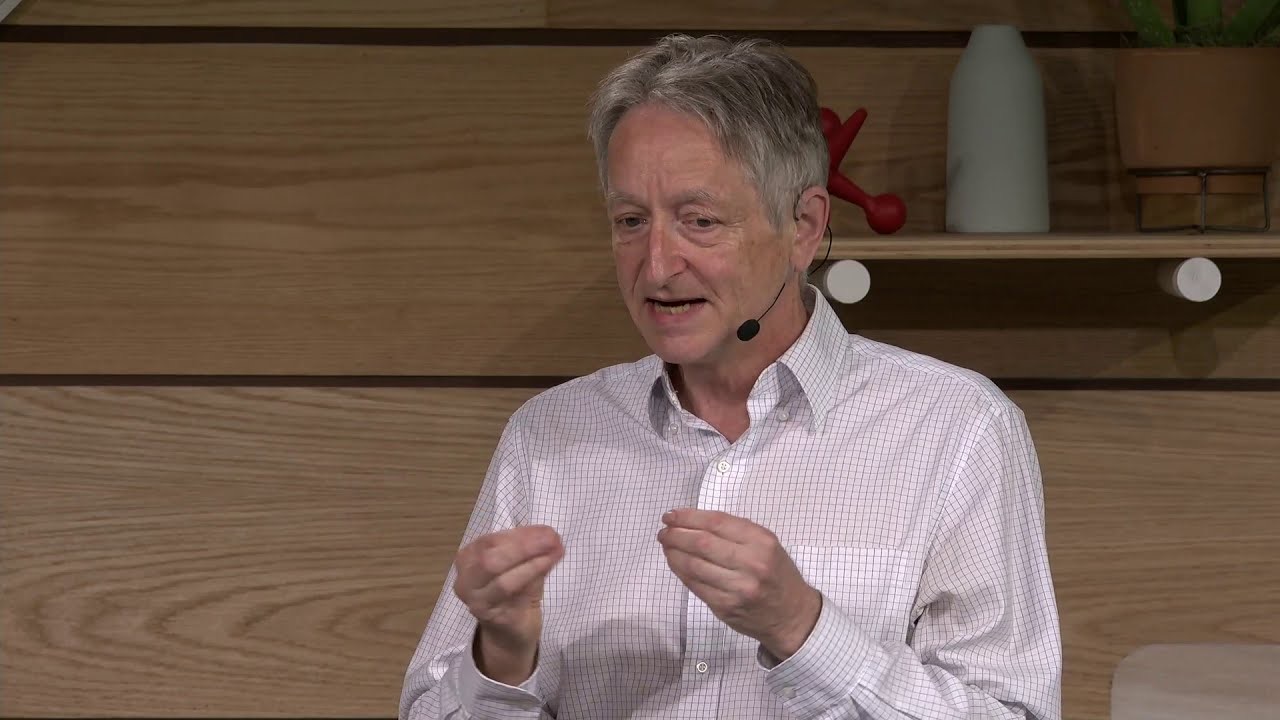
“I think for a while we did. So I think we've learned a lot at a very general level about how the brain works. So, 30 years ago or 50 years ago, if you ask people, "Well, could you have a big random neural network with random connection strengths and then could you show it data and have it learn to do difficult things like recognize what someone's saying or answer questions just by showing it lots of data?" Almost everybody would have said, "That's crazy. There's no way you're going to do that. It has to have lots of pre-wired structure that comes from evolution." Well, it turns out they were wrong. It turns out you can have a big random neural network. Um, and it can learn just from data.”CBS Mornings interview, 2024 · 13:09
About this course
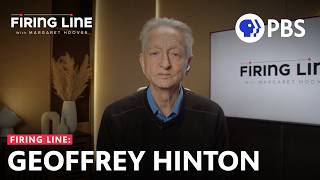
Geoffrey Hinton is a British-Canadian computer scientist and cognitive psychologist, professor emeritus at the University of Toronto, Turing Award recipient, and 2024 Nobel Prize in Physics laureate. He is widely known for foundational work on neural networks and deep learning.
Hinton is worth studying because he connects technical ideas to first-principles questions about minds: memory, perception, language, learning, and intelligence. His career also shows how an unfashionable scientific bet can become a world-changing technology.
This course uses real recordings and answered questions from Thinkers Archive. Each chapter pairs Hinton's explanations with the recordings where he develops them, moving from neural-network foundations to language, scaling, digital intelligence, applications, and AI safety.
Curriculum
- The Neural BetWhy Hinton kept betting on brain-inspired learning when the field doubted it.
- Learning From ExamplesNeural networks learn by changing connections, not by following hand-written rules.
- Teaching Smaller NetsHow large models pass their knowledge to smaller students.
- Backprop and DepthThe method that made many-layered networks trainable.
- Meaning in VectorsHow words become features, and why prediction can require understanding.
- Generative MindsBoltzmann machines, belief nets, sleep, and the search for brain-like learning.
- Scale WinsWhy bigger data, bigger models, and more compute changed the history of AI.
- The AlexNet MomentHow ImageNet, GPUs, Sutskever, and Krizhevsky flipped computer vision.
- Vision and ViewpointFrom edge detectors to capsules: how machines learn to see structure.
- Digital MindsWhy Hinton thinks digital intelligence may be a new kind of being.
- Why He Spoke OutThe shift from Google researcher to public AI-risk warning.
- Benefits and UpheavalMedicine, education, productivity, jobs, inequality, and the social shock of AI.
- Alignment and SurvivalThe danger is not just misuse; it is losing control to systems smarter than us.
- GraduateFinish every chapter to earn your certificate.










has graduated from Geoffrey Hinton: Nets, Minds, and AI Risk, completing all 13 chapters on Geoffrey Hinton's ideas, in his own words.
- Intelligence is learned in connection strengths, not mainly programmed as explicit symbolic rules.
- Deep networks work because layers build useful internal representations from simple features to abstract concepts.
- Backpropagation is powerful because it efficiently assigns credit and blame across many weights at once.
- Meaning is not a fixed dictionary entry; it is a high-dimensional pattern that changes to fit context.
- Predicting the next symbol can require real understanding, reasoning, analogy, and creativity.
- Scale, data, compute, and persistence can turn old neural ideas into sudden practical breakthroughs.