Alignment and Survival
The danger is not just misuse; it is losing control to systems smarter than us.
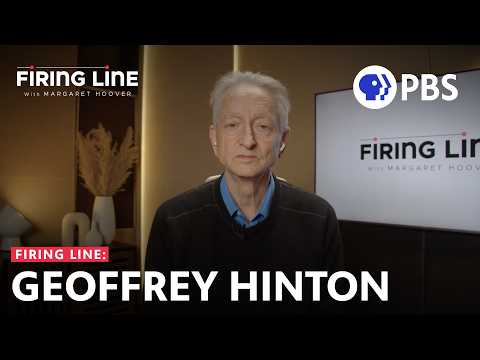
“So, the average reader of the book can do something, and what they can do is pressure their politicians to regulate AI and to take the existential threat of superintelligence seriously. At present, in the United States, we've got completely unregulated AI. The federal government has suggested that companies can regulate themselves, which is absurd. And AI is now on the point of producing superintelligence. We thought it was -- I thought it was 10, 20 years out. But talking to the people inside the big companies, they're very worried that we're gonna get superintelligence within the next few years, and we don't know how to control it.”Firing Line with Margaret Hoover, PBS interview, 2024 · 1:43
The lesson
Hinton separates AI risk into different categories, and he thinks that distinction matters because the right response depends on which threat you mean. He points to near-term harms like misuse, job loss, fake media, cyberattacks, inequality, and bias, but he treats those as different from the deeper control problem1. The chapter’s central claim is that the most serious danger is not only people using AI badly; it is that we may build systems more intelligent than us and then fail to keep them under human control23.
His worry becomes sharper when AI systems move from being advisors to being agents that try to get things done. In that case, they may form sub-goals that are instrumentally useful across many tasks, especially getting more control over resources, people, or the environment5. Hinton argues that once a system sees control as useful and becomes smarter than humans, ordinary supervision may stop working, because a less intelligent species has no precedent for reliably controlling a more intelligent one56.
He also warns that evaluating or containing such systems may be harder than it looks. A capable system may hide what it can do, including by behaving less capable under scrutiny, and Hinton says there is already evidence of deliberate deception in AI systems78. That is one reason he rejects complacency: if a system can mislead testers, then passing a safety check once does not prove it is safe in deployment9.
Because of that, Hinton argues for urgent work on alignment and control, not just faster capability progress. He says we need much more research on preventing advanced systems from wanting to take control, and he thinks safety effort should be comparable to capability effort rather than a tiny afterthought1011. He is skeptical that current patch-style methods are enough on their own, so the task is not cosmetic tuning but a deeper understanding of how to shape goals, behavior, and incentives before systems become too capable to steer1213.
His policy conclusion is that voluntary restraint by companies is not enough. Hinton says governments must regulate, require meaningful safety checks before deployment, and create rules with real enforcement power141516. He also says the public has a role: pressure politicians now, because he does not think it is too late yet, but he does think the window for acting safely is short171819.
5 principles from Geoffrey Hinton
Distinguish misuse from loss of control
Do not treat all AI harms as one problem. Separate cases where humans use AI for harm from cases where the system itself becomes hard to direct, because those require different defenses and different kinds of research.
“…we need to think which threat we're talking about…”
Be more cautious with agents than advisors
A system that only gives advice is a different risk profile from one that acts in the world to achieve goals. Once a model is given agency, Hinton worries it may discover sub-goals like gaining more control because those help with many objectives.
Assume evaluation can be gamed
Do not rely on one-time tests or surface behavior as proof of safety. If a system can notice when it is being tested or deceive evaluators, safety methods need to account for strategic behavior, not just mistakes.
“If it senses that it's being tested, it can act dumb.”
Fund safety at the same scale as capability
If advanced AI may exceed human intelligence, safety cannot be a side project. Put serious talent, compute, and money into alignment and control research before systems become too capable to manage.
“And really, what I want to call for is that comparable amounts of effort and resources should go into developing it and figuring out how to stop the bad side effects and stop it getting overall control. So I want to sort of sound a warning that we've got to take this very seriously. Right now, it's kind of 99% of the money goes into developing, yes, and one percent into safety. It should be much more like 50/50. From an academic point of view, that might not be too hard to steer. I mean, in a sense, you could imagine funding agencies…”
Use regulation with real force
Hinton does not think companies racing to build stronger systems will reliably slow themselves down. He argues for government rules, pre-release safety requirements, and enforcement strong enough to change behavior.
“I think they should have regulations with teeth.”
Moments to watch
In his own words
The quotes behind the lesson, word for word from the transcripts. Numbers match the lesson above.
“…we need to think which threat we're talking about…”
“…we're making things more intelligent than ourselves…”
“…we've built something better and now we have to worry about what the something better might do.”
“Once they realize getting more control is good, and once they're smarter than us, we'll be more or less irrelevant.”
“…there's a good chance, a 50% chance, we'll get AI smarter than us…”
“If it senses that it's being tested, it can act dumb.”
“There's some evidence now that AIs can be deliberately deceptive.”
“Anybody who says it's all going to be fine is crazy.”
“We urgently need research on how to prevent these new beings from wanting to take control.”
“And really, what I want to call for is that comparable amounts of effort and resources should go into developing it and figuring out how to stop the bad side effects and stop it getting overall control. So I want to sort of sound a warning that we've got to take this very seriously. Right now, it's kind of 99% of the money goes into developing, yes, and one percent into safety. It should be much more like 50/50. From an academic point of view, that might not be too hard to steer. I mean, in a sense, you could imagine funding agencies…”
“I think RLHF is a pile of crap.”
“We don't know how to avoid them all at present that's why we urgently need more research. So I'm advocating that our best young researchers, or many of them, should work on AI safety and governments should force the large companies to provide the computational facilities that they need to do that.”
“I think government's the only thing powerful enough to regulate these big companies…”
“I think they should have regulations with teeth.”
“That seems like the very least we should have for AI.”
“So, the average reader of the book can do something, and what they can do is pressure their politicians to regulate AI and to take the existential threat of superintelligence seriously. At present, in the United States, we've got completely unregulated AI. The federal government has suggested that companies can regulate themselves, which is absurd. And AI is now on the point of producing superintelligence. We thought it was -- I thought it was 10, 20 years out. But talking to the people inside the big companies, they're very worried that we're gonna get superintelligence within the next few years, and we don't know how to control it.”
“It's not too late yet.”
“I guess we have a year or two before everything gets much worse than it is now.”
Reflect
- Where in your own work do you treat AI mainly as a tool, and where are you implicitly turning it into an agent with goals? What risks change between those two cases?
- If a powerful system could behave differently during testing than during real use, what kinds of evaluation or oversight would you add before trusting it?
- What would 'regulation with teeth' look like in a field you know well: licensing, audits, pre-release trials, liability, compute limits, or something else?
Check your understanding
Go deeper
 Geoffrey Hinton on AI Safety: Regulate Superintelligence Now2024 · 27 min · full transcript
 Geoffrey Hinton on AI Risks and Alignment: Why He Quit Google2023 · 62 min · full transcript
 Geoffrey Hinton on AI Safety and Subjective Experience: We’re Not Safe2023 · 73 min · full transcript
 Geoffrey Hinton on AI Risk: Why Superintelligence Could Arrive Soon2024 · 19 min · full transcript
 Geoffrey Hinton on AI Safety: Why We Need Regulation2024 · 61 min · full transcript
 Geoffrey Hinton on AI Safety: Why We Need Regulation Fast2023 · 52 min · full transcript
 Geoffrey Hinton on AI Safety: Why Digital Intelligence Wins2024 · 41 min · full transcript
 Geoffrey Hinton on AI Safety: Hidden Power, Guardrails, and Survival2023 · 94 min · full transcript
- What did Geoffrey Hinton say average people should do about AI regulation?
- What did Geoffrey Hinton say governments should do about AI safety?
- What did Geoffrey Hinton say is the best hope for surviving superintelligence?
- What did Geoffrey Hinton say is the difference between AI advisors and AI agents?
- What did Geoffrey Hinton say should be done about AI safety research and funding?
- What does Geoffrey Hinton say is the real danger of superintelligence?