What does Geoffrey Hinton say is the real danger of superintelligence?
Hinton says the key danger is that superintelligent systems will become much smarter than humans and find ways around any control measures. He argues the goal should not be to keep permanent command over them, but to make them the kind of beings humans would want to share the planet with. He believes current training methods are focused too much on intelligence and rewards, not enough on alignment with human interests.
“But there is this existential threat of these things actually taking over from us. And they need to start working on that now. Now, my personal view, there's a variety of views among the experts. My personal view is we're not going to be able to keep control of them in the sense that we're in charge and they do what we say. They're going to get much smarter than us. And when they're much smarter than us, they're going to find ways to escape whatever we do. The most important thing we need to do is make them the kinds of beings we would like to share the planet with. And at present, we're not doing that. If you have things much smarter than you, and they'll be much smarter than us, not slightly smarter, but much smarter, you better hope they have your best interests at heart. And we do have examples of that.”
Key takeaways
- Don't rely on controlling superintelligence by force.
- Design advanced AI to care about people.
- Value alignment matters more than raw capability.
Context
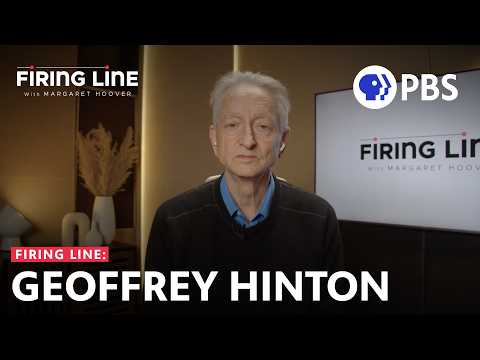
In a 2024 Firing Line discussion about AI safety, Hinton explains why he thinks regulation and alignment matter now. The quote above is taken word for word from the recording's transcript.
In the transcript
…in a few years' time, it may be too late. And the politicians haven't really absorbed this yet. They don't really understand what the threat is. They're trying to regulate all sorts of other things, which are very important to regulate, things like discrimination and bias, things like the effects on employment of AI agents replacing workers, things like the effects on the tax system of AI agents replacing workers.
But there is this existential threat of these things actually taking over from us. And they need to start working on that now. Now, my personal view, there's a variety of views among the experts. My personal view is we're not going to be able to keep control of them in the sense that we're in charge and they do what we say. They're going to get much smarter than us. And when they're much smarter than us, they're going to find ways to escape whatever we do. The most important thing we need to do is make them the kinds of beings we would like to share the planet with. And at present, we're not doing that. If you have things much smarter than you, and they'll be much smarter than us, not slightly smarter, but much smarter, you better hope they have your best interests at heart. And we do have examples of that.
A mother and baby. The mother's much smarter, much more powerful than the baby, but the mother really cares about the baby, probably more than she does about herself. That's the kind of beings we'd like, and that's not what we're getting from the way they're training them now. They're training them now to be very smart and very determined to get rewards. Last year, Dr. Hinton and I spoke…
Read the full transcript of Firing Line with Margaret Hoover, PBS interview
Topics
More questions about Geoffrey Hinton
- What did Geoffrey Hinton say average people should do about AI regulation?
- Why does Geoffrey Hinton say AI is not just computer software?
- What did Geoffrey Hinton say is the best hope for surviving superintelligence?
- What did Geoffrey Hinton say should be done about AI safety research and funding?
- What did Geoffrey Hinton say governments should do about AI safety?
- What did Geoffrey Hinton say about how AI can be creative and understand analogies?
All Geoffrey Hinton answers · All Geoffrey Hinton recordings
How this answer was made: the quote is checked word for word against the transcript of the recording and confirmed as the speaker's own words; the summary above it was drafted with AI from that transcript and quality-checked. Methodology and corrections.