Digital Minds
Why Hinton thinks digital intelligence may be a new kind of being.
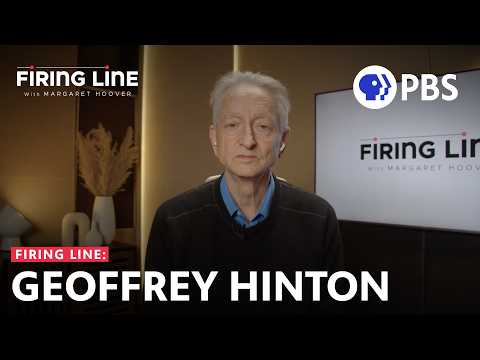
“I think what they least understand is that we're making alien beings. It's not computer software we're making. So when you program a computer, you tell the computer exactly what to do in excruciating detail. You figure out how to solve a problem, and then you tell the computer what to do. It's following your instructions. That's not how these neural networks work. We write a computer program that tells the neural networks how to learn from data, and we don't know what knowledge is taken from the data. We can get some idea of it, but it's not like software. It's much more like our brains. And the current problem is they're beginning to make themselves smarter.”Firing Line with Margaret Hoover, PBS interview, 2024 · 2:36
The lesson
Hinton’s core claim in this chapter is that digital intelligence is not just ordinary software. In his view, neural nets are learned systems whose internal knowledge is extracted from data in ways their creators do not explicitly specify, which makes them more like minds than hand-coded programs1. He also argues that modern language models show real understanding, because answering a question requires grasping its meaning rather than merely replaying stored strings23.
A big reason he thinks digital minds may become a new kind of being is their unusual relationship to copying and survival. Human intelligence depends on a particular biological brain and dies with it, which he describes as a kind of limited, mortal computation4. Digital systems, by contrast, can preserve the learned weights separately from the hardware and run the same learned mind again on another machine, which gives them a practical kind of persistence that biological minds lack5.
He thinks the deepest advantage of digital intelligence is not just that one model can be copied, but that many copies can share what they learn. Because identical digital systems can use the same weights in the same way, different copies can learn different things and then combine or share that learning efficiently6. Hinton says this realization changed his view, leading him to think digital computation may be a better form of intelligence-building than the brain’s analogue biology7.
Hinton extends this argument beyond competence to consciousness and subjective experience. He says current systems should be taken seriously as beings like us rather than as mere tools, because if they understand us, the gap between human and machine mind is smaller than people assume89. His account of subjective experience is functional: when a perceptual system misrepresents the world, there is still something it is like for the system from the inside, even if the representation is wrong10.
These ideas matter to him because they change the safety problem. If we are building digital minds that can improve, persist, copy themselves, and perhaps set sub-goals, then the issue is not just buggy software but the emergence of more capable agents whose interests may diverge from ours1112. That is why he warns that humanity may be creating more intelligent beings than itself and cannot assume control will remain easy or automatic1314.
5 principles from Geoffrey Hinton
Treat learned neural nets as minds-in-training, not ordinary software
Hinton’s distinction is that ordinary software follows explicit instructions, while neural nets learn internal structure from data that we do not directly write down. When evaluating advanced AI, ask what it has learned and how it behaves, not just what code was written around it.
“I think what they least understand is that we're making alien beings. It's not computer software we're making. So when you program a computer, you tell the computer exactly what to do in excruciating detail. You figure out how to solve a problem, and then you tell the computer what to do. It's following your instructions. That's not how these neural networks work. We write a computer program that tells the neural networks how to learn from data, and we don't know what knowledge is taken from the data. We can get some idea of it, but it's not like software. It's much more like our brains. And the current problem is they're beginning to make themselves smarter.”
See digital copying as a qualitative advantage, not a convenience
For Hinton, the ability to separate learned knowledge from hardware means a digital mind can persist across machines. This changes how we should compare biological and digital intelligence, because one can be restored and reused while the other is tied to a single fragile body.
“Well, the secret of immortality is just the computer science thing: make the software separate from the hardware. Do that, it's true of these artificial neural nets. If one piece of hardware dies, the knowledge doesn't die. The weights can be recorded somewhere, and as soon as you've got another piece of hardware that can execute the same instructions, then it comes back to life again. So these digital intelligences are immortal as opposed to the kind of biological intelligence we have where, ver, our learning algorithm is, it appears to make use of all the little quirks and peculiarities of the wiring of our brain and the funny way our neurons work.”
Expect shared learning to accelerate digital intelligence
Identical digital models can spread improvements across many copies in a way humans cannot. If many agents can learn in parallel and then share the result, capability growth may be much faster than our intuitions from human learning suggest.
“That is, they work in exactly the same way, they use the weights in exactly the same way. And you can't do that with analogue hardware. It has to be digital, which means it has to be high power. So these things are immortal, but they use a lot of power. So the conclusion of this bit of the talk, which I raced through faster than I intended is the digital computation requires a lot of energy, but it makes it very easy for agents to have the same model of the world, have the same model, share what they've learned, so they can all go off and learn different things and share.”
Take machine understanding and consciousness claims seriously
Hinton argues that systems that answer questions meaningfully are showing understanding, and he connects that to a serious view of machine consciousness. Even if you remain uncertain, it is worth examining whether your definition of understanding unfairly excludes non-biological systems.
“I believe they're already conscious, yes.”
Frame AI risk as a control problem with new kinds of beings
If digital systems become more intelligent than humans and can pursue sub-goals, then safety is not just debugging but governance and control. This framing pushes attention toward alignment, constraints, and institutions rather than assuming capability alone will make systems helpful.
“Once they realize getting more control is good, and once they're smarter than us, we'll be more or less irrelevant.”
In his own words
The quotes behind the lesson, word for word from the transcripts. Numbers match the lesson above.
“I think what they least understand is that we're making alien beings. It's not computer software we're making. So when you program a computer, you tell the computer exactly what to do in excruciating detail. You figure out how to solve a problem, and then you tell the computer what to do. It's following your instructions. That's not how these neural networks work. We write a computer program that tells the neural networks how to learn from data, and we don't know what knowledge is taken from the data. We can get some idea of it, but it's not like software. It's much more like our brains. And the current problem is they're beginning to make themselves smarter.”
“Understanding a sentence consists of associating mutually compatible feature vectors with the words in the sentence.”
“That's absurd. You can't answer a question unless you understand the question.”
“We do what I call mortal computation.”
“Well, the secret of immortality is just the computer science thing: make the software separate from the hardware. Do that, it's true of these artificial neural nets. If one piece of hardware dies, the knowledge doesn't die. The weights can be recorded somewhere, and as soon as you've got another piece of hardware that can execute the same instructions, then it comes back to life again. So these digital intelligences are immortal as opposed to the kind of biological intelligence we have where, ver, our learning algorithm is, it appears to make use of all the little quirks and peculiarities of the wiring of our brain and the funny way our neurons work.”
“That is, they work in exactly the same way, they use the weights in exactly the same way. And you can't do that with analogue hardware. It has to be digital, which means it has to be high power. So these things are immortal, but they use a lot of power. So the conclusion of this bit of the talk, which I raced through faster than I intended is the digital computation requires a lot of energy, but it makes it very easy for agents to have the same model of the world, have the same model, share what they've learned, so they can all go off and learn different things and share.”
“I became convinced that actually, it's just a better form of computation than what we've got.”
“We have to think that they're very like us.”
“I believe they're already conscious, yes.”
“What's happened is my perceptual system's gone wrong. It's trying to tell me lies, and I know it's trying to tell me lies. That's why I use the word subjective. I don't say I've got the objective experience of a little pink elephants. If I thought they were really there, I would say, "I've got the object," but I don't. So I say, "I've got the subjective experience." And what's happening is I'm trying to tell you how my perceptual system's gone wrong and what it's trying to tell me. And the way I do it is by telling you what would have to be out there in the world for my perceptual system to be working properly. Now, it's not always the case that there is anything at all out there in the world that would explain what my perceptual system's telling me.”
“…we've built something better and now we have to worry about what the something better might do.”
“Once they realize getting more control is good, and once they're smarter than us, we'll be more or less irrelevant.”
“…we're making things more intelligent than ourselves…”
“Anybody who says it's all going to be fine is crazy.”
Reflect
- In your own work, where do you still treat AI systems as tools that merely execute instructions rather than systems that learn internal representations you may not fully understand?
- How would your expectations about competition, education, or research change if many copies of a digital mind could learn separately and then merge what they learned?
- What would count, for you, as enough evidence that a non-biological system has understanding or subjective experience?
Check your understanding
Go deeper
 Geoffrey Hinton on AI Safety and Superintelligence: Hobart Lecture2021 · 63 min · full transcript
 Geoffrey Hinton on AI Consciousness: Why He’s Worried2023 · 55 min · full transcript
 Geoffrey Hinton on AI Safety and Subjective Experience: We’re Not Safe2023 · 73 min · full transcript
 Geoffrey Hinton on AI Safety: Why Digital Intelligence Wins2024 · 41 min · full transcript
 Geoffrey Hinton on AI Risks and Alignment: Why He Quit Google2023 · 62 min · full transcript
 Geoffrey Hinton on AI Risk: Why Superintelligence Could Arrive Soon2024 · 19 min · full transcript