Bill Gates on Personal Computers
Bill Gates sees personal computers as universal tools powered by software, made truly valuable when they are easy to use, widely available, and connected to other devices and services.
- The PC mattered because software could turn cheap hardware into a universal tool.
- Gates’s core bet was that computers would spread to every desk and home.
- A great PC must be easier, faster, more reliable, and compatible with what people already use.
- The PC stays central even as phones, tablets, and other screens grow around it.
- Hardware progress alone is insufficient; connected experiences and software make computing useful.
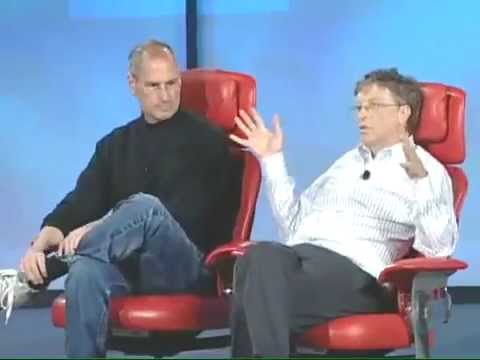
“Architecturally, the question is, do you run just in the cloud and all you have down locally is the browser? And that is the same question for the phone as it is for the full screen device. There'll always be different screen sizes because these are the eight the five inches screen does not really compete with the 20 inches screen does not compete with the big living room screen. Those are, things that there'll be some type of computing behind all of those things, all connected to the Internet. But the idea that locally, you have the responsiveness of immediate interaction without the latency or bandwidth limitations that you get if you try and do it all behind, That's what leads to the right balance.”D5 Conference interview, 2007 · 41:32
Personal computers were a software revolution first
Gates’s view starts with a simple shift: the important value in personal computing was not just the machine itself but the software that made the machine useful. He describes an era when most companies still treated software as secondary, while he and Microsoft saw it as the core opportunity. That is why he believed the PC revolution would create entirely new kinds of companies and new economics.13
This also explains why personal computers looked so transformative to him so early. If hardware kept getting more capable, software could keep expanding what ordinary people could do with a computer. In his telling, personal computing was never just about owning a box; it was about unlocking a general-purpose platform through software.45
His central bet was that computers would become universal
Gates is strongly associated with the belief that computing would not remain confined to big institutions or specialists. He repeatedly returns to the idea that the long-term direction was broad, everyday access, with computers becoming common in work and home life. For him, the personal computer was important precisely because it could become a mass tool rather than a niche machine.64
That belief also helps explain why he moved so aggressively early on. Even when software companies were uncommon, he thought the timing around more powerful chips and personal computing created a rare opening. The urgency came from seeing a universal platform before most others did.1
A good PC must be easy, dependable, and compatible
Gates does not treat adoption as automatic. If personal computers are going to be universal, they must become easier for normal people to use and reliable enough that they do not feel fragile or confusing. That is why he emphasizes quality, testing, and interface improvements as central parts of the PC story rather than side details.78
His Windows 95 framing is especially revealing: the point was not just to add features but to make computing faster, easier, and more fun. He highlights usability changes such as clearer navigation and also stresses compatibility, which matters because people adopt PCs more readily when new systems work with existing hardware and software. In Gates’s view, the PC wins when it lowers friction.9
The PC remains central even in a world of many devices
Gates does not think personal computing ends when new devices appear. Instead, he expects a world of multiple screen sizes and form factors, including tablets, phones, and larger displays, each suited to different uses. The personal computer remains part of a broader ecosystem rather than being replaced by a single winner.1011
This is why he pushes back against the idea that everything should live only in the browser or only in the cloud. He argues that local computing still matters because responsiveness and rich interaction matter. In his view, the strongest future combines capable devices with Internet connectivity, not one at the expense of the other.111213
“Architecturally, the question is, do you run just in the cloud and all you have down locally is the browser? And that is the same question for the phone as it is for the full screen device. There'll always be different screen sizes because these are the eight the five inches screen does not really compete with the 20 inches screen does not compete with the big living room screen. Those are, things that there'll be some type of computing behind all of those things, all connected to the Internet. But the idea that locally, you have the responsiveness of immediate interaction without the latency or bandwidth limitations that you get if you try and do it all behind, That's what leads to the right balance.”D5 Conference interview, 2007 · full transcript →
What makes personal computers powerful is connection and reach
As computing matures, Gates shifts the focus from standalone machines to connected experiences. Faster chips and better devices matter, but he says that by themselves they are insufficient; the missing value comes from linking devices, content, and services so people can move across work, home, and mobile settings. This extends the meaning of the PC instead of shrinking it.1213
He also sees the PC as part of a much larger social and technical arc. Software, in his account, becomes central not only to office work or media but to education, robotics, speech, vision, and health. Personal computing matters because it helps spread the power of software into more parts of life.155
Gates on personal computers, in his own words
“But that alone is not enough.”
Where to watch
 Bill Gates on Windows 95 Launch: Faster, Easier, More Fun1995 · 92 min · full transcriptBest for seeing how Gates thought PCs had to become simpler, more reliable, and mainstream.
 Bill Gates on Microsoft and Philanthropy: Building, Learning, Giving2016 · 25 min · full transcriptBest short account of why Microsoft bet on personal computing and why software captured the value.
 Bill Gates on Connected Experiences: Windows Vista, Media, and Devices2007 · 76 min · full transcriptBest for his later view that the PC grows more valuable through connected devices and services.
 Bill Gates on the Internet and the Future: Letterman interview1995 · 20 min · full transcriptBest for the early mass-market vision of computers becoming widely useful in everyday life.
 Bill Gates on Apple and Microsoft: Rivalry, Partnership, and the Future2007 · 90 min · full transcriptBest for his view of the future beyond the desktop: tablets, phones, rich clients, and cloud services.
Questions people ask
- What did Bill Gates say about tablets and phones?
- What did Bill Gates say about the future of cloud computing and local software?
- What did Bill Gates say the Internet was for?
- What did Bill Gates say was the most important work of his life?
- What did Bill Gates say about cameras becoming ubiquitous?
- Why did Bill Gates say he would not have left software to become a lawyer or mathematician?
Sources
Every quote above, word for word from the transcripts. Numbers match the text.
“The idea of software companies wasn't around all that much.”
“They didn't see the value being in the software.”
“The most important work I got a chance to be involved in, no matter what I do, is the personal computer. That's what I grew up in my teens, my 20s, my 30s. I even knew not to get married because I was so, until later, because I was so obsessed with it. That's my life's work. And I, it's lucky for me that some of the skills and resources, but I put skills first, that I was able to develop through those experiences can be applied to the benefit of the people who haven't had technology, including, medicine, working for them. So it's an incredible blessing to have two things like that. But the thing that I'll, my, if you look inside my brain, it's filled with software and the magic of software and a bleep in software, and that's not going to…”
“Well, software is pretty magical stuff. So even if I'd been consigned to a pretty modest role in the software game, software in the, you know, 1980 to even now, And we're just at the beginning because speech, vision, you know, software became really good. And some great holy grails of that industry that I sat and dreamed about as a freshman here at Harvard were finally making great progress on on those things. So even if I'd had to do a fairly small company, I don't think I would have ever felt like, I should go be a lawyer, which my dad was. And when I was very young, I I originally thought that's what I would do. Or mathematician, which, you know, has certain prestige, but very few people get to contribute to it.”
“…the original vision of "a computer on every desk and in every home" is slowly but surely coming true…”
“…we decided to take the extra nine months in order to test Windows 95 thoroughly…”
“…make sure it met the highest quality standards…”
“We've got over a million and a half devices that are compatible…”
“I don't think you'll have one device. I think you'll have a full screen device that you can carry around, and you'll do dramatically more reading off of yes. I mean I believe in the tablet form factor. I think you'll have voice. I think you'll have ink. You'll have some way of having a hardware keyboard and some settings for that. And then you'll have the device that fits in your pocket, which the whole notion of how much function should you combine in there. There's navigation computers. There's media. There's phone. Technology is letting us put more things in there. But then again, you really want to tune it so people know what they expect. So there's quite a bit of experimentation in that pocket sized device. But I think those are natural form factors, and that we'll have the evolution of the portable machine and the evolution of the phone will both be extremely high volume complementary.”
“Architecturally, the question is, do you run just in the cloud and all you have down locally is the browser? And that is the same question for the phone as it is for the full screen device. There'll always be different screen sizes because these are the eight the five inches screen does not really compete with the 20 inches screen does not compete with the big living room screen. Those are, things that there'll be some type of computing behind all of those things, all connected to the Internet. But the idea that locally, you have the responsiveness of immediate interaction without the latency or bandwidth limitations that you get if you try and do it all behind, That's what leads to the right balance.”
“But that alone is not enough.”
“The key thing missing is the connections.”
“…the role of robots in helping to deal with those problems…”
How this guide was made: drafted with AI from the full transcripts of the recordings cited, then checked: every quotation must match a transcript word for word and be the speaker's own words, and an independent review gates accuracy. Methodology and corrections.

